Choosing the best Pallet Storage Racking System manufacturer in China takes more than comparing prices or product photos. A supplier should understand your pallet dimensions, load weights, forklift type, and available warehouse space. These details shape the rack layout, beam selection, aisle width, and installation plan. Small mismatches matter. They can reduce usable storage or complicate daily handling.
This article explores how to evaluate Chinese manufacturers, from engineering support and production quality to delivery, installation, and after-sales service. Ask for project-specific drawings, clearly stated load ratings, material specifications, and inspection records. Confirm how the manufacturer checks welds, finishes, and dimensional tolerances. Request references for facilities with storage needs similar to yours, and clarify the availability of replacement components. A factory visit or independent inspection may also help verify claims.
There is no universal “best” supplier. A large catalog does not guarantee a suitable design, and a low quotation may exclude important services. Even experienced buyers can overlook practical details, such as floor conditions or future changes in pallet loads. Recheck assumptions. Compare manufacturers against the same technical requirements, then have qualified professionals review the final layout and site conditions. This approach gives buyers a clearer basis for selecting a dependable partner and a racking system suited to their operation.
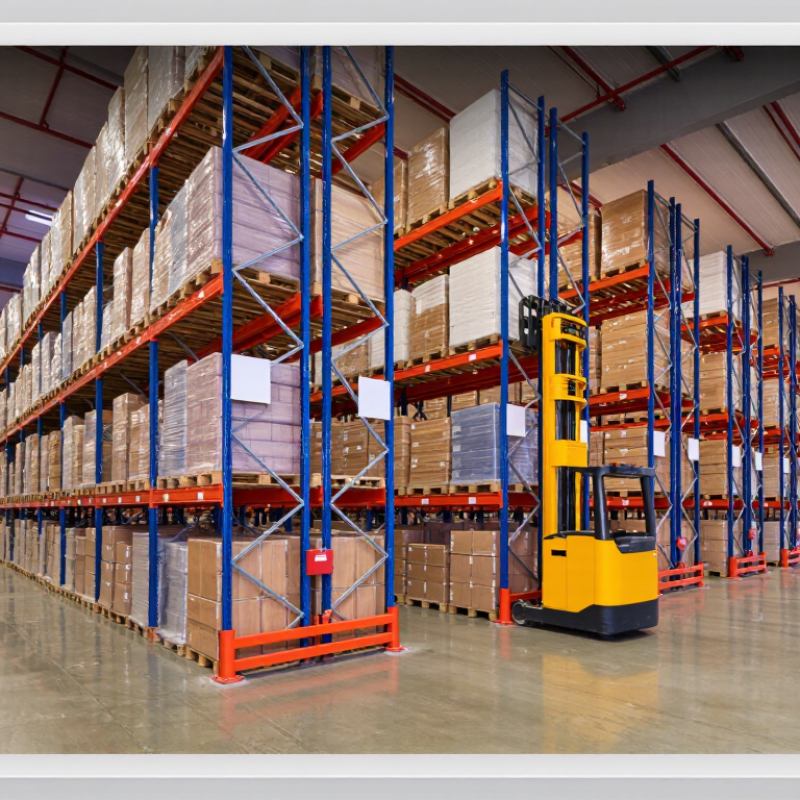
Define Pallet Racking Systems and Their Warehouse Applications
Pallet racking is a steel storage framework that holds palletized goods on beams and uprights. Forklifts place and retrieve loads from designated bays. Common configurations include selective racks for direct access, drive-in racks for dense storage, and push-back racks for several pallets per lane. Each serves a different balance of access, capacity, and space use.
In warehouses, these systems organize fast-moving stock near picking areas and reserve inventory in higher or deeper locations. Manufacturing sites use them to stage components; distribution centers use them to support order picking and replenishment. The right layout depends on pallet dimensions, load weight, forklift turning space, ceiling height, and floor capacity. Small details matter. A rack may look efficient on a plan but create awkward forklift turns in daily work.
Rack selection should be supported by load calculations, clear capacity labels, and regular checks for impact damage or loose components. MHI’s 2024 Annual Industry Report found that 55% of surveyed supply-chain leaders planned to increase investment in supply-chain innovation. This is a broad technology finding, not a rack-specific statistic, but it reflects growing attention to warehouse productivity. Even so, denser storage is not automatically better. It can reduce access and complicate replenishment if inventory patterns change. That trade-off deserves review.
FAQS
It is a steel framework of uprights and beams that stores palletized goods. Forklifts place and retrieve loads from designated bays.
Warehouses use them for fast-moving stock and reserve inventory. Manufacturing sites stage components, while distribution centers support picking and replenishment.
Every pallet location is directly accessible. Operators can retrieve one pallet without moving another. Useful for mixed inventory.
Selective racks offer direct access but need wider aisles. Drive-in racks store more pallets densely, while push-back racks hold several pallets per lane.
Check pallet dimensions, loaded overhang, load weight, ceiling height, floor capacity, and forklift turning space. Measure the real load.
No. It can increase capacity but reduce access and complicate replenishment. Changing inventory patterns may make a dense layout awkward.
Request load calculations, beam and upright specifications, and records showing test methods and conditions. Ratings may vary by configuration.
Confirm anchors, aisle spacing, floor conditions, and capacity labels. Inspect for impact damage or loose parts. Keep clear records.
Ask about inspection guidance, replacement parts, and response times for damage reports. A polished proposal may still leave questions. Recheck the details.
Conclusion
Choosing the right Pallet Storage Racking System begins with understanding how it will support warehouse storage, picking, and replenishment. Selective racking provides direct access to every pallet position, offering 100% pallet selectivity and flexibility for operations with varied products. The best configuration depends on inventory turnover, available floor space, handling equipment, and the access requirements of daily workflows.
Before selecting a supplier, confirm that rack bays are designed around the 1,200 × 1,000 mm pallet commonly used in China, while allowing for load dimensions, clearances, and forklift operation. Assess the manufacturer’s engineering process against relevant ANSI MH16.1-2023 rack design criteria, and ask for clear documentation of load testing, material traceability, installation procedures, and after-sales support. Comparing these factors helps businesses evaluate structural suitability and service quality, rather than relying on price alone, and select a system that fits both current operations and future warehouse needs.