Warehouse storage and racking insights for international buyers
Engineering-Led Procurement Insights

Warehouse Racking News & Buying Guides

Practical guidance for distributors, manufacturers and 3PLs evaluating pallet racking, AS/RS and high-density storage projects.

Knowledge Center

Technical Content for Better Procurement Decisions

Buying warehouse storage is not only a price comparison. It is a decision about load capacity, aisle geometry, fire and seismic review, installation method, spare-parts planning and future expansion. This knowledge center explains the details that overseas buyers and consulting engineers need before approving a racking layout.

Articles are prepared for project managers, procurement teams, distributors and warehouse operators who need clear technical direction in English. When a project advances, the engineering team at My Favorite Shelf Industrial Co., Ltd. can translate the discussion into layout drawings, load calculations and a container-optimized shipping plan.

1997Manufacturing since
8,000+Projects delivered
140+Export countries
ISO & CEAudited certifications
Latest Articles

Storage System Insights for Buyers

Use these guides to ask better technical questions, compare system options and prepare a more complete inquiry package.

Automation

How Warehouse Automation Lifts Storage and Labor Efficiency

A procurement-focused look at AS/RS, shuttle systems and conveyor links: where automation reduces labor dependency, how to size the business case and which data buyers must prepare before a layout study.

Engineering Note7 min read
Gravity Flow

Gravity Flow Racking: When It Makes Sense for Fast-Moving Inventory

Use velocity, replenishment rhythm, carton or pallet consistency and FIFO discipline to judge whether flow racking will improve picking productivity or create unnecessary complexity.

System Selection6 min read
Pallet Racking

Single-Deep vs. Double-Deep Pallet Racking: Access, Capacity and Cost

Compare selectivity, storage density, forklift requirements and safety review points before choosing a deeper lane configuration for a high-throughput distribution center.

Buying Guide6 min read
Push-Back

Push-Back Racking: Matching Inventory Patterns to the System

A practical screening guide for medium-density storage: SKU counts, pallet depth, rotation rules, load documentation and the procurement questions that prevent costly misalignment.

Inventory Fit5 min read
Facility Planning

Warehouse Mezzanine or New Facility? A Practical Expansion Comparison

Evaluate usable floor area, dock flow, code review, future flexibility and capital timing when deciding between a steel mezzanine and a new warehouse building.

Expansion7 min read
VNA Racking

VNA Racking: Questions to Resolve with Your Forklift Supplier

Narrow-aisle performance depends on truck specification, floor tolerance, guidance, rack tolerances and operator training. Here are the technical inputs to confirm early.

Technical Review5 min read
Mezzanine Planning

Planning Mezzanine Storage Around Picking and Replenishment

Layout mezzanine levels around replenishment routes, stair and lift positions, fire review, floor loading and the pick faces that keep fast movers accessible.

Layout Planning6 min read
System Selection

Pallet Racking vs. Shelving: Which Storage System Fits Your Operation?

Compare unit loads, picking methods, structural requirements and growth scenarios to choose between pallet racking, longspan shelving and hybrid storage layouts.

Buying Guide6 min read
Cost Planning

What Drives Pallet Racking System Cost? A Buyer's Breakdown

Understand how uprights, beams, seismic design, finish, accessories, freight, installation and project documentation influence the total installed cost.

Budget Review5 min read
Layout Design

Designing a Warehouse Racking Layout for Better Storage Efficiency

A data-driven layout starts with pallet profiles, SKU velocity, aisle geometry, column grid and throughput targets — not a generic capacity estimate.

Engineering Note8 min read
Supplier Due Diligence

What to Verify Before You Order

A reliable racking supplier should make technical evidence available before shipment, not after problems appear on site.

1. Load and layout documentation

Request a layout that clearly shows pallet profiles, beam levels, upright spacing, aisle widths, column clearances, forklift travel paths and expansion joints. Confirm that the offered capacity matches the actual pallet load, including overhang, impact allowance and accessory weight.

2. Seismic and structural calculations

For projects in Chile, Peru, Colombia or other seismic regions, ask for calculations prepared with reference to the local code or the code confirmed by the buyer’s engineer. Reports should show base-plate design, anchor selection, bracing and upright capacity under seismic combinations.

3. Certification and factory quality control

Check CE certification for covered equipment, ISO management certificates, material traceability, coating-thickness records and pre-shipment inspection reports. These documents help procurement and safety teams verify that the supplier works to a repeatable quality system.

4. Shipping, installation and after-sales plan

A strong quotation should explain packing, container loading, installation supervision, commissioning responsibilities, spare parts and remote support. For automated systems, include WMS/WCS interface responsibility and operator training in the project scope.
Topic Coverage

Where We Help Overseas Buyers

System Selection

Selective, double-deep, VNA, drive-in, push-back, shuttle and AS/RS options compared by density, selectivity and operating model.

Automation & AS/RS

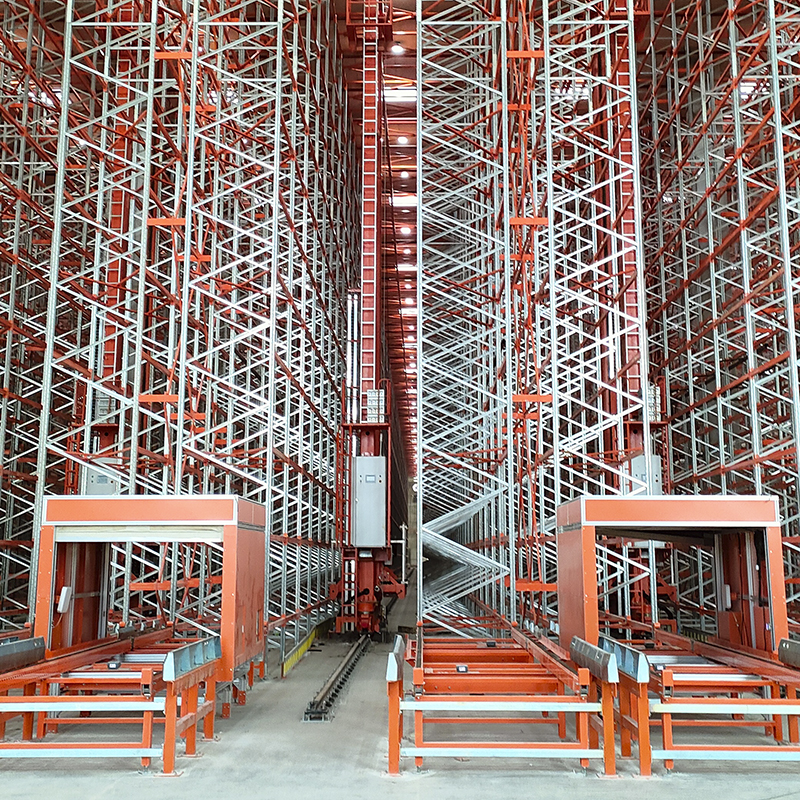
High-bay stacker cranes, four-way shuttles, conveyors and WMS/WCS integration assessed for throughput, labor and payback.

Cost & Procurement

Understand the total installed cost, freight planning, container loading, documentation and the commercial questions to ask.

Safety & Compliance

Seismic design, load verification, certifications, installation method statements and rack safety review for local engineers.

Buyer Questions

Frequently Asked Questions

Clear answers for procurement teams preparing a warehouse storage project.

Use them to frame technical questions before requesting quotations. A clear brief should include pallet dimensions and weights, building height, column grid, forklift type, throughput target, SKU velocity, local seismic requirements and the required delivery port. This helps suppliers provide a verifiable layout instead of a generic price.

Yes. For projects in Chile, Peru, Colombia and other seismic regions, our engineers can provide structural and seismic calculations with reference to the local requirements agreed for the project, such as NCh 2369, E.030 or NSR-10 where applicable. Reports can be delivered with quotation drawings for review by the buyer's engineer.

Request the signed layout, load-capacity schedule, material certificates, coating inspection records, CE certificates for covered equipment, ISO management certificates, packing list and container-loading plan. For automated systems, also confirm the scope of WMS/WCS integration, commissioning tests and operator training.

We provide English project documentation, remote design reviews and installation supervision. Our team can train local installers, support commissioning and provide spare-parts planning. Spanish and Portuguese project communication support is available for South American buyers.

Use the Get Catalog button on this page or email [email protected] with your pallet size, maximum load, available height, warehouse plan, forklift details, throughput target and destination port. Our engineers will review the information and recommend a suitable system configuration.

Need a Catalog for Your Tender or Project Review?

Share your pallet data, warehouse dimensions and target capacity. Our team will recommend a suitable storage system and provide verified specifications for procurement review.

Get Catalog

Email: [email protected] · English, Spanish and Portuguese project support available.

Download Catalog