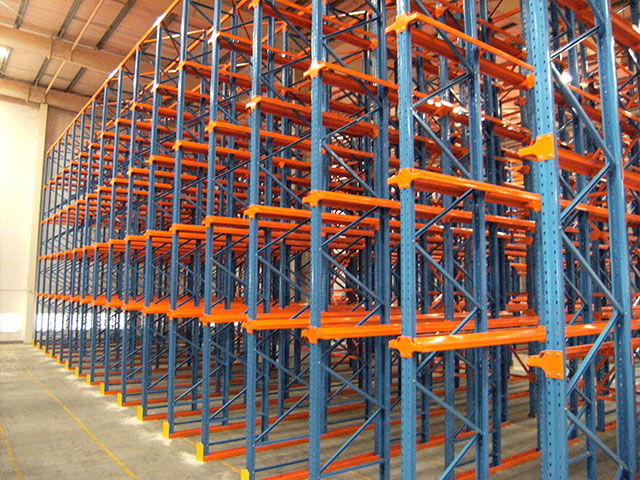
LIFO Drive-in Racking for Cold Storage
Continuous rail lanes for freezer rooms, cold chain warehouses and high-volume SKU storage. We review low-temperature performance, corrosion protection and forklift access before production.
View Solution
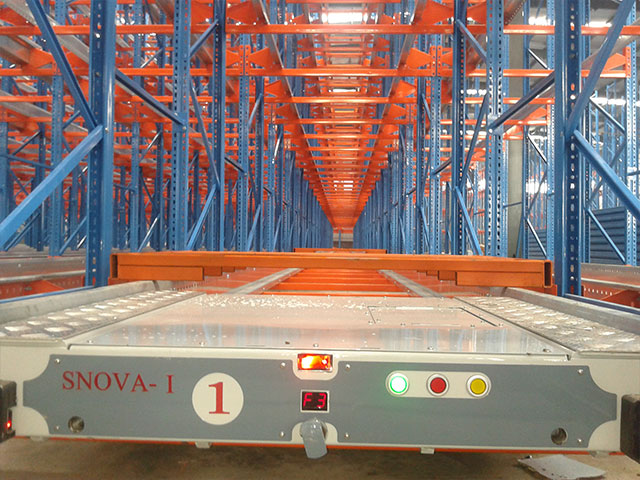
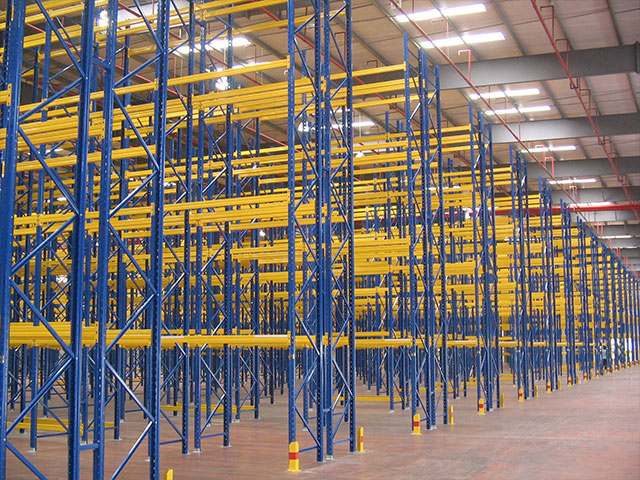
Drive-in pallet racking is a high-density pallet storage system in which forklifts enter lanes between upright frames to load and retrieve pallets. It is designed for warehouses that store many pallets of the same SKU and need more pallet positions without adding building area.
For global buyers, drive-in pallet racking is not simply a low-cost way to remove aisles. It is an engineering decision that changes inventory rotation, forklift movement, safety procedures and warehouse operating discipline. The system uses continuous rails at each level, allowing pallets to be stored several deep within a lane. Because forklifts drive into the structure, storage density rises, but selectivity falls. That trade-off is why drive-in racking works best for stable, slow-moving or seasonal SKUs, cold storage, beverage warehouses, food distribution, raw material storage and manufacturing buffer stock.
My Favorite Shelf Industrial Co., Ltd. approaches every drive-in project as a layout and safety problem before it becomes a steel order. The engineering team reviews pallet dimensions, load weight, clear height, forklift type, turning radius, lane depth, floor condition and local code requirements. The objective is not only to fit more pallets into the building, but to keep the system safe, buildable, shippable and practical for the warehouse team after start-up.
Drive-in racking performs best when SKU control is strict. If many pallets share the same SKU, lane storage can be filled efficiently and forklift travel can be reduced. If the inventory mix changes too often, selectivity becomes a bottleneck and a radio shuttle, drive-through or selective racking design may be more suitable. For this reason, My Favorite Shelf Industrial Co., Ltd. recommends a pallet-flow analysis before confirming lane depth and rail configuration.
The right configuration depends on inventory rotation, temperature, local seismic requirements and shipping plan. These solutions show how My Favorite Shelf Industrial Co., Ltd. adapts drive-in technology for different global procurement scenarios.
Continuous rail lanes for freezer rooms, cold chain warehouses and high-volume SKU storage. We review low-temperature performance, corrosion protection and forklift access before production.
View SolutionUse drive-in lanes for stable low-SKU goods and shuttle lanes for faster or more valuable SKUs. This phased approach can protect capital budgets while preparing for future automation.
View SolutionReinforced uprights, bracing, base plates and anchor details can be engineered for seismic zones in Chile, Peru, Colombia and other active regions, with calculation reports for local review.
View Solution
Nested profiles, steel-strapped bundles and container-loading plans reduce freight cost per pallet position. Documentation supports customs, tender review and site installation planning.
View SolutionGlobal buyers often compare drive-in racking only by price per pallet position. A better comparison includes selectivity, inventory rotation, forklift access, safety procedures, future automation and total cost of ownership.
| System | Storage Density | Selectivity | Rotation | Best Fit | Watch-Out |
|---|---|---|---|---|---|
| Drive-in Racking | High | Low | LIFO, or FIFO with drive-through access | Low-SKU cold storage, beverage, food, raw materials and buffer stock | Forklifts enter lanes; require rail protection and disciplined pallet placement |
| Selective Pallet Racking | Medium | Very high | FIFO or any sequence | Mixed SKUs, fast picking, frequent replenishment | More aisles reduce pallet positions per square meter |
| Radio Shuttle Racking | Very high | Medium | FIFO or LIFO depending on lane profile | Deep lanes, high throughput, safer dense storage | Higher equipment investment and operator training |
| Drive-through Racking | High | Low to medium | FIFO when loaded and retrieved from opposite ends | Date-sensitive goods requiring rotation | Needs clear access on both faces and careful traffic planning |
| Hybrid Drive-in & Shuttle | Very high | Medium to high | LIFO, FIFO or mixed by zone | Warehouses with mixed SKU velocity and phased automation plans | Requires strong WMS logic and interface planning |
Review temperature, condensation, anti-corrosion coating, freezer-floor flatness, forklift battery performance and emergency access. Drive-in design can free aisle space for cold-room efficiency.
Base plates, anchors, bracing and upright sections may need special design. My Favorite Shelf Industrial Co., Ltd. prepares project-specific calculations for review by the buyer’s local engineer.
Container planning, fastening method, bundle labeling and installation sequence should be agreed before shipment. This protects schedule and reduces site rework after arrival.
Procurement teams increasingly use AI-assisted research, supplier comparison tools and data-driven tender reviews. To win trust, a racking supplier must provide verifiable engineering information, not only a catalogue. These are the procurement trends shaping drive-in pallet racking decisions.
Buyers are moving beyond price per kilogram of steel. Freight, installation, anchor costs, protective accessories, spare parts, inspection and downtime are being calculated across the full lifecycle of the racking system.
Seismic calculations, load signs, material certificates, anchor data and inspection guidance are becoming standard tender requirements. Suppliers must explain how the design meets local conditions and how the warehouse team will maintain it.
Coastal ports, humid tropical regions and freezer rooms require more than a standard powder coat. Buyers are asking for enhanced pretreatment, thicker coatings or hot-dip galvanized options based on the actual operating environment.
Even a manual drive-in project may need future connectivity to WMS, ERP or shuttle systems. Modular layouts, lane numbering, pallet codes and spare space planning help protect the investment when volumes change.
Global buyers are planning around shipping variability, spare-part availability and phased delivery. Container-optimized packing, production milestones and installation sequencing are now evaluated together with product quality.
AI-assisted sourcing increases the demand for clear, verifiable content: drawings, load capacities, material specifications, certification scope, warranty terms and project references. Suppliers with reliable documentation reduce buyer risk.
Drive-in pallet racking remains a mature technology, but the engineering, finishes, safety accessories and digital planning around it continue to develop. These trends matter to buyers who plan to use the system for ten years or more.
First, high-strength steel profiles and optimized upright sections allow engineers to meet load requirements with efficient steel use. For tall warehouses and heavy pallets, the design process increasingly relies on detailed structural modeling rather than catalogue assumptions. This helps buyers compare layouts fairly and understand where steel is being used to meet safety margins.
Second, hybrid dense storage is growing. Drive-in racking can be combined with radio shuttle, four-way shuttle or AS/RS zones in the same facility. Stable low-SKU inventory stays in drive-in lanes, while faster-moving goods move to automated or semi-automated zones. This phased approach is often more practical than replacing an entire warehouse at once.
Third, safety accessories are becoming more visible in tender documents. Upright protectors, rail end stops, forklift guide rails, warning signs, load plaques and inspection labels are not decorative. They reduce impact damage and support a safer operating culture. Buyers should ask how protection is designed and how spare parts can be sourced after installation.
Fourth, coating and corrosion protection continue to improve. For cold storage, coastal sites and humid climates, the specification may include enhanced pretreatment, epoxy-polyester powder coating or galvanized components. The correct finish depends on humidity, temperature, cleaning routines and the presence of salt or chemicals.
Fifth, digital planning is becoming more accessible. 3D layouts, pallet-position simulations, bill-of-material transparency and container-loading plans help buyers evaluate a project before production. My Favorite Shelf Industrial Co., Ltd. uses engineering documentation to align layout, structural design, packing and installation sequence, reducing the gap between quotation and site reality.
Finally, sustainability is influencing material efficiency and lifecycle planning. Steel racking is highly recyclable, but responsible sourcing also means avoiding over-specified sections, reducing shipping volume and designing for future reconfiguration. A well-engineered drive-in system should not be a disposable purchase; it should be a modular asset that can support the next stage of warehouse growth.
Global buyers need more than a racking catalogue. They need a manufacturer that can connect layout design, structural calculations, production, export packing, installation guidance and after-sales support.

My Favorite Shelf Industrial Co., Ltd. has designed, manufactured and installed warehouse racking and automated storage systems since 1997. Our production base processes around 60,000 tons of steel per year, supporting stable quality and scale for export projects.

Our municipal-level R&D center holds more than 70 national patents and software rights covering racking, stacker cranes, conveyors, shuttle carriers and warehouse control software, supporting continuous improvement in dense storage.

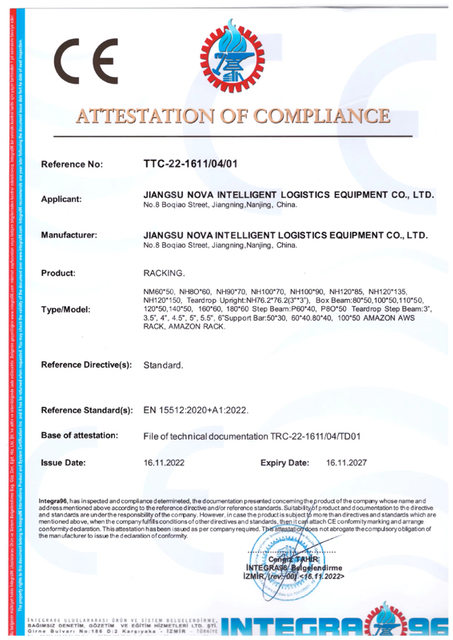
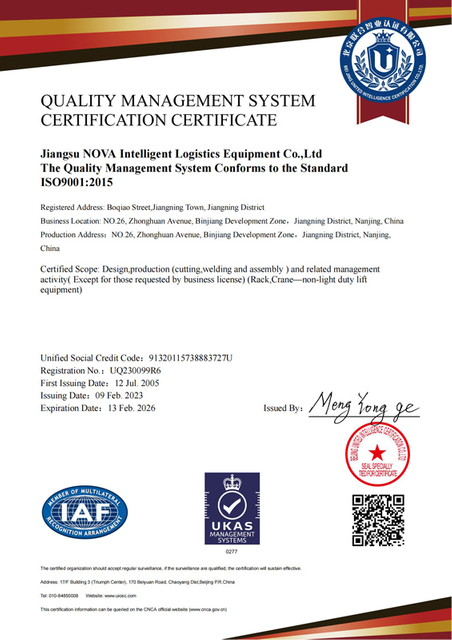
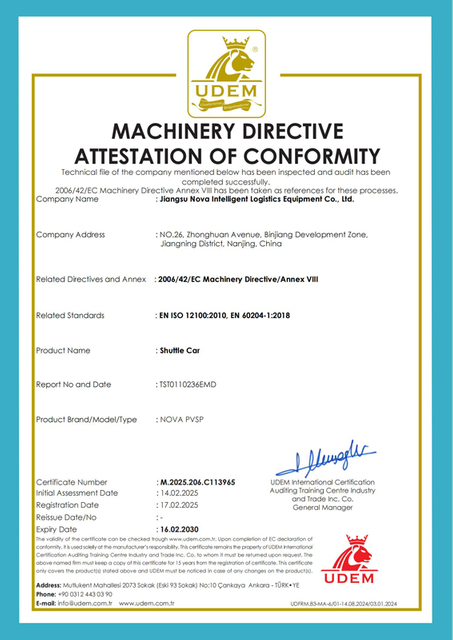
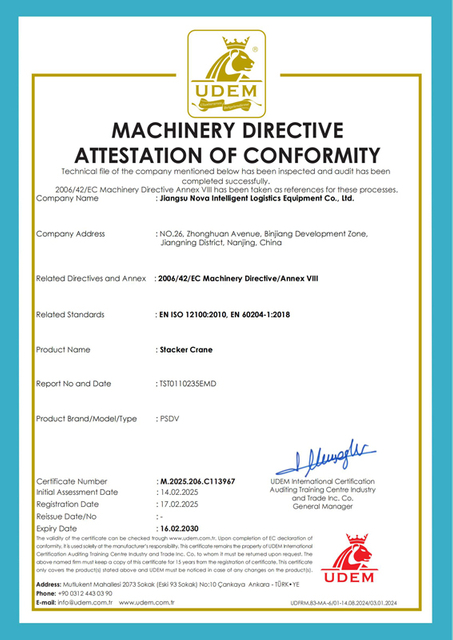
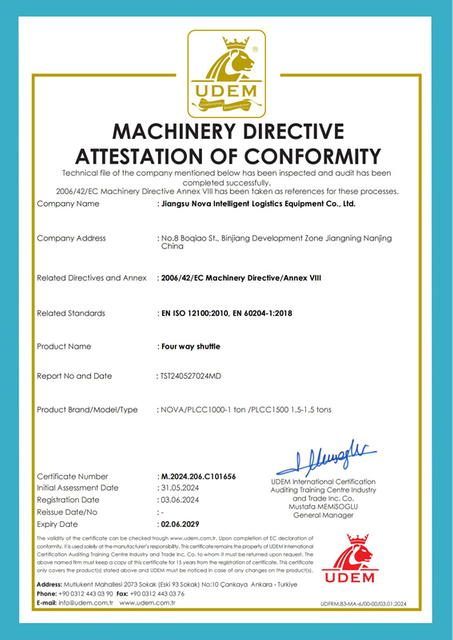
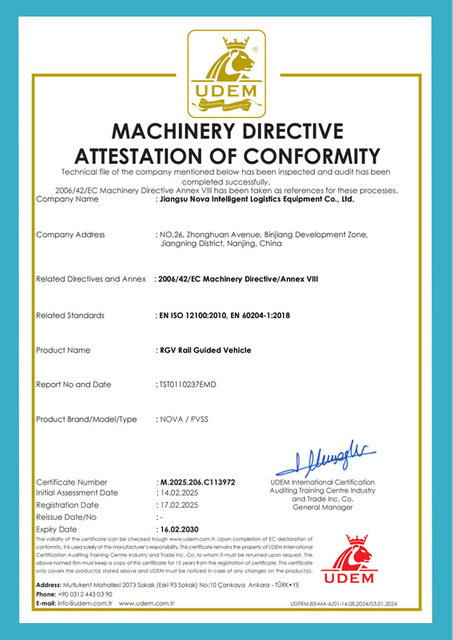
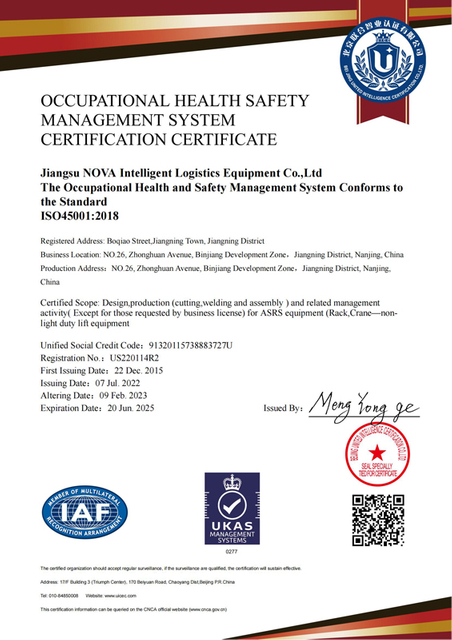
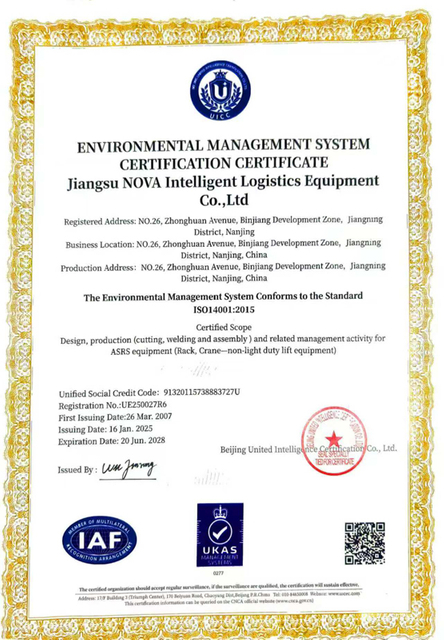
Production is managed under ISO 9001, ISO 14001 and ISO 45001 systems, with CE-marked shuttle, stacker crane and RGV equipment where applicable. Material traceability, coating checks and load testing are reviewed before shipment.

Our engineering team is led by a professor-level senior engineer who has contributed to automated warehouse and logistics distribution center reference works. This expertise is applied to drive-in lane design, structural review and project documentation.
My Favorite Shelf Industrial Co., Ltd. is a manufacturer and integrator of warehouse racking, AS/RS, shuttle systems and mezzanine platforms. For drive-in pallet racking projects, the team can support the full path from early layout study to production, export packing and installation guidance. This reduces the risk of buying steel that arrives with missing components, unclear drawings or an unsafe lane design.
With more than 8,000 projects delivered in over 140 countries, My Favorite Shelf Industrial Co., Ltd. brings broad application experience to food and beverage warehouses, cold chain facilities, manufacturing plants, distribution centers and export-oriented storage projects. Project communication is available in English, Spanish and Portuguese for global buyers.
Third-party certifications and quality documents that procurement and safety teams can review before purchase.
Drive-in racking projects succeed when the storage system matches actual pallet flow, truck movement and safety routines. These application examples reflect the type of engineering review My Favorite Shelf Industrial Co., Ltd. performs for global buyers.
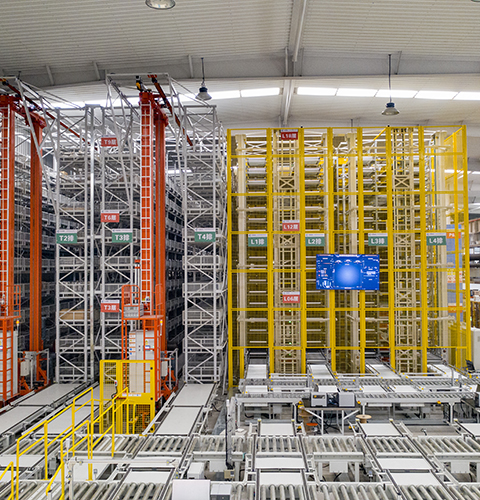 Machinery
Heavy pallet loads and spare parts consolidated into dense lanes, with rack protection and forklift clearance reviewed before installation.
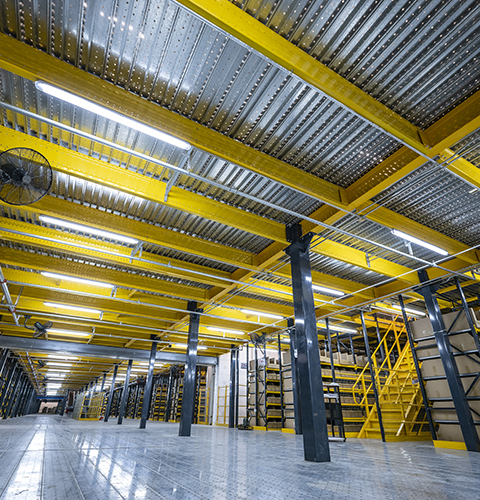 Distribution
Low-SKU pallet inventory stored in drive-in lanes while fast-moving products remain in selective picking areas for faster order fulfillment.
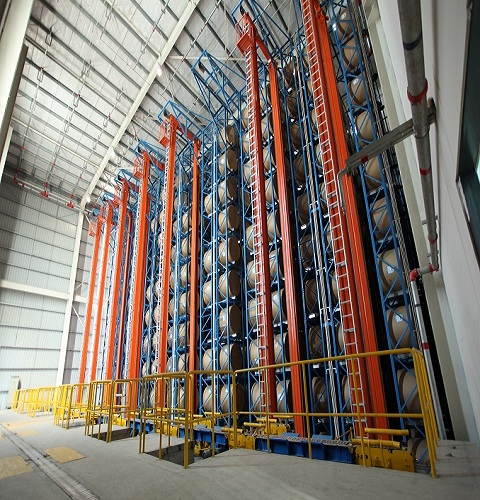 Manufacturing
Drive-in racking used as a buffer between production and dispatch, with lane planning aligned to batch sizes, pallet weights and shipping cycles.
Questions global buyers commonly ask when comparing suppliers, layouts and procurement options for drive-in pallet racking.
Drive-in pallet racking is best for high-density storage of low-SKU, high-volume palletized goods. It is widely used in cold storage, beverage, food, grocery and manufacturing warehouses where many pallets share the same SKU and selectivity is less important than pallet-position density.
Drive-in racking is normally loaded and retrieved from one side, so it follows LIFO inventory rotation. Drive-through racking can be accessed from both sides, allowing FIFO rotation but requiring more aisle and handling discipline. My Favorite Shelf Industrial Co., Ltd. can engineer either configuration according to throughput and SKU rules.
Yes. For seismic areas, structural calculations, base plate design, bracing, anchor specification and upright reinforcement are reviewed according to project location and local code requirements. Calculation reports and layout drawings can be delivered for review by the buyer’s local engineer.
Yes, drive-in racking is widely used in cold and frozen warehouses because it reduces aisle space. The design should consider low-temperature steel performance, condensation control, corrosion protection, floor flatness, forklift access and safety inspections in wet or freezing conditions.
Density gain depends on building dimensions, pallet size, forklift turning radius, lane depth and clear height. In many low-SKU warehouses, drive-in racking can significantly increase pallet positions compared with selective racking by reducing aisle count. Final density should be confirmed by a professional layout study and pallet-position simulation.
Buyers should provide building drawings or length, width and clear height; pallet size and maximum load; forklift type and lift height; SKU count and inventory rotation; throughput; operating temperature; local seismic or safety requirements; and destination port. My Favorite Shelf Industrial Co., Ltd. uses these inputs to prepare a layout, loading plan and quotation.
Standard racking production is typically around 25 to 35 days after drawing approval, depending on quantity and finish. Ocean transit to major ports varies by route, usually around 30 to 45 days. Automated or hybrid systems follow a project schedule agreed at contract stage.
My Favorite Shelf Industrial Co., Ltd. can provide material certificates, inspection records, load-test information, packing lists, certificates of origin, and ISO 9001, ISO 14001, ISO 45001 and CE-related documentation where applicable. Custom project documents can be prepared for tender and customs review.
Yes. Many projects use drive-in racking for stable low-SKU inventory while reserving radio shuttle, four-way shuttle or AS/RS systems for faster-moving or more valuable goods. A hybrid plan can balance capital cost, selectivity, land use and future automation without rebuilding the entire warehouse.
Send your building drawing, pallet size and load, forklift type, SKU profile and destination port. The engineering team at My Favorite Shelf Industrial Co., Ltd. will review the project and recommend the most suitable drive-in, drive-through or hybrid dense storage layout.
Use the live chat button below to discuss layout, loading, shipping and installation planning. You can also email your project data for an engineering review.
Replies in English, Spanish or Portuguese within one business day.
Contact Us