Higher Storage Density
Deep lanes use the warehouse footprint more efficiently than conventional selective racking because fewer working aisles are required. Final density is optimized after pallet count per SKU and retrieval frequency are reviewed.
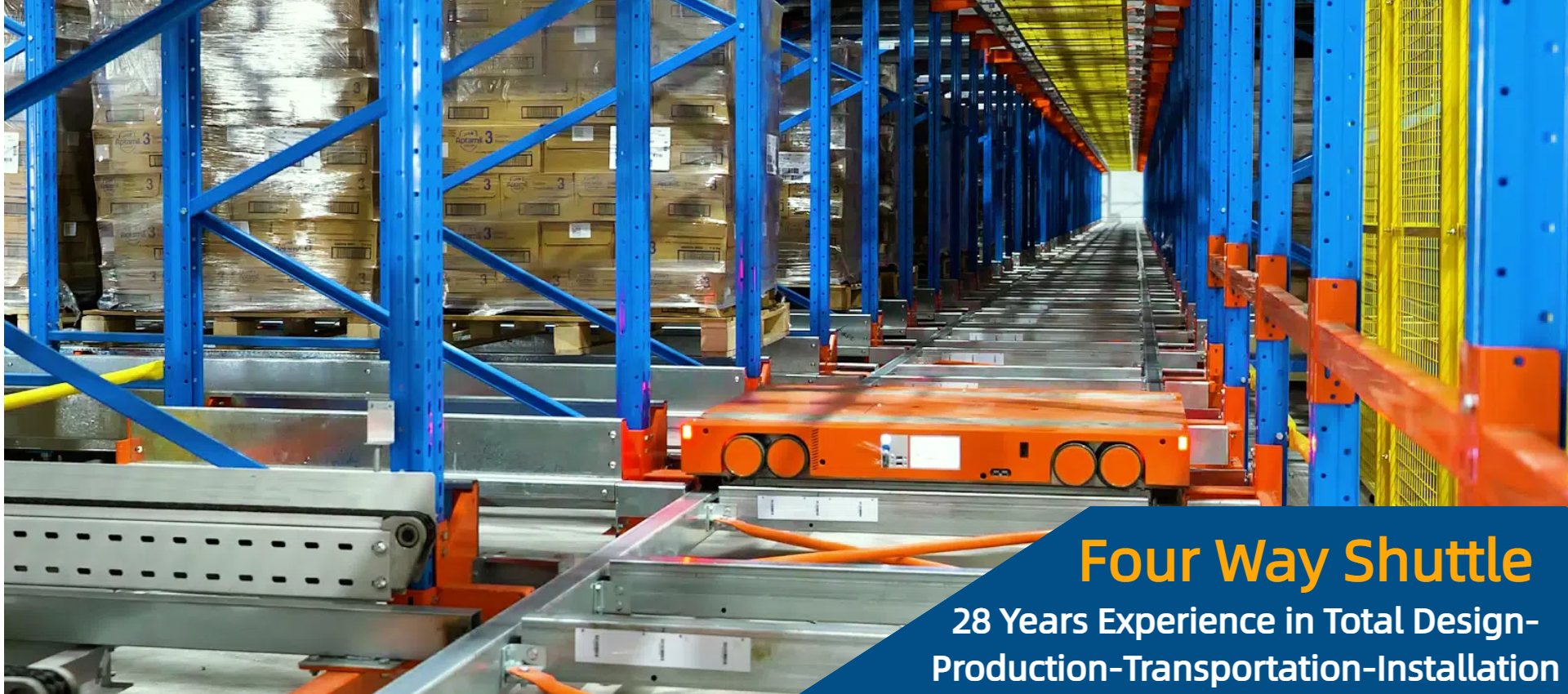
A radio shuttle racking system, also called pallet shuttle racking, stores pallets in deep lanes and uses a powered shuttle to move loads along rails inside the rack. Forklifts remain at the lane face instead of driving deep into every storage lane. This design helps reduce working aisle space, shorten forklift travel, and lower exposure to rack impacts in dense storage areas.
My Favorite Shelf Industrial Co., Ltd. engineers each system around pallet dimensions, load weight, SKU profile, warehouse clear height, handling equipment, inventory rotation, operating temperature, and local project requirements. The objective is not simply to add pallet positions, but to create a layout that supports practical receiving, put-away, retrieval, and shipping operations.
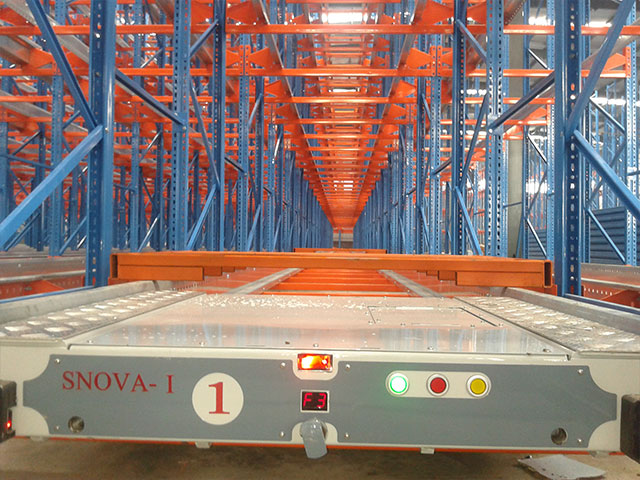
A well-engineered shuttle system balances storage density, inventory access, forklift safety, and future automation potential.
Deep lanes use the warehouse footprint more efficiently than conventional selective racking because fewer working aisles are required. Final density is optimized after pallet count per SKU and retrieval frequency are reviewed.
Forklifts do not need to drive deep inside the rack structure. This reduces exposure to upright impact, beam damage, and operator blind spots at the lane face.
FIFO layouts typically load from one end and retrieve from the other; LIFO layouts load and retrieve from the same end. The choice should follow batch control, shelf life, and shipping schedules.
Start with a semi-automated radio shuttle and add four-way shuttle, lifts, conveyors, or WMS/WCS integration where throughput and labor targets justify the investment.
The shuttle moves pallets inside the lane, while the forklift driver handles the interface at the lane face. Performance depends on correct pallet data, lane planning, and shuttle allocation.
Review pallet dimensions, maximum load, underside structure, load stability, and condition. Photos and load diagrams help confirm shuttle compatibility before quotation.
Define lane depth, pallet positions per SKU, rack height, clearances, shuttle quantity, and FIFO or LIFO access based on the warehouse plan and handling requirements.
A forklift places the shuttle on the selected lane rails. The operator then transfers the pallet at the lane entrance and activates the shuttle for movement inside the rack.
The shuttle carries the pallet to the target storage position or returns it to the unloading point. FIFO and LIFO rules direct where pallets are placed and retrieved.
Radio shuttle racking is most effective when each SKU can occupy multiple pallet positions and when dense storage supports the overall inbound and outbound flow.
Support batch control, FIFO or LIFO storage, and dense pallet buffering. For cold rooms and freezers, shuttle components, batteries, charging arrangements, and finishes must be specified for the operating temperature.
Buffer high-volume pallet inventory between receiving and dispatch while preserving access to fast-moving SKUs. Layout planning should reflect peak inbound and outbound volumes.
Provide dense storage for multiple clients and pallet profiles. The system can be planned for semi-automated operation or future expansion into higher automation.
Organize heavy components, stable pallet inventories, and line-side buffers in compact storage blocks while keeping forklifts at the lane face.
Store large quantities per SKU in robust racking structures with project-specific beams, uprights, and shuttle dimensions. Load verification is completed before approval.
Support container-loading schedules, high pallet counts, and export-oriented inventory. My Favorite Shelf Industrial Co., Ltd. can coordinate packing and export documentation for ocean freight.
Final specifications are confirmed after engineering review. The table below shows the project data typically agreed before production.
| Parameter | Project Options / Notes |
|---|---|
| System type | Radio shuttle, four-way shuttle, or hybrid high-density storage |
| Pallet load | Engineered to the required pallet weight; heavy-duty rack designs available |
| Pallet dimensions | Standard and custom pallet sizes; confirm length, width, height, and underside structure |
| Inventory flow | FIFO, LIFO, or combined operation |
| Lane depth | Planned around pallet quantity per SKU, retrieval frequency, and shuttle allocation |
| Racking height | Matched to warehouse clear height, handling equipment, and local code review |
| Operating environment | Ambient, chilled, freezer, or coastal and humid warehouses with suitable surface protection |
| Surface finish | Epoxy-polyester powder coating; hot-dip galvanized or enhanced pretreatment options |
| Documentation | Layout drawings, load schedules, calculation reports for local review, packing list, and export documents |
| Automation interface | Semi-automated lane-face operation; WMS/WCS and conveyor integration available when specified |
Procurement teams need more than a product picture. They need load data, project drawings, quality documentation, and a supplier who can support installation and long-term operation.
Practical answers for warehouse managers, project engineers, and procurement teams reviewing a high-density pallet storage project.
Radio shuttle racking is best for high-density palletized storage where multiple pallets per SKU can share deep lanes. It is suitable for food and beverage, cold storage, distribution, manufacturing, and 3PL warehouses where storage density and reduced forklift travel matter. It is usually less suitable for many low-volume SKUs that require frequent random access to every pallet.
Yes. Radio shuttle racking can be configured for FIFO, LIFO, or combined operation. FIFO normally requires loading from one end of the lane and retrieving from the other, while LIFO uses the same end for loading and retrieval. The correct layout depends on batch control, shelf life, shipping schedules, and available aisle access.
Please provide pallet length, width, and height; maximum loaded weight; underside structure; pallet condition; load stability; SKU quantities; required pallet positions; warehouse clear height; operating temperature; and handling equipment. Photos and load diagrams help My Favorite Shelf Industrial Co., Ltd. confirm compatibility before quotation.
Yes, but equipment must be selected for the operating temperature. Shuttle components, batteries, charging arrangements, rail details, surface finish, and maintenance procedures should be reviewed for freezer or chilled storage before the system is confirmed.
A radio shuttle generally moves along a pallet storage lane and is transferred between lanes by a forklift. A four-way shuttle can move in multiple directions within a designed rail network and may integrate with lifts, conveyors, and other automated handling equipment for higher automation levels.
Documentation can include layout drawings, load schedules, technical specifications, calculation reports for review by local engineers, packing lists, and export documents as agreed. Seismic or local-standard reviews can be prepared with reference to applicable project requirements such as NCh 2369, E.030, NSR-10, or ABNT NBR 15524 where relevant.
A conversion may be possible, but it requires an engineering assessment of rail geometry, structural capacity, clearances, pallet compatibility, existing rack condition, and potential shuttle access. Not every drive-in installation is suitable for conversion.
Lead time depends on system type, project quantity, customization, approval cycle, production schedule, and ocean route. Standard pallet racking is typically produced in about 25 to 35 days, with ocean transit varying by destination port. My Favorite Shelf Industrial Co., Ltd. confirms the project schedule at quotation stage.
To receive a practical layout and quotation, send your warehouse plan or clear dimensions, pallet size and load, SKU profile, required pallet positions, inventory flow, and operating temperature. My Favorite Shelf Industrial Co., Ltd. will review the project requirements and recommend a suitable radio shuttle or four-way shuttle configuration.
Email: [email protected]