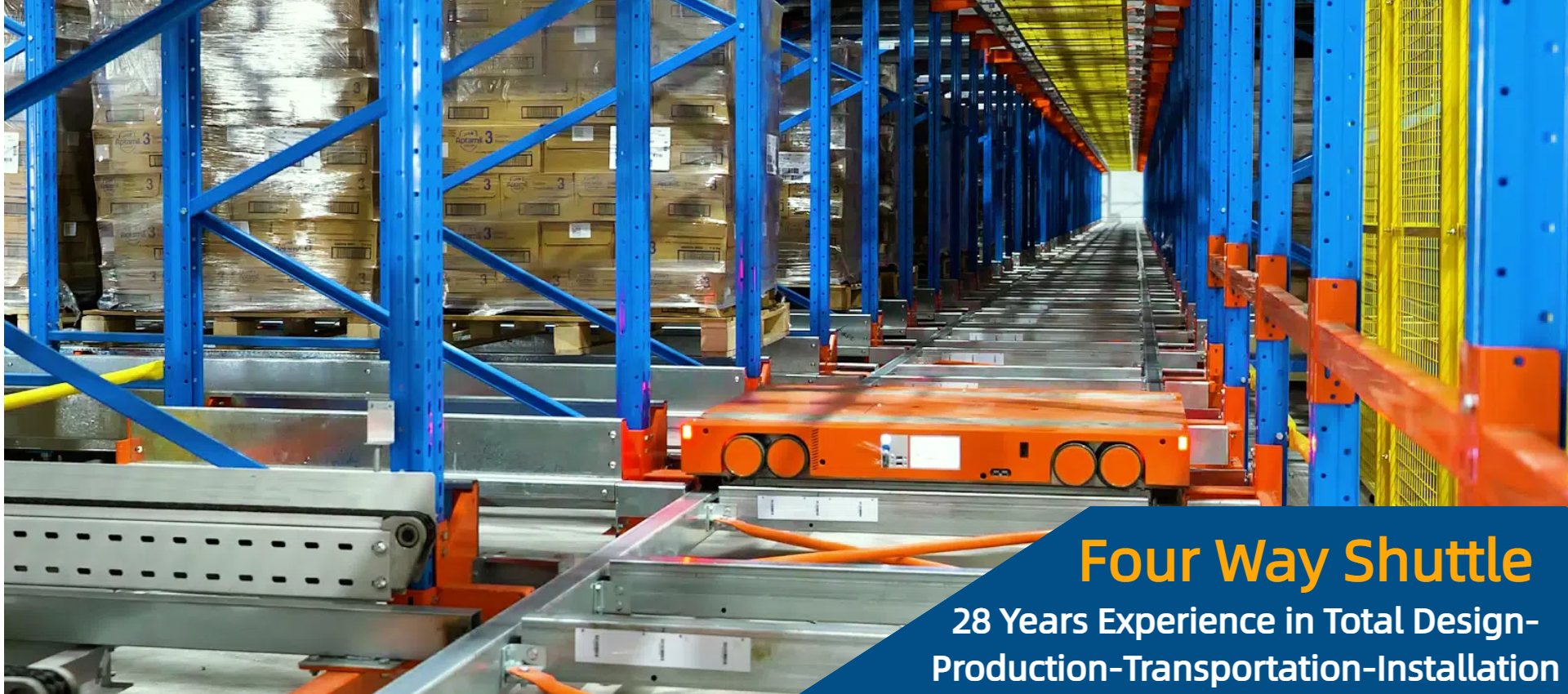
Four-Way Shuttle Racking System
Best for high-density pallet storage with multiple SKUs, medium-to-high throughput and a plan for phased automation.
More
This guide is written for procurement teams, warehouse operators, 3PLs and project owners who need more than a product brochure. It covers engineering logic, commercial evaluation, future procurement trends, common questions and the evidence to request before placing an order.
Four-way shuttle racking has moved from a specialist automation concept to a mainstream procurement option for warehouses that need more pallet positions without more building. In a typical inquiry, the buyer is not simply comparing steel prices. They are comparing storage density, throughput, uptime, serviceability, safety and the risk of choosing a system that cannot grow with the business. This guide is written to answer the questions that global buyers increasingly ask search engines and AI assistants before they contact a manufacturer. It also explains where My Favorite Shelf Industrial Co., Ltd. fits into that evaluation.
Unlike a conventional racking quotation, a four-way shuttle project combines structural engineering, moving equipment, controls, software, safety and after-sales support. The lowest apparent price can be expensive if the system is hard to maintain, difficult to expand or not aligned with local seismic and fire requirements. The most useful buying decision is therefore based on a clear operational brief and a transparent technical comparison.
A four-way shuttle racking system is a high-density automated pallet storage system in which one or more robotic shuttles run on a rail grid in two axes: forward and backward, left and right. A lift or transfer device moves the shuttle between levels. Pallets are stored on rails in dense rows instead of conventional forklift aisles. When a pallet arrives at the inbound station, the shuttle lifts it slightly, travels along the rail grid to the assigned location and lowers it into position. When an outbound order is released, the shuttle retrieves the pallet and delivers it to an outfeed station, conveyor or pickup point.
The system is managed by WCS for equipment movement and WMS for inventory, orders and location logic. Every pallet position can be tracked, and the software sequences tasks according to business rules such as FIFO, LIFO, batch release, temperature zone or picking priority. Because the shuttle can change lanes and levels without a forklift entering the storage structure, the system offers greater flexibility than deep-lane radio shuttle racking and greater density than conventional selective pallet racking.
The workflow starts at an inbound station. A forklift places the pallet on a pickup station, conveyor or shuttle platform. Barcode or RFID identification confirms the pallet ID, and the WCS assigns a storage location based on the WMS logic. The shuttle engages the pallet, lifts it from the support rails, and travels in the X or Y direction to the target aisle. A lift or transfer car may move the shuttle to another level. The shuttle then positions the pallet over the target rails, lowers it and returns to the home position or to the next task.
For outbound operations, the WCS receives the order from the WMS and dispatches the most suitable shuttle. Multiple shuttles can share the same rail grid, which improves throughput during peak periods and provides redundancy if one shuttle needs service. Safety sensors, position encoders and mechanical stops protect the equipment, while the control system prevents conflicting movements. The building itself must be suitable: floor flatness, rail alignment, clear height, fire strategy, temperature and pallet quality all affect the final design.
The four-way shuttle racking system is not always the right answer. The best procurement decision starts with the operating profile: SKU count, pallet velocity, order profile, building height, temperature, labor cost and future expansion plan. The following recommendations help buyers compare the four-way shuttle with adjacent product categories.
Best for high-density pallet storage with multiple SKUs, medium-to-high throughput and a plan for phased automation.
More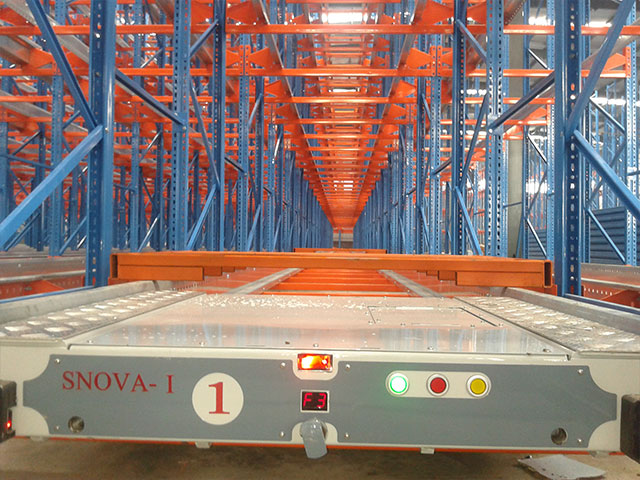
A lower-CAPEX deep-lane option for fewer SKUs, larger batches and semi-automated pallet storage.
More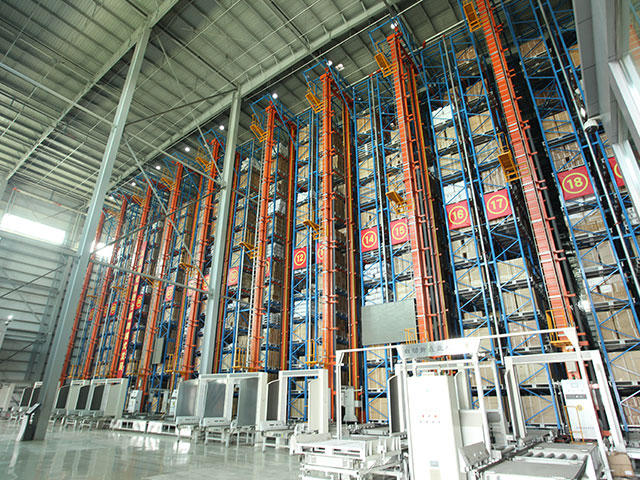
For maximum automation, high-bay storage, 24/7 operation and tight integration with WMS/WCS.
More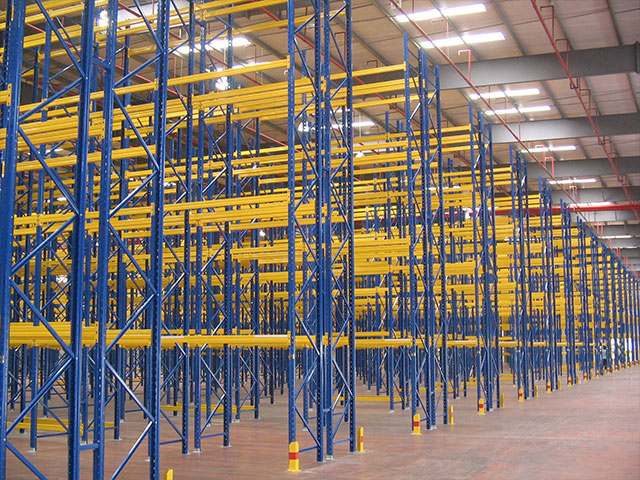
A flexible, lower-automation solution for mixed SKUs, direct access and conventional forklift operations.
More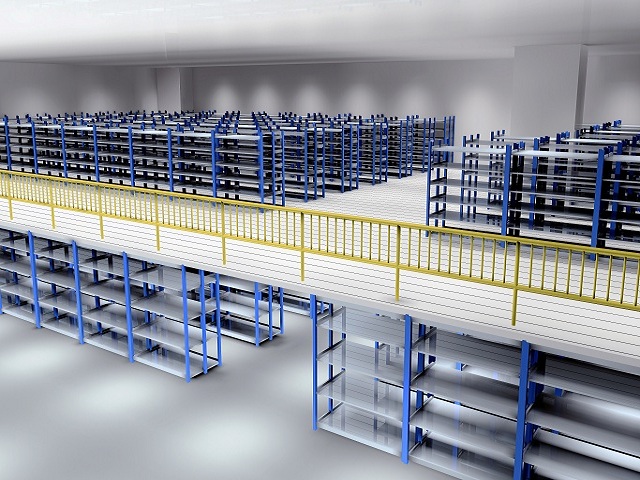
Use vertical space for picking, small-parts storage or production support without a new building.
More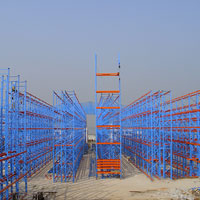
When the racking carries the roof and walls, the warehouse can maximize cubic space and building efficiency.
MoreThe specification stage is where credible suppliers separate themselves from catalog sellers. Four-way shuttle racking is a system, not a single machine. The racking, rail grid, shuttle, lift, controls and building interface must be engineered together. The table below summarizes the main decision areas for a global procurement review.
| Decision Area | What to Verify | Why It Matters |
|---|---|---|
| Pallet load | Maximum dynamic and static load, load eccentricity, beam deflection and pallet condition. | Under-specified racking or poor pallets can cause instability, shuttle faults and safety risk. |
| Rack structure | Upright and beam profiles, bracing, base plates, anchors, seismic calculations and coating finish. | The racking must match local codes, building conditions and the expected service life. |
| Shuttle equipment | Rated load, lift stroke, travel speed, battery or charging strategy, sensors and spare-parts availability. | Shuttle performance determines throughput, uptime and long-term maintenance cost. |
| Height and levels | Clear height, number of levels, sprinkler clearance, lift or transfer arrangement and maintenance access. | More levels can increase density, but only if the building, fire strategy and service plan allow it. |
| Throughput | Peak pallets per hour, number of shuttles, outfeed stations, lifts and expected task mix. | Average throughput is not enough. The system must handle peak season and future growth. |
| Controls | WMS/WCS integration, API or database interface, barcode or RFID, backup, cybersecurity and reporting. | Software failures can stop the whole system. Integration responsibility must be clear before contract. |
| Safety | CE documentation for relevant equipment, local seismic requirements, fire strategy, guarding and maintenance procedures. | Safety and compliance are not optional, especially for high-density and cold-store projects. |
| Cold or humid sites | Low-temperature lubricants, battery strategy, condensation control, galvanized or enhanced coating options. | Corrosion and condensation can shorten equipment life and increase downtime. |
| Project delivery | Engineering drawings, FAT, SAT, installation supervision, operator training, manuals and spare-parts list. | A clear handover process reduces commissioning risk and protects the buyer after shipment. |
Global procurement behavior is changing. Buyers are moving away from a single lowest-price comparison and toward total cost of ownership. They ask about energy consumption, shuttle availability, spare-parts lead time, local service support, training and the ability to add capacity later. In many markets, the real constraint is not warehouse rent alone; it is the combination of labor availability, order accuracy, safety compliance and speed of fulfillment.
High land costs and shortages of forklift operators make high-density automated storage more attractive. Four-way shuttle systems reduce aisle space and keep forklifts at the perimeter.
Buyers prefer systems that can start with a practical scope and expand later. Modular rail, extra shuttles and additional outfeed stations support phased investment.
Freezer and chilled warehouses face labor discomfort and strict temperature control. Automation reduces door openings, personnel movement and product exposure.
New distribution networks in South America and other regions require flexible, high-density storage that can be replicated across multiple sites.
Buyers now request simulation, layout files, energy estimates, spare-parts lists, CE documents and reference projects before shortlisting a supplier.
Seismic, fire and structural requirements are becoming more important in procurement. Calculation reports and local engineer review are part of the decision.
Four-way shuttle technology continues to develop in several directions. Shuttle manufacturers are improving battery performance, charging strategies, positioning accuracy and diagnostic capability. Lithium batteries and opportunity charging can reduce downtime and simplify energy planning. Higher travel and lift speeds improve throughput, but only when the rack structure, controls and outfeed stations are designed to match.
Software is becoming a larger part of the value proposition. WMS/WCS integration, digital twins, AI-assisted slotting and real-time dashboards help buyers use the system more effectively after commissioning. Remote diagnostics and AR-supported maintenance can shorten response times for overseas projects. At the same time, cybersecurity and data ownership are moving into the procurement checklist, especially for automated warehouses connected to enterprise systems.
Mechanical design is also evolving. Modular rail grids, standardized shuttle interfaces, lighter moving components and improved safety sensors make systems easier to install, expand and maintain. Green manufacturing is another trend: powder coating, energy-efficient production, lower-waste packaging and recyclable steel are increasingly requested by global buyers. In seismic regions, engineers are paying closer attention to anchor design, bracing, base plates and the interaction between racking and building structure.
E-E-A-T for an industrial product page is not built with slogans. It is built with evidence that a buyer can verify. Relevant experience means a manufacturer has delivered comparable projects in similar load, temperature, throughput and code environments. Expertise means the engineering team can explain the calculations, controls and safety logic. Authoritativeness comes from certifications, patents, reference projects and a long operating history. Trust comes from transparent documentation, realistic lead times and a clear after-sales plan.
My Favorite Shelf Industrial Co., Ltd. has designed, manufactured and installed warehouse racking and automated storage systems since 1997. The company operates its own production base with annual steel processing capacity of around 60,000 tons and has delivered more than 8,000 projects in over 140 countries. Its municipal-level R&D center holds more than 70 national patents and software copyrights covering racking, stacker cranes, conveyors, shuttle carriers and warehouse control software. Production is managed under ISO 9001, ISO 14001 and ISO 45001, with CE certification available for racking, stacker cranes, shuttles and RGVs.
For global buyers, this means one manufacturer can take responsibility for the steel structure, the shuttle equipment, the controls and the project documentation. For South American projects, the engineering team can prepare structural and seismic calculations with reference to local requirements such as NCh 2369 in Chile, E.030 in Peru and NSR-10 in Colombia, and can support project communication in English, Spanish and Portuguese. Installation supervision, operator training, spare parts and remote diagnostics are part of the service scope for automated systems.

Designated logistics equipment supplier experience with international enterprises including GE, Siemens, Walmart, Amazon and Toyota. The same project discipline is applied to distributors, 3PLs and manufacturers worldwide.

A municipal technical R&D center with 70+ patents on racking, stacker cranes, conveyors, shuttle carriers and WMS/WCS warehouse software.

Production managed under ISO 9001, ISO 14001, ISO 45001 and ISO 10012 measurement management, with coil traceability, coating checks and load testing before shipment.

Led by a professor-level senior engineer and doctoral tutor who co-authored automated warehouse design and logistics distribution center references.
Share your building dimensions, pallet data and throughput target. The engineering team can review the storage concept and recommend the right level of automation before you commit to a budget.
Certifications, engineering documentation and production control are part of the procurement decision. Buyers can request the documents that matter for their project and review them with local engineers.
Third-party certifications that procurement, safety and quality teams can verify before purchase.
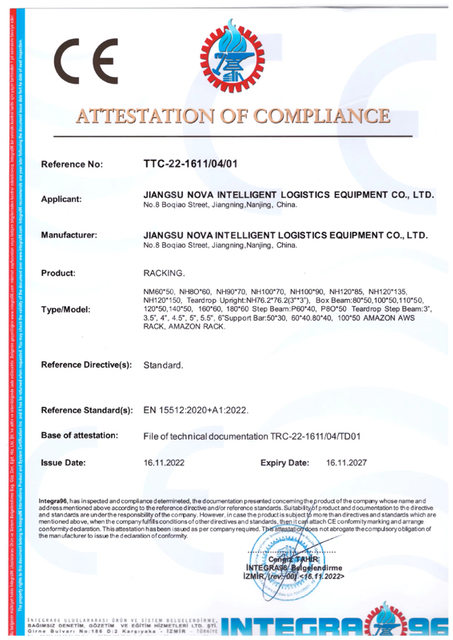
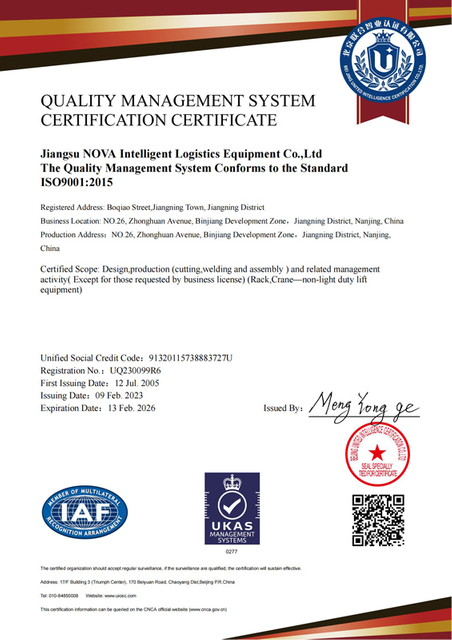
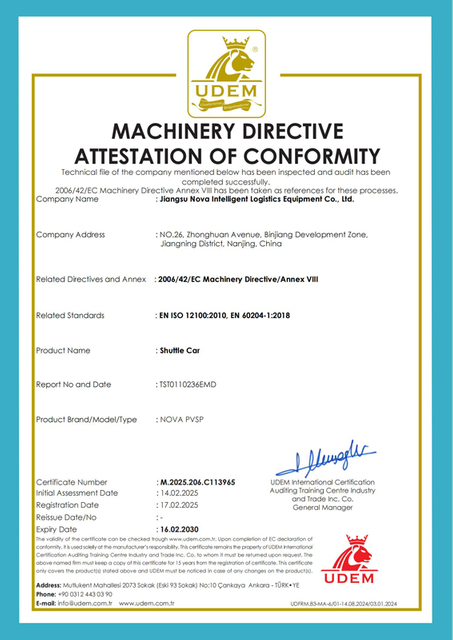
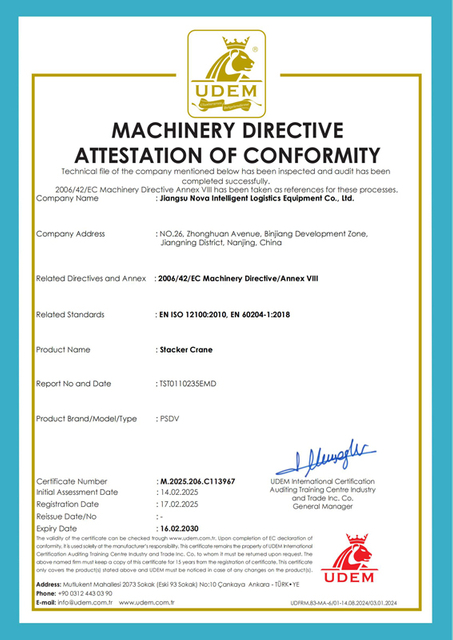
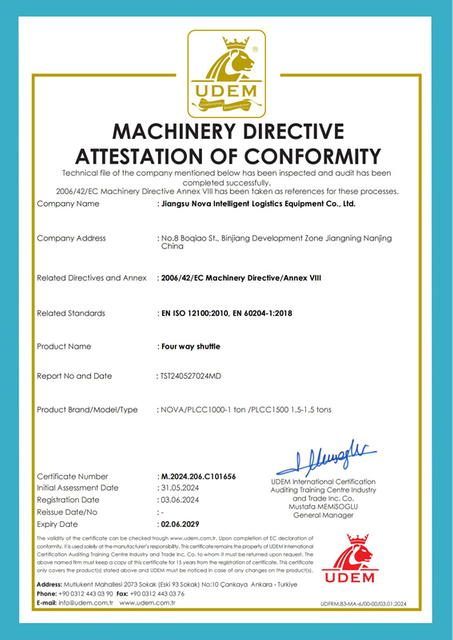
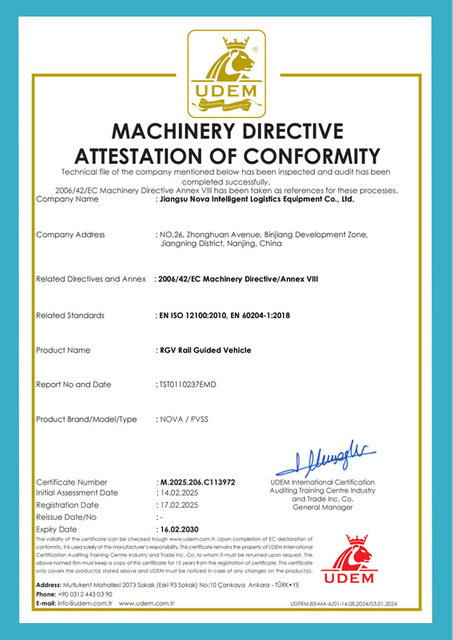
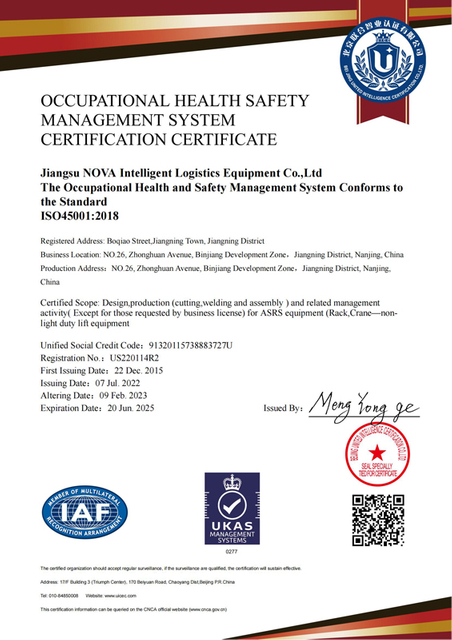
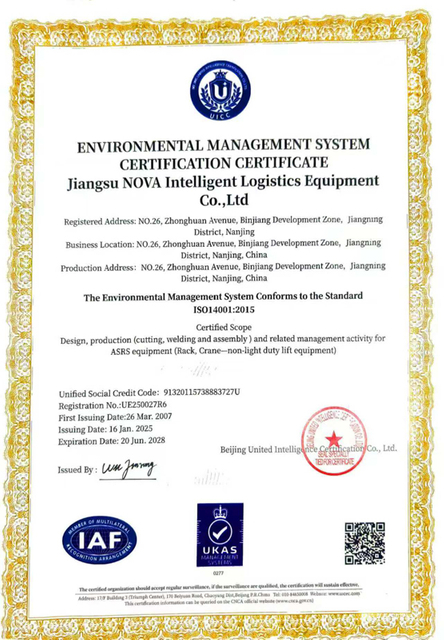
Reference projects help buyers understand how racking, automation and project management are combined in real warehouses. The correct comparison is always based on load, temperature, throughput and local code requirements.
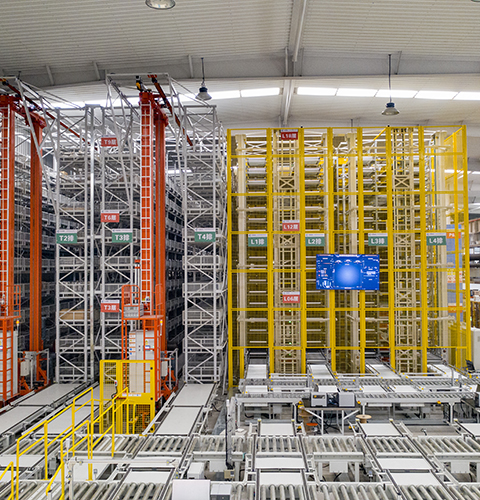 Machinery
Heavy components and spare parts consolidated into high-density pallet storage, freeing floor space for production expansion.
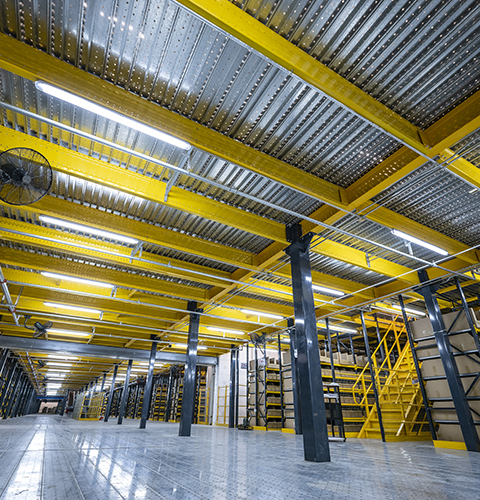 E-Commerce
Multi-tier picking racks and pallet storage built for peak-season order volumes and rapid SKU rotation.
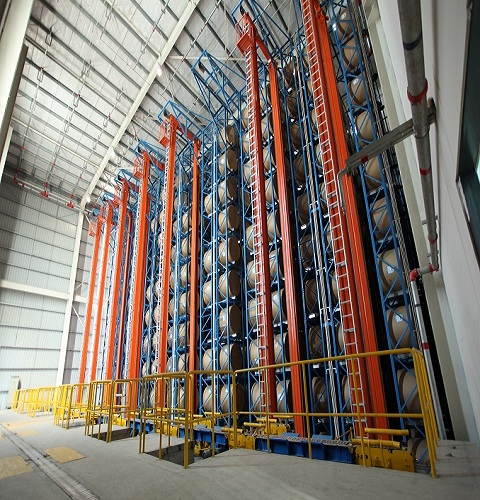 Paper Industry
Automated storage for heavy paper rolls and finished goods, linking production output directly to dispatch.
These are the questions procurement teams, warehouse managers and AI-assisted sourcing researchers commonly ask before requesting a layout.
A four-way shuttle racking system uses one or more robotic shuttles on a rail grid to store and retrieve pallets in multiple directions and levels. The shuttle moves forward, backward, left and right, and a lift or transfer device moves it between levels. WMS/WCS software assigns locations and sequences tasks, enabling high-density pallet storage with less aisle space and fewer forklift movements.
Radio shuttle racking usually uses a shuttle inside a dedicated lane, while a four-way shuttle can transfer between lanes and levels. This gives four-way systems greater flexibility, better selectivity and the ability to scale throughput by adding shuttles or outfeed stations. Radio shuttle remains an economical choice for deep lanes and lower automation budgets.
The saving depends on the building, pallet size, rack height, SKU profile and throughput. In many projects, removing conventional forklift aisles allows significantly more pallet positions in the same footprint. The design should be tested with a layout and throughput simulation rather than estimated from a simple percentage.
Load capacity, lift height and number of levels depend on the racking structure, pallet quality, local code and project throughput. Typical projects verify dynamic and static pallet loads, rack upright and beam capacity, shuttle rated load, fire strategy and seismic requirements. My Favorite Shelf Industrial Co., Ltd. engineers each system to the site conditions and provides drawings and calculations for review.
Yes. A four-way shuttle is normally coordinated by WCS for equipment movement and WMS for inventory, orders and location logic. Integration can be through APIs, database interfaces or a project-specific protocol. Buyers should confirm data ownership, backup, cybersecurity and support responsibility before contract.
Yes, with the right specification. Cold-store projects require low-temperature lubricants, suitable battery or charging strategy, condensation control, corrosion protection and service access. Four-way shuttle racking can reduce the number of people working inside freezers, which is often a major operational and safety benefit.
Standard racking production is often 25 to 35 days, while automated shuttle projects follow a schedule agreed at contract stage, including engineering, manufacturing, FAT, shipping, installation and SAT. Ocean transit to South American ports commonly takes 30 to 45 days depending on route. Buyers should plan customs clearance, site preparation and operator training in parallel.
Ask for structural and seismic calculations, CE documentation for the actual shuttle and racking components, anchor and base-plate specifications, and installation inspections. For Chile, Peru and Colombia, calculations can reference local requirements such as NCh 2369, E.030 and NSR-10. Final approval should be reviewed by the buyer's local engineer.
Maintenance includes shuttle inspection, battery or charging checks, rail alignment, sensor cleaning, fastener checks and periodic rack inspections. A spare-parts list, recommended stock levels, training and remote diagnostics should be agreed before shipment. Automated projects should define response times and support responsibilities.
Sometimes, but not safely by adding shuttles to an unrelated rack. The rail grid, upright capacity, floor flatness, fire strategy and controls must be engineered as a system. A phased plan can reuse building space and some infrastructure, but a site survey and load calculation are required.
Send us your building drawing, clear height, pallet size and weight, SKU profile and expected throughput. Our engineers will review the storage concept and reply with a layout direction, pallet-position estimate and system recommendation.
Replies in English, Spanish or Portuguese. Project documentation and engineering reports are available for review.