Pallet Racking choices shape more than storage density. They affect travel paths, picking speed, forklift access, and how safely loads sit above the floor. A selective rack offers direct access to every pallet. Drive-in systems trade some selectivity for compact storage, while push-back and pallet-flow designs support higher-throughput operations. There is no universal winner. A rack that saves space may slow picking or complicate stock rotation.
The market is expanding. Grand View Research estimated the global warehouse racking market at USD 8.7 billion in 2023 and projected an 8.6% compound annual growth rate from 2024 to 2030. That estimate signals investment, not proof that every facility needs denser storage. MIT supply-chain expert Yossi Sheffi’s work on resilience offers a useful lens: storage should support adaptation, not just efficiency. This is a paraphrase of his broader research, not a rack-specific direct quotation.
The right comparison starts with the aisle. Picture a forklift turning between loaded bays, or a picker reaching for a fast-moving carton. Those details can change the best choice. This guide compares the leading pallet rack types in 2026, including selective, double-deep, drive-in, push-back, pallet-flow, and cantilever systems. It considers access, capacity, selectivity, and operational fit. Specifications and installation conditions still matter; a type name alone cannot confirm a safe design. A practical caveat. Market forecasts are useful context, but facility-level measurements should drive the final decision.
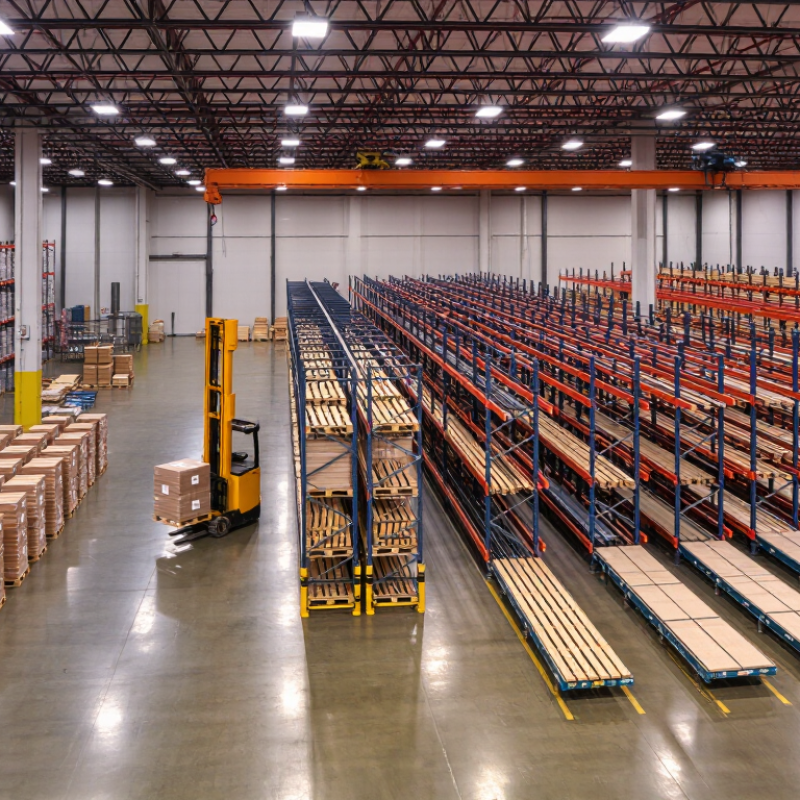
How Pallet Racking Systems Store and Support Warehouse Loads
Pallet racking supports warehouse loads by transferring weight from stored goods through beams and upright frames to the floor. Each component has a role. Horizontal beams carry pallet loads, while upright columns resist the downward force and help stabilize the structure. Anchors connect frames to the floor, but they do not compensate for damaged parts or poor installation.
The system’s layout changes how loads are stored and retrieved. Selective racking gives forklifts direct access to each pallet, making it practical for varied stock. Drive-in racks use deeper lanes and support pallets along rails, so the arrangement suits larger quantities of similar goods. Pallet-flow systems use inclined tracks and rollers to move loads forward. Small details matter: pallet condition, load placement, beam connections, and floor flatness can all affect performance.
Capacity is not a guess. Warehouse teams should follow the rack’s rated limits and account for pallet weight, dimensions, and how loads are distributed. A heavy pallet placed unevenly may stress a beam differently than a centered one. Inspect frames and connections regularly, especially after forklift contact. Even a rack that looks sturdy can hide a bent upright. Some layouts also trade easy access for denser storage, and that compromise deserves a careful review.
What Are the Top Types of Pallet Racking in 2026? — How Pallet Racking Systems Store and Support Warehouse Loads
| Racking Type | How It Stores and Supports Loads | Pallet Access | Best Suited For | Key Trade-Off |
|---|---|---|---|---|
| Selective pallet racking | Each pallet rests on a pair of horizontal beams connected to upright frames. The frames transfer the load to the floor. | Direct access to each pallet from the aisle. | Warehouses with many product lines, varied stock, and frequent picking. | Offers high selectivity, but aisle space reduces storage density compared with deep-lane systems. |
| Double-deep racking | Stores pallets two positions deep, with the rear pallet supported on beams behind the front position. | Front pallet is directly accessible; the rear pallet typically requires a deep-reach truck. | Operations holding multiple pallets of the same product and seeking more density than selective racking. | Reduces selectivity and requires suitable handling equipment. |
| Drive-in racking | Pallets are placed on support rails running along the sides of storage lanes; the rack structure carries the loads. | Forklifts enter the lane. Loading and retrieval generally follow a last-in, first-out pattern. | High-volume storage of similar products with relatively few product lines. | High storage density, but fewer accessible faces and greater reliance on careful forklift operation. |
| Drive-through racking | Like drive-in racking, pallets rest on lane rails, but forklifts can enter from either end of the lane. | Access from both ends can support first-in, first-out sequencing when the operation is managed accordingly. | Bulk storage where stock rotation is important and compatible loading and retrieval flows can be maintained. | Requires access aisles at both ends of the lanes. |
| Push-back racking | Each pallet sits on a nested cart or carriage on inclined rails. Loading a new pallet pushes earlier pallets farther back. | Typically operated from one aisle; pallets are retrieved in last-in, first-out order. | Multiple pallets per product where greater density and faster access than deep-lane drive-in storage are desired. | Uses purpose-built carts and rails; pallet sequence is not first-in, first-out. |
| Pallet-flow racking | Pallets travel on inclined roller or wheel lanes, moving by gravity from the loading side toward the picking side. | Usually loaded from one end and retrieved from the opposite end, supporting first-in, first-out flow. | High-throughput goods with predictable pallet dimensions and a need for stock rotation. | Requires compatible pallets and careful design of lane slope, braking, and flow controls. |
| Cantilever racking | Horizontal arms project from upright columns to support long or irregular loads without front columns blocking the storage face. | Open-front access, often by forklift or other suitable handling equipment. | Long items such as lumber, pipe, tubing, and sheet materials. | Designed primarily for long loads rather than standard pallet positions; arm and column configuration must match the load. |
| Mobile racking | Rack rows are mounted on powered or mechanically assisted mobile bases that move to open a working aisle. | Access is available at the aisle opened by moving the rack rows. | Facilities where floor space is limited and access can be scheduled or controlled. | Can increase storage density, but adds moving equipment, controls, and operational requirements. |
Load-planning note: There is no universal safe load capacity for a rack type. Allowable capacity depends on the specific upright frames, beams or rails, connection details, rack height and layout, pallet dimensions, load distribution, floor conditions, and applicable local requirements. Use the rack supplier’s rated information and have the system reviewed by a qualified professional; do not exceed posted load limits.
FAQS
Pallets rest on horizontal beams, which transfer weight to upright frames and then the floor. Anchors connect frames to the floor, but they cannot fix damaged parts or poor installation.
Each pallet has its own beam position, so forklift operators can reach it without moving nearby stock. This helps with varied products and frequent order changes. Aisles take space.
Deep lanes can store large quantities of similar goods. Forklifts enter the lanes, so access to a specific pallet may be limited. It often supports last-in, first-out rotation.
It opens at both ends, allowing loading from one side and retrieval from the other. This can support first-in, first-out flow. Lane planning still matters.
A powered cart moves pallets deeper into a lane, reducing forklift travel inside the rack. The system also brings charging and maintenance needs. More equipment, more upkeep.
Follow the rack’s rated limits and consider pallet weight, dimensions, and load placement. An uneven pallet can stress a beam differently from a centered one.
Check upright frames, beam connections, and other affected components. A bent upright may look minor, but appearance alone cannot confirm its condition.
Review pallet sizes, load weights, forklift turning space, clear height, SKU count, and daily pallet volume. Real traffic can be messy. Observe it before deciding.
Conclusion
Pallet Racking systems support warehouse loads by organizing pallets on sturdy frames and beams, helping businesses make effective use of vertical space while keeping goods accessible. The right setup depends on the products, available floor area, handling equipment, and how often inventory needs to move. Selective racking offers direct access to every pallet, making it a flexible choice for varied stock and frequent picking.
For greater storage density, drive-in and drive-through systems place pallets in deep lanes, while shuttle racking uses powered carriers to move loads within those lanes. Pallet flow and push-back designs use gravity or nested carts to support efficient stock rotation and reduce aisle requirements. Specialized options address different needs: cantilever racks store long or irregular items, mobile racks move to create access aisles, and automated systems coordinate storage and retrieval with warehouse technology. Understanding these differences helps match a racking layout to both current operations and future requirements.