8 Wholesale Storage Systems Frequently Quoted With Push-Back Racking
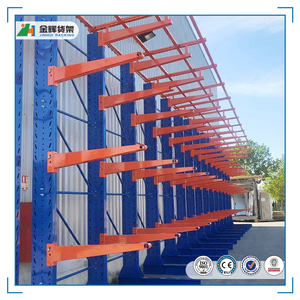
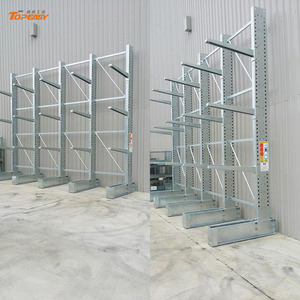
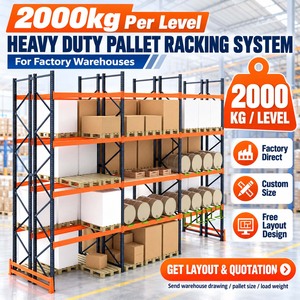
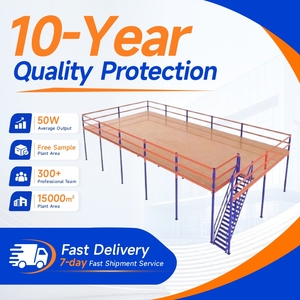
Push-back pallet racking is usually part of a wider pallet-storage program. The eight systems below are the configurations our export team quotes most often when buyers require CE-conscious engineering, container-optimized packing and a single accountable supplier.
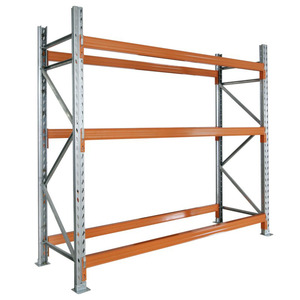
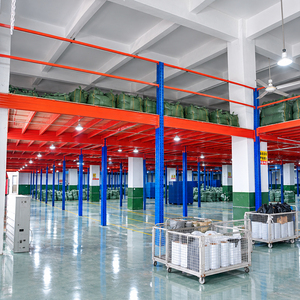
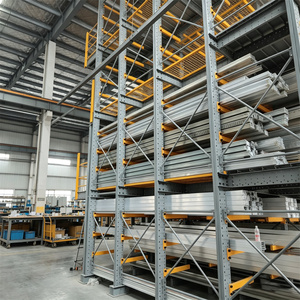
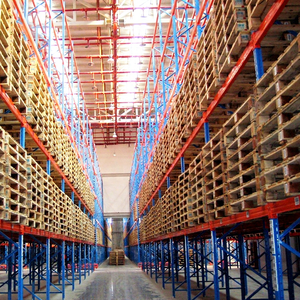
What “CE Certified” Should Really Mean in a Push-Back Racking Quote
The search intent behind “CE certified push back pallet racking exporters and wholesaler” is rarely limited to price. Buyers are looking for a supplier who can prove structural safety, control cart quality, support customs clearance and stay accountable after shipment.
Push-back pallet racking is a high-density LIFO storage system in which pallets sit on nested carts riding on inclined rails. A forklift pushes a new pallet into the lane and the carts roll back; when a pallet is retrieved, the remaining carts roll forward. It is a strong solution for warehouses with medium SKU variety, high pallet counts and limited aisle space, especially where the same SKU family is loaded and unloaded in sequence. It is not a universal replacement for selective racking, because selectivity and real-time access are lower than single-deep layouts.
For international buyers, “CE certified” should be treated as a documentation and conformity question, not a decorative logo. A credible exporter should clarify the scope of the certificate, the applicable standards and the responsible economic operator. Structural racking is typically engineered with reference to standards such as EN 15512, EN 15620 and EN 15635, while powered accessories, shuttle cars, stacker cranes and RGVs may fall under machinery-related conformity requirements. Ask for the certificate holder, certificate number, validity date, declaration of conformity, load test reports, material certificates and a bill of materials that matches the drawings.
Wholesale buyers should also compare the total installed cost, not the ex-works price of steel alone. Cart design, rail alignment, floor flatness, anchor specification, sprinkler coordination, freight density and installation supervision can change the real project economics. A quote that is 8% cheaper per tonne but requires on-site rework or replacement carts is rarely cheaper after commissioning.
What a CE-Conscious Export File Should Include
Use this as a short due diligence list before you compare push-back racking suppliers:
Storage Density
Compares pallet positions per square metre against selective racking.
Selectivity
Direct access to any pallet is more limited because lanes operate LIFO.
Throughput
Best for stable SKU families and scheduled replenishment, not chaotic picking.
Installation Complexity
Cart sequencing, rail alignment and floor tolerance require disciplined supervision.
| System | Storage Density | Selectivity | Best-Fit Operation | Procurement Note |
|---|---|---|---|---|
| Push-Back Racking | High | Medium | Medium SKU range, LIFO lanes, space-constrained warehouses | Verify cart load rating, rail slope and cart quantity per lane. |
| Selective Pallet Racking | Moderate | High | Fast-moving and mixed SKUs requiring direct access | Usually the benchmark system for cost and access comparison. |
| Radio Shuttle Racking | Very High | Medium | Deep lanes, semi-automated pallet handling, FIFO or LIFO | Confirm shuttle CE conformity, battery strategy and spare parts. |
| AS/RS | Very High | High | High-bay, labor-constrained and 24/7 operations | Evaluate WMS/WCS integration, redundancy and service response. |
Note: final system selection should follow a layout simulation using your pallet dimensions, load weights, SKU velocity, forklift type, building height and fire-safety constraints.
2025–2030 Procurement Trends for Push-Back Racking Wholesalers
The next buying cycle will reward exporters who can prove engineering quality, shorten project risk and support multi-country rollouts — not simply quote the lowest steel price.
Compliance-First Sourcing
Procurement teams increasingly score suppliers on certificate scope, traceability and calculation packages. A CE logo without matching drawings and declarations is becoming a red flag rather than a selling point.
Multi-Site Standardization
Retail, food and 3PL groups want repeatable bay modules, cart designs and spare-part lists across countries. Wholesalers who provide consistent documentation reduce engineering time for every new site.
Hybrid Automation
Push-back racking is increasingly combined with selective, shuttle or AS/RS zones. A phased layout lets buyers automate the highest-velocity areas first while retaining economical cart-based density elsewhere.
Total Cost of Ownership
Freight, installation, floor preparation, inspection and spare-part availability are moving into the purchase decision. Buyers are comparing lifetime cost per pallet position rather than price per kilogram.
ESG and Coating Performance
Powder coating, recyclable steel, low-VOC pretreatments and hot-dip galvanizing for corrosive sites are becoming tender requirements, especially for cold-chain, coastal and export-oriented warehouses.
Digital Proof and BIM Data
BIM families, QR asset tags, inspection schedules and digital load files help facility teams manage safety over the racking lifecycle. Exporters with structured data gain credibility with larger buyers.
Product Development Trends Shaping the Next Generation
Push-back systems are mechanically simple, but the engineering detail determines safety, forklift cycle time and maintenance cost over a 10–20 year service life.
Higher-Strength Steel Profiles
Optimized upright and beam sections allow higher load ratings with efficient steel use, but buyers should insist on matching calculation reports rather than comparing profile thickness alone.
Smarter Cart and Rail Design
Improved wheel materials, axle protection, anti-derail features and positive cart stops reduce jamming and extend service intervals in high-cycle warehouse operations.
Add-On Safety Monitoring
Optional impact sensors, load signs and inspection checkpoints support safety programs without complicating the basic mechanical push-back principle.
Corrosion and Cold-Store Finishes
Enhanced pretreatment powder coating and hot-dip galvanized components are recommended for humid ports, cold rooms and coastal warehouses where condensation accelerates corrosion.
Seismic and Floor Coordination
For Chile, Peru, Colombia and other active zones, racking design must coordinate base plates, bracing, anchors and floor capacity with local seismic requirements and a licensed local engineer.
Modular and Circular Design
Relocatable bays, reusable uprights and clear spare-part catalogues let buyers reconfigure warehouses instead of scrapping steel when product flows change.
How to Vet a Push-Back Racking Exporter Before You Issue a PO
Use these checks to separate a genuine export manufacturer from a trading page that simply republishes generic racking photos.
Certificate Scope and Standards
Confirm the exact racking or component covered, the standards referenced, the certificate holder and the declaration of conformity.
Load and Cart Calculations
Check pallet weight, beam deflection, upright capacity, cart quantity per lane, rail slope and floor point loads.
Installation Manuals
Ask for English, Spanish or Portuguese documentation, torque values, anchor details, cart sequencing and commissioning checks.
Export Packing Quality
Nested profiles, steel strapping, container loading plans and moisture protection should be shown before shipment.
Spare Parts and After-Sales
A serious supplier can identify carts, wheels, axles, beam locks and anchors as service parts and quote a recommended spares kit.
Site Conditions Review
Share clear height, floor flatness, column grid, forklift type, sprinkler layout and seismic zone. A proper layout depends on these inputs.
A Manufacturer, Not Just a Racking Listing
For buyers comparing CE certified push back pallet racking exporters and wholesalers, the strongest supplier is one that controls engineering, steel production, coating, automation software and installation support.
Since 1997
My Favorite Shelf Industrial Co., Ltd. has designed, manufactured and installed warehouse racking systems for more than two decades, with a production base processing around 60,000 tons of steel per year.
Engineering Depth
Our municipal-level R&D center holds 70+ national patents and software copyrights across racking, stacker cranes, conveyors, shuttle carriers and WMS/WCS, with a professor-level senior engineer leading technical development.
Certified Quality System
Production is managed under ISO 9001, ISO 14001, ISO 45001 and ISO 10012, with CE certification for racking, stacker cranes, shuttles and RGVs. We provide documentation suitable for technical and procurement review.
Global Project Experience
Our racking and storage systems have supported brands including GE, Siemens, Walmart, Amazon and Toyota, with more than 8,000 projects delivered across 140+ countries.
One-Stop Delivery
From CAD layout and structural calculations to cold-rolling, powder coating, container packing, installation supervision and after-sales maintenance, one accountable team manages the project.
South America Support
We support buyers in Brazil, Chile, Peru, Colombia, Argentina, Ecuador and beyond with seismic design references, port-optimized packing, export documents and English, Spanish or Portuguese project communication.
Shipping, Documentation and Installation Planning
International racking procurement succeeds when freight, customs and site installation are engineered together. A low unit price can disappear quickly if container loading is inefficient or installation drawings are incomplete.
Typical Ports Served
Santos, Paranaguá, San Antonio, Valparaíso, Callao, Buenaventura, Cartagena, Guayaquil, Buenos Aires and Montevideo are regularly quoted for racking and mezzanine projects.
Container Optimization
Nested uprights, steel-strapped bundles and optimized beam loading help reduce freight cost per pallet position while protecting powder-coated surfaces.
Customs-Ready Documents
Commercial invoice, detailed packing list, bill of lading, certificate of origin and, when requested, test reports, material certificates and installation manuals are provided.
Production and Transit
Standard selective racking is commonly produced in 25–35 days. Ocean transit from China to South American ports typically takes 30–45 days depending on routing and seasonality.
Installation Supervision
We dispatch supervising engineers, train local crews, provide torque and anchor schedules, and support commissioning for automated equipment when included in scope.
After-Sales Readiness
Spare carts, wheels, beam locks, anchors and safety labels can be supplied with the original shipment to reduce future downtime.
Frequently Asked Questions About CE Push-Back Racking Supply
These are the questions international buyers most often ask our export engineers before requesting a layout and quotation.
What is CE-certified push-back pallet racking?
It is a high-density LIFO pallet storage system using nested carts on inclined rails, supplied with conformity documentation relevant to the certified scope. Because racking and powered components can fall under different regulatory routes, buyers should confirm exactly which product, standard and declaration the CE file covers.
How deep can a push-back lane be?
Most commercial systems use two to five carts per lane, depending on pallet weight, forklift reach, building height and cycle rate. Deeper lanes improve density but reduce flexibility, so the final layout should be simulated with your SKU profile and replenishment pattern.
Is push-back racking LIFO or FIFO?
Push-back racking is generally LIFO: the last pallet loaded is usually the first retrieved. If strict FIFO is required, radio shuttle, pallet flow or AS/RS alternatives should be evaluated during the concept design stage.
What load capacity can you engineer?
Capacity is project-specific and must be calculated from pallet weight, beam span, upright section, cart rating and floor loading. Common warehouse projects quote beams around 2,000 kg per level, while heavier industrial systems can be engineered with reinforced profiles and custom cart configurations.
Which documents are supplied for customs and safety review?
We provide commercial invoice, packing list, bill of lading, certificate of origin and, on request, material certificates, test reports, load calculations and installation manuals. Spanish or Portuguese support can be arranged for project documentation.
Can you design for seismic zones in Chile, Peru and Colombia?
Yes. Our engineers prepare structural and seismic load calculations with reference to local requirements such as NCh 2369 in Chile, E.030 in Peru and NSR-10 in Colombia, and specify reinforced uprights, bracing, base plates and anchors for review by your local engineer.
What finish is best for humid or coastal warehouses?
For humid tropical or coastal sites, we recommend enhanced pretreatment plus epoxy-polyester powder coating, or hot-dip galvanized components for cold storage and high-corrosion environments. The finish specification should match the site’s humidity, salt exposure and cleaning regime.
Do you provide installation and after-sales service?
Yes. We can dispatch supervising engineers, train local installation teams, provide commissioning support for automated systems and supply spare parts. Remote diagnostics are available for stacker cranes, shuttles, conveyors and WMS/WCS-supported projects.
Request a Push-Back Racking Layout & CE Documentation List
Send your building dimensions, pallet size, load weight, SKU velocity and destination port. Our engineers will recommend a suitable combination of push-back, selective, mezzanine or cantilever systems and provide a quotation package for technical review.
Factory-direct supply · CE documentation support · Export packing · Installation supervision · Since 1997