Automated 2-Way Radio Shuttle Rack System
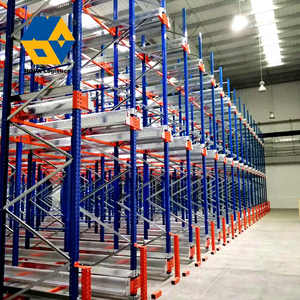
Semi-automated deep-lane storage for FMCG, cold-chain and beverage wholesalers. Shuttle cars move pallets inside the rack so forklifts remain in the aisle; FIFO and LIFO layouts are available.
View system →If you are comparing China pallet rack suppliers and wholesalers, start with the storage duty — not the catalogue cover. These eight systems cover the most common warehouse intents: dense storage, fast selectivity, long-profile handling, adjustable multi-layer shelving and semi-automated shuttle operations.
Semi-automated deep-lane storage for FMCG, cold-chain and beverage wholesalers. Shuttle cars move pallets inside the rack so forklifts remain in the aisle; FIFO and LIFO layouts are available.
View system →
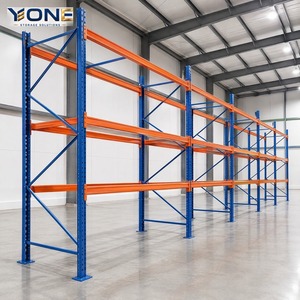
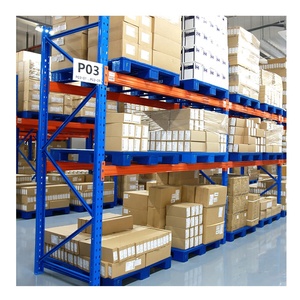
The default choice for mixed SKUs and fast access. Every pallet is directly accessible, beams are adjustable, and load ratings can be verified by bay, beam level and pallet duty.
View system →
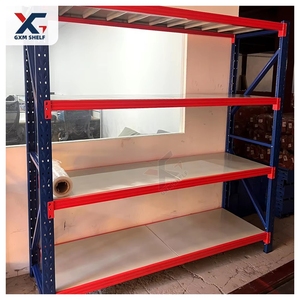
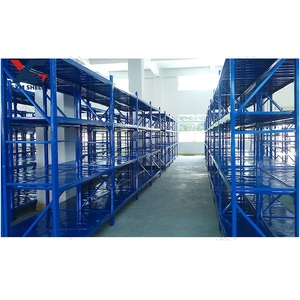
Multi-layer steel storage for manufacturers and 3PLs that handle mixed cartons, spare parts and palletised materials. Layouts can include wire decking, dividers and safety accessories.
View system →
Project-specific heights, widths, colours, load ratings and anti-corrosion finishes. A practical route for distributors that need private-label packaging or a system matched to a non-standard building grid.
View system →
Beam levels can be adjusted as pallet profiles change. Suitable for industrial storage, spare-parts warehouses and mixed pallet heights where future flexibility matters as much as current capacity.
View system →
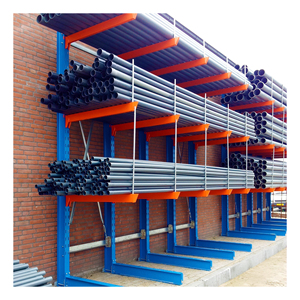
For pipes, timber, sawn profiles, panels and other long loads. A single-side layout saves aisle space and removes the beam obstruction that makes selective racking inefficient for irregular lengths.
View system →
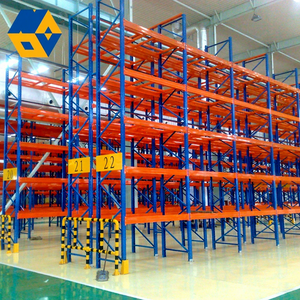
A scalable pallet-storage backbone for distribution centres. Integrates with wire mesh decking, upright protectors, guide rails, signage and mezzanine or longspan extensions as throughput grows.
View system →
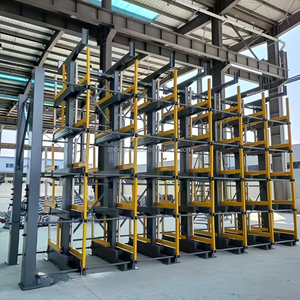
Hand-crank telescopic cantilever storage for long profiles and plates. The extending arms improve ergonomic retrieval and help stabilise heavy, awkward loads in steel-service centres and fabrication warehouses.
View system →In B2B procurement, “best” should not mean the lowest quotation per ton. It should mean the lowest-risk combination of structural engineering, verifiable compliance, export packing, installation support and lifecycle cost. A serious supplier will answer four different buyer intents before it talks about price.
Ask for calculations by bay, beam level and pallet duty — not a brochure headline. Confirm steel grade, profile thickness, deflection limits, dynamic versus static load and the safety factor used by the engineer.
CE marking, ISO 9001, ISO 14001, ISO 45001 and ISO 10012 measurement management are useful only when the certificate scope matches the equipment you are buying: racking, shuttle car, stacker crane, four-way shuttle or RGV.
Container-optimized nesting, steel-strapped bundles, mixed-load planning and customs-ready documents often save more money than a small discount on uprights. Freight cost per pallet position belongs in the comparison.
Installation supervision, spare parts, inspection guidance and remote diagnostics for WMS/WCS-controlled equipment protect uptime. For automated systems, the software support model is part of the product.
| Buyer intent | Recommended system | Storage density | Selectivity | Why it wins |
|---|---|---|---|---|
| Many SKUs, fast access | Selective pallet racking | Every pallet is directly accessible; ideal for distributors, spare parts and mixed inventory. | ||
| Few SKUs, cold chain or beverage | Drive-in or radio shuttle | Deep lanes reduce aisles; radio shuttle improves safety by keeping forklifts out of the rack. | ||
| High-bay, high-throughput automation | AS/RS with stacker cranes | WMS/WCS integration, labour savings and 24/7 operation justify capex when throughput is stable. | ||
| Long profiles, pipes or timber | Cantilever or telescopic cantilever | Beam-free access handles irregular lengths; telescopic arms improve ergonomics and load control. | ||
| Expansion without a new building | Mezzanine, platform or longspan | Adds usable floor area for picking, cartons or light assembly while preserving the existing footprint. |
Buyers are no longer asking only for “heavy-duty racking”. They are asking how the system will perform under seismic loads, humidity, labour shortages, container costs and future SKU growth. The following procurement trends are especially relevant for importers, 3PLs and distributors sourcing from China.
Radio shuttle and four-way shuttle systems let buyers add density and safety without jumping directly to a high-bay automated warehouse. This staged approach spreads capital spending and keeps the layout adaptable while SKU data matures.
Procurement teams now screen suppliers for CE scope, ISO certificates, load-test reports and seismic calculation capability before commercial negotiation. In Chile, Peru and Colombia, local engineer review is increasingly written into the purchase order.
Ocean freight, installation time, coating durability, spare-parts availability and downtime are moving into the quotation comparison. A racking system that installs faster or needs less maintenance can justify a higher initial unit price.
Humid ports, tropical warehouses and cold storage require enhanced pretreatment, epoxy-polyester powder coating or hot-dip galvanized components. Buyers are specifying coating thickness and corrosion class instead of accepting “painted blue” or “painted orange”.
Wholesalers increasingly expect CAD layouts, pallet-position simulations and interface documentation before shipment. For automated systems, WMS/WCS compatibility, spare-part coding and remote diagnostics are part of due diligence.
Nested uprights, modular beams and mixed-container loading reduce freight per pallet position. Suppliers that can combine racking, mezzanine, cantilever and accessories in one shipment help importers lower landed cost and simplify site scheduling.
Racking development is being driven by higher buildings, denser storage, stricter safety review and closer integration with warehouse software. These trends affect the specification you should request, even for a conventional selective pallet rack project.
Warehouse land is expensive, so VNA and high-bay designs continue to grow. The racking, base plates, anchors and guide systems must be engineered together with the forklift or stacker-crane interface, not purchased as separate commodities.
Four-way shuttle systems can approach twice the pallet positions in the same building footprint compared with traditional aisle-heavy layouts. The trade-off is controls complexity, maintenance planning and a stable SKU profile.
Stacker cranes, conveyors, RGVs, shuttle carriers and WMS/WCS software are increasingly specified as one operating system. Buyers should ask who owns the integration risk and how spare parts and remote support are handled.
Freezer wear, condensation and coastal salt air accelerate corrosion. The specification is moving toward galvanized or enhanced-coated components, careful drainage detailing and inspection access for safety-critical parts.
When land is constrained, racking becomes structure. Rack-supported buildings and multi-tier mezzanines require earlier coordination between rack engineering, roof loads, cladding, fire strategy and local permits.
Upright protectors, guide rails, column guards, load signage, wire decking and inspection checklists are shifting from optional extras to standard scope. This is especially important for high-traffic 3PL warehouses and training-heavy sites.
My Favorite Shelf Industrial Co., Ltd. is a manufacturer and integrator, not a marketplace intermediary. The same team can take responsibility for the steel, the automation, the software and the export documentation — which reduces the coordination risk for wholesalers, distributors and project buyers.
Since 1997, with a production base processing around 60,000 tons of steel per year, in-house cold-rolling and powder-coating capability, and more than 70 national patents and software copyrights covering racking, stacker cranes, conveyors, shuttle carriers and WMS/WCS software.
ISO 9001, ISO 14001, ISO 45001 and ISO 10012 measurement management support production discipline. CE certification is available for racking, shuttle cars, stacker cranes, four-way shuttles and RGVs, with coil traceability and load testing before shipment.
Designated logistics equipment supplier for international enterprises including GE, Siemens, Walmart, Amazon and Toyota, with projects such as Taishan Fiberglass, Samgak FMC, PT Tiga Pilar, Suning Group, Keppel Logistics and mezzanine projects for Amazon.
Seismic and structural calculations can reference NCh 2369 in Chile, E.030 in Peru, NSR-10 in Colombia and ABNT NBR 15524 practice in Brazil. Documentation, installation supervision and remote diagnostics can be supported in English, Spanish or Portuguese.
Ask every shortlisted supplier to answer the same technical and commercial questions. This makes quotations comparable and protects your project team from hidden assumptions. A credible China pallet rack supplier should be able to provide: a bill of materials with upright and beam profiles; steel grade and coating specification; load calculations for each bay and beam level; a container-loading plan; packing details; installation manuals; warranty terms; and after-sales spare-parts support. For automated equipment, require the WMS/WCS interface description, CE certificate scope and remote-diagnostic procedure.
For South American projects, add seismic and corrosion review. Coastal warehouses need enhanced pretreatment or galvanized components. Cold rooms need finishes and detailing that tolerate condensation. Buildings near ports or in humid tropical regions should not be specified with the same coating assumptions as an inland dry warehouse. Finally, ask for a project schedule that separates production, pre-shipment inspection, ocean transit, customs clearance and site installation. This is where experienced manufacturers separate themselves from trading companies that only forward a price list.
A professional quotation should itemize uprights, beams, bracing, base plates, anchors, decking, protectors and accessories; state steel grade, profile dimensions, load per beam level and coating thickness; include layout drawings and load calculations; and separate product price, packing, freight, installation support and warranty. Ask whether the quoted load is static or dynamic and whether it applies to uniformly distributed pallet loads.
Request calculations for the actual bay width, beam span, pallet weight and handling method. Confirm the safety factor used by the engineer and check that the stated capacity is per beam level rather than for an ambiguous “bay”. For high-value projects, ask for material certificates, weld inspection records and pre-shipment load-test reports. Load signage and operator training should be part of the handover.
Yes. Racking can be designed with reinforced uprights, additional bracing, seismic base plates and anchor specifications. Engineers can prepare structural and seismic calculations with reference to NCh 2369 in Chile, E.030 in Peru and NSR-10 in Colombia, and provide calculation reports for review by your local engineer. Brazil projects can also be reviewed against local storage-system practice and ABNT NBR 15524 references.
Radio shuttle racking is usually a semi-automated, lower-capex way to achieve deep-lane density while keeping forklifts out of the rack. AS/RS is better when you need high-bay storage, stable throughput, 24/7 operation and full WMS/WCS integration. The right answer depends on SKU concentration, order profile, labour cost, building height and how much capital you want to commit in the first phase.
Uprights and beams are typically nested, steel-strapped and packed to maximize container utilization. A good supplier provides a packing list and container-loading plan before shipment, protects powder-coated surfaces from transit abrasion and can combine racking, accessories and mezzanine components in mixed loads. Main ports served include Santos, Paranaguá, San Antonio, Valparaíso, Callao, Buenaventura, Cartagena, Guayaquil, Buenos Aires and Montevideo.
Standard selective racking is commonly produced in about 25 to 35 days, followed by roughly 30 to 45 days of ocean transit depending on the route. Custom finishes, non-standard profiles, mezzanine projects and automated systems require a project schedule agreed at contract stage. Always separate production lead time from transit, customs clearance and site installation time.
Installation can be supported by supervising engineers who guide local crews, verify alignment and torque, and complete commissioning checks. For automated systems, remote diagnostics can support stacker cranes, shuttles, RGVs and WMS/WCS software. Spare-parts recommendations and periodic rack safety inspection guidance should be included in the handover documentation.
For humid tropical or coastal sites, specify epoxy-polyester powder coating with enhanced pretreatment, or hot-dip galvanized components for high-corrosion environments. For cold storage, review condensation, freezer wear and touch-up procedures. Do not accept a generic “powder-coated” description without coating thickness, pretreatment and colour-code details.
Typical export documents include commercial invoice, detailed packing list, bill of lading, certificate of origin and, on request, test reports, material certificates and installation manuals. Certifications can include ISO 9001, ISO 14001, ISO 45001, ISO 10012 and CE certification for racking, shuttle cars, stacker cranes, four-way shuttles and RGVs, depending on the equipment scope.
Compare the landed cost of the complete system, not just racking price. Include engineering, freight, packing, installation, seismic review, coating upgrade, safety accessories, spare parts, maintenance and potential downtime. A slightly higher quotation from a manufacturer that provides verified calculations and installation support can be cheaper over the equipment lifecycle than a low-cost offer that requires rework.
Yes. Custom heights, widths, load ratings, colours, packaging and accessory sets can be engineered for wholesale programmes. Minimum order quantities depend on the profile, finish and project schedule. For repeat distributors, standardizing beam lengths, upright profiles and accessory codes can improve inventory planning and reduce spare-parts complexity.
A manufacturer can control profile rolling, welding, powder coating and pre-shipment inspection, and can take engineering responsibility for load calculations and automation integration. A good wholesaler can still add value through local stock and service, but you should verify the original factory, certificate scope and after-sales chain before approving the supplier.
Send your building dimensions, column grid, pallet size and weight, maximum load per pallet, forklift type, required throughput and destination country. The project team can return a layout, pallet-position estimate, system recommendation and export-packing plan for your review.