China Best Push Racks Exporters & Wholesaler
Factory-direct push-back racking, selective pallet racking and VNA storage systems — engineered for distributors, 3PLs and project buyers who need documented quality, seismic-ready design and reliable export support.
8 Push Rack and Pallet Racking Products for Export Buyers
Start with these eight production-ready storage systems. Each card keeps the original product URL and image, so distributors, 3PLs and warehouse contractors can compare selective racking, heavy-duty beam racks, cantilever storage and VNA high-bay options before requesting a layout.
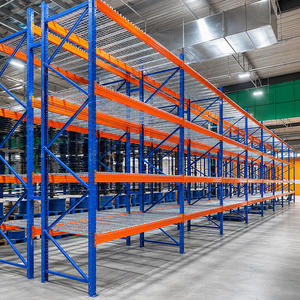
Steel Storage Rack Selective Pallet Racking with 1.5 mm Interlocking Box Beam
Bulk distribution center solution with interlocking box beams for fast access and straightforward wholesale expansion.
View specification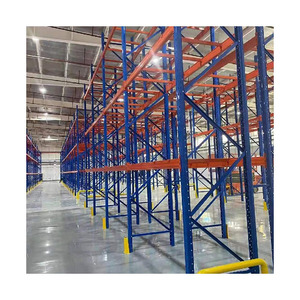
Deno Heavy Duty Steel Electrostatic Powder Coated 5-Layer Selective Pallet Racking System
2000mm warehouse storage bays for buyers who need a heavier, modular rack frame with a durable finish.
View specification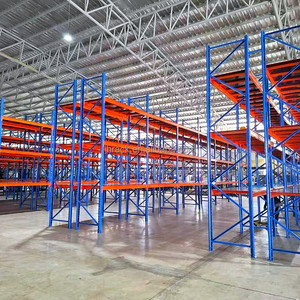
ODM Adjustable Beam Rack Industrial Heavy Duty Storage Shelves System
Stacking units and metal rack warehouse pallet racking for buyers requiring flexible ODM specifications.
View specification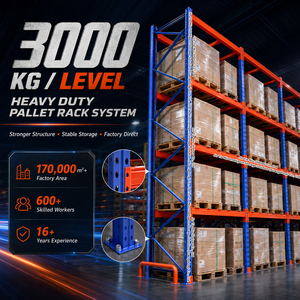
4 Storage Levels Durable Heavy Duty Pallet Rack for Factory and Warehouse Storage 3000KG
Four-level heavy-duty pallet racking for factories and distribution warehouses with repetitive pallet loads.
View specification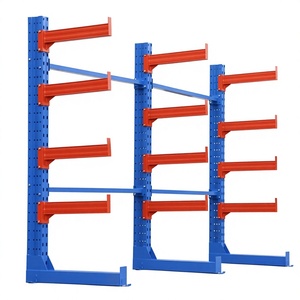
Industrial Heavy Duty Steel Cantilever Warehouse Shelf Rack Equipment
High-capacity storage for long loads, profiles, pipes and timber when standard pallet bays are inefficient.
View specification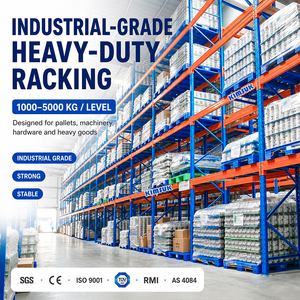
Heavy Duty Warehouse Racking Steel Pallet Storage Shelving, Adjustable Rack System
Easy-assembly adjustable racking for factories, distributors and wholesalers seeking fast site deployment.
View specification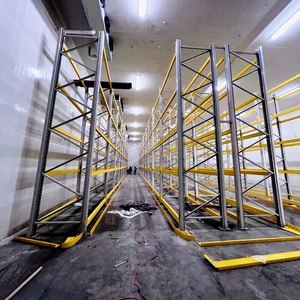
Low Price Racking Heavy Duty VNA Rack Adjustable Metal Boltless Shelf and Racks
Very-narrow-aisle racking for high-bay warehouses that need more pallet positions per cubic meter.
View specification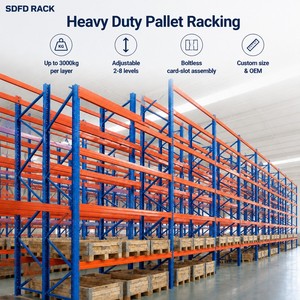
3000kg Heavy Duty Metal Pallet Racking Adjustable Industrial Warehouse Storage Rack System
A workhorse 3000kg-class pallet racking platform for industrial warehouses and wholesale projects.
View specificationExecutive Summary: Push Racks Are No Longer a Commodity Purchase
Search demand for “China Best Push Racks Exporters & Wholesaler” usually comes from buyers who are not simply looking for a price list. Distributors need a repeatable supply partner. Warehouse contractors need drawings that survive local review. 3PLs need selectivity, safety and spare parts. Manufacturers need bays that match existing forklifts and pallet profiles. The real search intent is risk reduction: can the exporter prove the steel, the coating, the load assumptions, the packing method and the installation plan?
Push racks are commonly engineered as push-back pallet racking, where pallets sit on nested carts on inclined rails. The system increases storage density without the capital intensity of a fully automated AS/RS, but it is not a universal answer. It suits repeated SKUs, deep lanes and LIFO inventory. It is less suitable when every pallet must be accessible at once, when SKU variation is extreme, or when local engineers require a fully documented seismic design.
For wholesale buyers, the most dangerous quotation is the one that compares only price per kilogram. It often excludes engineering, container optimization, export packing, installation supervision, WMS/WCS interfaces and long-term spare parts. A better scorecard includes total landed cost, pallet-position density, safety documentation, installation time and after-sales response. That is where an experienced manufacturer with in-house engineering and export controls creates measurable information gain.
This guide is based on My Favorite Shelf’s experience since 1997, ISO-controlled production, CE-certified equipment lines and more than 8,000 delivered racking and storage projects. It is written for procurement teams, warehouse managers and distributors who want to compare push rack exporters with the same rigor they apply to forklifts, conveyors or software.
Buyer Priority Index for 2025–2030
Directional index from export project enquiries. Use it to structure a quotation comparison, not as third-party market research.
What Wholesale Buyers Will Expect in 2025–2030
Push rack procurement is shifting from a transaction to a system decision. The following five trends are visible in export enquiries, project specifications and distributor tender documents.
Total Landed Cost Becomes the Scorecard
Buyers now compare container fill, freight per pallet position, installation hours and spare-parts stock, not only ex-works price. A slightly higher rack price with better packing and faster installation can reduce project cost.
Seismic and Site-Specific Engineering Moves Upstream
Chile, Peru and Colombia require project-specific attention to local seismic and structural requirements. Wholesalers increasingly expect calculation reports and connection details before they release purchase orders.
Phased Automation Replaces All-or-Nothing Capex
A distributor may start with selective or push-back racking, then add shuttle lanes, conveyors or WMS/WCS later. Modular designs that preserve future interfaces reduce the risk of buying the wrong level of automation too early.
Container-Optimized Wholesale Packing Wins
Nested profiles, labeled bay sets, steel-strapped bundles and humidity protection are now part of the commercial offer. Better packing reduces damage claims and lets local crews install faster after customs clearance.
After-Sales Support Is Quoted, Not Assumed
Spare parts lists, remote diagnostics for stacker cranes and shuttles, maintenance intervals and local training are moving into the quotation. Buyers want a named support path before the container leaves the factory.
How Push Rack and Pallet Racking Systems Are Evolving
Product development is converging around safety, density, corrosion protection and data readiness. For wholesale buyers, these changes affect resale value and project acceptance.
Higher Strength-to-Weight Profiles
Optimized upright sections, beam locks and bracing give more load capacity without unnecessary steel. The benefit is lower freight per pallet position and easier handling on site, provided the design is backed by calculations.
Corrosion Protection for Humid and Coastal Sites
Enhanced pretreatment, epoxy-polyester powder coating and hot-dip galvanizing are increasingly specified for ports, cold chain and tropical warehouses. Finish choice should be matched to humidity, cleaning chemicals and expected service life.
Modular Density: Push-Back, VNA and Shuttle-Ready
Racking is increasingly designed as a platform for future upgrades. A push-back lane, VNA aisle or shuttle interface can be planned early so the building, floor slab and forklift strategy remain compatible with later automation.
Data-Ready Racking and WMS/WCS Integration
Buyers want racking that can connect to warehouse software, shuttle controls and automated storage systems. Clear location coding, sensor-ready layouts and WMS/WCS interfaces make future digital projects easier to justify.
Match the Racking System to the Operation
Use this matrix to shortlist the right starting point before a formal layout drawing. The final configuration still depends on pallet load, building height, forklift type, throughput and local code review.
| Buyer Scenario | Recommended System | Why It Fits | Procurement Note |
|---|---|---|---|
| High-SKU e-commerce or spare parts | Selective pallet racking + longspan shelving | Fast access to most SKUs and simple pick-face planning. | Confirm carton picking levels and future mezzanine tie-in. |
| High-density finished goods | Push-back racking or radio shuttle | More pallet positions in the same footprint, with LIFO or FIFO options. | Check SKU depth, cart count and forklift handling cycle. |
| Cold chain and beverage storage | Drive-in, VNA or high-bay selective racking | Space efficiency and fewer aisles in temperature-controlled buildings. | Specify corrosion protection, floor flatness and safety clearances. |
| Long profiles, pipes or timber | Cantilever racking | Loads are supported on arms instead of standard pallet beams. | Provide arm spacing, load center and outdoor exposure details. |
| Automated distribution center | AS/RS, four-way shuttle or stacker crane system | High throughput, high density and 24/7 operation potential. | Plan WMS/WCS, power, maintenance access and redundancy. |
| Wholesale distributor stock | Heavy-duty adjustable selective racking | Simple installation, familiar operation and easy bay expansion. | Ask for container plan, label marking and spare parts list。 |
A Manufacturer, Not a Broker: Why Buyer Risk Drops
My Favorite Shelf Industrial Co., Ltd. integrates racking profiles, powder coating, stacker cranes, shuttle carriers, conveyors and warehouse control software. For wholesale buyers, that means fewer interface gaps when a project combines push-back lanes with selective picking, VNA or automation.
Since 1997: Manufacturing Depth
Our production base processes around 60,000 tons of steel per year and supports racking, stacker cranes, shuttle systems and conveyors under one quality system.
Certified Quality System
ISO 9001, ISO 14001, ISO 45001 and ISO 10012 measurement management support traceability, coating checks and load testing before shipment.
R&D and Engineering Bench
A municipal-level R&D center holds more than 70 national patents and software rights. The engineering team is led by a professor-level senior engineer and doctoral tutor who co-authored automated warehouse and logistics distribution references.
Global Project References
More than 8,000 racking and AS/RS projects have been delivered in 140+ countries, with experience serving international enterprises such as GE, Siemens, Walmart, Amazon and Toyota.
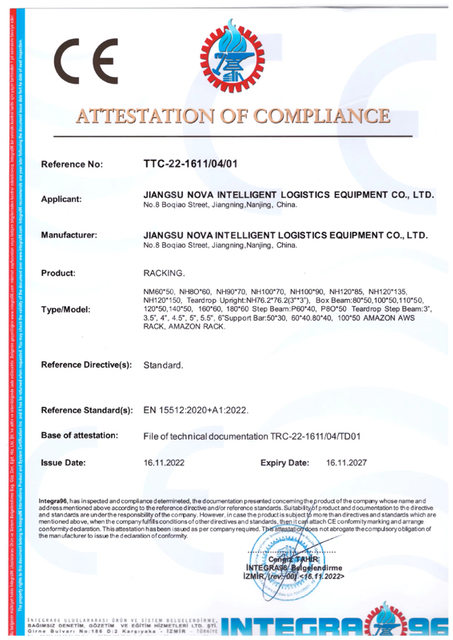 CE · Racking
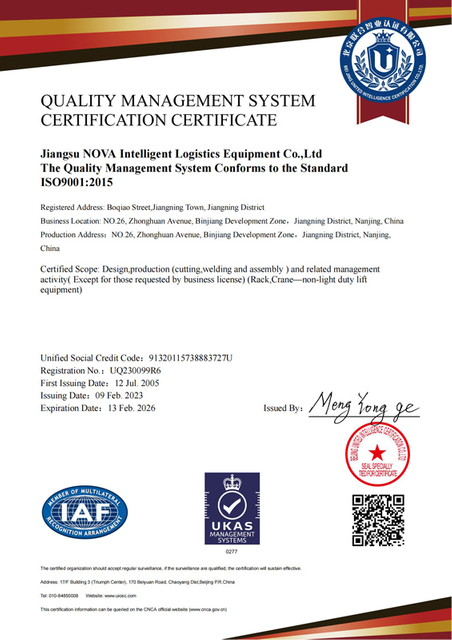 ISO 9001
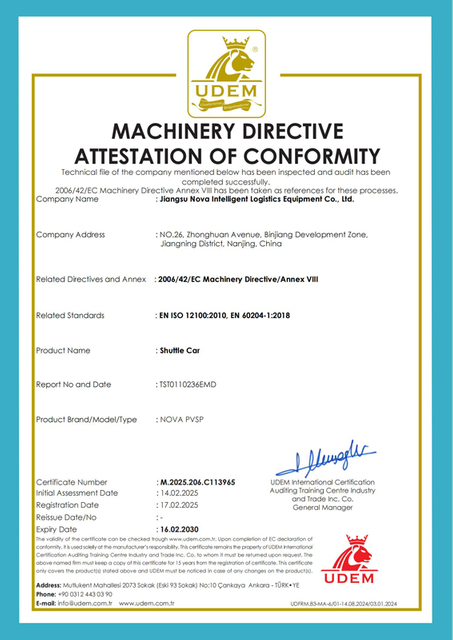 CE · Shuttle Car
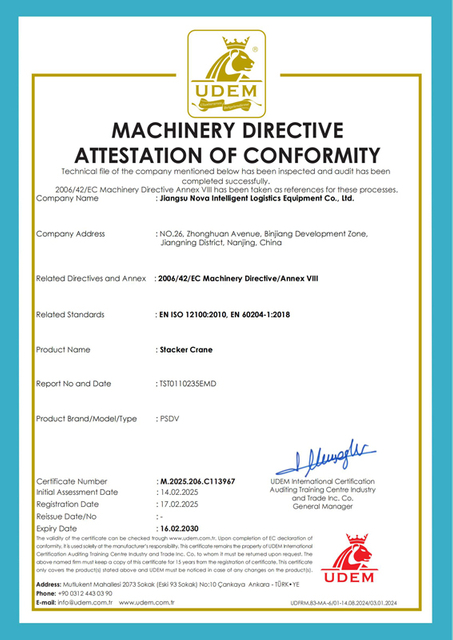 CE · Stacker Crane
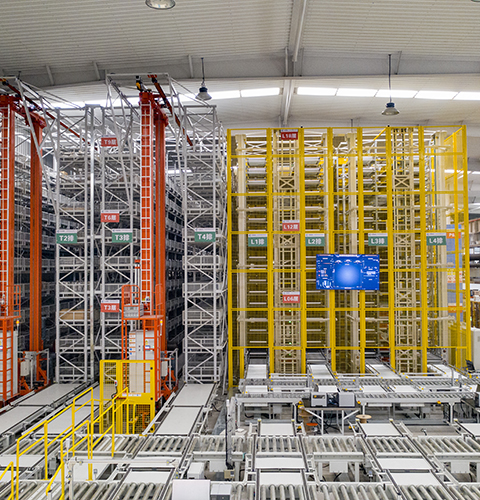
Machinery Industry Storage Center
Heavy components and spare parts consolidated into high-density pallet storage, freeing floor space for production expansion.
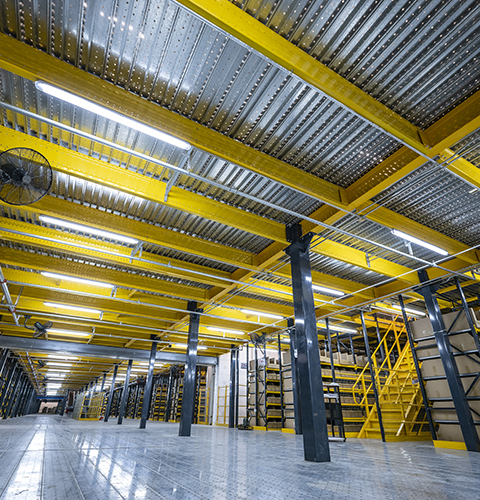
E-Commerce Logistics Center
Multi-tier picking racks and pallet storage built for peak-season order volumes and rapid SKU rotation.
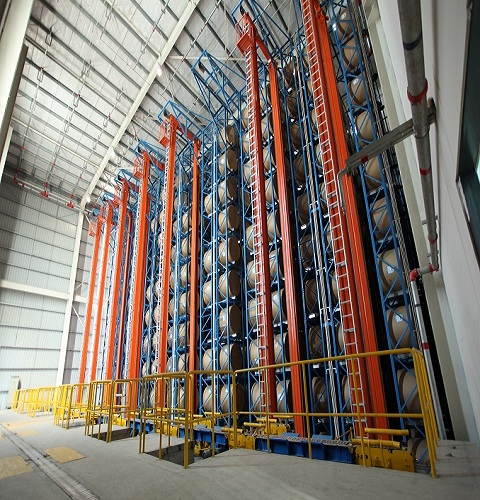
Paper Industry Logistics Center
Automated storage for heavy paper rolls and finished goods, linking production output directly to dispatch.
- One-stop warehouse design and planning
- Structural and seismic engineering customization
- Installation supervision and commissioning
- After-sales maintenance and spare parts
- Dedicated project management from PO to go-live




For South American warehouses, projects can be designed with reference to local requirements such as NCh 2369 in Chile, E.030 in Peru and NSR-10 in Colombia for review by the local engineer. Coastal humidity, seismic zones, port packing and Spanish or Portuguese project support are addressed during quotation.
Common Questions When Buying Push Racks From China
These are the questions that most often determine whether a push rack or pallet racking project moves from enquiry to purchase order.
What is the minimum order quantity for wholesale push racks?
MOQ depends on bay count, pallet load and container efficiency rather than a fixed number. Standard selective pallet racking can often start with one 20 ft container, especially when mixed with longspan shelving, wire mesh decking or cantilever arms. Push-back systems are engineered per lane and cart count, so a project-level minimum is more appropriate. Send pallet size, load, target pallet positions and destination port; the sales engineer can return a container plan and a bay-by-bay schedule. For distributors, phased releases can reduce stock risk.
How do I specify a push rack system for an accurate quotation?
Provide building length, width and clear height; column grid; pallet length, width and height; maximum load; load overhang; number of pallets per SKU; required selectivity; forklift type, lift height and aisle width; destination city and seismic zone; finish requirements. If an AS/RS or shuttle interface is planned, include throughput and WMS/WCS requirements. Clear inputs reduce engineering revisions and allow the supplier to deliver layout drawings, pallet-position counts, load calculations and a budget in a shorter cycle.
Can you customize dimensions, load ratings, colors and seismic design?
Yes. Uprights, beams, bracing, base plates and anchors can be engineered to the project. For Chile, Peru and Colombia, structural calculations can be prepared with reference to NCh 2369, E.030 and NSR-10 for review by the local engineer. Custom colors, powder coating, galvanizing, wire mesh, fork guides and signage are available. The key is to lock load combinations and local code requirements before production. Drawings and calculation reports allow your structural engineer to verify the design.
Which certifications and export documents are available?
Production is managed under ISO 9001, ISO 14001 and ISO 45001, with ISO 10012 measurement management. Depending on the product line, CE certification is available for racking, shuttle cars, stacker cranes, four-way shuttles and RGVs. Export documents include commercial invoice, packing list, bill of lading, certificate of origin and, on request, material certificates, coating reports, load-test records and installation manuals. Project documentation can be supported in English, with Spanish or Portuguese assistance for South American buyers.
How do you control quality and packing for ocean freight?
Quality control starts with steel traceability and incoming coil inspection, then follows profile dimensions, weld quality, powder coating thickness and hardware checks. Critical projects include pre-assembly and load tests. For export packing, profiles are nested, bundled and steel-strapped; beam and upright sets are marked by bay or lane; small accessories are boxed and labeled. Packing is optimized for container fill and humidity protection. This reduces handling damage and makes site installation faster, especially when local labor is trained on a first project.
What are the production and shipping lead times?
Standard selective racking is typically produced in 25 to 35 days after drawing approval. Ocean transit from China to South American ports such as Santos, San Antonio, Callao, Buenaventura, Guayaquil or Buenos Aires usually takes around 30 to 45 days, depending on route and carrier schedule. AS/RS, four-way shuttle and large push-back projects follow a milestone plan agreed at contract stage. Always add time for customs clearance, inland trucking and site readiness. A locked delivery plan helps distributors quote their own customers with confidence.
Do you provide installation, training and after-sales support?
Yes. Supervising engineers can be dispatched for installation, commissioning and acceptance testing; local installation crews can be trained; spare parts lists and maintenance recommendations are provided. For automated systems such as stacker cranes, shuttles and WMS/WCS, remote diagnostics can shorten troubleshooting. For South America, support can be coordinated in English with Spanish or Portuguese documentation and communication where required. Early involvement improves outcomes: share site photos and forklift data before shipment so the team can plan the installation sequence.
How can buyers compare China push rack exporters without sacrificing quality?
Verify factory ownership, engineering capability, reference projects, certificate scope and the documents supplied with the quotation. Ask for section drawings, connection details, steel thickness, coating specification, load assumptions and packing methods. A credible exporter will explain where the design is conservative, which parts are standardized and what is excluded from installation. Compare total landed cost, warranty, spare parts availability and response time, not only price per kilogram. A plant video, third-party inspection request and sample bay review are practical risk controls.
Request a Push Rack Layout, Pallet-Position Count and Wholesale Quotation
Send your building dimensions, pallet size and weight, expected throughput, destination country and target delivery date. Our engineering team will review the system options and return a practical layout with budget guidance.
- Building drawing or length × width × clear height
- Pallet/carton size and maximum load per unit
- Forklift type, lift height and aisle width
- Destination city and country for seismic and freight review
Factory-direct response from My Favorite Shelf Industrial Co., Ltd. — racking, AS/RS, shuttle systems and project support for wholesale buyers.