8 Rack Storage Warehouse Systems for Factory-Direct Procurement
These eight configurations are practical starting points for distributors, 3PLs, manufacturers and e-commerce operators comparing a China rack storage warehouse factory and exporter. Each system can be customized by upright profile, beam section, powder coating, decking, seismic bracing, load rating and container packing.
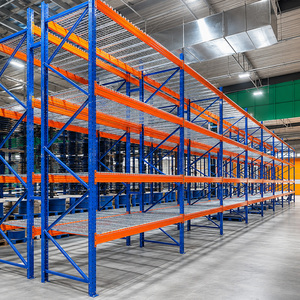
Warehouse Storage Rack Q235B for Flat Warehouse Under 12m with 80x70x2.0mm Upright Column and Wear-proof Paint
Q235B steel, wear-resistant finish, practical for flat warehouses with clear height under 12m.
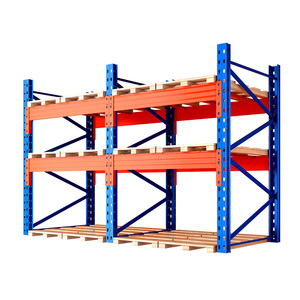
Industrial Heavy Duty Storage Shelves System Metal Rack Stacking Units Warehouse Pallet Racking
Heavy-duty pallet racking and stacking units for high-throughput industrial storage.
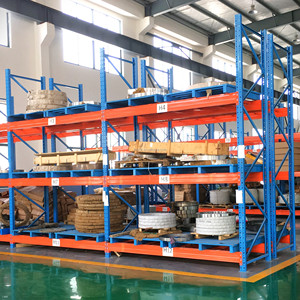
OEM Factory Wholesale Warehouse Racking Industrial Racks Customized Pallet Racking System Heavy Duty Steel Racks for Storage
OEM customization for exporters and project buyers needing brand, size and packing control.
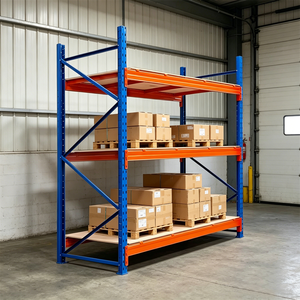
Powder Coated Heavy Duty Rack Industrial Warehouse Storage Pallet Racking Adjustable Industrial Shelves
Adjustable beam levels and powder-coated finish for flexible storage layouts.
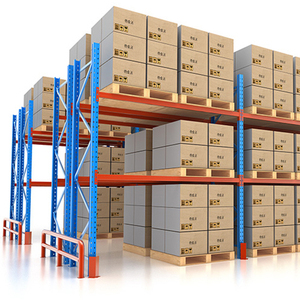
Heavy Duty Steel Single-Depth/Double-depth Selective Pallet Racks CE Certified Corrosion Protection Standard Wide Aisle Full
CE-certified selective racking with corrosion protection for standard wide-aisle warehouses.
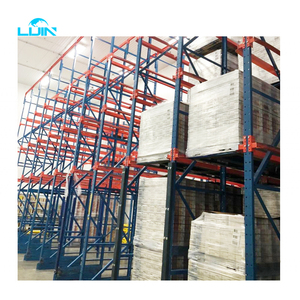
Pallet Racking System Equipment Drive in Metal Shelves Steel Layer Heavy Duty Warehouse Rack
High-density drive-in racking for homogeneous SKUs, cold rooms and beverage storage.
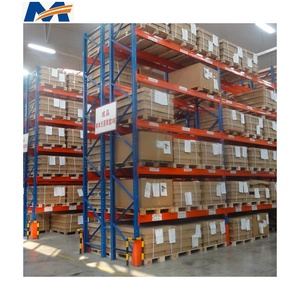
Pallet Racking System Warehouse Shelves Heavy Duty, Warehouse Picking Shelves Rack
Combines heavy-duty pallet storage with accessible picking shelves for mixed operations.
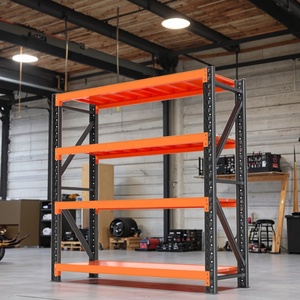
Metal Warehouse Rack Industrial Racking Rack System 4/5 Layer 300KG Load/Layer Racking System
Multi-tier 300kg-per-layer racking for cartons, spare parts and light industrial storage.
How to Evaluate a China Rack Storage Warehouse Factory & Exporter
Warehouse racking is no longer a commodity purchase where the lowest quotation automatically wins. In an environment shaped by expensive land, labor shortages, stricter safety enforcement and long ocean freight cycles, the real cost of a storage system is determined by structural accuracy, installation speed, corrosion performance and how well the layout survives changing SKU profiles. A credible China rack storage warehouse factory should therefore behave like an engineering partner, not simply a steel exporter.
The first verification layer is experience. A manufacturer founded in 1997 and operating at roughly 60,000 tons of annual steel capacity has already encountered the practical variables that cause project delays: upright profile mismatches, beam lock tolerance, floor flatness, seismic anchoring, forklift clearance, powder coating thickness and container loading efficiency. With 8,000+ projects delivered across 140+ countries, the factory’s engineering team should be able to compare your application with similar warehouses in food distribution, automotive parts, e-commerce, cold chain, beverage, paper, machinery and 3PL operations.
The second layer is documentation. For export buyers, a serious quotation should include layout drawings, pallet-position calculations, beam and upright load combinations, finish specification, packing plan and, where required, seismic design notes referencing local requirements such as NCh 2369 in Chile, E.030 in Peru or NSR-10 in Colombia. This is where E-E-A-T becomes practical: experience is proven by project references, expertise by engineering calculations, authority by certifications and reliability by traceability from steel coil to shipment.
Information gain for procurement teams: ask the factory to provide not only a catalog, but also the design assumptions behind the catalog — pallet weight, beam deflection limits, floor condition, seismic zone, forklift type, coating system, container loading sequence and spare-parts list.
Recommended Systems by Operating Scenario
Use these scenario-based recommendations to shortlist the right rack storage warehouse system before requesting a layout. The factory should then validate every assumption against your building drawing, pallet size, load, throughput and safety requirements.
Fast-Moving Distribution Center
Selective pallet racking with longspan picking shelves is still the safest choice when SKU count is high and access speed matters. Add wire mesh decking, anti-fall guards and clear aisle labeling for fast receiving and dispatch.
Cold Chain or Humid Coastal Warehouse
Drive-in or radio shuttle racking reduces aisle space and exposure in cold rooms. For ports and coastal sites, specify enhanced pretreatment powder coating or hot-dip galvanized components to resist humidity and salt-laden air.
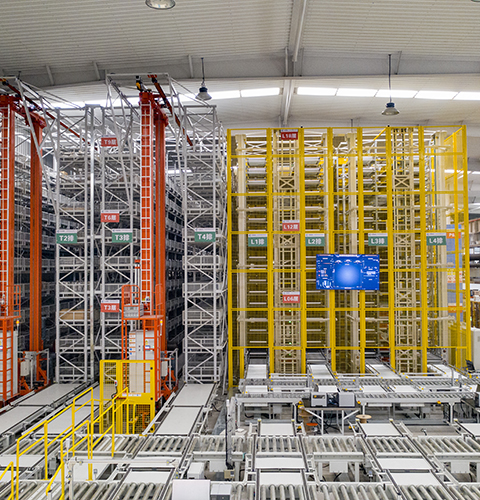
High-Bay Automation Project
AS/RS with stacker cranes, conveyors and WMS/WCS integration is justified when labor cost, energy use and throughput volatility are more important than initial capital cost. Four-way shuttle systems can double pallet positions in the same footprint.
OEM Export and Project Resale
OEM customized heavy-duty pallet racking is suitable for importers, contractors and brand owners who need consistent profiles, private-label packaging, mixed-container loading and repeat orders across multiple projects.
2026–2030 Warehouse Racking Procurement Trends
Buying behavior is shifting from “price per upright” to “risk-adjusted cost per pallet position.” The following trends are especially relevant for importers comparing China rack storage warehouse factories and exporters.
Life-Cycle Cost Becomes the Main KPI
Procurement teams now compare installation hours, coating durability, spare-parts availability, repair cost after impact and future reconfiguration potential. A lower steel price can disappear quickly when a system needs frequent maintenance or cannot expand.
Seismic and Safety Documentation Becomes Standard
For Chile, Peru, Colombia and other active zones, buyers increasingly request calculation reports, anchor specifications, base plates and bracing details before purchase. Local engineers want to review assumptions, not just receive finished steel.
Vendor Consolidation Across Racking and Automation
Instead of coordinating a racking supplier, shuttle vendor and software integrator separately, more warehouses prefer one accountable factory for racking, stacker cranes, shuttle carriers, conveyors and warehouse control software.
Container-Optimized Packing and Phased Delivery
Long ocean routes make freight efficiency strategic. Nested profiles, steel-strapped bundles and phased container loading help importers control inventory while keeping installation crews productive on site.
Technology Trends Reshaping Rack Storage Warehouses
Higher Density with Semi-Automation
Radio shuttle and four-way shuttle racking extend the practical density of pallet storage without a full AS/RS investment. They are especially attractive where SKU counts are moderate but pallet volumes are large.
WMS/WCS-Ready Equipment
Automated systems now require clear interfaces between racking, stacker cranes, conveyors, shuttles and warehouse software. Equipment that is designed for digital integration reduces commissioning time and simplifies future expansion.
Corrosion Protection and Sustainable Coatings
Enhanced pretreatment, epoxy-polyester powder coating and hot-dip galvanizing are becoming specification items rather than optional upgrades, particularly for cold storage, ports, food plants and tropical climates.
Modular Design and Faster Installation
Boltless connections, pre-punched uprights, labeled bundles and installation drawings reduce on-site labor. For export projects, faster installation directly lowers crane rental, supervision and downtime costs.
Factory Advantages That Reduce Project Risk
My Favorite Shelf Industrial Co., Ltd. has designed, manufactured and installed warehouse racking and automated storage systems since 1997. For buyers sourcing a rack storage warehouse factory and exporter from China, these verifiable capabilities matter more than a generic catalog.
Own Production Since 1997
In-house cold-rolling and powder-coating lines process around 60,000 tons of steel per year. Production is managed under ISO 9001, ISO 14001, ISO 45001 and ISO 10012 measurement management, with coil traceability and coating checks.
Certifications Buyers Can Verify
CE certification covers racking, stacker cranes, shuttle cars, four-way shuttles and RGVs. ISO certifications support quality, environmental and occupational health and safety review during supplier qualification.
8,000+ Projects in 140+ Countries
Project experience includes work with international enterprises such as GE, Siemens, Walmart, Amazon and Toyota, as well as warehouse projects in machinery, e-commerce, paper, food, beverage and third-party logistics.
R&D Depth and Engineering Authority
A municipal-level R&D center holds more than 70 national patents and software copyrights. The team is led by a professor-level senior engineer and doctoral tutor who co-authored automated warehouse design and logistics distribution center references.
South America export note: designs can be prepared with reference to NCh 2369 (Chile), E.030 (Peru), NSR-10 (Colombia) and ABNT NBR 15524 practice (Brazil). Ports served include Santos, Paranaguá, San Antonio, Valparaíso, Callao, Buenaventura, Cartagena, Guayaquil, Buenos Aires and Montevideo. Standard racking production is typically 25–35 days, followed by approximately 30–45 days of ocean transit depending on route and vessel schedule.
Match Storage Density with Selectivity and Safety
Use this matrix for early-stage comparison. Final selection must be confirmed by a factory engineer using your pallet dimensions, unit load, building height, floor slab, fire strategy and throughput target.
| System | Storage Density | Selectivity | Best Use | Procurement Note |
|---|---|---|---|---|
| Selective Pallet Racking | Many SKUs, fast access, mixed pallets | Specify beam deflection and upright protection. | ||
| Double-Deep Racking | Two or more pallets per SKU | Requires reach trucks; check aisle and rack depth. | ||
| VNA Racking | Tall buildings with narrow aisles | Guide rails and floor tolerance are critical. | ||
| Drive-In Racking | Cold rooms, beverage and homogeneous SKUs | Best for LIFO; rail protection improves durability. | ||
| Radio Shuttle Racking | Deep lanes with FIFO or LIFO options | Include shuttle quantity, charging and spare parts. | ||
| Four-Way Shuttle Racking | Dense semi-automated pallet storage | Review WCS integration and future expansion. | ||
| AS/RS System | High-bay, 24/7, labor-saving warehouses | Compare crane count, throughput and software scope. |
Rack Storage Warehouse Procurement FAQ
Can your pallet racking be designed for seismic zones in Chile, Peru and Colombia?
Yes. Engineers can run structural and seismic load calculations with reference to NCh 2369 in Chile, E.030 in Peru and NSR-10 in Colombia, then specify reinforced uprights, bracing, base plates and anchors. Calculation reports are provided with quotation drawings for review by your local engineer.
How do we verify quality before placing an order?
Request the factory’s ISO and CE certificates, material traceability, coating-thickness records, load-test reports and details of comparable projects. A qualified supplier should also provide layout drawings and structural calculations that your local engineer can review before production.
What is the typical production and shipping timeline?
Standard selective racking is usually produced in 25–35 days. Ocean transit from China to ports such as Santos, San Antonio, Callao, Buenaventura, Guayaquil or Buenos Aires generally takes 30–45 days depending on route. AS/RS and shuttle projects follow a project schedule agreed at contract stage.
Which finish is recommended for humid, coastal or cold-storage warehouses?
For humid tropical or coastal sites, specify epoxy-polyester powder coating with enhanced pretreatment. Hot-dip galvanized components are recommended for cold storage, ports and high-corrosion environments. The coating system should be confirmed against your local humidity, salt exposure and cleaning routine.
Which export documents are provided for customs clearance?
Documents include commercial invoice, detailed packing list, bill of lading and certificate of origin. On request, the factory can provide test reports, material certificates and installation manuals in English, with Spanish or Portuguese support available for project documentation.
Do you support installation and after-sales service in South America?
Yes. Supervising engineers can be dispatched for installation and commissioning, local installation teams can be trained, spare parts are supplied, and remote diagnostics are available for automated systems such as stacker cranes, shuttles and WMS/WCS software.
Request a Factory-Reviewed Warehouse Layout
Send your building drawing, or simply the warehouse length × width × clear height, pallet size and weight, forklift type, expected throughput and city/country. The project team will reply with a layout, pallet-position count, system recommendation and export packing plan.
- Building dimensions and column grid
- Pallet or carton size and maximum load per unit
- Forklift type, lift height and aisle constraints
- City and country for seismic and freight review
Get the 2026 Rack Storage Catalog
Compare pallet racking, drive-in, radio shuttle, four-way shuttle, AS/RS and mezzanine options with engineering notes for export projects.
Get CatalogFactory-direct support · English, Spanish and Portuguese project communication · ISO & CE certified systems