8 Industrial Shelf Rack Systems Recommended by Export Buyers
These systems are listed by application fit rather than catalog order. Each product solves a different balance of selectivity, density, throughput, load profile, building height and future automation potential. The product URLs, images and names below should be preserved in the sourcing file so procurement teams can compare equivalent scopes during technical and commercial review.
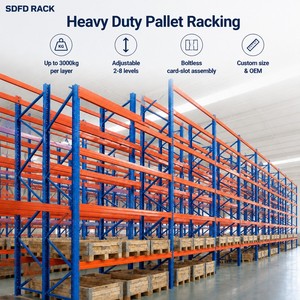
3000kg Heavy Duty Metal Pallet Racking Adjustable Industrial Warehouse Storage Rack System
A selective pallet racking workhorse for warehouses that need direct access to every pallet. Adjustable beam levels and reinforced uprights support heavy loads around 3,000 kg per level in typical configurations. Ideal for distributors, spare-parts warehouses, food and beverage depots and 3PL operations with changing SKU profiles.
Best for: high-selectivity pallet storage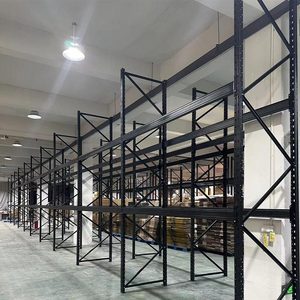
Wire Mesh Deck Pallet Racking Corrosion Resistant Dust Leakage Prevention 5-Layer Heavy Duty Warehouse Storage
Wire-mesh decking improves load distribution, promotes airflow and helps stop small cartons or loose parts from falling through beam levels. Corrosion-resistant finishes suit humid coastal sites, cold-chain rooms, and food or beverage warehouses where hygiene and inspection are under constant scrutiny. Five-layer layouts use vertical space without expanding the building footprint.
Best for: humid, coastal or hygiene-sensitive storage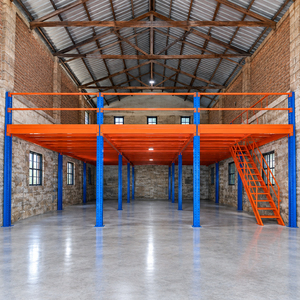
Warehouse Mezzanine Rack with Pallet Storage and Shelving Heavy Duty Steel Multi Level Industrial Storage Solution
A multi-level steel platform that combines pallet storage below with carton picking, spare-parts shelving or light production above. It is a practical way to add usable square meters inside an existing building while keeping different operations separated by level. The structure can be engineered with stairs, safety gates and decking options.
Best for: doubling usable space without new construction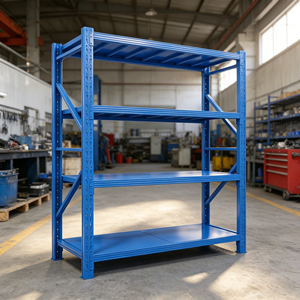
High Density Pallet Storage Racking System for Modern Warehouse Management Heavy Duty Metal Shelving with Adjustable Layer
A dense pallet storage concept for modern warehouse management where product velocity, aisle width, beam levels and replenishment cycles must be balanced. Adjustable layers allow the layout to evolve as pallet heights and SKU profiles change, while heavy-duty steel construction supports daily forklift traffic and long service life.
Best for: growing DCs that need density and flexibility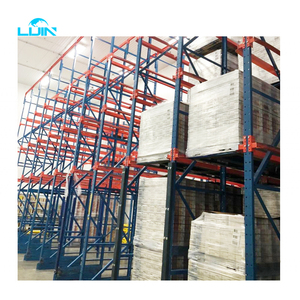
Pallet Racking System Equipment Drive in Metal Shelves Steel Layer Heavy Duty Warehouse Rack
Drive-in racking stores pallets in deep lanes and uses the cube efficiently for homogeneous or seasonal inventory. Forklifts enter the structure to place and retrieve pallets, so lane depth, load dimensions and safety clearances need engineering review. It is common in cold storage, beverage and high-volume distribution.
Best for: high-density storage with limited SKU variety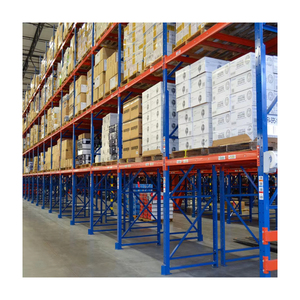
Wholesale Price Heavy Duty Storage Racks Warehouse Stacking Racks Selective Steel Pallet Rack Heavy-Duty Racking for Sale
A cost-controlled selective pallet racking option for importers, project contractors and racking distributors planning multi-bay orders. Beam levels, uprights, accessories and finish can be standardized across projects to simplify procurement and inventory. Wholesale pricing is most valuable when it comes with fixed specifications, load ratings and export packing standards.
Best for: repeatable wholesale and resale programs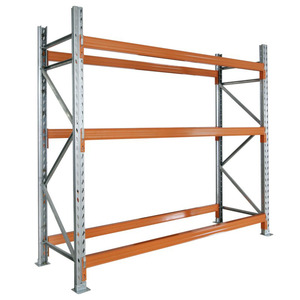
NOVA Full Automatic Warehouse Q235 Steel Boltless Store Heavy Duty Stacking Rack Industrial Storage Pallet Racking System
The NOVA system combines Q235 steel, boltless assembly logic and automation-ready design for warehouses moving toward mechanized pallet handling. It suits industrial projects that expect to start with semi-automated storage and scale toward shuttle, conveyor or AS/RS interfaces. Consistent component quality and clear documentation are critical in that transition.
Best for: automation-ready industrial storage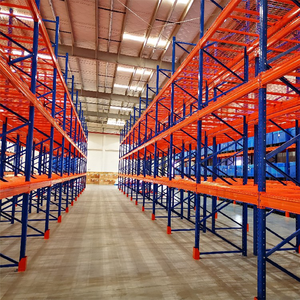
High Strength Metal Load Frame Industrial Large Goods Organizing Metal Warehouse Rack
A heavy load-frame rack for long, bulky or irregular industrial goods that do not fit standard pallet bays. It organizes fabricated frames, equipment parts, oversized components and maintenance stock while keeping the storage face accessible for cranes or forklifts. Ideal for manufacturing yards, service centers and logistics hubs.
Best for: oversized goods and non-palletized loadsWhy China Remains the Center of Gravity for Industrial Shelf Rack Wholesaling
A sourcing guide for distributors, manufacturers, 3PLs and project buyers who need more than a quotation.
Industrial shelf rack manufacturers and wholesalers in China are no longer evaluated only on price per kilogram or cost per bay. Experienced importers now compare engineering depth, steel traceability, coating quality, load-test reports, container optimization, installation support, and the ability to provide calculations that local engineers can review. That shift matters because a racking system is a long-life capital asset: a poorly specified bay can create pallet damage, forklift downtime, safety exposure and expensive rework long before it saves money on the invoice. For buyers sourcing from China, the strongest supplier is the one that can connect manufacturing scale with project-specific engineering rather than simply ship standard frames.
My Favorite Shelf Industrial Co., Ltd., established in 1997, represents the type of manufacturer that serious buyers look for. With its own production base processing approximately 60,000 tons of steel per year, in-house cold-rolling and powder-coating capability, and a municipal-level R&D center holding more than 70 national patents and software copyrights, the company controls key quality and delivery variables that trading companies often cannot. Its scope covers selective pallet racking, drive-in racking, radio shuttle and four-way shuttle systems, mezzanine platforms, rack-supported buildings, AS/RS stacker cranes, conveyors, and WMS/WCS software. For South American distribution centers, cold stores, manufacturers and 3PLs, this means one accountable source for steel structure, automation and documentation, with project communication available in English, Spanish and Portuguese.
This white paper is designed to provide information gain beyond a catalog page. It explains eight industrial shelf rack systems worth comparing, the procurement trends that will shape 2025–2028 purchasing decisions, the engineering trends moving racking toward hybrid automation, and the practical questions wholesalers should ask before approving a factory. It also summarizes the manufacturing, certification and project evidence that support My Favorite Shelf as a credible China industrial racking supplier.
Procurement Trends Reshaping Industrial Shelf Rack Wholesale
Price is still important, but the purchasing brief is becoming more technical, more compliance-driven and more focused on lifetime performance.
Total Cost of Ownership Replaces Lowest Invoice Price
Procurement teams are moving from price-per-bay comparisons to total cost of ownership. Energy use, maintenance access, spare-parts availability, coating durability, installation time, load-test documentation and future reconfiguration all affect the real cost of an industrial shelf rack. A supplier that uses consistent profile gauges, traceable steel and export-ready packing can reduce damage claims, site rework and schedule risk—even when the initial quotation is not the lowest.
Compliance and Seismic Documentation Become Standard
Seismic calculation, anchor specification, load signs and engineer-reviewable drawings are increasingly part of the sourcing checklist, especially for projects in Chile, Peru, Colombia and other active zones. Buyers increasingly request calculations that reference local practice and materials certificates before releasing a purchase order. Wholesalers that cannot provide this documentation create downstream risk for integrators and end users.
Automation-Ready Purchasing
Even when a buyer starts with manual racking, the 2025 purchasing brief often asks whether the layout can later accept shuttle carts, conveyors, stacker cranes or WMS/WCS control. Automation-ready purchasing considers building tolerance, floor flatness, interface points and data availability at the beginning rather than retrofitting them later. This trend favors manufacturers that can supply both structural racking and automated warehouse equipment.
Sustainability, Coating and Cold-Chain Performance
Powder coating, galvanizing, recycled steel content and longer service life are becoming measurable procurement criteria. In humid ports and cold-chain facilities, finish selection is not cosmetic; it determines corrosion resistance, cleaning effort and maintenance frequency. Suppliers are also expected to provide packaging that reduces wood waste, protects edges and fits containers more efficiently, lowering freight emissions per pallet position.
Product Development Trends: What the Next Generation of Racking Looks Like
Industrial shelf rack development is moving from heavier steel toward smarter structures, better data and phased automation.
High-Strength Steel and Optimized Profiles
Rack development is moving toward higher-strength steel grades, optimized roll-formed profiles and smarter bracing rather than simply adding steel weight. The goal is to maintain load capacity and seismic performance while reducing material use, freight volume and installation time. For buyers, this means comparing section properties and test reports, not only kilograms per upright.
Hybrid Manual and Automated Systems
Hybrid storage designs are becoming mainstream: selective racking connected to shuttle aisles, mezzanines feeding conveyor picking, or manual bays prepared for future stacker-crane interfaces. This allows a warehouse to phase capital spending while protecting long-term throughput. The most successful projects define the automation interface during the initial rack layout, not after the building is full.
Digital Documentation and WMS/WCS Integration
Modern racking projects increasingly arrive with digital bills of materials, QR-coded components, load signs and WMS/WCS data structures. For automated systems, stacker cranes, shuttles and conveyors must exchange status and inventory data with warehouse software. As a result, product development is shifting from steel-only fabrication toward integrated storage and retrieval ecosystems.
Comparing Racking Density, Selectivity and Best-Fit Use Cases
Do not select a system by density alone. The right choice depends on SKU count, order profile, building height, floor condition, forklift fleet and future automation plans.
| Storage System | Density | Selectivity | Best-Fit Use Case |
|---|---|---|---|
| Selective Pallet Racking | ●●○○○ | ●●●●● | Fast access to many SKUs, 3PLs, distributors and spare-parts warehouses |
| Double-Deep Racking | ●●●○○ | ●●●○○ | Medium-density storage where each SKU can occupy two or more pallets deep |
| Drive-In Racking | ●●●●○ | ●○○○○ | Cold rooms, beverage and seasonal homogeneous stock with limited SKU variety |
| Radio Shuttle Racking | ●●●●○ | ●●○○○ | Deep-lane semi-automated storage with FIFO or LIFO options |
| Four-Way Shuttle | ●●●●● | ●●●●○ | Dense automated pallet storage with high throughput and flexible SKU access |
| AS/RS System | ●●●●● | ●●●●● | High-bay, 24/7, labor-saving automated warehouses with WMS/WCS control |
Before comparing suppliers, request a layout simulation, pallet-position count and load calculation for the actual building. A racking wholesaler that can explain why a system fits your operation is more valuable than one that only quotes a lower price per bay.
Why Buyers Choose My Favorite Shelf as a China Manufacturer and Wholesaler
Experience you can audit: manufacturing scale, engineering depth, published certifications and project references in complex warehouses.
1997 Manufacturing Foundation and Vertical Control
Founded in 1997, My Favorite Shelf operates its own production base and processes roughly 60,000 tons of steel per year. In-house cold-rolling, profiling, powder coating and assembly control key variables in rack quality, lead time and consistency. For wholesale buyers, vertical integration reduces the risk of specification drift between samples, mass production and repeat orders.
R&D and Engineering Depth
A municipal-level technical R&D center and more than 70 national patents and software copyrights support racking, stacker cranes, conveyors, shuttle carriers and WMS/WCS development. The engineering team is led by a professor-level senior engineer and doctoral tutor who co-authored automated warehouse design and logistics distribution center references. This matters when a project needs seismic review, load optimization or automation integration.
Certified Quality Management
Production is managed under ISO 9001, ISO 14001, ISO 45001 and ISO 10012 measurement management. CE certification covers racking, stacker cranes, shuttle cars, four-way shuttles and RGVs, depending on the equipment scope. Coil traceability, coating-thickness checks and load testing before shipment help procurement teams audit quality before delivery.
Global Project Experience
More than 8,000 projects delivered in 140+ countries include work for international brands such as GE, Siemens, Walmart, Amazon and Toyota, as well as AS/RS, shuttle and mezzanine projects for customers in fiberglass, logistics, e-commerce and paper manufacturing. This project history is useful evidence of E-E-A-T: the manufacturer has already solved the coordination, safety and documentation problems that appear in complex warehouses.
Export Engineering for South America
For South American buyers, racking must address seismic loads, port humidity, long ocean transit and local approval processes. My Favorite Shelf prepares calculations with reference to local requirements such as NCh 2369, E.030 and NSR-10 where applicable, recommends enhanced coating or galvanizing for coastal sites, and provides customs-ready documentation with English, Spanish or Portuguese support.
Installation, Spare Parts and After-Sales Service
One accountable team can manage CAD layout, structural calculation, production, container loading, installation supervision, commissioning and maintenance. Supervising engineers can travel to site, local crews can be trained, and remote diagnostics support automated systems after handover. For distributors, this service layer is often the difference between supplying steel and delivering a working storage system.
Real Warehouses, Real Operating Conditions
Project references help buyers judge whether a manufacturer has experience with heavy loads, fast-moving e-commerce and automated production logistics.
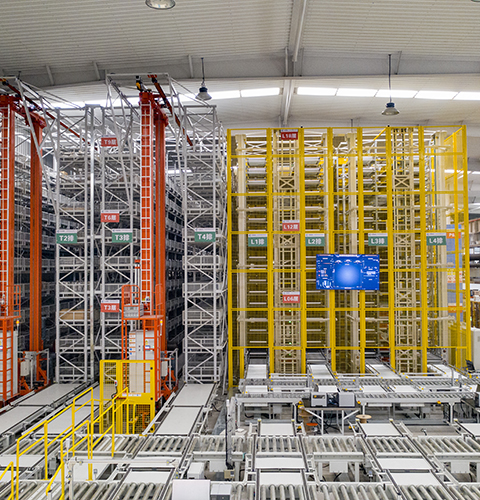
Machinery Industry High-Density Storage Center
Heavy components and spare parts were consolidated into high-density pallet storage, freeing floor space for production expansion while maintaining access to critical maintenance inventory.
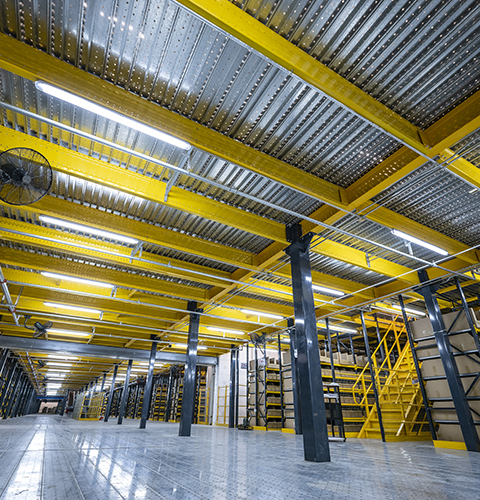
E-Business Logistics Center
Multi-tier picking racks and pallet storage were built for peak-season order volumes, rapid SKU rotation and clear separation between bulk replenishment and manual order picking.
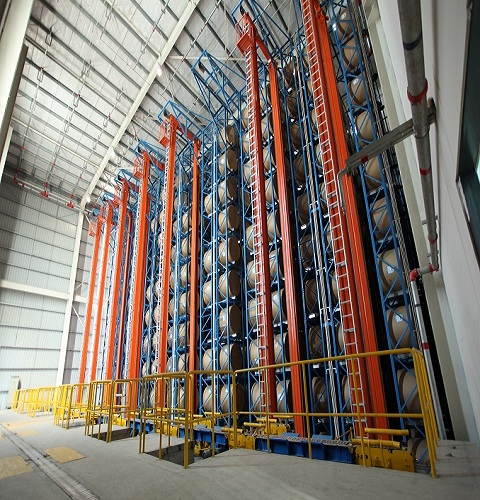
Paper-Making Industry Logistics Center
Automated storage for heavy paper rolls and finished goods linked production output directly to dispatch, reducing manual handling and improving traceability across the logistics center.
Certifications and Quality Documentation Buyers Can Verify
Certifications are not a substitute for project-specific engineering, but they give procurement and safety teams a baseline for supplier verification.
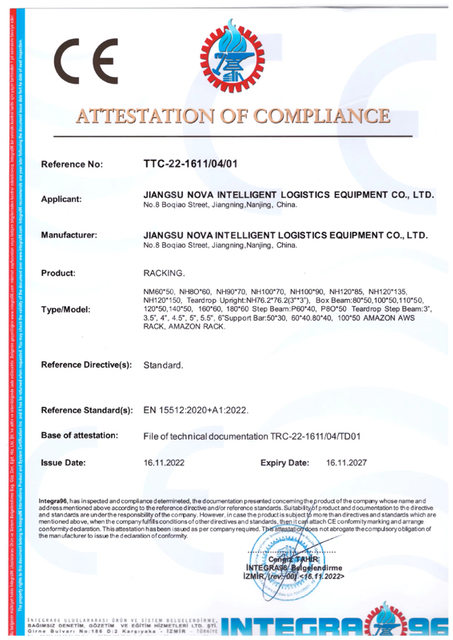
CE · Racking
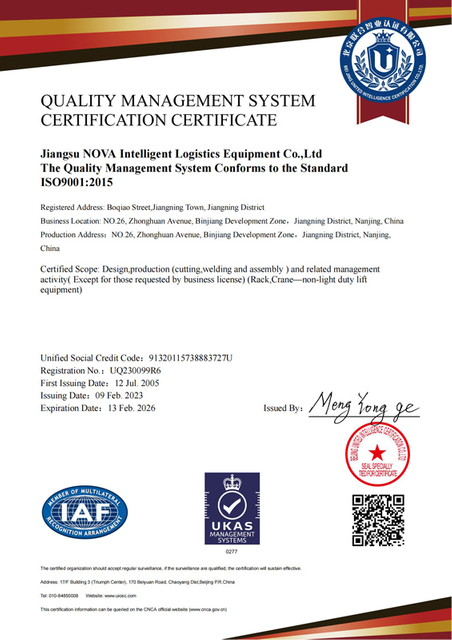
ISO 9001
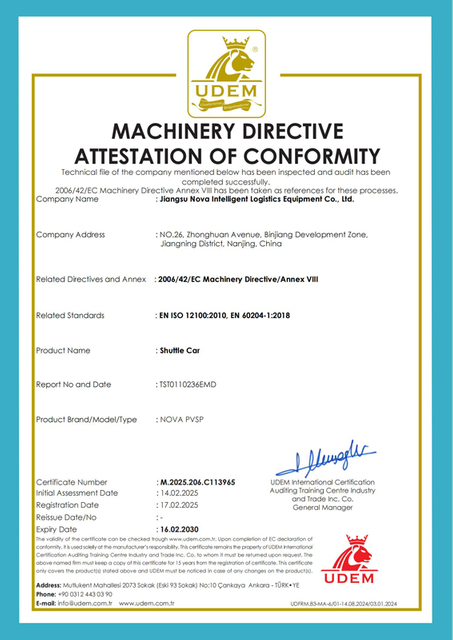
CE · Shuttle Car
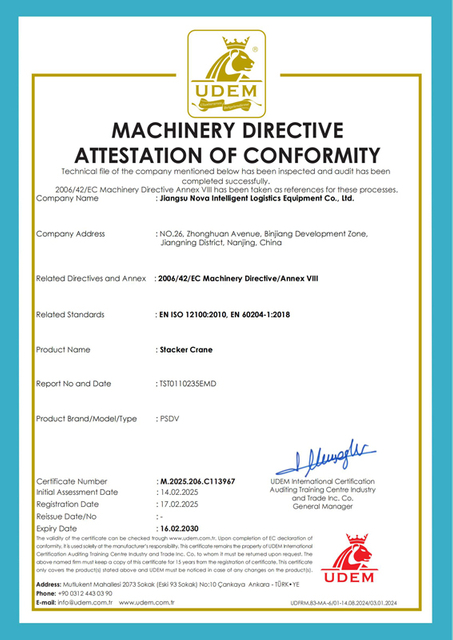
CE · Stacker Crane
Request the latest certificate scope, covered product models and validity dates before quoting them in project documentation. For automated equipment, confirm which CE certificate applies to the exact shuttle, stacker crane or RGV being supplied.
Frequently Asked Questions for Industrial Shelf Rack Buyers
Practical answers for importers comparing Chinese racking manufacturers, wholesalers and project suppliers.
What is the difference between a Chinese racking manufacturer and a trading company?
A manufacturer controls steel sourcing, profile rolling, welding, powder coating, quality inspection and packaging, while a trading company coordinates third-party factories. For standard bays the difference may appear small, but for custom layouts, seismic calculations, automation interfaces and complaint resolution, direct manufacturing control usually shortens communication and improves traceability. Ask for factory audit evidence, production line photos, certificate scope and references from comparable export projects.
Can industrial shelf racking be designed for seismic and humid environments?
Yes. The layout should include site-specific seismic parameters, building height, floor condition, rack geometry, anchor design and local code references. Humid coastal and cold-chain sites may require enhanced powder coating, hot-dip galvanized components or stainless accessories. Buyers should confirm that calculations, material certificates and installation tolerances are included in the quotation, not added after the order.
How should buyers compare load ratings?
Compare load capacity per level, per bay and per upright, and confirm whether the figure is based on uniformly distributed loads. Check beam deflection limits, safety factors, pallet weight including packaging, and the effect of mesh decking or accessories. For high-risk or seismic projects, require engineer-reviewed calculations and clear load signs for the installed configuration.
What information is needed for an accurate quote?
Provide building length, width and clear height; column grid and floor slab information; pallet or carton dimensions; maximum load per unit; SKU count and turnover; forklift type and lift height; target pallet positions; local code and temperature conditions; and destination port. Drawings, photos or a short video of the existing warehouse help engineers identify constraints that a simple price request would miss.
What are typical lead times and shipping considerations for South America?
Standard selective racking is commonly produced in about 25–35 days, followed by approximately 30–45 days of ocean transit depending on route and port. Custom, shuttle and AS/RS projects follow a project schedule agreed at contract stage. Container optimization, steel-strapped bundles, reinforced packaging and complete customs documentation help reduce damage and demurrage risk.
What after-sales support is available after delivery?
Support can include installation supervision, local crew training, commissioning, spare-parts planning, maintenance manuals and remote diagnostics for automated equipment. For multi-phase projects, document the rack configuration, load signs and accessory part numbers so future expansion remains compatible. A supplier with both racking and automation experience can usually resolve interface issues faster than separate vendors.
Request a Layout, Load Calculation and Wholesale Catalog
Send your building dimensions, pallet size and weight, forklift type, target pallet positions and destination port. Our project team can return a system recommendation, pallet-position estimate and export-ready quotation for industrial shelf racking, mezzanine, shuttle or AS/RS projects. For faster technical review, include your city and country so seismic, humidity and shipping factors can be considered from the first proposal.
Get Catalog