What B2B Buyers Should Look for in a China Industrial Shelving Wholesaler
A storage project rarely fails because steel is missing. It fails when load data, aisle strategy, finish specification, local approvals or installation responsibilities are unclear. The right supplier should behave like an engineering partner, not only a price list.
For buyers comparing China industrial shelving manufacturers, the most useful starting point is the operating profile: pallet dimensions, load per level, SKU count, selectivity, forklift type, clear height, fire strategy, environment and future growth. These variables decide whether selective pallet racking, double-deep racking, VNA, drive-in, radio shuttle, four-way shuttle, AS/RS, cantilever racking, longspan shelving or a mezzanine platform is technically and commercially appropriate. A low quoted price per bay can become expensive when the system is redesigned after factory release, when freight is poorly optimized, or when installation and spare-parts responsibilities are left unresolved.
This guide is prepared from the perspective of My Favorite Shelf Industrial Co., Ltd., a Nanjing-based manufacturer and integrator of warehouse racking and automated storage systems since 1997. It summarizes the practical criteria we use in project reviews, while reminding procurement teams that final designs must be checked against the building, local codes, insurer requirements and a qualified local engineer. That combination of manufacturer data and local verification is the basis of a dependable industrial storage procurement decision.
Fit-for-purpose engineering
Compare systems by selectivity, density, throughput and lift height — not by a generic racking photo. The correct layout should show pallet positions, aisle widths, column clashes and future expansion.
Safety and compliance evidence
Request load calculations, material specifications, coating data, anchor details and seismic assumptions. For Chile, Peru and Colombia, local review commonly references NCh 2369, E.030 and NSR-10.
Environment-led finishes
Humidity, coastal salt, cold storage and wash-down areas change the coating conversation. Specify pretreatment, coating system and touch-up procedure; do not rely on a generic “powder coated” statement.
Installation and lifecycle support
Clarify who supervises installation, commissions automation, trains operators and supplies spare parts. The most economical bid can lose its advantage if service response and documentation are weak.
Information gain for procurement teams: compare installed cost, not unit price
Total installed cost = equipment + engineering + approvals + freight + customs + installation + commissioning + spare parts + lifecycle maintenance. Ask every supplier to separate these lines. This single change exposes hidden assumptions in layout rework, seismic design, coating upgrades, container loading and after-sales support.
Recommended Industrial Shelving & Storage Systems
The eight systems below cover common wholesale and project requirements, from high-selectivity pallet racking to cantilever storage, galvanized logistics racks and adjustable selective racking. Use them as a shortlist; the final configuration should follow load data and a warehouse layout.
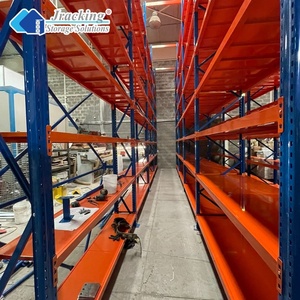 Selective
Jracking EURO Standard Heavy Duty Pallet Racking System
A distribution-ready selective system for fast-moving pallets. EURO-standard beam connections, adjustable levels and powder-coated frames support frequent SKU changes, making it a practical starting point for 3PLs, spare-parts warehouses and retail distribution centres that need high selectivity before considering automation.
View product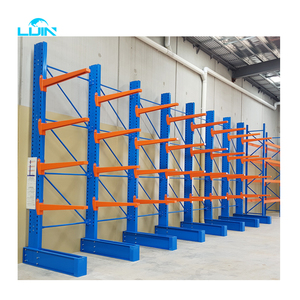 Long loads
Factory Price Cantilever Rack Heavy Duty Industrial Cantilever Racking
Designed for pipes, timber, profiles, panels and other long loads that do not fit standard pallet bays. Arms can be configured around load length and handling equipment. Confirm arm load, base anchoring, finish and aisle clearance; cantilever storage is efficient only when building geometry and forklift access are planned together.
View product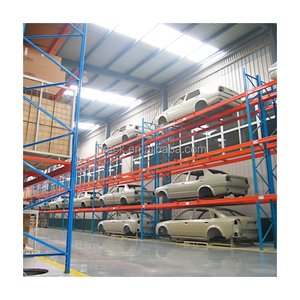 Mixed storage
Industrial Metal Shelving Unit and Heavy Duty Pallet Racking for Warehousing
A practical storage platform for mixed pallet and carton handling, maintenance stores and material-handling areas. The system can be specified around pallet footprint, shelf loading and access frequency. For wholesale projects, request a consolidated bill of materials so beams, frames, decking and safety accessories are priced consistently.
View product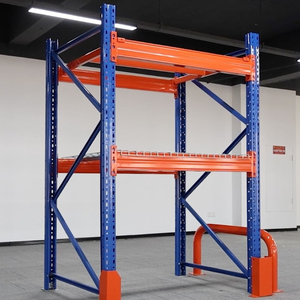 Heavy load
4000kg Multi-Level Pallet Racking for Auto Parts Logistics
High-capacity multi-level racking for auto parts, spare components and industrial parks where floor space is constrained. Heavier beam profiles and engineered frame designs support dense storage while preserving forklift access. Procurement should include load calculations, column protection and a stage-by-stage installation plan.
View product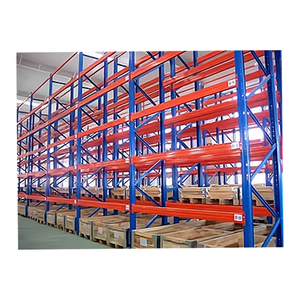 Galvanized
 Steel Plate Logistics Equipment Warehouse Rack
A cost-effective option for warehouses that need corrosion resistance and straightforward logistics equipment. Galvanized steel plate components can suit humid, coastal or cold-chain environments when specified correctly. Verify coating system, material certificates and touch-up procedures, especially where cold storage or wash-down creates persistent moisture.
View product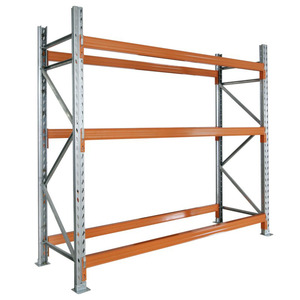 Boltless
NOVA Automatic Heavy Duty Boltless Stacking Rack System
A boltless, heavy-duty storage system built around Q235 steel components for fast assembly and reconfiguration. It suits industrial pallet storage and semi-automated workflows where installation time and flexibility matter. Ask the supplier to demonstrate locking details, load testing records and compatibility with your stacker or automated handling plan.
View product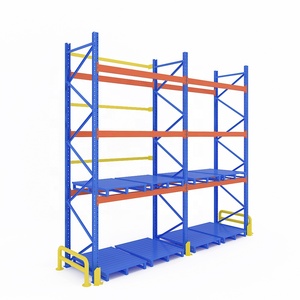 Safety
Warehouse Storage Industrial Pallet Rack with Back Stopper
Back stoppers are a low-cost safety feature that prevents pallets from being pushed through the rear of a bay — a frequent cause of rack damage and product loss. This product is suitable for high-turnover warehouses where forklift operators work at speed. Combine it with upright protectors, guide rails and a documented inspection routine.
View product Adjustable
800kg Adjustable Selective Pallet Racking System
An adjustable selective racking solution for medium-duty storage, custom 4–6 layer configurations and varied SKU profiles. It can be a sensible first step before automated storage, because the layout data and pallet profile work can be reused in later phases. Confirm load per level, deck type and seismic or wind requirements before final design.
View productNeed a mixed-container, multi-bay or distributor quotation? Share your pallet data, building dimensions and target throughput so the proposal can be engineered rather than guessed.
Get a QuoteHow to Match Racking Architecture to the Warehouse Plan
The same pallet can be stored in several systems. The right choice depends on SKU volatility, selectivity, handling equipment, building height and the cost of labor. Use this matrix to structure technical questions before comparing prices.
| System | Best-fit operating profile | Procurement evidence to request | Risk to check |
|---|---|---|---|
| Selective pallet racking | Many SKUs, frequent access, fast picking and flexible slotting | Beam load diagrams, frame load table, beam-lock specification, upright protectors | Low unit price hiding weaker load assumptions or omitted safety accessories |
| Double-deep or VNA racking | Medium-to-high density with more selectivity than drive-in | Forklift aisle requirements, rack height, truck specification and floor tolerance | Handling equipment mismatch that reduces throughput after installation |
| Drive-in pallet racking | Homogeneous SKUs, cold storage and lane-based reserve stock | Lane depth, rail guidance, load per level and entry/exit configuration | Low selectivity and blocked access when SKU variety grows |
| Radio shuttle racking | Deep lanes with FIFO or LIFO, high-density pallet reserve storage | Shuttle capacity, battery strategy, maintenance plan, spare shuttle availability | Over-specifying automation for fast-changing or low-volume SKU profiles |
| Four-way shuttle or AS/RS | High-density, labor-sensitive operations with stable warehouse processes | Throughput simulation, WMS/WCS integration scope, spare-parts and service model | Data readiness and after-sales capability being underestimated |
| Cantilever racking | Pipes, timber, profiles, panels and other long or irregular loads | Arm load, base anchoring, finish and lift-equipment clearance | Assuming standard pallet racking can handle long loads safely |
| Longspan shelving or mezzanine | Carton picking, spare parts, e-commerce and usable-floor expansion | Floor loading, fire egress, staircase and access design, local permits | Adding a platform without checking building approval and fire strategy |
Industrial Shelving Procurement Trends for 2026–2030
Buyers are becoming more analytical. The strongest quotations now explain engineering assumptions, lifecycle cost and delivery risk — not only steel weight and price per bay.
Total cost of ownership replaces unit price
Procurement teams increasingly compare freight, installation, commissioning, spare parts and maintenance alongside the racking invoice. A factory-direct price is only meaningful when the quotation normalizes container loading, engineering reports, finish specification and service responsibilities.
Safety and seismic documentation enters the RFQ
For projects in Chile, Peru, Colombia and other active regions, structural assumptions are now requested with the quotation. Suppliers should provide calculation reports, anchor details and bracing specifications for review by a local engineer, rather than treating seismic design as a post-order discussion.
Finish specification becomes environment-led
Humid ports, cold rooms, coastal sites and wash-down areas need different pretreatment and coating strategies. Buyers are asking for coating system details, material certificates and touch-up instructions. Generic “powder-coated” claims are no longer enough for risk-sensitive warehouses.
Automation is phased, not rushed
Many operators choose a modular path: selective racking or radio shuttle first, followed by four-way shuttle or AS/RS when data, throughput and labor costs justify the investment. Phased automation reduces capital pressure and keeps the warehouse operational during expansion.
WMS/WCS compatibility is assessed as infrastructure
Automated storage is no longer evaluated as isolated equipment. Buyers ask how stacker cranes, shuttles and conveyors will exchange data with WMS/WCS, how faults are diagnosed, and how spare parts and software support will be managed after handover.
Port-optimized logistics and spare-parts planning
Long ocean routes make packing efficiency and document accuracy part of the commercial case. Nested profiles, steel-strapped bundles and phased deliveries can reduce freight cost and site congestion. Distributors also want spare uprights, beams, safety accessories and shuttle components available for local service.
Product Development Trends: From Steel Racks to Integrated Storage Infrastructure
Racking is becoming more integrated with handling equipment, safety systems and software. The next generation of warehouse storage will reward buyers who plan data, access and serviceability together.
High-density hybrid systems
Selective racking is being combined with shuttle lanes, push-back and four-way shuttle modules to balance density and SKU access. Hybrid designs let one building serve different inventory classes without forcing every pallet into the least selective solution.
Taller, stronger and more engineered structures
High-bay AS/RS and rack-supported buildings require tighter tolerances, stronger bracing and closer coordination with building structures. Engineering documentation becomes more valuable than raw steel weight because tolerance and safety decisions are harder to correct later.
Smart safety and inspection-ready components
Back stoppers, upright protectors, guide rails, load signs and damage indicators are being specified as part of the original system. Digital inspection routines and QR-based maintenance records are gradually moving from premium projects into mainstream warehouse procurement.
Sustainable finishes and circular lifecycle
Buyers are looking for durable finishes, recyclable steel, replaceable components and layouts that can be reconfigured rather than scrapped. A system designed for re-use across leases and expansion phases can deliver better long-term value than a locked, single-purpose installation.
My Favorite Shelf’s municipal-level R&D center holds more than 70 national patents and software copyrights covering racking, stacker cranes, conveyors, shuttle carriers and WMS/WCS software. That breadth matters because a warehouse project often crosses steel, mechanics, controls and data rather than fitting neatly into one product category.
Why My Favorite Shelf Is a Credible Manufacturing Partner
Supplier credibility should be verifiable. The following capabilities reflect the production, engineering, certification and project record of My Favorite Shelf Industrial Co., Ltd.
My Favorite Shelf Industrial Co., Ltd. has designed, manufactured and installed warehouse racking and automated storage systems since 1997. The company operates its own production base with approximately 60,000 tons of annual steel capacity, including cold-rolling and powder-coating capabilities, and serves distributors, manufacturers, 3PLs and warehouse integrators in more than 140 countries. For buyers sourcing industrial shelving from China, this means one manufacturer can coordinate steel, automation, export packing and engineering documentation rather than leaving the buyer to manage multiple disconnected suppliers.
Factory depth since 1997
In-house production and long-standing steel processing experience support consistent bays, frames, beams, decking and accessories. A 60,000-ton annual steel capacity provides a meaningful base for wholesale orders, phased projects and mixed-container planning.
Engineering and R&D
A municipal-level R&D center, 70+ patents and software rights, and an engineering team led by a professor-level senior engineer support custom racking layouts, automation integration and design documentation. The team also references the automated warehouse design and logistics center management literature in project planning.
Certifications and quality control
Production is managed under ISO 9001, ISO 14001, ISO 45001 and ISO 10012 measurement management. CE certificates cover racking, shuttle cars, stacker cranes and RGVs. Quality processes include coil traceability, coating checks and load testing before shipment, with documentation available for project review.
Project record and export support
More than 8,000 projects across 140+ countries include work connected with GE, Siemens, Walmart, Amazon and Toyota references. For South American buyers, engineering documentation can be supported in English, with Spanish or Portuguese project communication available for installation, commissioning and after-sales coordination.
Local Engineering Details That Support Approvals and Lower Project Risk
International storage projects need more than a solid rack design. They need the right finish, approval documentation, shipping strategy and installation plan for the destination.
Seismic-ready design
Structural and seismic load calculations can reference local requirements such as NCh 2369, E.030 and NSR-10, with reinforced uprights, bracing, base plates and anchor specifications. Calculation reports are supplied with quotation drawings for review by the buyer’s local engineer.
Humidity and corrosion strategy
For humid tropical or coastal sites, specify epoxy-polyester powder coating with enhanced pretreatment, or hot-dip galvanized components for cold storage and high-corrosion environments. The finish decision should be linked to cleaning routines, condensation risk and expected service life.
Large-scale and phased layouts
For large distribution centres, high-bay AS/RS, VNA and shuttle systems can be compared against modular selective racking. Designs may be prepared with reference to local storage-system practice such as ABNT NBR 15524, while phased expansion helps manage capital spending.
Shipping and documentation
Container-optimized packing uses nested profiles and steel-strapped bundles to reduce freight cost per pallet position. Export documents can include commercial invoice, detailed packing list, bill of lading, certificate of origin, test reports, material certificates and installation manuals. Main South American ports served include Santos, San Antonio, Callao, Buenaventura, Guayaquil and Buenos Aires.
Typical production time for standard selective racking is 25–35 days, followed by approximately 30–45 days of ocean transit depending on route. AS/RS and shuttle projects follow a project schedule agreed at contract stage, including engineering approval, factory testing and installation planning.
Prepare an RFQ That Produces a Comparable and Useful Quote
Suppliers can only engineer what they understand. A structured RFQ reduces revision cycles and makes it harder for a low bid to hide missing scope.
Building dimensions and column grid
Provide length, width, clear height, column positions, floor condition and any mezzanine or roof constraints.
Pallet, carton and load data
Include length × width × height, weight per unit, load overhang, stacking pattern and any fragile or long-load requirements.
Throughput and SKU profile
Explain order volume, SKU count, picking frequency, FIFO/LIFO needs, seasonality and expected growth over five years.
Handling equipment and aisle constraints
Specify forklift type, lift height, reach truck or VNA equipment, battery strategy and minimum aisle requirements.
Environment, finish and compliance
State humidity, coastal exposure, cold storage, wash-down, fire strategy, seismic zone and any local standards or insurer requirements.
Delivery, installation and spare parts
Clarify destination port, required documents, installation supervision, commissioning responsibilities and recommended spare-parts list.
Industrial Shelving and Storage Procurement FAQ
These questions reflect common technical, commercial and logistics concerns raised by distributors, warehouse owners and project integrators.
Can pallet racking be designed for seismic zones in Chile, Peru and Colombia?
Yes. Engineers can run structural and seismic load calculations with reference to local requirements such as NCh 2369 for Chile, E.030 for Peru and NSR-10 for Colombia, then specify reinforced uprights, bracing, base plates and anchors accordingly. Calculation reports should be delivered with quotation drawings for review by your local engineer, insurer and approving authority.
How do I choose between selective racking, radio shuttle and AS/RS?
Start with SKU count, selectivity, throughput, labor cost and building height. Selective racking offers direct access to most pallets and suits high SKU variety. Radio shuttle improves density for deep lanes and stable inventory. AS/RS or four-way shuttle can be attractive when throughput is high, labor is constrained and the operation can support WMS/WCS integration and maintenance planning.
What are typical production and shipping timelines for South American buyers?
Standard selective racking is typically produced in 25–35 days. Ocean transit from China to ports such as Santos, San Antonio, Callao, Buenaventura, Guayaquil or Buenos Aires usually takes about 30–45 days depending on route and sailing schedule. AS/RS and shuttle projects follow a project schedule agreed at contract stage, including engineering approval, factory testing and installation planning.
Which certifications and export documents can be provided?
Manufacturing is managed under ISO 9001, ISO 14001, ISO 45001 and ISO 10012 measurement management. CE certificates cover racking, shuttle cars, stacker cranes and RGVs. Export documents can include commercial invoice, detailed packing list, bill of lading, certificate of origin, test reports, material certificates and installation manuals, with Spanish or Portuguese support available for project documentation.
What surface finish should be specified for humid, coastal or cold-storage warehouses?
For humid tropical or coastal sites, an epoxy-polyester powder coating with enhanced pretreatment is often appropriate. For cold storage and high-corrosion environments, hot-dip galvanized components should be evaluated. The specification should state the pretreatment method, coating system, thickness target and touch-up procedure so the finish can be inspected and maintained.
Do you provide installation and after-sales service?
Yes. Supervising engineers can be dispatched for installation and commissioning, local installation teams can be trained, and spare parts can be supplied. For automated systems such as stacker cranes, shuttles and WMS/WCS software, remote diagnostics and maintenance planning can be included in the after-sales model.
Can distributors or project wholesalers request mixed containers and phased deliveries?
Many projects can be organized around container-optimized packing, nested profiles, steel-strapped bundles and phased deliveries where the project scope allows. Distributors should share their expected product mix, destination port and spare-parts requirements early so freight and production planning can be aligned.
How should I compare quotations from different industrial shelving manufacturers?
Normalize each bid around total installed cost: equipment, engineering, load calculations, finish upgrades, freight, customs documentation, installation supervision, commissioning, spare parts and maintenance. Confirm beam and frame load tables, safety accessories, packing method, warranty, response time and the scope of any automation or software included.
Turn Warehouse Constraints into a Layout You Can Approve
Send your building dimensions, pallet size and weight, clear height, forklift type, destination country and target throughput. Our project team will use that data to recommend a storage system, prepare an initial pallet-position concept and clarify the engineering, shipping and installation path.
Project enquiries: [email protected] · English, Spanish and Portuguese communication available for South American projects.