Eight Racking Systems Buyers Request Most Often
For wholesale programs, distributors and project contractors, product selection must balance pallet profile, load capacity, selectivity, installation time and container loading. The products below are factory-direct options commonly specified with push back racking projects.
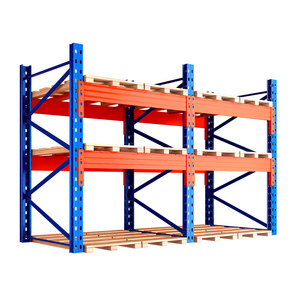
Heavy Duty Industrial Storage Shelves system Metal Rack Stacking Units Warehouse Steel Industrial Pallet Racking
For heavy industrial loads, stacking units and dense pallet storage; engineered around clear heights, beam levels and aisle layout.
View Product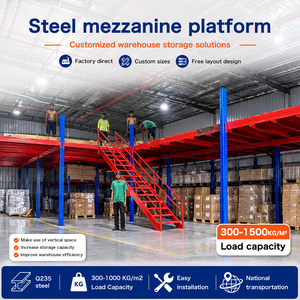
Factory Supply Industrial Mezzanine Racking System Heavy Duty Steel Warehouse Storage Platform Multi Level Shelving
Creates multi-level picking, spare-parts and distribution space without expanding the building footprint.
View Product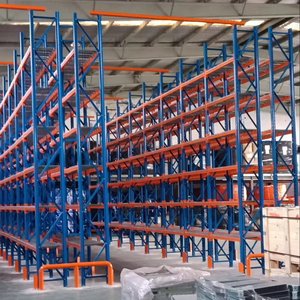
Heavy Duty Racks Selective Pallet Racking Storage Systems with Wire Mesh Deck Heavy-duty Wire Deck Pallet Racking
Wire mesh deck improves safety, ventilation and small-item containment for fast-moving SKUs and mixed pallet profiles.
View Product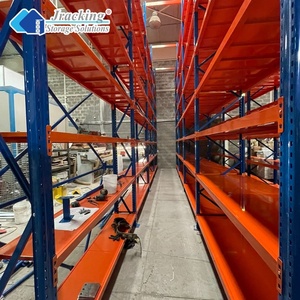
Jracking EURO Standard Warehouse Storage Racks Heavy Duty Steel Pallet Racking System for Distribution
A practical baseline for distribution centers, mixed pallet sizes and phased warehouse expansion.
View Product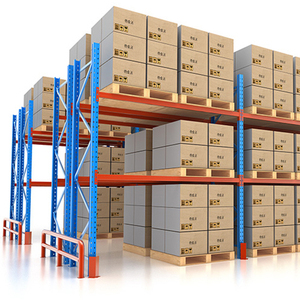
Heavy Duty Steel Single-Depth/Double-depth Selective Pallet Racks CE Certified Corrosion Protection Standard Wide Aisle Full
Single-depth and double-depth configurations with corrosion protection for medium-density storage and fast access.
View Product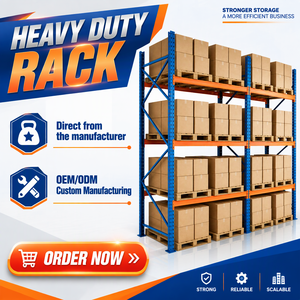
Hot Selling 800kg Adjustable Metal Racking Custom 4 5 6 Layer Selective Pallet Racking System Heavy Duty Warehouse Pallet Racks
Flexible 4–6 layer adjustable racking for wholesalers and 3PLs that need fast reconfiguration.
View Product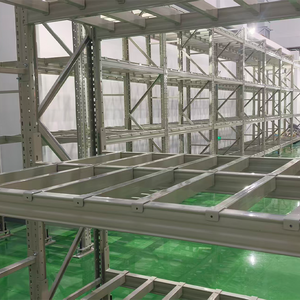
Thickened Industrial Pallet Racking System 2000kg Load Heavy Duty Warehouse Storage Rack for Large Goods Steel
Thickened steel profiles for large goods, heavier loads and rigorous industrial warehouse environments.
View Product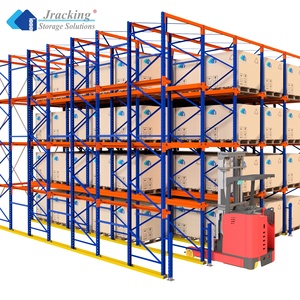
Warehouse Heavy Duty Industrial Shelves Steel EU Blue and Orange Selective Pallet Racking Shelving System CE Certified
EU-style blue and orange selective racking with CE marking support for warehouses and distribution projects.
View ProductWhy Push Back Racking Is a Capital Strategy, Not a Commodity
Push back pallet racking is often described simply as “pallet flow storage”, but the commercial value is more specific. It stores pallets two to six deep on nested carts and inclined rails, allowing forklift operators to load at the front and push pallets backward along the lane. The result is higher storage density than selective racking while preserving more SKU access than drive-in systems.
For a China wholesale program, the difference between a low-cost quotation and a low-risk procurement decision is engineering transparency. The rack must match pallet width, load weight, forklift reach, rail slope, cart count, aisle width and local building requirements. Buyers who compare only price per bay often miss cart maintenance, damaged-pallet risk, spare-parts availability and container-loading efficiency — four factors that directly affect total landed cost.
Push back racking is particularly relevant for beverage, food, retail, cold-chain, automotive and manufacturing warehouses where medium-to-high stock volumes can be sequenced with LIFO operation. For distributors and project contractors, the wholesale advantage is not simply a lower unit price: it is a repeatable supply source that can support multiple projects with consistent steel profiles, powder-coating quality and engineering documentation.
Compare Storage Systems Before Committing Capital
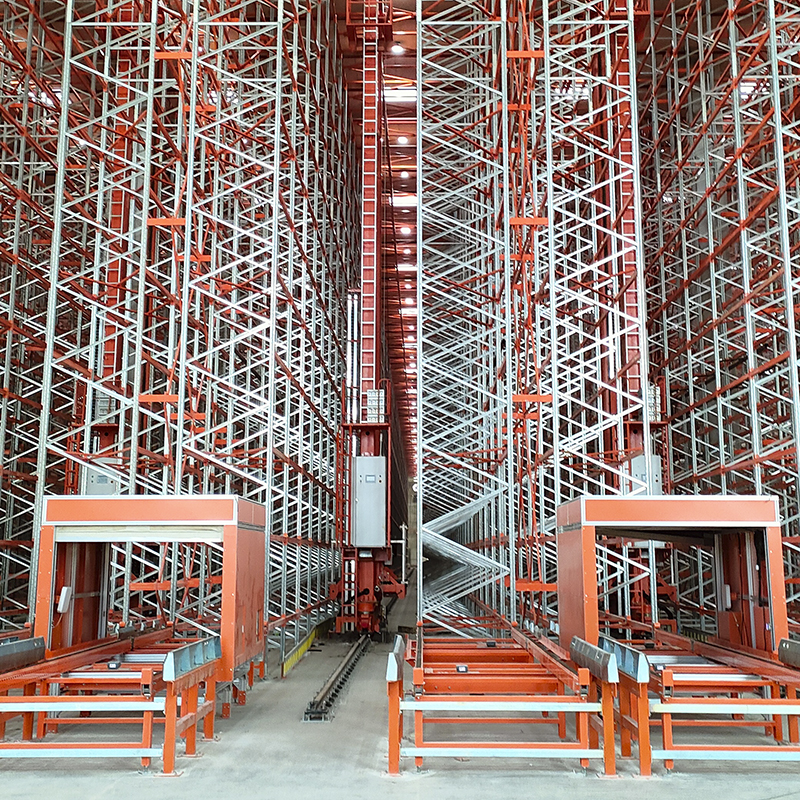
Push back racking rarely works alone. Wholesale projects normally combine it with selective pallet racking, mezzanine platforms or shuttle systems to balance density, access and cost. The table below gives procurement teams a fast comparison framework.
| Storage System | Density | Selectivity | Best Use | Wholesale Procurement Note |
|---|---|---|---|---|
| Selective Pallet RackingDirect access to every pallet | Fast-moving SKUs, mixed pallets, 3PL operations. | Most flexible entry point; easy to phase and expand. | ||
| Push Back RackingNested carts on inclined rails | Medium-to-high volume, LIFO storage, beverage and food. | Check cart quality, rail slope and spare-cart availability. | ||
| Drive-In RackingForklifts enter the rack lanes | Cold storage, few SKUs, high-volume homogeneous stock. | Lower selectivity; safety training is essential. | ||
| Radio Shuttle RackingSemi-automated deep lanes | FIFO or LIFO deep-lane storage, labor-sensitive sites. | Requires shuttle maintenance plans and operator training. | ||
| AS/RSStacker cranes, conveyors, WMS/WCS | High-bay, 24/7 operation, labor reduction, precision inventory. | Best evaluated as a project, not as a single equipment purchase. | ||
| Mezzanine PlatformMulti-level usable floor space | Picking, spare parts, e-commerce and light assembly. | Review floor load, stair access and fire egress. |
How Push Back Racking Buying Will Change by 2030
Wholesale buyers are moving away from one-dimensional price comparison. The next procurement cycle will reward suppliers who can prove engineering quality, compliance readiness and lifecycle support.
Total Cost of Ownership
Procurement teams will compare unit price against cart replacement cost, powder-coating durability, freight cube and installation hours. A slightly higher factory price can be cheaper per pallet position after landed-cost analysis.
Compliance-Ready Sourcing
Seismic calculations, anchor approval, CE documentation and traceable steel reports will become standard attachments in wholesale enquiries, especially for Chile, Peru, Colombia and other active seismic regions.
Automation-Ready Layouts
Push back racking is increasingly specified as part of a phased automation roadmap. Suppliers must provide layout data that can later connect to WMS/WCS, shuttle systems or AS/RS without rebuilding the entire warehouse plan.
Supply-Chain Resilience
Distributors want mixed-container loading, spare parts held with the first shipment and documentation delivered before vessel departure. China wholesalers who behave like project partners will win repeat orders.
Technical Trends Inside Modern Push Back Racking
Steel gauge alone no longer defines product quality. The next generation of warehouse racking combines safety intelligence, modular design and environment-specific finishes.
Higher Loads, Taller Bays
Push back systems are being engineered for heavier pallets and taller lifts. Reinforced uprights, precise rail angles and tested cart assemblies support denser vertical storage without compromising forklift safety.
Smart Safety Monitoring
Load sensors, QR-based inspection tags and digital maintenance logs are moving from premium projects into mainstream wholesale packages, helping warehouse teams document inspections and reduce downtime.
Modular Cart & Rail Systems
Modular carts, standard rail profiles and interchangeable components reduce spare-parts complexity. For distributors, this means fewer SKUs in stock while still serving multiple client layouts.
Corrosion-Resistant Finishes
For coastal ports, cold rooms and humid climates, enhanced pretreatment powder coating and hot-dip galvanized components are increasingly specified to protect the lifecycle of the steel structure.
Why Global Buyers Source From My Favorite Shelf
Wholesale confidence is built on facts that can be checked. The advantages below come from the manufacturer’s existing production, engineering and project-service capabilities.
Factory Depth Since 1997
My Favorite Shelf Industrial Co., Ltd. has designed, manufactured and installed warehouse racking and automated storage systems since 1997. Its own production base processes around 60,000 tons of steel per year, giving wholesale buyers stable capacity and material traceability.
Certified Quality Control
Production is managed under ISO 9001, ISO 14001, ISO 45001 and ISO 10012 measurement management. CE certification covers racking, stacker cranes, shuttles and RGVs, supporting procurement reviews and project handover.
R&D and Software Capability
A municipal-level R&D center holds more than 70 national patents and software copyrights covering racking, stacker cranes, conveyors, shuttle carriers and WMS/WCS. This matters when push back racking must be integrated into a future automation plan.
Global Project Experience
More than 8,000 racking and AS/RS projects have been delivered in over 140 countries. The company has served international enterprises including GE, Siemens, Walmart, Amazon and Toyota, applying the same project discipline to distributors, 3PLs and manufacturers.
South America Project Support
Engineering teams adapt racking to seismic requirements such as NCh 2369, E.030 and NSR-10, support design reviews with local engineers, and provide project documentation in English with Spanish or Portuguese support. Container-optimized packing and port-ready export documents reduce landed-cost surprises.
One-Stop Delivery Model
From CAD layout and structural calculations to production, installation supervision, commissioning and after-sales spare parts, one accountable team manages the project. This reduces the coordination risk that often appears between separate designers, factories and installers.
Questions Buyers Ask Before a Push Back Racking Order
These answers focus on technical fit, export logistics and the commercial details that matter during supplier qualification.
Can push back racking be designed for seismic zones in Chile, Peru and Colombia?
Yes. Engineering teams can run structural and seismic load calculations with reference to local requirements such as NCh 2369 in Chile, E.030 in Peru and NSR-10 in Colombia. Reinforced uprights, bracing, base plates and anchor specifications are then selected accordingly. Calculation reports can be delivered with quotation drawings for review by the buyer’s local engineer.
What information is needed for an accurate push back racking quotation?
Provide building length, width and clear height, column grid, pallet dimensions, maximum load per pallet, racking height, forklift type, aisle requirements, SKU profile and whether LIFO operation is acceptable. If a drawing is available, send it with the enquiry. These details let the supplier calculate cart quantity, rail slope, bay layout and pallet positions rather than quoting a generic price.
How does push back racking compare with selective racking on cost per pallet position?
The upfront cost per bay can be higher because push back racking includes carts and rails. However, cost per stored pallet may be lower when aisle space is reduced and building footprint is fixed. The correct comparison is total cost per pallet position, including steel, carts, freight, installation, inspection and lifecycle maintenance. A qualified wholesaler should show both systems side by side.
What are typical production and shipping times to South America?
Standard selective racking is typically produced in 25 to 35 days. Push back systems, mezzanine and AS/RS projects follow an agreed project schedule because carts, rails and accessories may require different production sequencing. Ocean transit from China to ports such as Santos, San Antonio, Callao, Buenaventura, Guayaquil or Buenos Aires usually takes about 30 to 45 days depending on routing.
Do you support installation and after-sales service in South America?
Yes. Supervising engineers can be dispatched for installation and commissioning, local installation teams can be trained, and spare parts can be supplied. Remote diagnostics are available for automated systems such as stacker cranes, shuttles and WMS/WCS software. For conventional racking projects, the supplier can provide layout drawings, installation manuals and inspection checklists.
Which export documents are provided for customs clearance?
Export documentation can include commercial invoice, detailed packing list, bill of lading, certificate of origin and, on request, test reports, material certificates and installation manuals. Spanish or Portuguese support can be arranged for project documentation. Buyers should confirm naming rules, HS codes and local import requirements with their customs broker before shipment.
What surface finish is recommended for humid or coastal warehouses?
For humid tropical or coastal sites, epoxy-polyester powder coating with enhanced pretreatment is recommended. Hot-dip galvanized components may be considered for cold storage, aggressive atmospheres or high-corrosion environments. The finish choice should be matched to the building environment, cleaning routine and expected service life, not selected solely on initial price.
Can a wholesaler supply mixed containers for several projects?
Yes, mixed-container loading is possible when the project plan is clear at order stage. Nested profiles and steel-strapped bundles help reduce freight cube. The supplier should prepare a loading plan that separates each project, labels bundles clearly and aligns packing lists with the commercial invoice so that multiple installers can receive their components without confusion.
Turn a Racking Enquiry Into an Engineered Layout
Send us your building drawing or basic dimensions, pallet size and load, forklift type and target pallet positions. Our engineers will reply with a system recommendation, layout direction and a quotation route.
Get a Wholesale Push Back Racking Quote
Whether you are comparing selective racking, push back racking, mezzanine platforms or a phased AS/RS plan, the fastest route is a layout-led conversation. Share the operating details, not just a product name, and the engineering team can price the correct system.
Project documentation in English, with Spanish and Portuguese support available. Email: [email protected]