8 Export-Ready Storage Racking Systems for Your Next Warehouse Project
These factory-direct systems cover selective pallet racking, narrow aisle storage, heavy-duty warehouse racks, mezzanine platforms and multi-level industrial shelving. For B2B buyers, the right choice is not the lowest quote per kilogram of steel — it is the system that matches your pallet profile, SKU profile, building height, forklift fleet, seismic zone and planned growth.
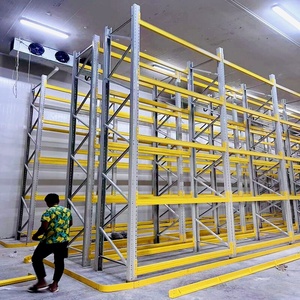
Narrow Aisle Selective Pallet Racking System
Heavy-duty industrial racking for warehouses that need high selectivity, dense vertical storage and efficient forklift access in tighter aisle layouts.
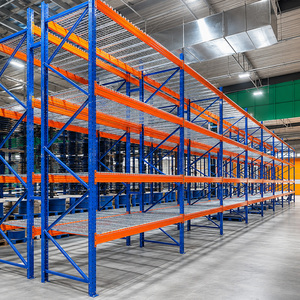
Q235B Flat Warehouse Storage Rack
Designed for warehouses under 12 m with 80×70×2.0 mm upright columns and wear-proof paint — a practical option for cost-controlled flat storage.
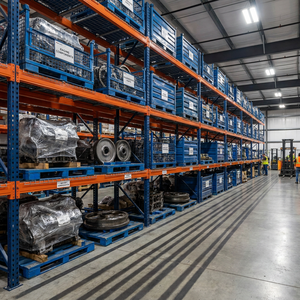
Selective Pallet Racking for Manufacturing
Industrial steel pallet storage for manufacturing plants that need direct access to every pallet and flexible reconfiguration as production changes.
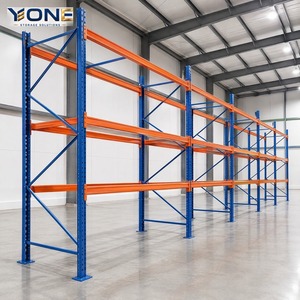
Heavy-Duty Selective Pallet Rack System
A robust selective racking platform for industrial metal organizers, spare parts and fast-moving palletized inventory with high accessibility.
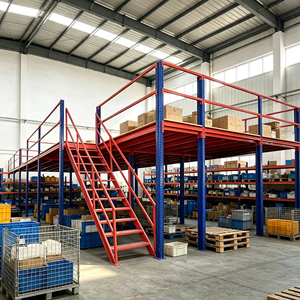
Mezzanine Platform Racking System
Attic, loft and mezzanine floor platforms that expand usable storage area without the cost and lead time of a new warehouse building.
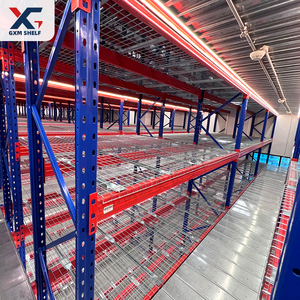
Three-Dimensional Heavy Storage Pallet Rack
Heavy-duty pallet racking for three-dimensional warehouse layouts, engineered for high bay height, stable beam loading and efficient throughput.
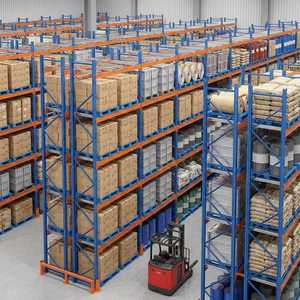
Selective Pallet Racking for Logistics Hubs
Steel pallet storage for logistics hubs and distribution centers that need fast picking access across a wide SKU range.
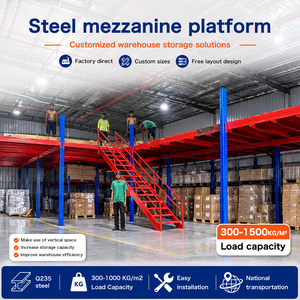
Industrial Mezzanine Racking System
Multi-level steel shelving and platform racking for factories, warehouses and e-commerce operations that need more usable floor area.
Factory Capability at a Glance
Scale matters in export racking because it affects raw material control, production scheduling, container loading and the ability to keep replacement parts available after handover.
What a Top Storage Racking Factory & Exporter Must Deliver
For B2B buyers, a top storage racking factory and exporter is not simply a supplier with a large product catalog. It is an engineering-led manufacturer that can translate pallet data, building constraints and throughput targets into a buildable racking layout — and then execute export packing, documentation, installation support and after-sales service without gaps.
China’s racking manufacturing clusters offer strong cost efficiency, mature steel supply chains, powder-coating capacity and fast product iteration. However, the quality gap between a genuine factory and a trading intermediary can be significant. Procurement teams should verify whether the supplier controls profiling, cutting, welding, punching, powder coating, load testing and packaging. They should also ask for structural calculations, material traceability, container-loading plans and a clear warranty and spare-parts process. A credible exporter will welcome these questions because they reduce project risk before the first container leaves China.
Selectivity vs. Density: A Practical Decision Framework
Most warehouse owners compare racking by price per pallet position, but the better comparison is cost per accessible pallet position over the life of the facility. The chart below gives an early-stage view of how common systems balance storage density and selectivity.
Selective Pallet Racking
Best for many SKUs, fast picking and flexible day-to-day access. Every pallet is directly accessible.
VNA Pallet Racking
Best for tall buildings and narrow aisles where high bay height must be combined with strong selectivity.
Drive-In Racking
Best for homogeneous SKUs and cold storage where pallet density matters more than instant access.
Radio Shuttle Racking
Best for deep lanes with FIFO or LIFO control; forklifts stay outside the rack, improving safety and speed.
Four-Way Shuttle
Best for automated high-density storage where pallets move in multiple directions on a shuttle grid.
AS/RS Automated Warehouse
Best for high-bay, 24/7 and labor-sensitive operations that need WMS/WCS integration and controlled retrieval.
How to Evaluate a China Storage Racking Factory Before You Place an Order
A structured evaluation protects your project from hidden steel substitutions, incomplete engineering, inconsistent powder coating and costly site modifications after delivery.
Verify Manufacturing Depth
Ask whether the supplier owns cold-rolling, profile forming, cutting, welding, powder coating and load-testing capabilities. A factory should be able to show production footage, equipment lists, material certificates and in-process inspection records, not only finished-product photos.
Request Engineering Deliverables
Require CAD layouts, upright and beam load charts, bill of materials, anchor specifications, seismic calcs where relevant and a packing plan. For automated systems, ask how WMS/WCS interfaces, stacker cranes, shuttles and conveyors are tested before shipment.
Audit Quality System and Traceability
ISO 9001, ISO 14001, ISO 45001 and CE documentation are useful starting points, but they do not replace project-level checks. Confirm coil traceability, coating thickness, weld quality, dimensional tolerances and pre-shipment load tests.
Check Export Execution
A reliable exporter manages container optimization, anti-rust packing, commercial invoice, packing list, bill of lading, certificate of origin, material reports and installation manuals. For South America, Spanish or Portuguese project support and remote diagnostics add practical value.
Procurement Trends Reshaping Storage Racking Purchases in 2025–2030
Warehouse buyers are moving from one-off equipment purchasing toward lifecycle partnerships. The strongest suppliers will be judged on engineering transparency, automation readiness and post-installation support.
Automation-First Business Cases
Buyers increasingly model labor availability, order accuracy, peak throughput and energy use before choosing racking. AS/RS, four-way shuttle and radio shuttle systems are evaluated as part of a wider automation roadmap rather than as isolated steel structures.
Code-Aligned Seismic Engineering
Projects in Chile, Peru, Colombia and other seismic regions require more than a standard catalog design. Procurement teams now ask for project-specific calculations, anchor design, bracing details and reviewable documentation before awarding the order.
Total Cost of Ownership
Lowest unit price is giving way to cost per accessible pallet position, including freight optimization, installation time, replacement parts, inspection intervals and the cost of future reconfiguration or expansion.
Phased, Modular Capex
Distributors and 3PLs prefer systems that can be installed in phases as demand grows. Modular selective racking, longspan shelving and mezzanine platforms reduce initial capital pressure while keeping future expansion possible.
Cold Chain and Corrosion Protection
Humid coastal sites, food cold rooms and export warehouses require enhanced pretreatment, epoxy-polyester powder coating or hot-dip galvanized components. Finish specification is becoming a core part of the technical comparison.
Digital Documentation and Remote Support
Export buyers now expect digital as-built drawings, maintenance manuals, spare-parts lists, installation checklists and remote commissioning support. Clear documentation reduces site delays and improves long-term rack safety management.
Product Development Trends in Racking, Shuttle and AS/RS Systems
Storage racking is evolving from static steel into an integrated physical-digital system. The most relevant developments for importers are higher bay heights, denser shuttles, safer structural detailing and tighter software integration.
Higher-Bay AS/RS
Stacker crane and high-bay racking designs continue to push vertical utilization. Systems up to around 40 m are used where land is expensive and throughput must remain stable across multiple shifts.
Four-Way Shuttle Dense Storage
Four-way shuttle systems allow pallets to move horizontally and vertically without forklift entry into the rack. They are increasingly selected for high-density e-commerce, retail and third-party logistics warehouses.
WMS/WCS Integration
Automated storage is only as good as its software layer. Buyers now compare WMS/WCS interfaces, API options, inventory visibility, fault diagnostics and recovery procedures alongside the hardware specification.
Rack-Supported Buildings
Where racking carries the roof and cladding, the structure must be engineered as a building system rather than simple shelving. This approach can improve land efficiency but demands stricter structural review and installation control.
Safety Monitoring and Inspection
Rack safety is moving toward regular inspection records, damage tagging and digital maintenance logs. Impact protection, guide rails, column guards and clear load signage are increasingly specified at the design stage.
Green Manufacturing and Finishes
Powder coating, steel utilization optimization, recyclable packaging and lower-waste production processes are becoming procurement criteria. For humid sites, better pretreatment and coating specification also extend service life.
Engineering Notes for Warehouse Projects in South America
South American warehouses often combine seismic risk, humidity, long ocean routes and fast-changing distribution demand. These factors should be reflected in the racking specification, not added after the layout is complete.
Chile, Peru and Colombia: Seismic-Ready Design
Racking can be engineered with reference to local seismic requirements such as NCh 2369 in Chile, E.030 in Peru and NSR-10 in Colombia. Reinforced uprights, additional bracing, base plates and anchor specifications should be documented for review by the buyer’s local engineer.
Brazil: Large-Scale Distribution
High-bay AS/RS, VNA racking, radio shuttle and mezzanine systems are relevant for retail, food and pharmaceutical distribution centers. Layouts should account for pallet exchange points, conveyor interfaces and future automation without disrupting current operations.
Ecuador and Colombia: Humid Coastal Sites
For ports, cold chain and agricultural exporters, we recommend enhanced pretreatment powder coating or hot-dip galvanized components where corrosion risk is high. Drainage, ventilation and cleaning routines should also be considered in the rack layout.
Argentina and Uruguay: Flexible Expansion
Modular longspan shelving, selective racking and demountable mezzanine platforms help buyers phase capital spending while keeping future expansion simple. Standardized beam levels and upright grids reduce reconfiguration cost later.
Why My Favorite Shelf Is a Credible Storage Racking Export Partner
My Favorite Shelf Industrial Co., Ltd. has designed, manufactured and installed warehouse racking and automated storage systems since 1997. The company’s strength is not only production capacity, but the ability to connect engineering, manufacturing, export logistics and after-sales service in one accountable process.
Manufacturing Scale Since 1997
An established production base with approximately 60,000 tons of annual steel processing capacity supports stable lead times, raw material control and container-level export planning.
R&D and Patent Portfolio
A municipal-level technical R&D center with more than 70 national patents and software copyrights covering racking, stacker cranes, conveyors, shuttle carriers and warehouse control software.
Certified Quality and Safety
ISO 9001, ISO 14001, ISO 45001 and CE certification for racking, shuttle systems, stacker cranes and RGVs provide procurement teams with verifiable management and product-safety signals.
Engineering Team Depth
Led by a professor-level senior engineer and doctoral tutor with contributions to automated warehouse and logistics distribution center references, the team can support complex layouts and seismic documentation.
8,000+ Projects and Global Clients
Published project experience includes racking and AS/RS deliveries across more than 140 countries, with references to international brands such as GE, Siemens, Walmart, Amazon and Toyota in the company’s project portfolio.
Full-Service Export Support
From CAD layout and structural calculations to container packing, export documents, installation supervision, spare parts and remote diagnostics, the same project team stays accountable through handover and after-sales.
What Real Warehouse Experience Looks Like in Practice
Case references help buyers judge whether a factory understands real operating constraints, not only steel fabrication. These projects reflect high-density storage, e-commerce fulfillment and heavy-industry logistics applications.
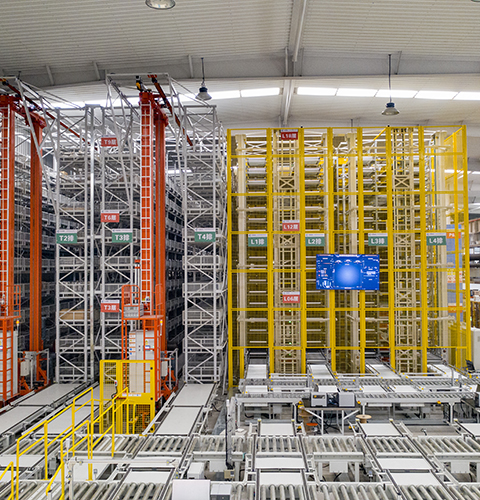
Machinery Industry High-Density Storage Center
Heavy components and spare parts consolidated into high-density pallet storage, freeing floor space for production expansion and improving access control.
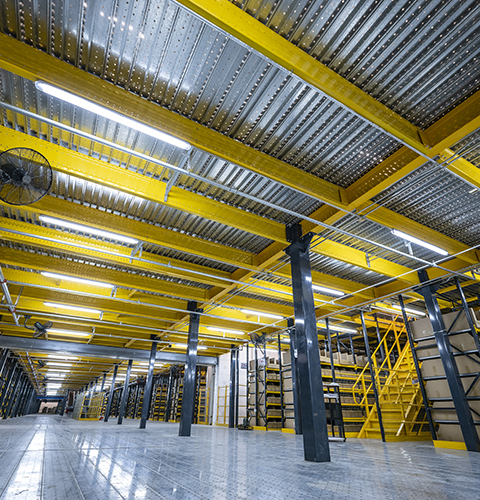
E-Business Logistics Center
Multi-tier picking racks and pallet storage built for peak-season order volumes, rapid SKU rotation and efficient picking workflows.
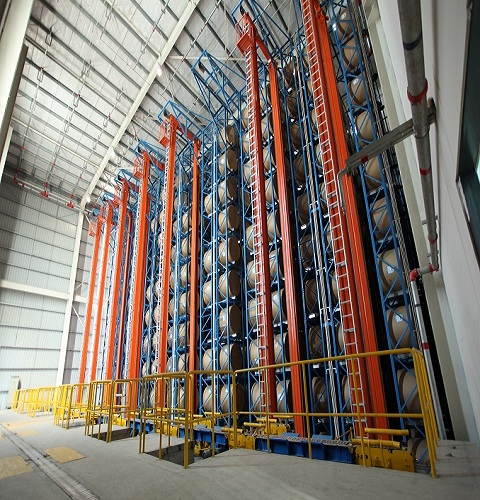
Paper-Making Industry Logistics Center
Automated storage for heavy paper rolls and finished goods, linking production output directly to dispatch and reducing manual handling pressure.
These examples matter because racking projects fail not only through steel quality problems. They also fail through poor pallet data, underestimated forklift clearances, late discovery of local seismic requirements, incomplete accessory lists and weak installation planning. A factory with cross-industry project experience can identify these risks during quotation and layout review, before they become change orders on site.
Frequently Asked Questions: Buying from a China Storage Racking Exporter
These are the questions procurement teams most often ask when comparing pallet racking factories, AS/RS suppliers and warehouse storage system exporters in China.
How do I identify a reliable China storage racking factory?
Verify manufacturing depth, engineering capability, quality-system certifications, reference projects and export documentation. Ask for load charts, structural calculations, material certificates, coating specifications and a pre-shipment inspection plan. A true factory can explain exactly how uprights, beams and accessories are produced and tested.
Can your racking be designed for seismic zones in Chile, Peru or Colombia?
Yes. Racking can be engineered with reference to local requirements such as NCh 2369, E.030 and NSR-10, with reinforced uprights, bracing, base plates and anchor specifications. Calculation reports can be supplied with quotation drawings for review by your local structural engineer.
How long does production and shipping to South America take?
Standard selective racking is typically produced in about 25–35 days. Ocean transit from China to ports such as Santos, San Antonio, Callao, Buenaventura, Guayaquil or Buenos Aires usually takes around 30–45 days depending on the route and schedule. Automated systems follow a project-specific timeline.
Which export documents are provided for customs clearance?
We provide a commercial invoice, detailed packing list, bill of lading and certificate of origin. On request, we can also supply material test reports, coating reports, installation manuals and project documentation in English, with Spanish or Portuguese support available for South America projects.
Do you offer installation and after-sales support overseas?
Yes. We can dispatch supervising engineers for installation and commissioning, train local installation crews, provide spare-parts lists and offer remote diagnostics for automated systems such as stacker cranes, shuttles and WMS/WCS software. Service scope is defined clearly in the contract.
What coating should be used for humid or coastal warehouses?
For humid tropical or coastal sites, we recommend epoxy-polyester powder coating with enhanced pretreatment. For cold storage, ports or high-corrosion environments, hot-dip galvanized components may be specified. The final choice depends on humidity, salt exposure, cleaning routines and expected service life.
Request a Factory-Direct Layout, Load Calculation and Export Quote
Send your building dimensions, pallet size and weight, forklift type, expected throughput and project country. Our team can reply with a racking recommendation, pallet-position estimate, preliminary layout direction and export planning notes for your market.
Send an InquiryFor faster review, include your city and country so seismic and freight requirements can be considered from the first response.