Eight Warehouse Shelving and Racking Systems for Wholesale Procurement
These systems cover the most common wholesale buying scenarios: long loads, high-density pallets, multi-level picking, narrow aisle storage and low-cost carton shelving. Compare the application fit first, then verify load tables, coating specification and container packing before issuing a purchase order.
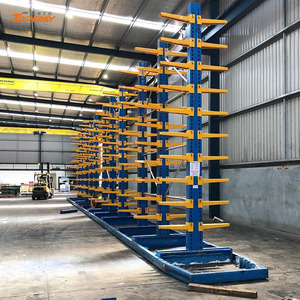
Topeasy TE-L212 Cantilever Racking
Single or double-sided arms for pipes, profiles, timber and other long materials. Powder-coated or galvanized finish, with knock-down structure for efficient export packing.
View product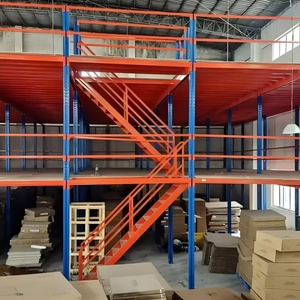
Heavy Duty Mezzanine Floor Racking
Add usable storage or picking levels without a new building. Suitable for distributors that need more cubic capacity but have limited floor area or an existing lease constraint.
View product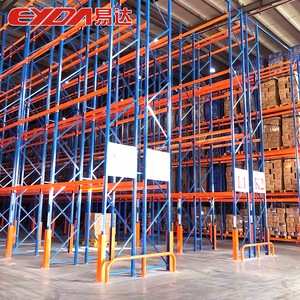
5-Layer Narrow Aisle Pallet Racking
High-density multi-layer pallet storage for warehouses seeking more pallet positions per square metre while retaining selective access to high-turnover SKUs.
View product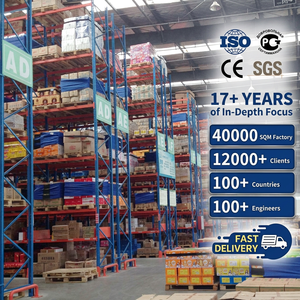
SDFD Selective Pallet Racking
Adjustable box-beam selective racking for mixed-SKU warehouses. Straightforward access, flexible beam levels and a practical fit for wholesale distribution and 3PL operations.
View product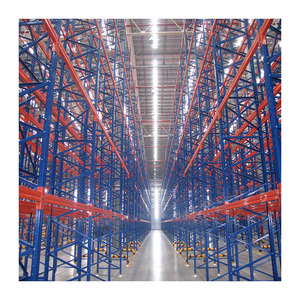
Heavy Duty Palletized Racking
Industrial palletized storage with load capacities commonly specified between 1,000 kg and 4,000 kg per level. Engineered for high-bay and high-throughput warehouse layouts.
View product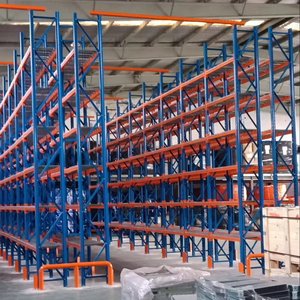
Selective Racking with Wire Mesh Deck
Wire mesh decking improves support for smaller cartons and irregular loads while maintaining visibility, sprinkler permeability and a cleaner storage surface.
View product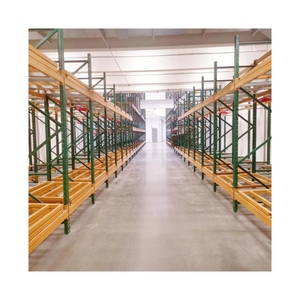
Custom Push-Back Pallet Racking
Push-back flow storage with guide rails for medium- to high-density pallet storage. A useful compromise when selective access is less important than space utilization.
View product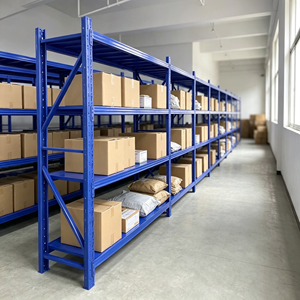
Boltless Rivet Storage Shelving
Cold-rolled steel boltless shelving for spare parts, cartons, e-commerce picking and fast, low-cost warehouse expansion. Powder-coated for routine corrosion protection.
View productWhy Warehouse Racking Procurement Has Become an Engineering Decision
Warehouse shelving and racking is no longer a simple steel purchase. For wholesalers, distributors and 3PLs, the racking system determines how many pallet positions a building can hold, how quickly orders can be picked, how safely forklifts can operate and whether a future automated storage and retrieval system can be added without rebuilding the entire facility.
A credible China warehouse racking supplier should therefore provide more than a price list. The supplier should explain upright section selection, beam deflection limits, seismic bracing assumptions, surface finishing for the destination climate, container-loading logic and installation supervision. That is the difference between buying shelving and buying a storage system that will pass local engineering review.
This whitepaper-style guide is structured for buying committees: procurement teams comparing warehouse shelving and racking wholesalers, operations managers checking throughput assumptions, and safety teams reviewing load capacity and documentation. The objective is information gain — practical selection criteria that help you compare suppliers on total lifecycle performance rather than the lowest quoted tonnage.
Load and Deflection Review
Pallet weight alone is not enough. Confirm pallet footprint, beam span, deck type, overhang and the required safety factor before comparing quotations.
Throughput and Selectivity
High-density systems save floor area but can reduce selectivity. Match the racking type to SKU velocity, pick faces and forklift aisle requirements.
Lifecycle and Expansion
Ask whether the design can migrate from manual pallet racking to shuttle or AS/RS operation, and whether spare parts and beams remain available years later.
Procurement Trends Shaping Warehouse Racking Orders Through 2030
Buying behaviour is moving away from “price per bay” towards total cost of ownership, code-ready design documentation and future automation readiness. These four trends should be written into your next RFQ.
Total Cost Over Unit Price
Freight, installation, rework, corrosion protection and expansion cost often outweigh a small difference in racking price. Buyers increasingly compare delivered and installed cost per usable pallet position.
Automation-Ready Layouts
Even if phase one is manual racking, procurement teams now ask for clear height, floor tolerance, column grid and racking interfaces that can later support shuttles, conveyors or AS/RS.
Seismic and Code Evidence
For Chile, Peru, Colombia and other seismic regions, quotations increasingly need calculation reports, anchor specifications and bracing drawings that local engineers can review.
Coating Life and Circular Steel
Coating quality affects maintenance cost and service life. Steel racking is highly recyclable, but buyers now also evaluate packaging waste, repairability and reusable modular components.
Indicative Storage Density Index
Density is a planning indicator only. Final pallet count depends on building height, aisle width, sprinkler clearance, forklift type and local code.
Sample Warehouse Racking TCO Allocation
A low ex-works price can lose its advantage if container loading is inefficient or installation drawings are incomplete.
Product Development Trends: What the Next Generation of Racking Must Deliver
Racking development is being driven by labour availability, higher storage density, stricter safety review and the need to integrate steel structures with warehouse software and automated equipment.
Automation Interface Design
Racking layouts are increasingly designed with datum tolerances, stacker-crane clearances and conveyor interfaces so that manual warehouses can be automated in phases.
Four-Way Shuttle Density
High-density shuttle systems are moving from niche projects into mainstream distribution planning, especially where pallet SKU counts are moderate but space cost is high.
Seismic Engineering by Default
Reinforced uprights, tuned bracing and anchor calculations are increasingly part of the standard technical file for projects in seismic zones rather than a post-tender add-on.
Long-Life Corrosion Protection
Epoxy-polyester powder coating with enhanced pretreatment, or hot-dip galvanizing for humid, coastal and cold-store projects, extends service life and reduces maintenance.
WMS/WCS-Ready Documentation
Automated systems require accurate racking coordinates, load data and equipment interfaces. Suppliers are expected to contribute structured data, not just steel drawings.
Modular, Relocatable Structures
Boltless shelving, knockdown cantilever arms and modular mezzanine systems support staged expansion, relocation and future reconfiguration with less welding and site work.
How to Match the Racking System to the Operation
A useful RFQ starts with operational logic, not a catalogue page. Use these three decision paths to narrow the system type before requesting structural drawings.
Many SKUs, Fast Access
Choose selective pallet racking when each pallet must remain directly accessible. Use longspan shelving or boltless rivet racks for carton picking, and mezzanine platforms when floor space is the constraint.
Few SKUs, High Density
Compare drive-in, push-back or radio shuttle systems when pallet lanes can be deep and selectivity is less critical. Confirm whether FIFO or LIFO is required before selecting the lane design.
High Labour Cost, 24/7 Output
Evaluate AS/RS or four-way shuttle storage when throughput, labour availability and building height justify automation. The racking must be designed with the crane, shuttle and software interfaces in mind.
Company Advantages Buyers Can Verify Before Ordering
E-E-A-T in industrial procurement is not a slogan. It is the ability to show engineering depth, production capacity, certifications, project references and after-sales processes in a form that buyers and local engineers can audit.
Manufacturing Experience Since 1997
My Favorite Shelf Industrial Co., Ltd. has planned, manufactured and installed warehouse racking and automated storage systems since 1997, with an annual steel processing capacity of around 60,000 tons.
R&D Centre and 70+ Patents
A municipal-level technical R&D centre supports racking, stacker cranes, conveyors, shuttle carriers and WMS/WCS software, with more than 70 national patents and software copyrights.
Certified Quality and Safety
Production is managed under ISO 9001, ISO 14001, ISO 45001 and ISO 10012 measurement management, with CE certification covering racking, shuttle cars, stacker cranes and RGVs.
Global Project References
More than 8,000 projects have been delivered across 140+ countries. Designated logistics equipment references include GE, Siemens, Walmart, Amazon and Toyota, alongside distributor and 3PL projects.
Engineering and Delivery Evidence to Request in an RFQ
- Upright and beam load tables, including deflection limits
- Seismic calculation report with anchor and base-plate details
- Coating system, pretreatment and salt-spray test reference
- Container-loading plan and packing list with weights
- Installation manual, safety labels and spare-parts list
- Certification copies: ISO, CE and material test reports
Export, Seismic and Coastal Specification Notes for Global Buyers
China-based wholesalers often serve buyers across very different climates and building codes. The technical specification should follow the destination site, not a generic catalogue assumption.
Seismic Zone Documentation
Projects in Chile, Peru and Colombia should be reviewed with reference to local requirements such as NCh 2369, E.030 and NSR-10. Reinforcement, bracing, base plates and anchor specifications should be stated in the quotation package.
Humid and Coastal Protection
For ports, cold chain and tropical warehouses, specify epoxy-polyester powder coating with enhanced pretreatment or hot-dip galvanized components. Confirm the coating system for the actual humidity and salt exposure.
Customs and Shipping Readiness
Export documentation typically includes commercial invoice, packing list, bill of lading, certificate of origin and, on request, material certificates. Major ports served include Santos, San Antonio, Callao, Buenaventura and Buenos Aires.
Warehouse Racking and Shelving Procurement FAQ
These are the questions that most often determine whether a wholesale racking order moves smoothly from quotation to installation.
What is the minimum order for a China warehouse racking supplier?
Minimum order depends on the system. Standard pallet racking and boltless shelving can often be quoted as mixed container loads, while cantilever, mezzanine and automated systems are usually engineered project orders. Provide drawings and pallet data so the supplier can calculate a realistic container plan.
How do I verify the load capacity of pallet racking?
Ask for a load table linked to the exact upright section, beam profile, beam span and deck type. Confirm whether the stated capacity is per level, per bay or per pair of beams, and check the deflection assumption. A proper quotation should not list a single capacity figure without configuration data.
Can racking be designed for seismic zones in Chile, Peru or Colombia?
Yes. A supplier should provide structural and seismic calculations with reference to local requirements such as NCh 2369, E.030 and NSR-10, and specify reinforced uprights, bracing, base plates and anchors. The calculation report should be delivered for review by your local engineer before production.
Which surface finish is best for humid or coastal warehouses?
For humid tropical or coastal sites, specify powder coating with enhanced pretreatment or hot-dip galvanizing for high-corrosion areas. Confirm the coating thickness, pretreatment process and any salt-spray reference. The lowest-cost standard paint system may not be suitable for cold stores or port warehouses.
How long does production and shipping take?
Standard selective racking is often produced in about 25 to 35 days, while ocean transit from China to major ports can take around 30 to 45 days depending on the route. AS/RS, shuttle and mezzanine projects usually follow a project schedule agreed at contract stage.
What documents are provided for customs clearance?
Typical documents include commercial invoice, detailed packing list, bill of lading, certificate of origin and, on request, test reports, material certificates and installation manuals. Confirm the required language and any destination-specific certification before shipment.
Can I get a layout and pallet-position count before placing an order?
Yes. A professional supplier should request building dimensions, column grid, clear height, pallet size, load weight, forklift type and throughput assumptions. The reply should include a CAD layout, pallet-position count and recommended system, not only a product price.
Do suppliers provide installation and after-sales support?
For export projects, support may include supervising engineers, installation manuals, local crew training, spare parts and remote diagnostics for automated equipment. Clarify who is responsible for unloading, site safety, anchor installation and final load testing before the contract is signed.
Get a Racking Recommendation, Pallet Count and Export-Planning Review
Send your building drawing or basic dimensions, pallet size and maximum load, forklift type, target throughput and destination country. A layout-driven quotation will help you compare suppliers on the same technical basis — including seismic review, coating specification, container packing and installation scope.
Inquire Now