China Wholesale Industrial Pallet Racks Factory & Suppliers
A procurement-grade guide to selecting heavy-duty warehouse pallet racking from a verified Chinese manufacturer — with engineered load calculations, CE/ISO quality controls, container-optimized shipping and lifecycle support for distribution centers worldwide.
Industrial Pallet Rack Product Recommendations
The eight systems below cover the most common wholesale procurement requirements: adjustable selective racking, modular heavy-duty frames, logistics-center racking, high-capacity multi-level storage, CE-certified export racking, mobile automation and corrosion-protected warehouse racks. Every product image is displayed in full ratio, and every product URL is preserved for direct technical review.
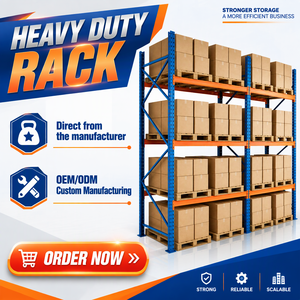
800kg Adjustable Selective Pallet Racking System
Custom 4, 5 or 6-layer heavy-duty warehouse pallet racks with adjustable beams for mixed-SKU storage and fast pallet access.
View Product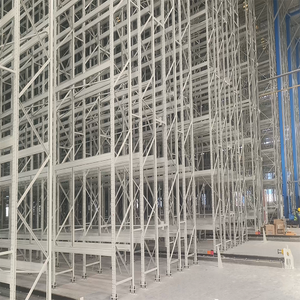
Modular Industrial Heavy-Duty Pallet Racking System
Expandable heavy-frame pallet organizing system for phased industrial storage, repeated relocation and future bay additions.
View Product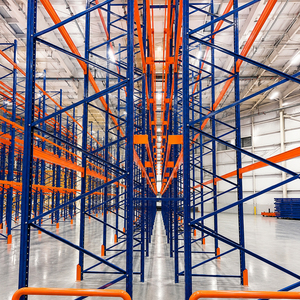
Heavy-Duty 1000kg Steel Pallet Rack for Logistics Centers
Logistics-grade steel storage rack with 24-hour technical support for high-throughput distribution and warehouse operations.
View Product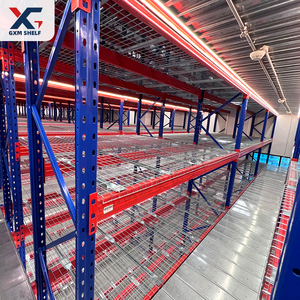
Three-Dimensional Warehouse Pallet Rack Storage System
High-density, multi-level industrial racking designed to convert clear building height into usable pallet positions.
View Product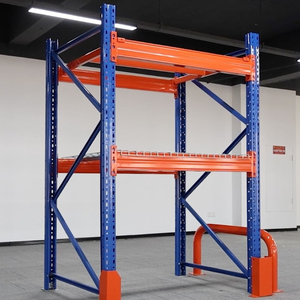
4000kg Multi-Level Pallet Racking for Auto Parts Logistics
High-capacity pallet racking for heavy auto parts, multi-level picking and industrial logistics parks requiring stable load transfer.
View Product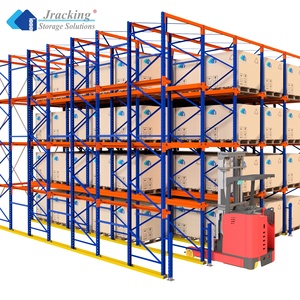
EU Blue & Orange Selective Pallet Racking — CE Certified
Export-ready selective pallet racking with EU-style blue/orange finish, CE documentation and flexible beam levels for wholesale buyers.
View Product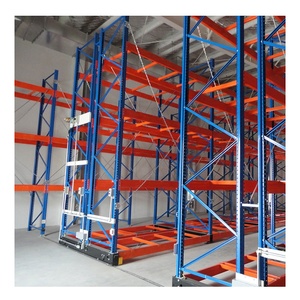
Automatic Mobile Pallet Racking System — Factory Price
High-density mobile racking that compresses aisles and increases pallet positions per square metre for cold chain and buffer storage.
View Product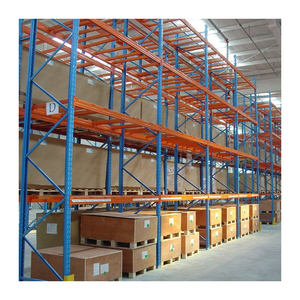
Industrial 5-Layer Heavy-Duty Pallet Rack — 2000kg
Corrosion-protected 5-layer steel rack for warehouse storage, with 2,000kg load capacity and dependable pallet access.
View ProductFrom Price Comparison to Engineering Assurance
In the China wholesale industrial pallet racks market, the difference between a low quotation and a reliable warehouse asset rarely appears on the initial price sheet. It appears in the engineering submittal, coating thickness, anchor calculation, container load plan and the supplier’s response when a beam is damaged three years later.
Industrial pallet racking is a structural product. Selective pallet racking, drive-in racking, radio shuttle racking, mobile racking and AS/RS all transfer pallet loads through upright frames, beams, bracing, base plates and floor anchors. The final design must respect local building codes, floor slab capacity, forklift impact risk, fire strategy and inspection regimes. A supplier without in-house engineering can trade steel; an experienced factory can coordinate racking with the building, the pallet flow and future automation interfaces.
For buyers, the responsible question is not “Who sells the cheapest rack?” but “Which China wholesale industrial pallet racks factory and supplier can prove that the system will perform under our load, building, seismic and operating conditions?” That proof should be visible before the purchase order, not after the shipment arrives. It should include general arrangement drawings, load plans, beam and upright specifications, finish requirements, anchor details and a container-loading plan that protects the product during ocean transport.
What a technical quotation should reveal
A credible quotation should state the design load per level, the safety factor and the applicable design reference, such as EN 15512, FEM 10.2.09, RMI ANSI MH16.1 or the relevant local code. It should identify upright and beam profiles, locking mechanisms, surface treatment and whether the price includes anchors, protection barriers, load signs and installation supervision. Without these details, two quotations cannot be compared on a like-for-like basis.
The most valuable information gain in procurement is not another product photo; it is a documented engineering trail. A buyer who can compare submittals, material certificates, load test records and spare-part commitments will make a better decision than a buyer who compares only price per kilogram.
Six Procurement Shifts Shaping 2025–2030
Wholesale pallet rack purchasing is moving from a transactional steel purchase to a lifecycle infrastructure decision. These shifts are especially important for distributors, 3PLs, manufacturers and project contractors comparing Chinese factory-direct supply.
Specification-Led Buying
Buyers increasingly require a line-by-line compliance matrix: load per level, deflection limits, upright section, beam lock type, finish, anchors and documentation. Price-only comparison is being replaced by verifiable specification comparison.
Automation-Ready Layouts
Warehouses want static selective racking today with a credible path to shuttle, mobile racking or AS/RS later. Early planning of aisle width, future crane clearance, floor tolerance and WMS/WCS interfaces avoids stranded capital.
Seismic & Safety Proof
Projects in seismic regions require local design references such as NCh 2369, E.030 or NSR-10. Even in non-seismic markets, procurement teams now ask for anchor calculations, inspection guidance and documented load signage.
Total Landed Cost
Freight, container utilization, unloading labor and installation time now matter as much as ex-works price. Nested profiles, steel-strapped bundles and engineered packing can reduce cost per pallet position delivered.
Factory Transparency
Video audits, production schedules, material certificates and named project references are becoming normal RFQ requirements. Traders can forward a catalog; a real factory must be able to prove process control.
Service & Spare Parts
Uptime depends on replaceable beams, uprights, safety clips and automation components. Suppliers that provide spare-part lists, local installer training and remote diagnostics become preferred long-term partners.
How Industrial Pallet Racks Are Evolving at Factory Level
The next generation of pallet racking is being developed around structural precision, automation integration, corrosion protection and data-enabled lifecycle management — not simply heavier steel.
High-Bay Structural Precision
Taller racking demands tighter control of upright straightness, beam locking, frame bracing and floor tolerance. Factory fabrication and pre-assembly checks reduce site adjustment and improve safety in high-bay applications.
Shuttle, Mobile & AS/RS Convergence
Racking is increasingly designed as an interface for shuttle carriers, mobile bases, stacker cranes and conveyors. Tolerances, rail positions, power/data routing and maintenance access are planned together with the steel structure.
Digital Engineering Workflows
CAD layouts, 3D project models, load plans and digital handover packages make it easier for local engineers and safety reviewers to verify the proposal before shipment and maintain the system after commissioning.
Corrosion Protection for Humid Sites
Coastal, tropical and cold-chain warehouses require enhanced pretreatment, epoxy-polyester powder coating or hot-dip galvanized components. Finish selection should be tied to site humidity, temperature and washdown practice.
Smart Rack Safety & Tags
QR tags, load signage, inspection intervals and damage-reporting workflows are being integrated into rack delivery. In automated systems, sensors and control data help operators detect abnormal events earlier.
Modularity & Circular Design
Bolted, modular racking supports phased expansion, relocation and component replacement. Steel recyclability and coating durability are becoming part of lifecycle and ESG evaluation for large projects.
Match the Rack System to the Operating Profile
Procurement becomes faster when the warehouse profile is translated into a system type before requesting prices. Use these recommended starting points, then confirm the final design with load calculations and site data.
Fast-Moving Multi-SKU DC
Start with adjustable selective pallet racking where pallet access, SKU selectivity and low operational risk matter more than maximum density.
Review CE Selective RackExpanding Industrial Storage
Choose modular heavy-duty frames when storage must grow in phases, relocate or adapt to changing production and spare-parts demand.
Review Modular SystemHeavy Auto Parts & Multi-Level Picking
Use high-capacity multi-level racking when pallet weight rises and the operation requires stable access across multiple storage levels.
Review 4000kg SolutionHigh-Density Buffer & Cold Chain
Evaluate mobile racking or shuttle systems when land cost is high, SKU variety is controlled and pallet positions per square metre drive ROI.
Review Mobile RackingDensity, Selectivity & Procurement Notes
Storage density is not the only objective. Selectivity, handling equipment, fire strategy, inventory rotation and future automation determine which racking type is actually appropriate.
| Racking System | Density | Selectivity | Ideal Operating Profile | Procurement Note |
|---|---|---|---|---|
| Selective Pallet Racking | ●●○○○ | ●●●●● | Many SKUs, fast access, mixed pallet sizes | Lowest-risk starting point; specify beam load, upright protection and future bay expansion. |
| Double-Deep Racking | ●●●○○ | ●●●○○ | Multiple pallets per SKU | Requires deep-reach trucks; check aisle and handling equipment before purchase. |
| Drive-In / Drive-Through | ●●●●○ | ●○○○○ | Homogeneous SKUs, cold storage, beverage | High density with low selectivity; rail protection and lane discipline are essential. |
| Radio Shuttle Racking | ●●●●○ | ●●○○○ | Deep lanes, FIFO or LIFO buffer storage | Plan shuttle quantity, battery strategy, maintenance access and control logic. |
| Mobile Pallet Racking | ●●●●● | ●●●●○ | High land cost, controlled aisle access | Need floor tolerance, rail design, power supply and safety controls reviewed together. |
| AS/RS High-Bay Racking | ●●●●● | ●●●●● | 24/7 automated warehouse, labor saving | Highest technical interface; integrate rack, stacker crane, conveyor and WMS/WCS early. |
A 12-Point Factory Acceptance & RFQ Scorecard
Use this scorecard to compare Chinese pallet rack factories and suppliers on evidence rather than presentation. A strong supplier should answer most points before the first purchase order.
Structural calculation with EN 15512, FEM 10.2.09, RMI or local code references.
Upright and beam load test reports tied to the proposed profiles.
Steel grade, coil traceability and mill certificate availability.
Powder coating thickness, pretreatment process and salt-spray test evidence.
Anchor specification and floor slab verification assumptions.
General arrangement drawing, load plan and anchor plan package.
CE and ISO certificate scope, expiry and product coverage.
Factory audit evidence, production schedule and named project references.
Container loading plan, packing protection and unloading guidance.
Installation method statement, safety plan and supervision scope.
Spare parts list, lead times and recommended inspection interval.
Warranty terms, after-sales response and remote technical support.
The Factory Behind the Proposal
My Favorite Shelf Industrial Co., Ltd. has designed, manufactured and installed warehouse racking and automated storage systems since 1997. The company combines steel fabrication, engineering documentation, automation integration and export project support under one accountable manufacturer.
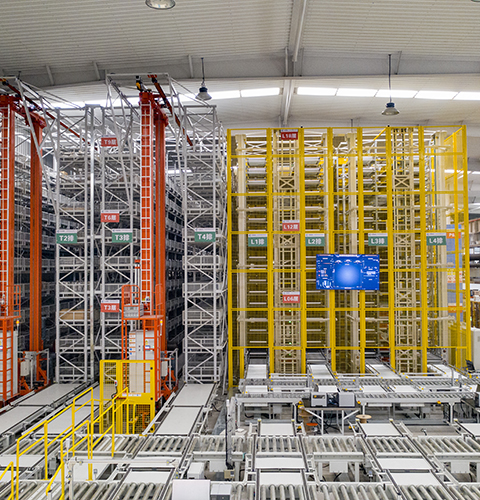
Factory-direct capability, auditable quality and engineering depth
The production base processes approximately 60,000 tons of steel per year, with in-house cold-rolling and powder-coating lines, load testing and project documentation. A municipal-level R&D center holds more than 70 national patents and software copyrights covering racking, stacker cranes, conveyors, shuttle carriers and warehouse control software.
For wholesale buyers, this means one manufacturer can take responsibility for the steel structure, the automation interface and the export documentation — reducing coordination gaps between separate designers, factories and installers.
- Since 1997 with 8,000+ projects delivered
- 140+ export countries served
- ISO 9001, ISO 14001 and ISO 45001 certified
- CE-certified racking, shuttle, stacker crane and RGV scope
- Designated supplier experience with GE, Siemens, Walmart, Amazon and Toyota
- Engineering team led by professor-level senior engineers and doctoral tutors
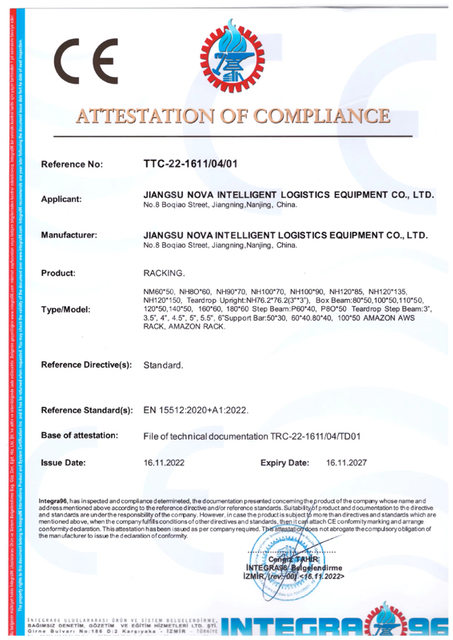 CE · Racking
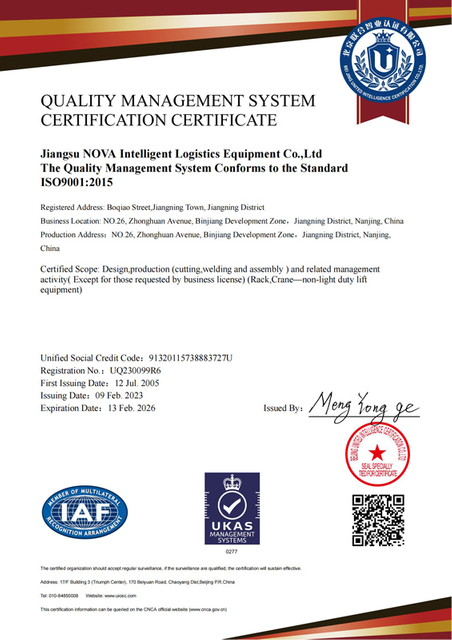 ISO 9001
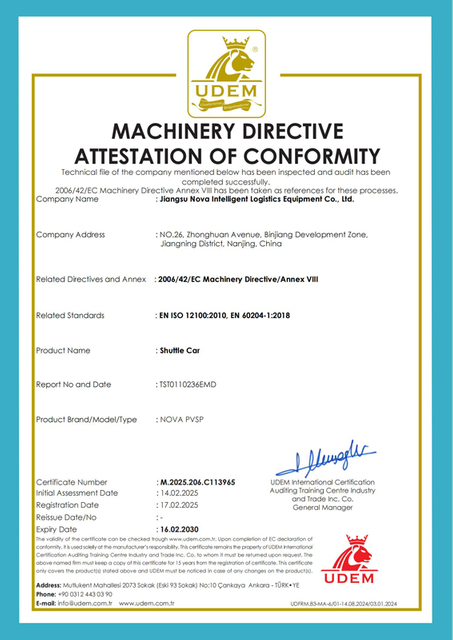 CE · Shuttle Car
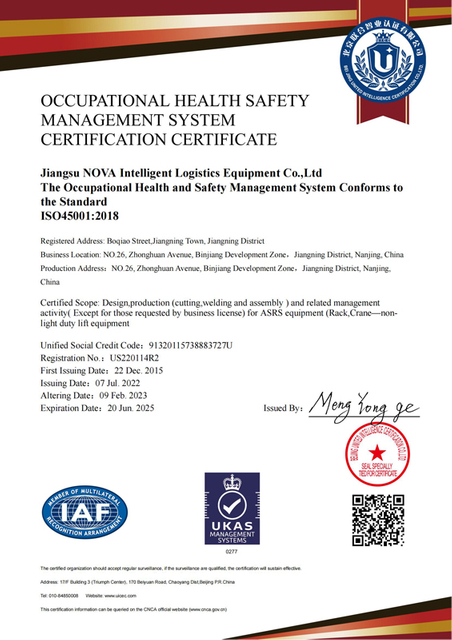 ISO 45001
From Machinery to E-Commerce & Paper Logistics
Racking performance is best judged through operating contexts. These project examples show how heavy loads, fast picking and automated storage create different engineering priorities.
Machinery Industry Storage Center
Heavy components and spare parts consolidated into high-density pallet storage, freeing floor space for production expansion while maintaining stable access to heavy loads.
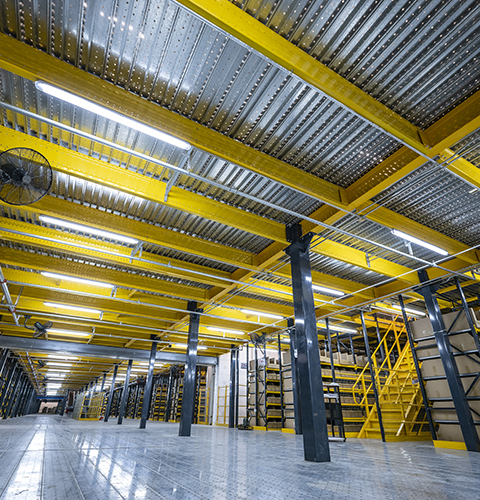
E-Commerce Logistics Center
Multi-tier picking racks and pallet storage built for peak-season order volumes, fast SKU rotation and efficient replenishment in a high-throughput fulfillment environment.
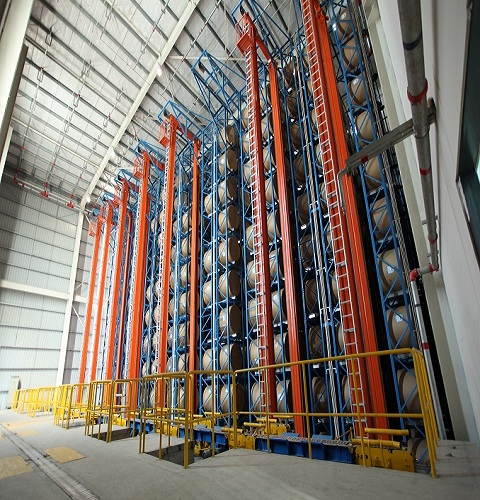
Paper-Making Logistics Center
Automated storage for heavy paper rolls and finished goods, linking production output directly to dispatch and reducing manual handling in a demanding industrial flow.
Frequently Asked Questions About Wholesale Pallet Rack Procurement
These are the questions procurement teams most often ask when comparing China wholesale industrial pallet racks factories and suppliers.
What information is needed to quote an industrial pallet rack project?
Provide building length, width and clear height; column grid and floor slab information; pallet size and maximum load; required load per beam level; forklift or AGV type; required number of pallet positions; temperature conditions; and project city/country. Drawings or a simple dimension sketch allow the factory to prepare a more reliable layout and calculation package.
How can I verify that a China wholesale pallet rack factory is reliable?
Check the supplier’s production capability, not only its catalog. Ask for factory audit video, business license, certificate scope, structural calculation samples, load test reports, material certificates, named project references, spare-parts list and warranty terms. A manufacturer with in-house rolling, coating and engineering is easier to audit than a trading company with no process control.
Can pallet racking be designed for seismic zones and local building codes?
Yes. For seismic projects, engineers should run structural calculations with reference to local requirements such as NCh 2369 in Chile, E.030 in Peru or NSR-10 in Colombia, plus the applicable racking standards. Reinforced uprights, additional bracing, seismic base plates and anchor specifications can be included in the quotation drawings for review by the buyer’s local engineer.
What load capacity can a heavy-duty pallet rack system support?
Capacity is project-specific. Common warehouse systems may be rated at 800 kg, 1,000 kg or 2,000 kg per level, while high-capacity multi-level systems can be engineered for loads such as 4,000 kg per level or more. The final rating must be confirmed through structural calculation using the actual pallet weight, beam span, upright height, floor condition and safety requirements.
Which surface finish is suitable for humid or coastal warehouses?
For humid, tropical or coastal sites, specify enhanced pretreatment followed by epoxy-polyester powder coating with verified thickness. For cold-chain, washdown or high-corrosion environments, hot-dip galvanized components may be appropriate. Finish selection should be tied to the actual humidity, salt exposure, cleaning method and expected service life.
What are the typical production and shipping lead times for wholesale racking?
Standard selective pallet racking is often produced in about 25 to 35 days after drawing approval. Ocean transit from China to major ports usually takes around 30 to 45 days depending on the route. AS/RS, shuttle and mobile racking projects follow a project schedule agreed at contract stage because they require more engineering, controls and commissioning coordination.
Can selective racking be upgraded to shuttle or AS/RS in the future?
Selective racking can be planned for phased upgrades, but future automation must be considered early. Shuttle and AS/RS systems require specific aisle geometry, floor tolerance, height clearance, equipment access, power/data routing and WMS/WCS interfaces. Starting with a future-ready layout is usually cheaper than rebuilding an incompatible system later.
What export documents and after-sales support are provided?
Typical documents include commercial invoice, detailed packing list, bill of lading, certificate of origin and, when requested, test reports, material certificates and installation manuals. Support can include installation supervision, local crew training, spare parts, remote diagnostics for stacker cranes, shuttles and WMS/WCS software, and periodic rack safety inspection guidance.
Turn Warehouse Data Into a Factory-Ready Racking Proposal
Send building dimensions, pallet size and weight, required pallet positions, forklift type and project country. The engineering team can then prepare a layout, system recommendation, load calculation scope and export shipping plan for your industrial pallet rack procurement.