China Wholesale Pallet Storage Racking System Manufacturer & Exporter
Engineered pallet racking, mezzanine platforms, drive-in, selective, multi-level and heavy-duty storage systems for distributors, 3PLs and manufacturers. Built in China, documented for global procurement, and adapted to seismic, coastal, cold-chain and high-throughput warehouse conditions.
Eight Pallet Storage Racking Systems Ready for Wholesale Procurement
These buyer-ready systems cover the most common warehouse intents: dense lane storage, mezzanine expansion, multi-level picking, adjustable pallet racking, safety-focused heavy-duty storage and industrial pallet stacking. Each system can be customized by upright section, beam length, load rating, decking, anchor specification, column protection and surface finish.
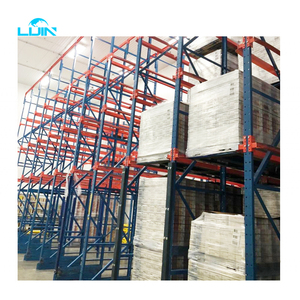
Heavy-Duty Drive-In Steel Pallet Racking System
Dense lane storage for homogeneous SKUs, cold rooms, beverage and food warehouses. The drive-in design reduces aisle space while keeping forklift access to the first pallet position.
View product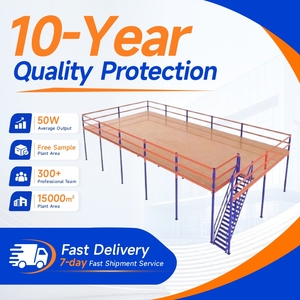
Heavy-Duty Warehouse Steel Mezzanine Pallet Racking System
Rack-supported mezzanine floors add a second or third usable level without expanding the building footprint. Suitable for e-commerce picking, spare parts and light assembly.
View product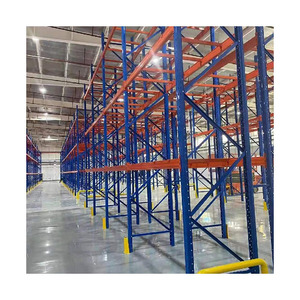
5-Layer Electrostatic Powder-Coated Selective Pallet Racking
Five-layer selective pallet racking with powder-coated steel, 2000 mm beam lengths and flexible beam adjustment. A practical choice for distributors that need direct access to every pallet.
View product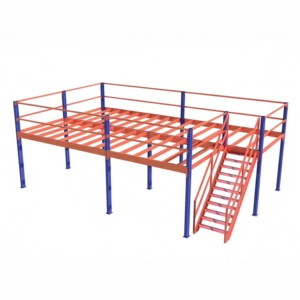
Custom Heavy-Duty Steel Mezzanine Warehouse Storage Rack
Custom heavy-duty mezzanine racking combines pallet storage below with a steel loft platform above. Engineered for warehouses that need extra floor area, stairs, railings and access control.
View product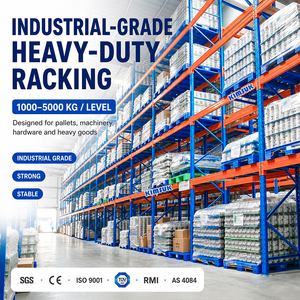
Adjustable Heavy-Duty Steel Pallet Warehouse Racking
Adjustable heavy-duty pallet racking for factories and distribution centers. Boltless beam connection, powder-coated finish and easy assembly support fast layout changes and future expansion.
View product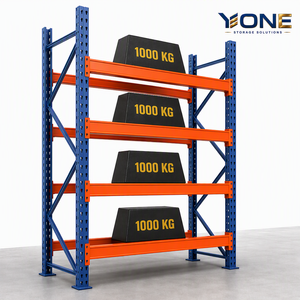
Durable Heavy-Duty Steel Pallet Racking with Safety Accessories
Durable industrial pallet racking with column guards, beam locks, load signs and safety accessories. Designed for high-traffic warehouses where forklift impact and inspection discipline matter.
View product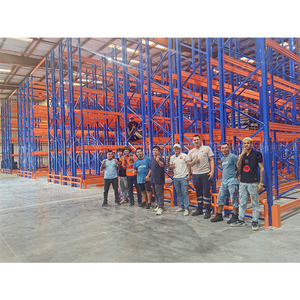
Industrial Multi-Level Heavy-Duty Pallet Storage Rack System
Multi-level industrial pallet storage for dense, high-turnover operations. Adjustable levels and corrosion protection support spare parts, retail and manufacturing storage environments.
View product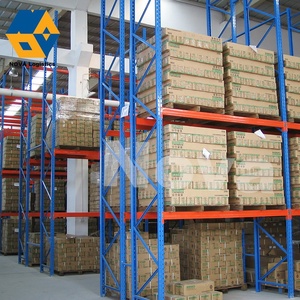
NOVA Heavy-Duty Industrial Pallet Rack Storage System
Heavy-duty industrial pallet rack system for stacking and racking applications. A manufacturer-led approach with export packing, technical documentation and project-based customization.
View productSpecify Pallet Racking as Structural Equipment, Not Commodity Shelving
For wholesale buyers, the lowest price per bay is rarely the lowest total cost. Pallet racking is a structural system that interacts with the floor slab, forklift fleet, fire protection, local building rules, pallet quality, SKU profile and future expansion plan. A disciplined specification process reduces rework, safety risk and locked-in operating cost.
Load Case & Structural Verification
Start with pallet footprint, unit load, overhang, beam deflection limits and upright capacity. A racking system should be checked for the actual load case, not only a generic beam capacity. Buyers should request layout drawings, beam and upright load tables, anchor specifications and installation tolerances before approving a supplier.
Seismic, Floor & Fire Interfaces
In seismic zones, rack height, site category, floor slab, bracing and anchor design must be evaluated together. Our engineering team references local requirements such as NCh 2369, E.030 and NSR-10 where applicable. Fire sprinkler layout, aisle width, forklift impact protection and emergency access should also be reviewed before finalizing the rack layout.
Finish, Safety Accessories & Documentation
For humid coastal or cold-chain warehouses, specify enhanced pretreatment powder coating or hot-dip galvanized components. For high-traffic sites, require column guards, beam locks, back stops, load signs and periodic inspection guidance. A reliable exporter should provide a packing list, material or test reports, installation manual and clear project documentation.
Information gain for procurement teams: request a documented load calculation, anchor schedule, finish specification, packing plan and system layout before comparing supplier prices. This makes the quotation auditable and helps protect your project from costly site modifications.
- Pallet length, width, height, weight and overhang condition
- Required beam deflection limit and upright impact protection
- Seismic zone, soil category, slab thickness and anchor details
- Sprinkler, fire-hose, aisle and emergency access requirements
- Forklift type, lift height, aisle width and turning radius
- SKU count, selectivity, throughput and future expansion plan
- Surface finish, humidity, washdown and cold-store conditions
- Container loading, shipping marks and installation sequence
How Pallet Storage Racking Will Be Bought in 2026–2030
Procurement is shifting from a one-time equipment purchase to a lifecycle decision. Buyers increasingly compare suppliers by engineering evidence, local compliance, installation risk, spare-parts support and the ability to grow the system in phases.
Total Cost of Ownership Replaces Unit Price
Warehouse managers are modeling relocation cost, downtime, damage repair, inspection frequency and expansion flexibility. A racking supplier that provides verified drawings and documented components becomes more valuable than a supplier quoting only the lowest steel weight.
Compliance Becomes a Gating Item
Seismic calculations, CE-marked automation, ISO management systems and documented quality checks are moving into the request-for-quotation stage. Buyers want evidence that the racking and accessories can be reviewed by local engineers before approval.
Hybrid Automation and Phased Capex
Instead of full automation from day one, many companies begin with selective, drive-in or shuttle-ready layouts and add AS/RS, conveyors or four-way shuttles later. Modular racking interfaces reduce the risk of rebuilding an entire warehouse when volume grows.
Regional DCs and Freight-Aware Design
Nearshoring and regional distribution are changing warehouse footprints. Buyers are asking for container-optimized packing, shorter installation windows and layouts that fit leased buildings where slab, height and fire constraints cannot be changed easily.
Where Pallet Storage Racking Technology Is Moving Next
The strongest product direction is not simply “more steel.” It is better system integration: high-density storage with predictable retrieval, safety intelligence, corrosion resistance and data links between racking, forklifts and warehouse software.
High Density Without Losing Selectivity
Radio shuttle, four-way shuttle and double-deep configurations continue to improve pallet positions per square meter. The next differentiator is how easily a system can switch between dense storage and SKU-level access as inventory profiles change.
AS/RS and Shuttle-Ready Interfaces
Racking is increasingly designed as part of an automated storage and retrieval system, with precise tolerances for stacker cranes, shuttle rails, conveyors and rail-guided vehicles. Early coordination between racking and automation suppliers reduces site-fit issues.
WMS, WCS and Digital Documentation
Warehouse software is becoming part of the racking decision for automated projects. Digital layouts, bill-of-material traceability and WMS/WCS coordination help operators plan replenishment, monitor shuttle activity and maintain the system after commissioning.
Corrosion Resistance for Coastal and Cold Chain
Enhanced powder coating, galvanized components and improved pretreatment are growing requirements for ports, tropical warehouses, food processing and cold storage. Finish specification is now a technical decision, not a color choice.
Why Global Buyers Source from My Favorite Shelf Industrial Co., Ltd.
Since 1997, My Favorite Shelf has designed, manufactured and installed warehouse racking and automated storage systems from its production base in Nanjing, Jiangsu, China. The company operates an integrated manufacturing, engineering and project-delivery model rather than acting as a simple trading layer.
Manufacturer with In-House Steel Capacity
Our production base processes approximately 60,000 tons of steel annually, covering profile forming, welding, powder coating, packing and project-based fabrication. Direct factory control helps protect dimensional accuracy, finish quality and delivery milestones.
R&D Center and 70+ Patents
A municipal-level technical R&D center supports racking structures, stacker cranes, conveyors, shuttle carriers and WMS/WCS software. More than 70 national patents and software rights reflect a long-term engineering focus rather than short-term product copying.
Certified Quality and Traceability
Production is managed under ISO 9001, ISO 14001 and ISO 45001, with CE certification for racking, stacker cranes, shuttles and RGVs. Coil traceability, coating-thickness checks and pre-shipment load or dimensional verification support procurement review.
Global Project Experience
More than 8,000 racking and AS/RS projects have been delivered across 140+ countries. Experience with brands such as GE, Siemens, Walmart, Amazon and Toyota has shaped a project discipline that is applied to distributors, 3PLs and manufacturers of different sizes.
South America Engineering Support
For Chile, Peru, Colombia, Brazil, Argentina and Ecuador, we adapt designs to seismic review, coastal humidity, container shipping and local installation sequencing. Project documentation is provided in English, with Spanish or Portuguese support available for project coordination.
End-to-End Service
From warehouse layout and structural calculations to manufacturing, export packing, installation supervision, spare parts and remote diagnostics, one accountable team manages the project. This reduces coordination risk between separate designers, factories and installers.
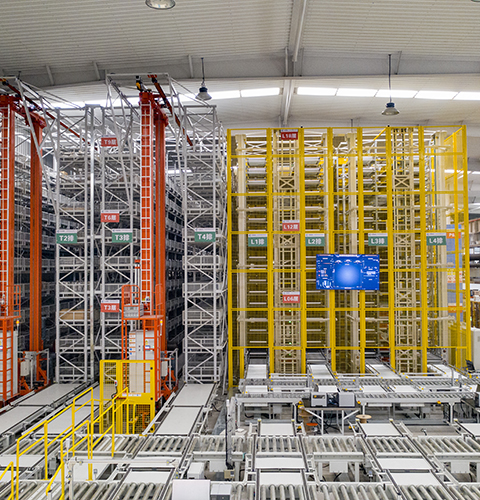
Real Projects Support Real Procurement Confidence
Procurement teams do not only buy steel; they buy certainty of installation, safety review and long-term operation. Our project portfolio includes high-density storage centers for machinery components, e-commerce logistics centers, paper-industry logistics centers and multi-level mezzanine projects.
For export buyers, we translate project experience into practical documents: layout drawings, pallet-position counts, loading plans, anchor schedules, packing lists and installation guidance. The objective is to make the warehouse buildable, inspectable and scalable.
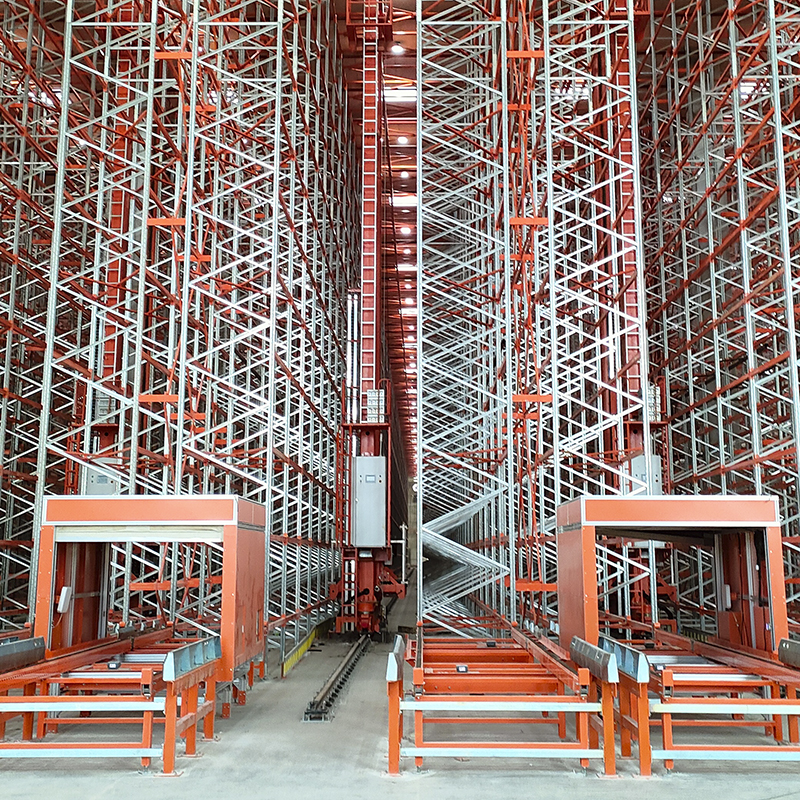
Warehouse Solutions: Lifting Storage and Working Efficiency
Automation releases labor and stabilizes throughput when inventory growth outpaces manual picking. Drawing on racking and AS/RS project experience in medical, food, automotive, textile, oil and e-commerce sectors, the key is matching automation to the real order profile and payback period.
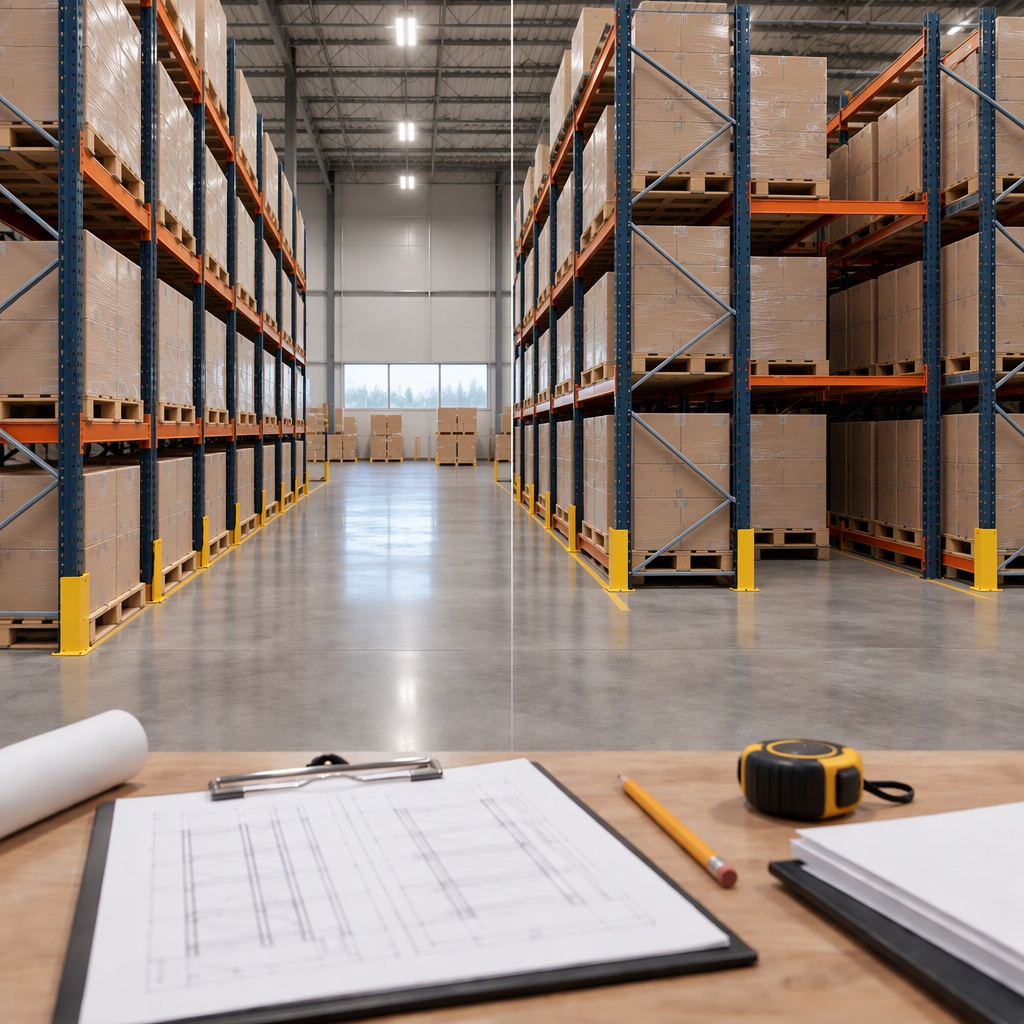
Single-Deep vs. Double-Deep Storage: Evaluating Access and Capacity
Single-deep selective racking offers direct access to every pallet, while double-deep increases density by storing two pallets per position. Buyers should compare handling equipment, SKU velocity, safety review and future reconfiguration before selecting the lower-cost density option.
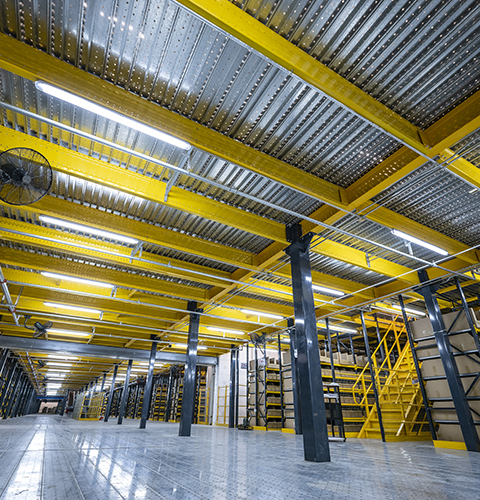
E-Commerce Logistics Center: Multi-Level Picking and Pallet Storage
Peak-season order volumes reward layouts that separate fast-moving carton picking from reserve pallet storage. Multi-tier racks, mezzanine platforms and clear replenishment routes help maintain picking speed while keeping reserve inventory dense.
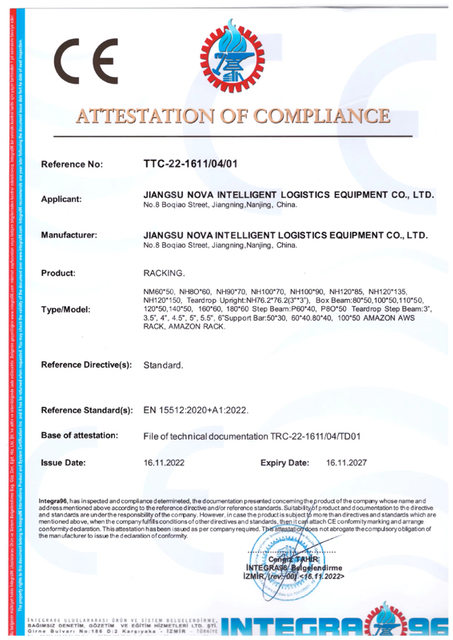 CE · Racking
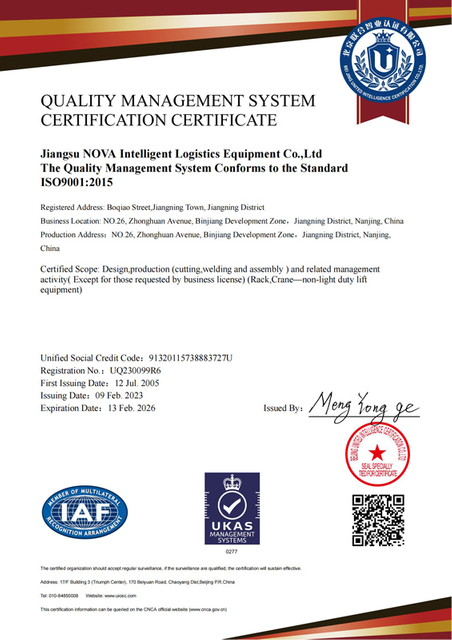 ISO 9001
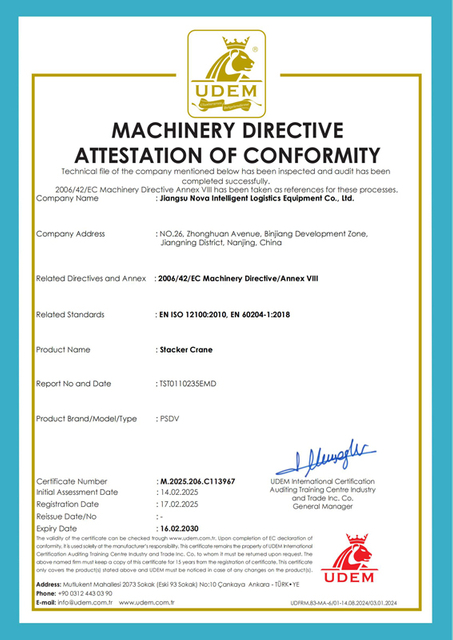 CE · Stacker Crane
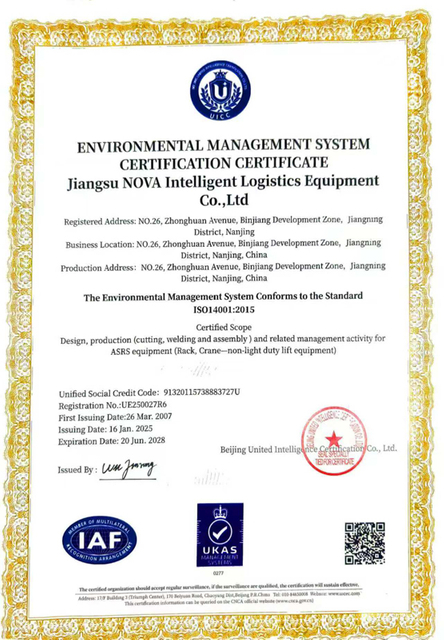 ISO 14001
Match Racking Density and Selectivity to Your Operating Intent
Use this matrix as an early planning tool. Final selection depends on load calculations, building geometry, fire strategy, forklift equipment and local code review.
| System | Density | Selectivity | Best-Fit Intent |
|---|---|---|---|
| Selective Pallet Racking | Many SKUs, direct access and fast picking | ||
| Double-Deep Racking | Two or more pallets per SKU with moderate selectivity | ||
| Drive-In Racking | Cold rooms, beverage and homogeneous inventory | ||
| Radio Shuttle Racking | Deep lanes, FIFO or LIFO, reduced forklift travel | ||
| Four-Way Shuttle | Automated dense storage with flexible retrieval | ||
| AS/RS | High-bay, 24/7 operation and labor saving | ||
| Mezzanine / Multi-Level | Add usable floor area for picking, storage or assembly |
Frequently Asked Questions About Wholesale Pallet Racking Procurement
These are the questions most commonly raised by importers, distributors, 3PLs and project contractors comparing Chinese pallet racking suppliers.
Are you a manufacturer and exporter, or only a trading company?
My Favorite Shelf Industrial Co., Ltd. is a manufacturer and exporter founded in 1997, with an own production base in Nanjing, Jiangsu, China. Production covers racking profiles, powder coating, packing and project fabrication, with approximately 60,000 tons of annual steel processing capacity. We also provide AS/RS, shuttle, conveyor and WMS/WCS integration support.
Can pallet racking be customized for my warehouse and local code?
Yes. We customize uprights, beams, load ratings, dimensions, colors, decking, column guards, anchors and finish systems. For seismic regions, our engineers prepare structural calculations with reference to local requirements such as NCh 2369, E.030 and NSR-10 where applicable. Drawings and calculation reports can be delivered for review by your local engineer.
What information should I send for a fast quotation?
Please send building length, width and clear height; column grid; pallet length, width, height and load; required pallet positions; forklift type and lift height; SKU count and selectivity expectation; destination port or city; seismic zone if known; and any fire-protection or slab constraints. With these inputs, our team can prepare a layout, system recommendation and preliminary pallet-position count.
How do you verify quality before shipment?
Production is managed under ISO 9001, ISO 14001 and ISO 45001, with CE certification for applicable racking and automated equipment. Quality control includes material traceability, profile dimensional checks, welding inspection, coating-thickness checks, pre-shipment load or dimensional verification and export packing confirmation. Inspection photos and documents can be provided before shipment.
What are the lead times and shipping options to South America?
Standard selective racking is typically produced in 25 to 35 days. Ocean transit from China to Santos, San Antonio, Callao, Buenaventura, Guayaquil or Buenos Aires usually takes around 30 to 45 days, depending on the route and shipping schedule. AS/RS and shuttle projects follow a project schedule agreed at contract stage. We provide commercial invoice, packing list, bill of lading, certificate of origin and requested test or material reports.
Do you provide installation and after-sales support?
Yes. We can dispatch supervising engineers for installation and commissioning, train local installation crews, provide installation manuals and supply spare parts. For automated systems, remote diagnostics support is available for stacker cranes, shuttles and WMS/WCS software. Spanish or Portuguese project support can be arranged for South American buyers, and periodic rack safety inspection guidance is available after handover.
Request a Factory-Direct Pallet Racking Layout and Quotation
Send your building drawing, pallet load, clear height, required pallet positions and destination city. Our engineering team will respond with a system recommendation, layout direction, pallet-position estimate and manufacturing plan for your warehouse project. For coastal, cold-chain or seismic sites, include the city and any local review requirements so the finish and structural details can be prepared correctly.