8 Wholesale Pallet Storage Racks Recommended for Export Buyers
The eight systems below cover the practical buying range: selective beam racking for fast access, live and push-back lanes for density, heavy-duty source-factory beams for logistics centers, customized safety packages, semi-automated radio shuttle, and long-span shelving for industrial mixed storage. Click any product URL to review a specific configuration; use the Get Catalog button for load tables, finish samples and container-loading drawings.
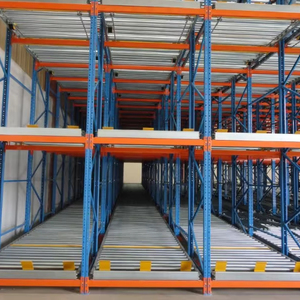
Heavy Duty Gravity Flow Pallet Rack Steel Roller Rack Warehouse Storage Racking System 1000kg Layer
A FIFO live-storage lane for cartons and pallets up to 1,000 kg per layer. Gravity rollers reduce forklift travel and improve picking speed in fast-moving wholesale distribution centers.
View product →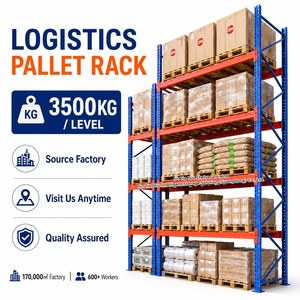
3500kg Super Heavy Duty Logistics Warehouse Pallet Beam Racking Source Factory High Load Storage Rack
A source-factory beam rack for dense logistics storage, engineered for 3,500 kg level loads, heavy pallets and tall warehouse profiles where beam strength and repeatability matter.
View product →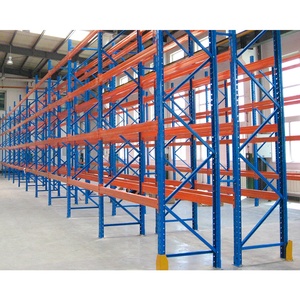
Customized Pallet Rack for Warehouse with Rack Safety
Customized selective pallet racking with safety accessories, anchors, protectors and layout drawings for mixed-SKU warehouses and export projects that require engineering review.
View product →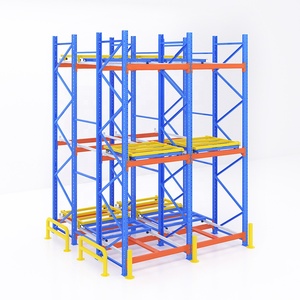
Pallet Live Rack Push Back Pallet Rack
A push-back rack uses nested carts on inclined rails to store multiple pallets deep per lane. Ideal for medium-fast SKUs where LIFO is acceptable and aisle space is constrained.
View product →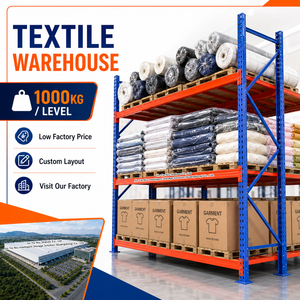
1000KG Heavy Duty Pallet Rack Manufacturer for Logistics Warehouse Storage
A cost-effective selective rack for logistics warehouses, with beam levels and upright frames configurable for 1,000 kg loads and smooth forklift access to every pallet.
View product →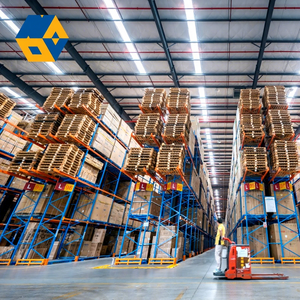
Heavy Duty 2000KG Per Layer Large Capacity Racking System Warehouse Storage High Duty Beam Stacking Pallet Rack Shelving Unit
Heavy-duty 2,000 kg per layer large capacity racking supports high stacking and stable pallet storage. Suitable for distribution centers expanding without adding new floors.
View product →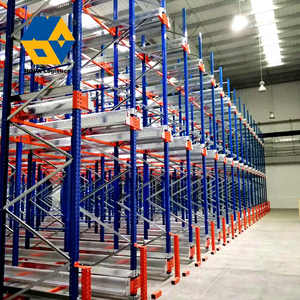
Manufacturer Automated 2 Way Radio Shuttle Rack System Warehouse Storage Steel Heavy Duty Drive in Shuttle Pallet Racking System
Automated two-way radio shuttle racking for high-density storage. Shuttles travel in lanes while forklifts remain in the aisle, improving safety and throughput for repetitive pallet flows.
View product →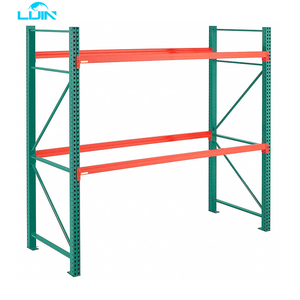
Long Span Adjustable Heavy Weight Warehouse Storage Pallet Shelves System Tear Drop Rack for Industrial
Long-span adjustable heavy-duty pallet shelving with tear-drop beams for industrial storage. Adaptable beam levels support cartons, parts and pallets in mixed-use facilities.
View product →Need load tables, finish options and container drawings?
Request the pallet rack catalog with beam capacity charts, upright frame data, powder-coating references, packing drawings and standard export documentation.
Why China Wholesale Pallet Storage Racks Remain a Strategic Procurement Category
China remains the most complete production base for pallet storage racks because cold-rolling, automatic welding, powder coating, shuttle-car assembly and warehouse control software sit inside a mature supplier network. For wholesale buyers, however, the real advantage is not the lowest quotation. It is the ability to compare load assumptions, certification evidence, coating specification, packing density and installation scope before a purchase order is issued.
Google's search quality framework rewards pages that demonstrate first-hand experience and verifiable expertise. This guide therefore separates product recommendations from procurement intelligence: what the rack does, which site conditions change the price, and which documents should exist in a factory-level quotation. The intent is to help a buyer reduce total landed cost and engineering risk, not to encourage a blind price comparison.
For export projects, racking is a structural product. Upright frames, beams, connectors, floor anchors, row spacers and guide rails must match pallet weight, rack height, forklift type, sprinkler clearance and local seismic or permitting rules. A wholesale factory quotation that does not show these inputs is a commercial estimate, not an engineered offer.
What a serious wholesale buyer should verify
Structural load table: beam capacity at your actual span, not a generic catalogue figure.
Steel and finish evidence: grade, upright thickness, coating thickness and salt-spray reference.
Compliance file: CE/ISO certificates, test reports and seismic calculation notes where required.
Logistics logic: nested profiles, bundle weight and container fill to protect freight economics.
Installation perimeter: supervision scope, anchor schedule, spare parts and WMS/WCS interface.
Pallet Rack Procurement Trends 2025–2030
Buying behaviour is shifting from “price per kilogram” to “verified total cost per pallet position.” These four procurement trends are visible in export RFQs, tender documents and factory audit requests.
Lowest unit price is losing to total cost of ownership
Buyers now model steel cost, freight, installation, inspection, downtime and spare-part availability together. A rack that saves 5% on the invoice but delays commissioning by two weeks or increases container count can destroy the saving.
Seismic and local-code evidence moves into the first quotation
Projects in Chile, Peru, Colombia and other active zones increasingly ask for calculation notes with reference to NCh 2369, E.030 or NSR-10, plus heavier bracing and anchorage. Suppliers that separate design assumptions from price assumptions win more projects.
Automation-ready racking replaces single-purpose steel
Wholesale buyers want a growth path: selective racking today, shuttle or AS/RS later. That changes upright tolerance, floor flatness, guide-rail design and data readiness. Factories that also build stacker cranes, shuttle cars and WMS/WCS software reduce interface risk.
Corrosion, sustainability and repairability become procurement criteria
Humid ports, cold rooms and coastal warehouses require enhanced pretreatment, powder coating or hot-dip galvanizing. Procurement teams ask for coating micron targets, recyclable steel content, repairable beam ends and clear spare-part lists.
Where Pallet Storage Rack Technology Is Heading
The next generation of warehouse racking is less about a new beam profile and more about integration: denser storage, better data, faster repair and a controlled path from manual to automated operation.
High-density storage becomes modular and semi-automated
Radio shuttle and push-back systems are being packaged as modular density kits so wholesalers can expand lane storage without rebuilding the whole warehouse. Four-way shuttle and AS/RS remain the upper tier, but the commercial gateway is often a semi-automated system that uses standard forklifts.
The software layer defines the product
A rack is increasingly sold with data: WMS/WCS interface points, shuttle scheduling, fault diagnostics and spare-part traceability. Buyers should ask whether the control software is included, licensed, supported locally and able to integrate with their ERP without custom middleware.
Safety intelligence and serviceability are designed in
Future racking designs add better impact protection, clearly labeled load signs, replaceable components and sensor-ready points for inspection data. The trend is not to make steel more complicated, but to reduce the cost of inspection, repair and downtime across a 10–20 year asset life.
Selection data: balance density, access and delivery time
Use these indices as a first-screen comparison, not as a substitute for engineered load calculations. Density, selectivity and lead time trade off differently in every warehouse.
Storage density index
Retrieval flexibility
How to Compare China Wholesale Pallet Rack Manufacturers and Factories
A factory quotation becomes comparable only when engineering, quality evidence and export scope are visible. Use this five-part checklist before you negotiate price.
Engineering before price
Ask for a load table, CAD layout and seismic or wind assumption where relevant. A factory quote without input data is not comparable.
In-house steel discipline
Look for cold-rolling, punching, welding, powder coating and packing under one quality system. Outsourced coating or welding can change lead time and claims ownership.
Certificates you can verify
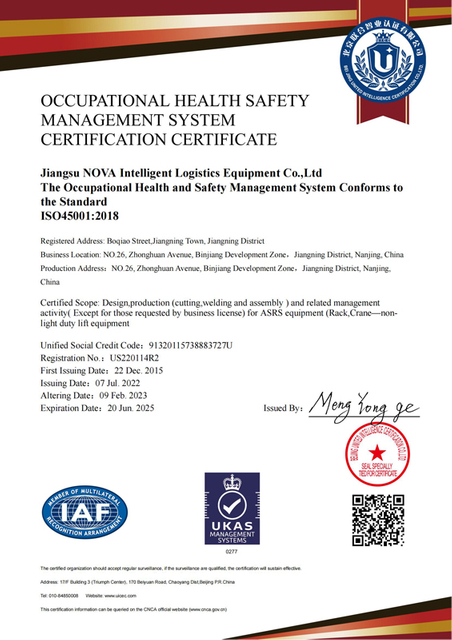
ISO 9001, ISO 14001, ISO 45001 and CE documentation for racking and automation should be current, traceable and available before deposit.
Testing and traceability
Coil traceability, coating thickness checks, load tests and pre-shipment inspection records reduce the risk of hidden material substitutions.
Export and installation support
Confirm packing drawings, certificates of origin, installation supervision, spare parts and local-language documentation before comparing CIF prices.
One Factory Accountable for Steel, Automation and Documentation
The strongest wholesale partnership is not the one that sends the fastest price. It is the one that can explain the load calculations, prove the quality system and support the installation scope after the container leaves China.
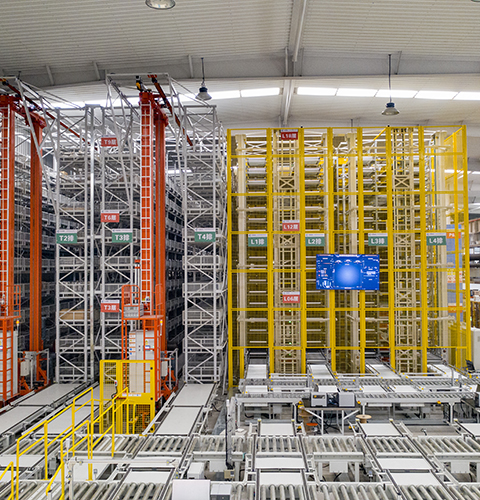
Factory Strength Behind My Favorite Shelf
My Favorite Shelf Industrial Co., Ltd. has planned, designed, manufactured and installed warehouse racking and automated storage systems since 1997. The company operates its own production base with annual steel processing capacity of approximately 60,000 tonnes, and its municipal-level R&D center holds more than 70 national patents and software copyrights covering racking, stacker cranes, conveyors, shuttle carriers and warehouse control software.
For wholesale buyers, this breadth reduces coordination risk. Steel, shuttle hardware and software can be reviewed as one system; CE and ISO evidence can be prepared in one document pack; and engineering documentation can be issued in English with project support in Spanish or Portuguese. The same project discipline has been applied to international customers including GE, Siemens, Walmart, Amazon and Toyota, as well as to distributors, 3PLs and manufacturers across 140+ countries.
Municipal R&D center
70+ patents and software rights for racking, cranes, shuttles and WMS/WCS.
Certified quality system
ISO 9001 / 14001 / 45001 with ISO 10012 measurement management practice.
Automation capability
Stacker cranes, shuttle cars, RGVs and control software from one supplier.
Export project support
Load tables, packing drawings, customs documents and installation supervision.
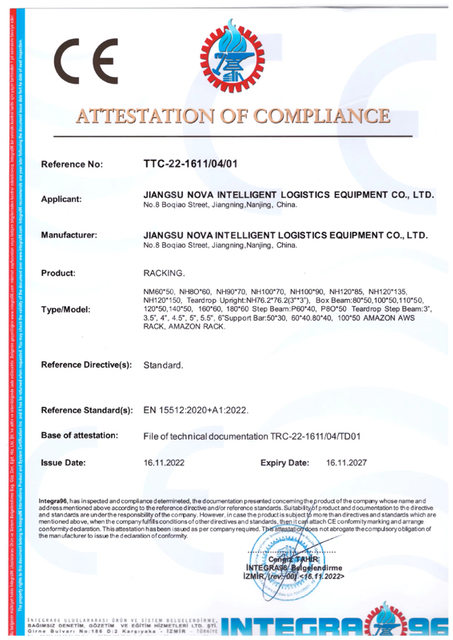 CE · Racking
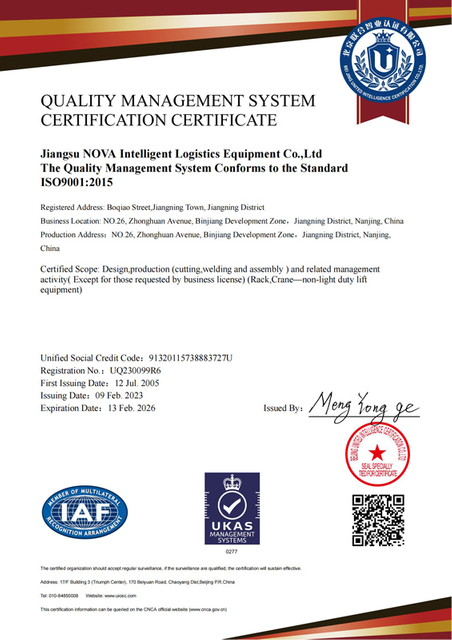 ISO 9001
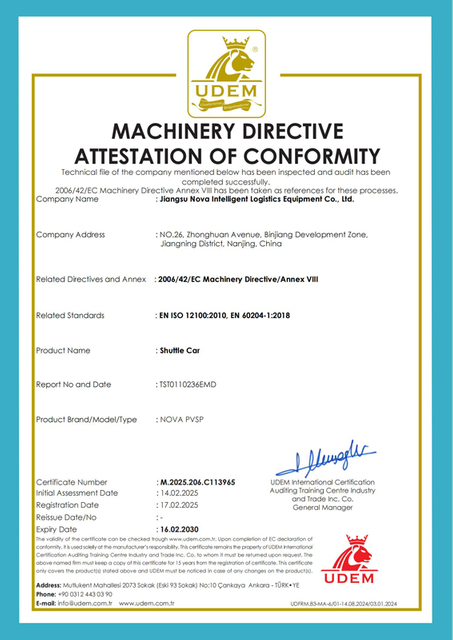 CE · Shuttle Car
 ISO 45001
Real Installations That Show Engineering Depth
Product catalogues show components. Project evidence shows how those components behave under real loads, real throughput targets and real commissioning schedules.
Machinery Industry High-Density Storage Center
Heavy components and spare parts consolidated into high-density pallet storage, freeing floor space for production expansion and improving material control.
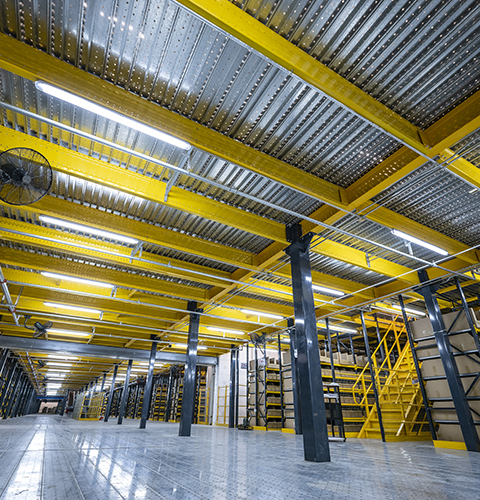
E-Business Logistics Center
Multi-tier picking racks and pallet storage built for peak-season order volumes, rapid SKU rotation and efficient replenishment across product categories.
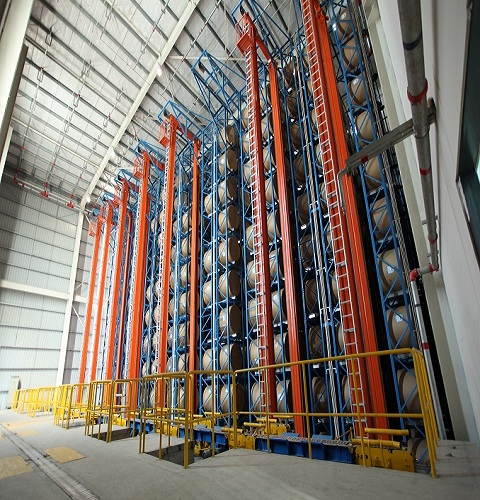
Paper-Making Industry Logistics Center
Automated storage for heavy paper rolls and finished goods, linking production output directly to dispatch and reducing manual handling exposure.
Frequently Asked Questions About Pallet Storage Racks
These answers are written for wholesale buyers, project engineers and procurement teams comparing China factories for pallet storage rack projects.
What should a buyer compare when sourcing from China wholesale pallet storage racks manufacturers and factories?
Compare engineered load tables, steel grade, upright thickness, coating microns, certification evidence, packing drawings, installation scope and spare-parts terms. A low price per kilogram is not a like-for-like comparison if beam spans, anchor systems or documentation differ.
Which pallet rack type is best for a mixed-SKU wholesale warehouse?
Selective pallet racking is normally the starting point because it offers direct access to every pallet. Add push-back or radio shuttle for SKUs with several pallets per reference, drive-in for homogeneous cold-storage lanes, and AS/RS when labor savings and high-bay density justify the automation budget.
Can your pallet racking be calculated for seismic zones?
Yes. Projects can be engineered with reference to local requirements such as NCh 2369 in Chile, E.030 in Peru and NSR-10 in Colombia. The quotation should state design assumptions, anchor specification, bracing arrangement and whether independent review by a local engineer is required.
What documents are provided for customs clearance and engineering approval?
Typical export documents include commercial invoice, packing list, bill of lading, certificate of origin and, on request, material or test reports. Engineering documents can include layout drawings, load tables and installation manuals in English, with Spanish or Portuguese project support available.
How do container packing and shipping affect landed cost?
Nested uprights, strapped beam bundles and optimized pallet positions can reduce freight per storage position. Ocean transit from China to ports such as Santos, San Antonio, Callao, Buenaventura, Guayaquil or Buenos Aires usually takes about 30–45 days, while standard racking production is often 25–35 days.
What finish should be used in humid, coastal or cold-storage warehouses?
For humid or coastal sites, specify enhanced pretreatment and epoxy-polyester powder coating. Hot-dip galvanized components may be appropriate for cold storage, high-corrosion areas or outdoor staging. The quotation should state coating thickness and touch-up procedures.
Do you provide installation and after-sales support?
Yes. The scope can include installation supervision, local crew training, commissioning, spare parts and remote diagnostics for stacker cranes, shuttle systems and WMS/WCS software. Confirm the number of supervisor days, travel costs and acceptance criteria before order.
How can I verify quality before shipment?
Ask for coil traceability, coating reports, load-test records, pre-shipment photos and a factory inspection plan. For approved suppliers, book a third-party inspection before loading and require all beam labels and safety signs to match the approved drawings.
Request a Factory-Level Layout, Load Table and Catalog
Send building length × width × clear height, pallet size, maximum load per pallet, forklift type, target pallet positions, city/country and required delivery date. Our engineers will respond with a layout direction, rack recommendation, key compliance notes and a catalog suitable for budget review.
- Load calculations and CAD layout options
- Container-loading and export packing review
- CE / ISO certificate pack for procurement
- Installation supervision and spare-parts scope