China Wholesale Pallet Warehouse Racking Manufacturers & Wholesaler
Industrial pallet racking, cantilever systems and AS/RS smart warehouse racking engineered for distributors, 3PLs and factory warehouses — with load calculations, export packing and installation support.
8 Pallet Warehouse Racking Systems for China Wholesale Buyers
These eight systems cover the most common purchase paths: selective pallet racking for fast-moving SKUs, custom projects, forklift-loaded heavy-duty storage, factory warehouse racking, cantilever racking for long loads and AS/RS smart warehouse racking.
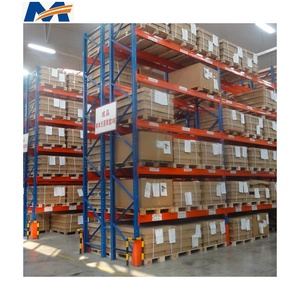
Heavy-Duty Pallet Racking System for Warehouse Shelving and Picking
A high-selectivity pallet racking solution for distributors that need rapid access to many SKUs. Engineered with powder-coated uprights, adjustable beams and decking options for forklift and manual picking operations.
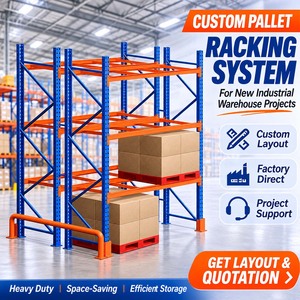
Custom Pallet Racking System for New Industrial Warehouse Projects
Designed around building drawings, pallet patterns, forklift aisle requirements and future expansion. Ideal for new warehouses that need a coordinated layout, bill of materials and installation plan before shipment.
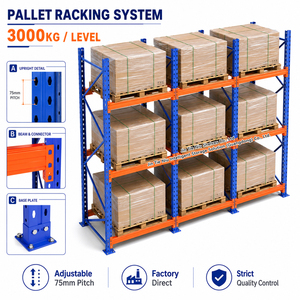
3-Level Heavy Duty Steel Warehouse Rack Selective Pallet Racking System 3000KG
A robust three-level selective racking configuration for heavier pallet loads in factory and distribution warehouses. The system supports straightforward forklift access while maintaining a clear, modular structure.
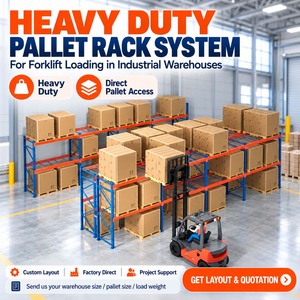
Heavy Duty Pallet Rack System for Forklift Loading in Industrial Warehouses
Configured for efficient forklift loading, unloading and replenishment. Upright frames, beam levels and safety accessories can be specified for high-throughput industrial warehouses and regional distribution hubs.
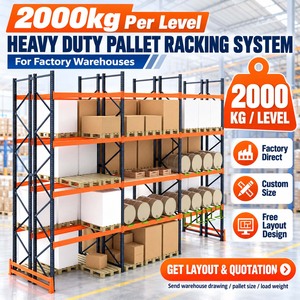
2000kg Per Level Heavy Duty Pallet Racking System for Factory Warehouses
A practical factory warehouse racking system with 2000 kg per level capacity. Suitable for raw materials, finished goods and spare parts where stable access, simple expansion and cost-controlled procurement matter.
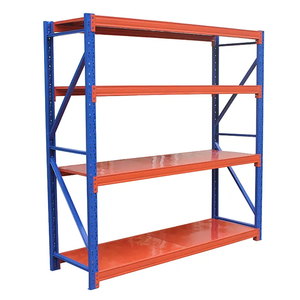
Prowow Factory Mall Warehouse Pallet Racking Shelves Custom Steel Color Blue White Gray Orange
Custom steel pallet racking for warehouses that want visual zoning, brand consistency or clearer safety identification. Multiple powder-coat colors can be combined with project-specific beam and upright specifications.
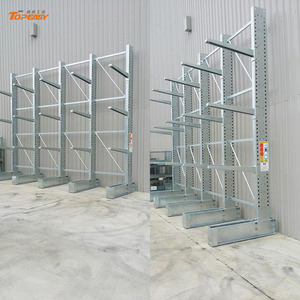
OEM Hot-dip Galvanized Corrosion Protected Eco-Friendly Customizable Single/Double Sided China Heavy Rack Cantilever Racking
Designed for pipes, timber, profiles and other long loads. Hot-dip galvanized finishes improve corrosion protection for coastal, humid or outdoor-adjacent storage environments while allowing OEM customization.
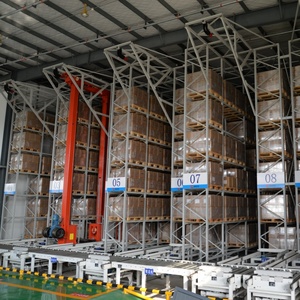
Customized Automatic Storage Retrieval System ASRS Racking System Smart Warehouse Pallet Racking
For buyers planning high-bay, labor-efficient storage. This AS/RS racking path integrates structural racking with stacker crane, conveyor, shuttle and WMS/WCS planning for a future-ready smart warehouse.
China Wholesale Pallet Warehouse Racking: What Serious Buyers Should Evaluate
The query “China Wholesale Pallet Warehouse Racking Manufacturers & Wholesaler” usually combines four buying intentions: manufacturer verification, wholesale cost, warehouse fit and export reliability.
China is no longer only a low-cost sourcing market for pallet racking. It is an engineering and manufacturing base where a qualified supplier can provide cold-rolled steel profiles, powder coating, structural calculations, seismic design references, export packing and installation guidance in one supply chain. That matters because warehouse racking is not a commodity shelf: it is a safety-critical structure that interacts with pallet loads, forklift traffic, building columns, fire protection, local codes and future automation.
For distributors, 3PLs, factory owners and project contractors, the lowest quoted price is rarely the lowest landed cost. A wholesale buyer must compare the steel specification, coating system, load test evidence, packing efficiency, spare parts plan, installation supervision and after-sales response. Information gain comes from asking for verifiable engineering documents, not just a catalog picture and a price per set.
My Favorite Shelf Industrial Co., Ltd. has manufactured warehouse racking and automated storage systems since 1997. With a production base processing around 60,000 tons of steel per year, more than 70 national patents and software copyrights, and projects in over 140 countries, the company supports wholesale buyers who need factory-direct engineering rather than trading-company guesswork.
Future Procurement Trends for Pallet Warehouse Racking
Wholesale purchasing is shifting from “price per upright and beam” to total project value, documentation quality and long-term operating performance.
Total Cost of Ownership Replaces Unit Price
Buyers now compare freight per pallet position, installation hours, spare parts availability, coating durability and future expansion cost. A lower steel price can be offset by poor container loading or missing accessories.
Ask for: landed cost model, container plan and maintenance schedule.Code Compliance and Seismic Documentation
Chile, Peru, Colombia and other markets require attention to local seismic and structural requirements. Wholesale suppliers must provide calculation reports that local engineers can review and approve.
Ask for: design assumptions, anchor plan and reinforced bracing details.Automation-Ready Racking Planning
Even buyers starting with manual racking want a path to AS/RS, four-way shuttle or radio shuttle. Rack interfaces, aisle tolerances and WMS/WCS data points are now discussed during the first RFQ.
Ask for: future automation compatibility and phased layout options.Container-Optimized Wholesale Logistics
Export packing is part of engineering. Nested profiles, steel-strapped bundles and rationalized accessory boxes reduce shipping volume and protect powder-coated surfaces during long ocean transit.
Ask for: packing list by container, loading plan and damage-prevention standard.ESG, Coating and Corrosion Performance
Humid ports, cold storage and coastal warehouses push buyers toward enhanced pretreatment, epoxy-polyester powder coating and hot-dip galvanized components with documented coating control.
Ask for: pretreatment process, coating thickness and salt-spray test references.Digital Due Diligence and Traceability
Procurement teams verify certificates, project references, material reports, production capacity and export records before placing wholesale orders. Transparent suppliers shorten the approval cycle.
Ask for: certificate scope, project list and component traceability method.Where Pallet Warehouse Racking Is Heading Next
The next generation of racking is more connected, more modular and more closely integrated with warehouse operations data.
Racking as Data-Connected Infrastructure
Racking is becoming part of the warehouse digital layer. Project documentation, component codes and inspection records can be linked to maintenance schedules, while AS/RS and shuttle systems exchange data with WMS/WCS platforms.
- Digital layout and bill of materials
- Component traceability for replacement parts
- Automation interfaces planned earlier
High-Density Hybrid Storage
Buyers no longer choose only between selective racking and full automation. Hybrid layouts combine selective picking faces, VNA, double-deep, radio shuttle and AS/RS zones to balance selectivity, density and capital spending.
- Four-way shuttle and radio shuttle growth
- High-bay AS/RS for labor efficiency
- Phased automation for budget control
Modular, Durable and Circular Design
Longer service life and easier reconfiguration are becoming procurement requirements. Modular beams, standardized uprights, replaceable safety components and corrosion-resistant finishes extend asset value and reduce waste.
- Hot-dip galvanizing for harsh sites
- Powder coating with enhanced pretreatment
- Expandable structures for future demand
How to Compare a China Wholesale Racking Manufacturer
Use this practical matrix to separate a true factory-direct manufacturer from a trading intermediary that cannot control engineering, quality or delivery.
| Evaluation Area | What to Request | Why It Matters |
|---|---|---|
| Engineering capability | CAD layout, load calculation, pallet pattern analysis and seismic design references. | Confirms that the racking will fit the building and operate safely under real loads. |
| Steel and coating control | Steel grade, profile drawings, coating thickness reports and coating process description. | Supports durability in humid, coastal and cold-chain environments. |
| Quality and certification | ISO 9001, ISO 14001, ISO 45001, CE certificates and factory inspection records. | Gives procurement and safety teams verifiable evidence for supplier approval. |
| Export packing | Container loading plan, packing list, bundle protection and accessory labeling. | Reduces freight cost and protects powder-coated parts during ocean transit. |
| Installation support | Installation manual, anchor plan, supervisor availability and local crew training. | Improves site safety and shortens commissioning time. |
| After-sales system | Spare parts list, remote diagnostics for automation and inspection recommendations. | Protects uptime and total cost of ownership after the project is delivered. |
Why My Favorite Shelf Is a Credible China Wholesale Partner
Experience in real projects, expertise in racking and automation, authority through certifications and references, and trust built through documentation and after-sales support.
Experience Since 1997
More than 8,000 racking and AS/RS projects delivered across 140+ countries, from selective pallet racking and mezzanine platforms to shuttle systems and automated warehouses.
R&D and Patent Strength
A municipal technical R&D center and 70+ patents and software rights covering racking, stacker cranes, conveyors, shuttle carriers and WMS/WCS warehouse software.
Certified Quality Control
Production managed under ISO 9001, ISO 14001, ISO 45001 and measurement management systems, with coil traceability, coating checks and load testing before shipment.
Global Project Support
Engineering documentation in English, project communication with Spanish and Portuguese support, installation supervision, spare parts and remote diagnostics for automated systems.
Information to Prepare Before Requesting a Wholesale Quotation
Accurate input data shortens engineering time and produces a quotation that can be compared with other manufacturers.
Pallet Warehouse Racking Wholesale FAQ
Clear answers for procurement teams comparing China manufacturers and wholesalers.
What does wholesale pallet warehouse racking include when buying from China?
It can include upright frames, beams, bracing, base plates, safety pins, decking, column protectors, anchor bolts, layout drawings, load calculations and export packing. A complete wholesale quotation should clearly show component quantities, steel profiles, load ratings, coating specification and the scope of installation support, not only a price per pallet position.
How can I verify load capacity and steel quality before ordering?
Request the design load per level, beam deflection criteria, upright section drawings and material certificates. Ask for load test records and coating thickness checks. For safety-critical projects, require engineer-reviewed drawings and clarify whether the calculation considers pallet weight, beam-level load, seismic actions and forklift impact protection.
Can the racking be designed for seismic zones in Chile, Peru and Colombia?
Yes. A qualified manufacturer can prepare structural and seismic calculations with reference to local requirements such as NCh 2369 in Chile, E.030 in Peru and NSR-10 in Colombia. Reinforced uprights, bracing, base plates and anchor specifications should be adjusted accordingly, and calculation reports should be provided for review by the buyer’s local engineer.
What is the typical lead time and shipping schedule for wholesale orders?
Standard selective racking is commonly produced in about 25 to 35 days after drawing approval. Ocean transit from China to ports such as Santos, San Antonio, Callao, Buenaventura, Guayaquil or Buenos Aires usually takes around 30 to 45 days, depending on route and schedule. AS/RS and shuttle projects should follow a project schedule agreed at contract stage.
Which export documents are provided for customs clearance?
Typical documents include the commercial invoice, detailed packing list, bill of lading, certificate of origin and, on request, test reports and material certificates. Installation manuals can be supplied in English, with Spanish or Portuguese support available for project documentation. Buyers should confirm destination-country requirements with their customs broker before shipment.
Do you offer installation and after-sales service?
Yes. For overseas projects, supervising engineers can be dispatched for installation and commissioning, local installation teams can be trained, and spare parts lists can be prepared. For automated systems such as stacker cranes, shuttles and WMS/WCS software, remote diagnostics and long-term maintenance guidance help protect system uptime.
Which finish is recommended for humid or coastal warehouses?
For humid tropical or coastal sites, specify epoxy-polyester powder coating with enhanced pretreatment. For cold storage, high-corrosion environments or outdoor-adjacent storage, hot-dip galvanized components may be more suitable. The coating system should be matched to the actual humidity, salt exposure, cleaning method and expected service life.
How do I get an accurate layout and wholesale quotation?
Send building dimensions, column grid, clear height, pallet size and weight, forklift type, throughput target, site city and country, and project scope. A manufacturer can then prepare a layout, pallet-position count, bill of materials, system recommendation and export packing plan. If seismic or automation requirements apply, state them at the first inquiry so the engineering assumptions are correct.