OEM/ODM Industrial Racking And Shelving Supplier & Exporters
Custom pallet racking, drive-in, radio shuttle, gravity flow, mesh decking and stainless-steel shelving engineered for warehouses in South America and 140+ export markets — with ISO/CE documentation, load-tested steel and container-optimized delivery.
OEM/ODM Industrial Racking and Shelving Systems
Every export warehouse has a different constraint. A cold-chain operator in Chile may need galvanized steel and seismic bracing; a Brazilian distributor may need high pallet density with forklift access; an e-commerce 3PL may need multi-tier picking and a phased path to AS/RS. Our OEM/ODM model starts from the load case, not a stock size. We manufacture uprights, beams, decking, safety accessories and custom finishes, then load-test, pack for container efficiency and ship with documentation your local engineer can review. The eight systems below are fast starting points for quotation, but dimensions, load ratings, colors, branding, packaging and accessories can be engineered to your project.
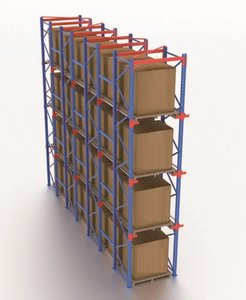
High Density Commercial Shelves Storage Warehouse Racking Systems Drive-In Pallet Rack for Industrial Factory Racks
High-density lane storage for homogeneous pallets. Drive-in racking reduces aisle count and is often specified for cold rooms, beverage and seasonal inventory where honeycombing must be controlled.
View product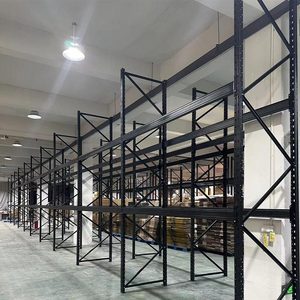
Wire Mesh Deck Pallet Racking Corrosion Resistant Dust Leakage Prevention 5-Layer Heavy Duty Warehouse Storage
Wire mesh deck supports small, irregular or unstable loads while helping prevent dust and debris falling between levels. Corrosion-resistant finish and 5-layer build suit humid or multi-tier warehouses.
View product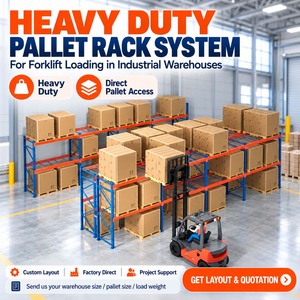
Heavy Duty Pallet Rack System for Forklift Loading in Industrial Warehouses
Selective pallet rack for forklift loading with direct access to every pallet. Engineered uprights, beams and safety accessories can be customized for high-turnover industrial warehouses.
View product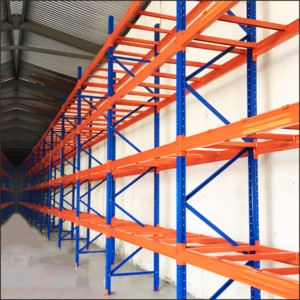
Heavy Duty Store Shop Display Shelving Tiers Garage Racking Shelves Steel Warehouse Shelf Metal Storage Rack Shelves Storage
Heavy-duty steel shelving for warehouse, retail display, garage and spare-parts storage. OEM sizes, shelf levels, powder-coated finish and branded packaging are available.
View product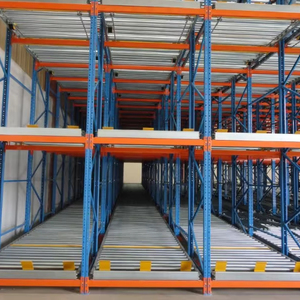
Heavy Duty Gravity Flow Pallet Rack Steel Roller Rack Warehouse Storage Racking System 1000kg Layer
Gravity flow pallet rack uses rollers to move pallets FIFO under controlled speed. Suited to production sequencing, cold chain and distribution where pallet handling time must fall.
View product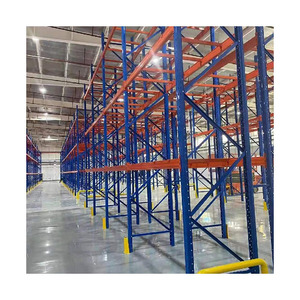
Deno Heavy Duty Steel Electrostatic Powder Coated 5-Layer Selective Pallet Racking System 2000mm Length Warehouse Storage
Deno 5-layer selective racking with electrostatic powder coating and 2000 mm beam lengths. A practical choice for distributors that need a balance of density, selectivity and modular expansion.
View product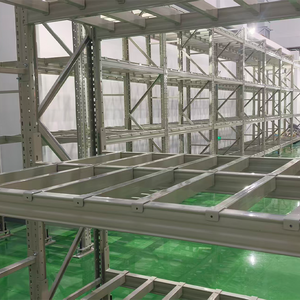
Thickened Industrial Pallet Racking System 2000kg Load Heavy Duty Warehouse Storage Rack for Large Goods Steel
Thickened industrial racking engineered for large goods and 2000 kg-class loads. We verify upright capacity, beam deflection, anchor design and forklift clearances for each layout.
View product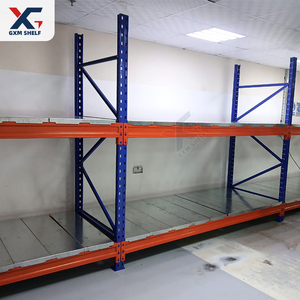
GXM Adjustable Stainless Steel Pallet Rack System Boltless Rack Storage Warehouse Heavy Duty Shelving
GXM adjustable stainless-steel boltless shelving for hygienic, wet or corrosion-sensitive areas. It can be reconfigured without specialized tools and customized for export packing.
View productProduct Recommendations by Operating Scenario
Buyers rarely need a single rack type. They need a storage plan that fits SKU profile, pick rate, building geometry, fire strategy, labor availability and future automation. Use these scenario notes as a pre-quotation checklist, then ask for a load-case matrix rather than a catalogue page.
High-Turnover Distribution
Start with selective pallet racking for fast-moving SKUs, add wire mesh decking for loose loads and reserve radio shuttle or drive-in lanes for low-SKU reserve stock. If the building has height, plan the beam pitch and upright clearances so a future AS/RS or four-way shuttle conversion remains possible.
Cold Chain & Food Storage
Drive-in and gravity flow pallet racking reduce aisle exposure in freezers, while hot-dip galvanized or enhanced powder-coated steel helps manage humidity and wash-down. Specify finish, drain paths, anchor protection and safety accessories together, not after the rack layout is fixed.
Heavy Manufacturing
For large goods and dense pallet loads, request 2000 kg-class or heavier racking with verified upright capacities, beam deflection checks and forklift impact protection. Thickened steel is useful only when the whole load path — beam, upright, base plate, anchor and floor — is engineered together.
E-Commerce & Spare Parts
Combine longspan shelving, stainless-steel boltless racks and mezzanine platforms for carton picking, spare parts and returns. For phased growth, design the first layout with a removable mezzanine edge, future conveyor path and expansion bay so increased order volume does not force a full rebuild.
Storage Density vs. Selectivity
The chart below is an indicative planning comparison, not a structural rating. Final performance depends on pallet size, load, building height, forklift type, fire strategy and local engineering requirements.
Selective Racking
Drive-In Racking
Radio Shuttle
AS/RS & Four-Way Shuttle
Ask for a pallet-position comparison, aisle study and phased investment plan before approving an OEM/ODM racking order.
Procurement Trends Reshaping Racking & Shelving Supply
Industrial racking procurement is moving from price per bay to total cost per usable pallet position. That shift changes supplier evaluation: buyers now audit engineering assumptions, freight efficiency, installation support, spare-parts continuity and the ability to integrate racking with automation and warehouse software.
1. Total Cost per Pallet Position
Buyers are comparing steel weight against actual beam capacity, not just price per kilogram. A lighter but properly engineered system can reduce freight and foundation load, while a heavier system may lower maintenance and damage risk in high-throughput warehouses. Ask for load assumptions, coating specification, container packing plan and spare-parts list in the same quotation.
2. Compliance & Traceability
ISO 9001 quality management, ISO 14001 environmental management, ISO 45001 safety management and CE-marked automation are becoming prequalification items. Procurement teams are requesting coil traceability, coating-thickness records, load-test reports and material certificates before shipment, especially for publicly funded or multinational projects.
3. Seismic & Climate-Specific Engineering
Chile, Peru and Colombia require project-specific seismic review, while coastal and tropical sites demand corrosion protection that matches real operating conditions. Buyers increasingly expect calculation notes with reference to local requirements such as NCh 2369, E.030, NSR-10 or ABNT NBR 15524, plus clear anchor and base-plate specifications for local engineer verification.
4. Automation-Ready Racking
Even buyers who start with manual racking want a path to radio shuttle, four-way shuttle or AS/RS. Design decisions made today — building height, floor tolerance, aisle width, column grid, fire strategy and WMS/WCS interface — determine whether future automation is economical or disruptive.
5. Container-Optimized Packing
Freight is a material part of landed cost. Nested profiles, steel-strapped bundles, protected powder-coated surfaces and accurate packing lists reduce container voids and unloading time. For OEM/ODM projects, buyers are also requesting branded labels, installation manuals and mixed-container sequencing by installation zone.
6. Local Installation & Digital After-Sales
The supplier with the lowest ex-works price is not automatically the lowest-risk partner. Buyers are scoring supervising engineers, installation training, Spanish or Portuguese documentation, spare-parts availability and remote diagnostics for stacker cranes, shuttles and WMS/WCS software.
Future Development Trends in Warehouse Racking
The next generation of industrial racking will be judged by how well it supports density, labor productivity, energy efficiency and safety at the same time. The most useful supplier is not the one with the largest catalogue, but the one able to connect structural steel, automation, software and export logistics into one accountable project.
High-Density Automation
Four-way shuttle systems and AS/RS stacker cranes continue to push pallet positions per cubic meter. For export projects, the practical trend is phased automation: manual racking now, with structural and dimensional allowances for shuttle or crane conversion later.
Digital Twin & WMS/WCS Integration
Warehouse layouts will increasingly be tested as digital models before steel is ordered. WMS/WCS integration, shuttle routing, crane scheduling and inventory heat maps allow buyers to compare throughput scenarios and reduce changes after installation.
Green Steel & Coating
Environmental procurement is moving into racking specifications: lower-carbon steel, recyclable components, powder coating instead of solvent-heavy finishes, and packaging that reduces wood and single-use plastic. Buyers should ask for material and finish documentation rather than generic green claims.
Cold Chain & Corrosion Protection
Freezer rooms, coastal ports and humid tropical warehouses demand more than standard paint. Hot-dip galvanizing, enhanced pretreatment powder coating and stainless-steel shelving will grow in food, pharma, chemical and export-processing applications.
Safety Intelligence
Rack safety is shifting from periodic visual inspection to structured risk control: impact protection, upright guards, beam locks, load signage, inspection records and spare-part standardization. Export buyers increasingly require these items to be quoted with the rack, not added after delivery.
Modular & Phased Expansion
Uncertain demand favors modular designs that can add bays, levels or mezzanine area without closing the warehouse. OEM/ODM suppliers that provide repeatable profiles, documented capacities and future expansion drawings will reduce lifecycle cost for distributors and 3PLs.
Why OEM Buyers Choose My Favorite Shelf
E-E-A-T is not a claim; it is evidence that procurement and engineering teams can audit. Our advantage is the combination of manufacturing depth, project experience, certified quality systems and engineering leadership in racking and automated storage.
Experience Since 1997
My Favorite Shelf Industrial Co., Ltd. has planned, manufactured and installed warehouse racking and automated storage systems since 1997. This continuity matters in export projects where documentation, spare parts and engineering assumptions must remain stable across repeat orders.
60,000 t Annual Steel Capacity
Our own production base processes around 60,000 tons of steel per year and includes cold-rolling and powder-coating capability. In-house control over profiles, holes, coating and packing reduces coordination risk between separate steel, paint and assembly suppliers.
70+ Patents & Software Rights
Our municipal-level R&D center holds more than 70 national patents and software copyrights covering racking, stacker cranes, conveyors, shuttle carriers and warehouse control and management software. This supports custom OEM/ODM designs rather than simple catalogue copying.
ISO & CE Credentials
Production is managed under ISO 9001, ISO 14001, ISO 45001 and ISO 10012 measurement management. Racking, shuttle cars, stacker cranes, four-way shuttles and RGVs carry CE certification where applicable, with inspection and test documentation available for export projects.
8,000+ Projects, 140+ Countries
Designated logistics equipment supplier experience with international enterprises including GE, Siemens, Walmart, Amazon and Toyota. Project references include AS/RS for Taishan Fiberglass, shuttle racking for Samgak FMC and PT Tiga Pilar, pallet racking for Suning Group and Keppel Logistics, and mezzanine projects for Amazon.
Expert Engineering Team
Our team is led by a professor-level senior engineer and doctoral tutor who co-authored automated warehouse design references and logistics distribution center management technology materials. For buyers, this means load cases, seismic assumptions and automation interfaces can be reviewed by specialists, not only sales staff.
Certifications Export Buyers Can Review
Third-party certification and internal measurement systems help procurement teams verify that racking, shuttle systems and stacker cranes meet the quality and safety expectations of the project. Certificate scope should always be checked against the exact product and destination market.
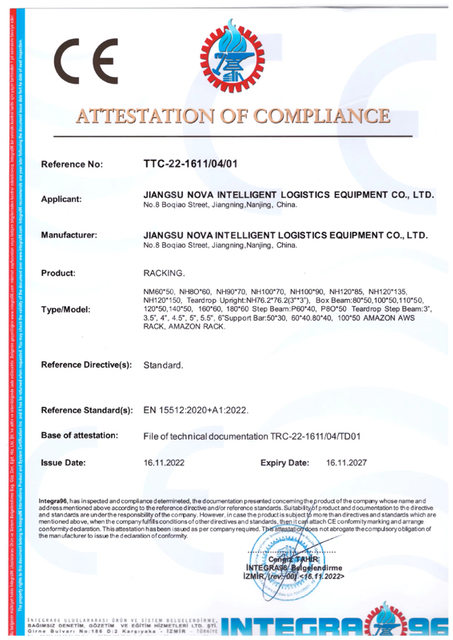
CE · Racking
Supports European-market racking compliance review.
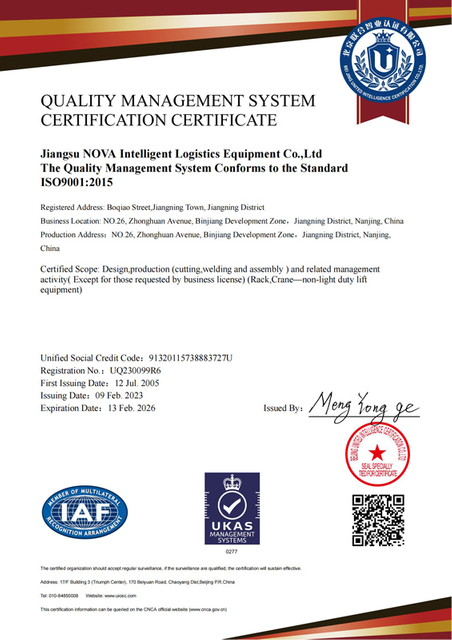
ISO 9001
Quality management system for production control.
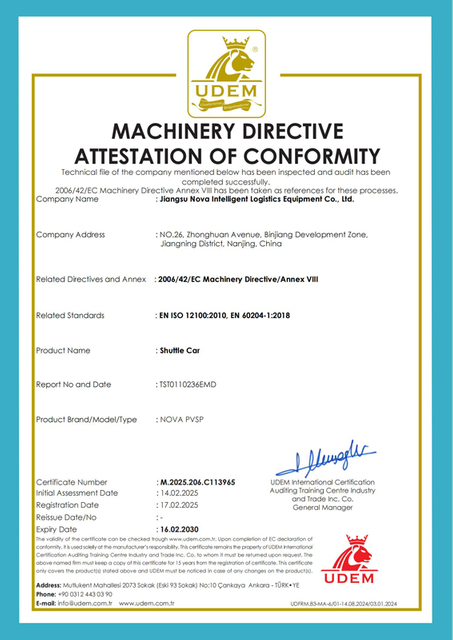
CE · Shuttle Car
Automation certificate for shuttle racking projects.
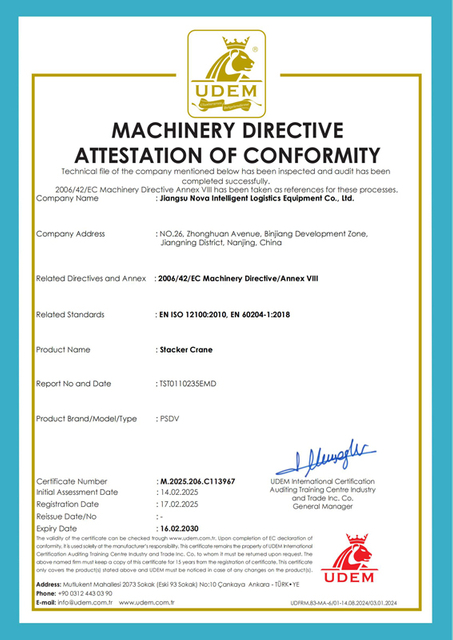
CE · Stacker Crane
Relevant to AS/RS and high-bay automated storage.
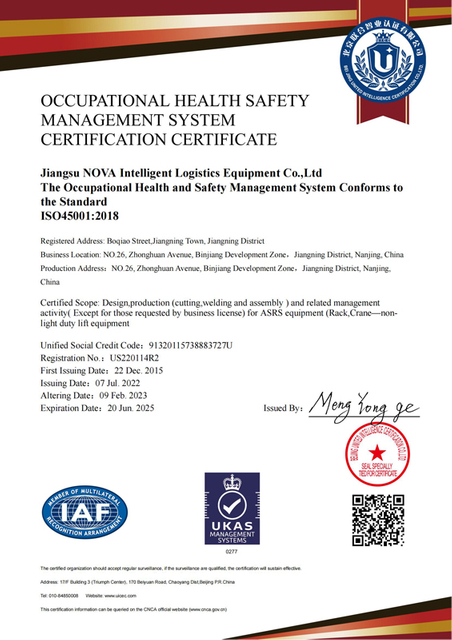
ISO 45001
Occupational health and safety management system.
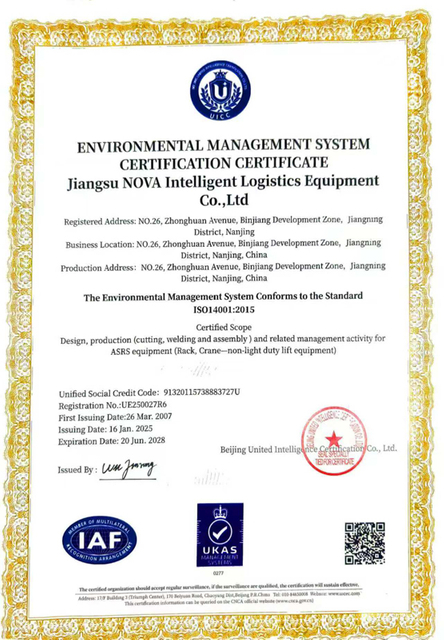
ISO 14001
Environmental management system for manufacturing.
ISO 10012 measurement management, coating-thickness checks, coil traceability and load testing are applied within the quality process. Always request documents for your exact order and destination.
Racking & Shelving Engineered for South American Warehouses
Seismic activity along the Andes, tropical humidity, long ocean routes and varied port documentation make South America a specialist export market. We adapt structural assumptions, finishes, packing and installation support to the destination — not just the product catalogue.
Seismic-Ready Design
Structural and seismic calculations can reference NCh 2369 and E.030, with reinforced uprights, bracing, base plates and anchor specifications prepared for review by your local engineer.
Large-Scale Distribution
High-bay AS/RS, VNA and shuttle systems for retail, food and pharma DCs, with designs prepared with reference to ABNT NBR 15524 storage-system practice.
Humid & Coastal Sites
Enhanced pretreatment powder coating or hot-dip galvanizing for ports, cold chain and exporters; seismic checks per NSR-10 where required.
Flexible Expansion
Modular longspan, mezzanine and cantilever systems that grow in phases, helping buyers manage capital spending while demand scales.
Export Logistics & Documentation
Main Ports Served
Santos, Paranaguá, San Antonio, Valparaíso, Callao, Buenaventura, Cartagena, Guayaquil, Buenos Aires and Montevideo, with export packing planned around route and unloading method.
Container-Optimized Packing
Nested profiles and steel-strapped bundles help cut freight cost per pallet position. Components can be sequenced by installation zone for faster site receiving.
Customs-Ready Documents
Commercial invoice, detailed packing list, bill of lading, certificate of origin and, on request, test reports, material certificates and installation manuals in English with Spanish or Portuguese project support.
Typical Timeline
Standard selective racking is often produced in 25–35 days. Ocean transit usually takes about 30–45 days depending on route and port. AS/RS and shuttle projects follow a schedule agreed at contract stage.
From Brief to Commissioning: A Controlled Process
A racking project becomes expensive when assumptions are discovered late. Our process front-loads building, load and workflow data so the quotation, drawings, production and installation all use the same engineering basis.
Brief & Data Collection
Collect building dimensions, column grid, clear height, floor condition, pallet size, load per pallet, forklift type, throughput, SKU profile and destination city for seismic and freight review.
Layout & Simulation
Prepare CAD layouts, pallet-position counts, aisle studies and access comparisons. For automation, model shuttle or crane interfaces and required WMS/WCS data flow.
Structural & Seismic Review
Define upright and beam capacities, bracing, base plates and anchors. Where required, prepare calculation notes with reference to local codes for review by the project engineer.
Sample, Coating & Load Testing
Confirm profile, finish and color; check coating thickness, hole positions and accessories. Load-test representative assemblies and prepare inspection records before mass production.
Production & Export Packing
Manufacture under ISO-controlled processes, label components and pack for container efficiency. Provide packing lists, material certificates and shipment milestones.
Installation, Training & Support
Dispatch supervising engineers where required, train local crews, support commissioning and handover, then supply spare parts and remote diagnostics for automated equipment.
Industrial Racking & Shelving Procurement FAQ
These are the questions export buyers, distributors and project engineers ask most often when comparing OEM/ODM racking suppliers and planning delivery to South America.
Can your pallet racking be designed for seismic zones in Chile, Peru and Colombia?
Yes. Our engineers run structural and seismic load calculations with reference to local requirements such as NCh 2369 for Chile, E.030 for Peru and NSR-10 for Colombia. Reinforced uprights, bracing, base plates and anchors can be specified accordingly. Calculation reports are delivered with quotation drawings for review by your local engineer.
How long does delivery to South American ports take?
Standard selective racking is typically produced in 25 to 35 days. Ocean transit from China to ports such as Santos, San Antonio, Callao, Buenaventura, Guayaquil or Buenos Aires usually takes 30 to 45 days depending on the route. AS/RS and shuttle projects follow a project schedule agreed at contract stage.
Which export documents do you provide for customs clearance?
We provide commercial invoice, detailed packing list, bill of lading, certificate of origin and, on request, test reports, material certificates and installation manuals in English. Spanish or Portuguese support can be arranged for project documentation and communication.
Do you offer installation and after-sales service in South America?
Yes. We can dispatch supervising engineers for installation and commissioning, train local installation teams, supply spare parts and offer remote diagnostics for automated systems such as stacker cranes, shuttles and WMS/WCS software.
What surface finishes are recommended for humid or coastal warehouses?
For humid tropical or coastal sites we recommend epoxy-polyester powder coating with enhanced pretreatment, or hot-dip galvanized components for cold storage and high-corrosion environments. Finish selection should consider wash-down, salt exposure, chemical contact and expected service life.
Can you customize racking as an OEM/ODM supplier?
Yes. OEM/ODM customization can cover upright and beam profiles, bay dimensions, load ratings, shelf levels, colors, branding, labels, packaging, documentation and accessories. Provide your drawing, pallet load and target market requirements so our engineers can prepare a compliant, factory-direct proposal.
Request an OEM/ODM Racking Layout and Export Quotation
Send your building dimensions, pallet size and weight, forklift type, target throughput and destination city. Our engineers will return a layout, pallet-position count, load assumptions and a factory-direct quotation. For South American projects, include city and country so seismic, corrosion and freight requirements are reviewed together.