OEM/ODM Industrial Shelving Units Manufacturers & Wholesaler
Custom-engineered warehouse shelving, pallet racking and high-density storage systems from a factory-direct partner with 8,000+ projects across 140+ countries.
8 Industrial Shelving Units for OEM/ODM Wholesale
Buyers searching for OEM/ODM industrial shelving units manufacturers and wholesalers usually need more than a catalogue of bays. They need a manufacturing partner that can align load ratings, seismic assumptions, coating systems, packaging, branding and documentation with the realities of the destination market. The eight systems below represent factory-direct programs for distributors, 3PLs, e-commerce operators and industrial end users. Each can be customized in dimensions, load capacity, color, accessory set and private-label documentation without changing the underlying engineering logic.
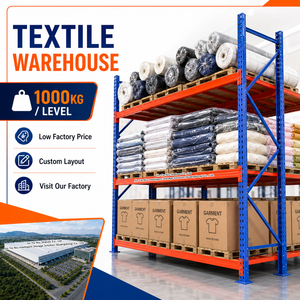
1000KG Heavy Duty Pallet Rack
A logistics-warehouse workhorse for dense pallet storage. Reinforced uprights and adjustable beams support OEM branding, custom dimensions and volume wholesale orders.
View product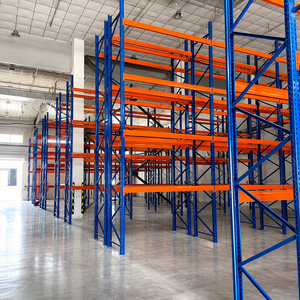
2000KG Q235B Selective Pallet Racking
Q235B steel selective racking with 2000 kg load capability per level, free 3D CAD layout, and factory-direct specification for distributors and 3PLs.
View product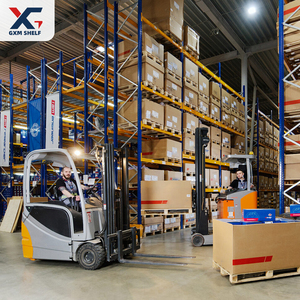
Multi-Tier Heavy Duty Pallet Storage Rack
GXM warehouse metal shelving system for multi-level pallet storage, engineered to maximize vertical space and support phased expansion.
View product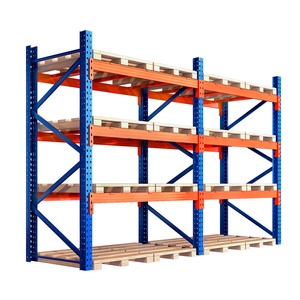
Industrial Heavy Duty Steel Pallet Racking
Stacking and warehouse steel pallet racking for heavy-duty industrial storage, suitable for OEM programs requiring robust powder-coated frames.
View product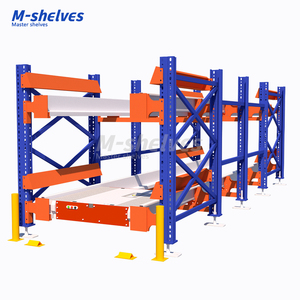
Metal Shuttle Pallet Racking System
Semi-automated high-density racking with shuttle carriers, reducing forklift travel and improving throughput for cold-chain and distribution centers.
View product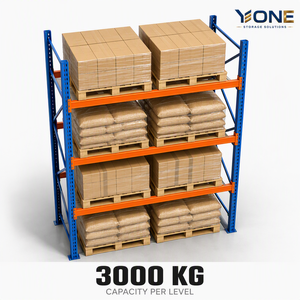
Boltless Adjustable Heavy Duty Pallet Rack
Factory heavy-duty steel pallet rack with 2000 kg capacity, boltless adjustable design for fast installation and flexible reconfiguration.
View product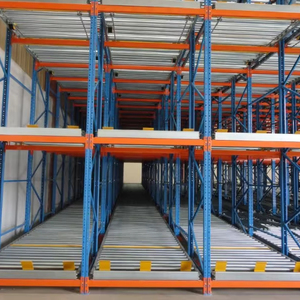
Heavy Duty Gravity Flow Pallet Rack
Roller-bed gravity flow racking for FIFO inventory control and high-density picking, with 1000 kg layer capacity and custom lane engineering.
View product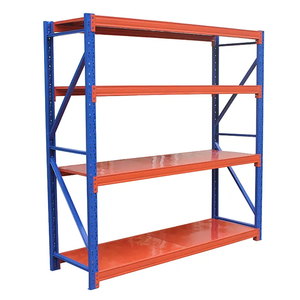
Custom Steel Warehouse Pallet Racking Shelves
Prowow custom racking in blue, white, gray or orange, with OEM/ODM color, size, branding and packaging options for wholesale channels.
View productA Manufacturer Built for Repeat OEM/ODM Programs
A credible shelving supply chain is proven by capacity, repeatability and auditability. These operating facts let a wholesaler quote confidently, plan container loads and support end users after delivery.
Based in Nanjing, Jiangsu, My Favorite Shelf Industrial Co., Ltd. has planned, designed, manufactured and installed racking and automated storage systems since 1997. Our production base processes around 60,000 tons of steel per year. A municipal-level R&D center holds more than 70 national patents and software copyrights covering racking, stacker cranes, conveyors, shuttle carriers, WMS and WCS. For an OEM/ODM buyer, this vertical integration matters: the steel profile, powder coating, automation interface and documentation can be controlled under one quality system instead of being assembled from unrelated suppliers.
Why OEM/ODM Industrial Shelving Is a Strategic Procurement Category
Industrial shelving units are often bought as a price-per-bay exercise, but the real cost is created after installation. A rack that is under-engineered for seismic activity, humidity, forklift impact or future automation can slow replenishment, increase maintenance and compromise safety. In mature procurement organizations, shelving is treated as infrastructure. The specification connects pallet dimensions, load center, aisle width, fire strategy, building column grid, lift equipment, SKU velocity and future growth. That is why buying from an experienced OEM/ODM manufacturer is different from buying generic shelving from a trading company. The manufacturer must translate operational data into upright profiles, beam sections, bracing, base plates, anchors, decking and coating choices that remain coherent when the project scales.
An OEM/ODM program also protects the wholesale channel. Distributors can present a branded system instead of a commodity. They can request custom colors, nameplates, packaging, installation manuals, spare-parts kits and CAD libraries that support their local sales team. For end users, the benefit is a system engineered around the actual load and handling profile instead of a generic load rating. For the wholesaler, the advantage is differentiation: the buyer is not comparing an unbranded beam against another unbranded beam, but comparing a complete storage solution with traceable documentation, safety assumptions and after-sales support.
The most defensible sourcing strategy is therefore to select a manufacturer that can operate in three modes: standard wholesale supply for fast-moving SKUs, OEM private-label production for channel partners, and ODM engineering for projects that require a new dimension, finish or automation interface. This flexibility reduces the risk of holding the wrong inventory while still allowing competitive landed cost. It also makes the supplier more useful over the full life cycle, from first layout to spare parts and expansion.
The 2025–2030 Procurement Outlook for Industrial Shelving
Procurement is shifting from lowest unit price to lowest lifecycle risk. These four trends are already visible in RFQs from distributors, 3PLs, manufacturers and e-commerce operators.
Nearshoring and Distributed Warehousing
Supply chains are adding regional distribution centers to shorten lead times and reduce single-port exposure. This increases demand for modular shelving that ships in container-optimized bundles and can be installed in phases. Buyers are asking for standard connection details, clear anchor schedules and layout drawings that local contractors can execute without a large specialist crew.
Total Cost of Ownership Becomes the Scorecard
Procurement teams now compare offers on load safety, coating thickness, spare-part availability, installation time, maintenance access and future reconfiguration. A slightly higher initial price can be justified when a racking system reduces forklift damage, avoids custom parts, or accepts automation upgrades later. Suppliers that provide verified load data and clear assumptions are easier to approve.
Phased Automation Readiness
Not every warehouse can move directly to AS/RS. Many buyers start with selective or shuttle racking and plan a later upgrade to conveyors, stacker cranes or WMS/WCS control. The purchasing trend is to request automation-ready geometry: level tolerances, beam clearances, shuttle interfaces and software data fields that can be activated in a second phase.
Documentation, Compliance and Sustainability
Public tenders and multinational procurement audits increasingly require ISO certificates, CE documentation, material test reports, coating specifications, packing lists, origin certificates and installation manuals. Sustainability criteria are also appearing in RFQs: powder coating instead of solvent paint, recyclable steel, reduced packaging waste and longer service life. Suppliers with a controlled quality system and export documentation are more likely to stay on approved-vendor lists.
Product Trends Shaping Next-Generation Shelving Units
Engineering is converging around density, speed, safety and data. These are the product-level changes to specify in your next wholesale program.
Higher Density with Smaller Footprints
Selective racking remains the default for SKU variety, but multi-tier, double-deep, drive-in, radio shuttle and four-way shuttle systems are being used selectively to recover floor area. The development challenge is to increase pallet positions without sacrificing forklift clearance, inspection access or fire-safety provisions.
Automation Interfaces from Day One
Stacker cranes, shuttles and RGVs are no longer add-ons after the rack is built. New racking designs include defined interface tolerances, sensor mounting points, cable routing, WMS/WCS data structures and maintenance zones. Designing for automation upfront reduces expensive retrofits and shortens commissioning.
Seismic and Corrosion Engineering
Demand is rising for site-specific structural calculations, reinforced uprights, seismic bracing, base plates and anchors, especially in Chile, Peru, Colombia and other active or high-humidity regions. For coastal and cold-storage sites, epoxy-polyester powder coating with enhanced pretreatment or hot-dip galvanized components is increasingly requested.
Boltless, Adjustable and Faster to Install
Labor availability and installation time now influence product design. Boltless adjustable pallet racking, pre-punched uprights, integrated beam locks and modular longspan shelving reduce assembly hours. For export projects, flat-packed and nested profiles lower freight cost per pallet position and simplify container planning.
Data-Rich Documentation and Digital Layouts
Buyers increasingly expect 3D CAD drawings, load calculations, anchor plans, bill of materials and spare-part lists in editable formats. This allows local engineers to review the design, facilities teams to plan maintenance and distributors to quote add-ons without repeatedly returning to the factory.
Circularity and Long-Life Coatings
The next generation of shelving is designed for disassembly and reuse. Powder-coated steel, standardized beam lengths and replaceable accessories support circular procurement. Wholesale programs that offer touch-up kits, replacement uprights and safety accessories extend service life and reduce total waste.
Why My Favorite Shelf Is a Low-Risk OEM/ODM Partner
Based in Nanjing, China, My Favorite Shelf Industrial Co., Ltd. combines a racking factory, automation engineering and export project management. Since 1997 we have supplied racking and AS/RS systems to distributors, manufacturers, 3PLs and retail chains in more than 140 countries. The same production discipline is applied whether the order is a private-label longspan shelving program or a high-bay pallet racking project.
Proven With Global Brands
Designated logistics equipment supplier for international enterprises including GE, Siemens, Walmart, Amazon and Toyota. The project controls behind those installations—document control, load verification, packing standards and commissioning checklists—are the same controls applied to wholesale and OEM orders.
R&D and Innovation
A municipal-level technical R&D center and more than 70 national patents and software copyrights cover racking profiles, stacker cranes, conveyors, shuttle carriers and warehouse control and management software. This matters to ODM buyers who need a new interface, a custom accessory or a data-ready automated system rather than a catalogue copy.
Certified Quality Control
Production is managed under ISO 9001, ISO 14001, ISO 45001 and ISO 10012 measurement management, with CE certification for racking, shuttle cars, stacker cranes and RGVs. Coil traceability, coating-thickness checks, dimensional inspection and load testing are performed before shipment, and certificates or test reports can support tender submissions.
Expert Engineering Team
Led by a professor-level senior engineer and doctoral tutor who co-authored automated warehouse design and logistics distribution center management references, our engineering team reviews pallet loads, seismic assumptions, aisle geometry and future automation. Calculation reports and CAD drawings are delivered for review by your local engineer.
Real Installations, Real Operating Contexts
A supplier’s claims should be visible in records. These project images represent machinery, e-commerce and paper-industry installations where storage density, load control and dispatch flow were central.
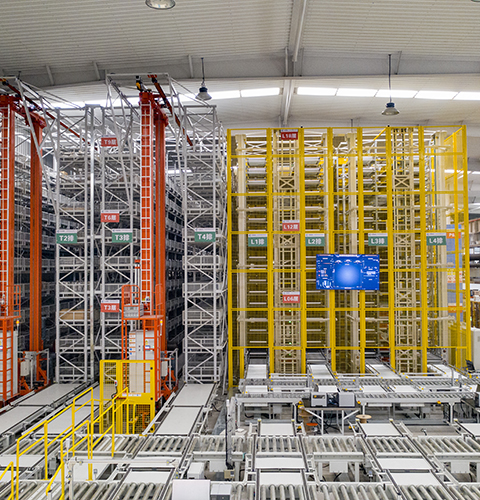
Machinery Industry High-Density Storage CenterHeavy components and spare parts consolidated into high-density pallet storage to free floor space for production expansion.
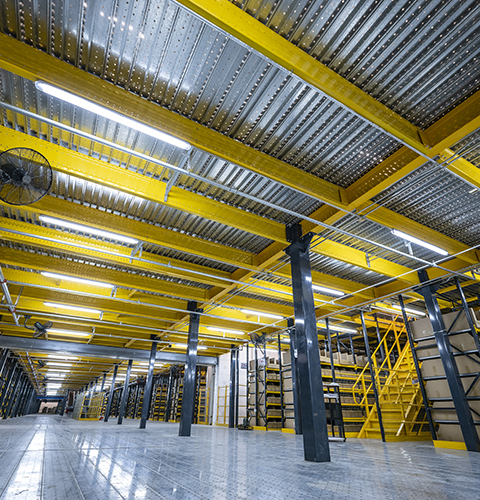
E-Business Logistics CenterMulti-tier picking racks and pallet storage built for peak-season order volumes and rapid SKU rotation.
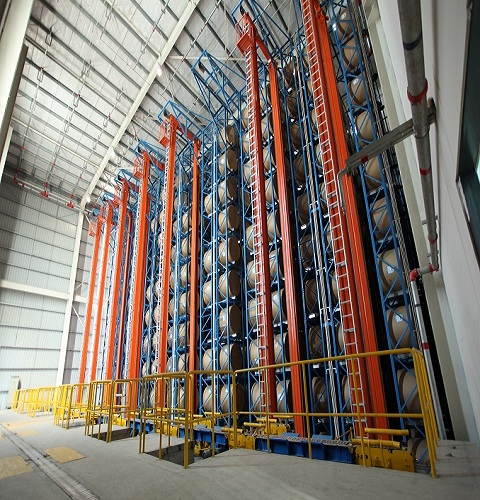
Paper-Making Industry Logistics CenterAutomated storage for heavy paper rolls and finished goods, linking production output directly to dispatch.
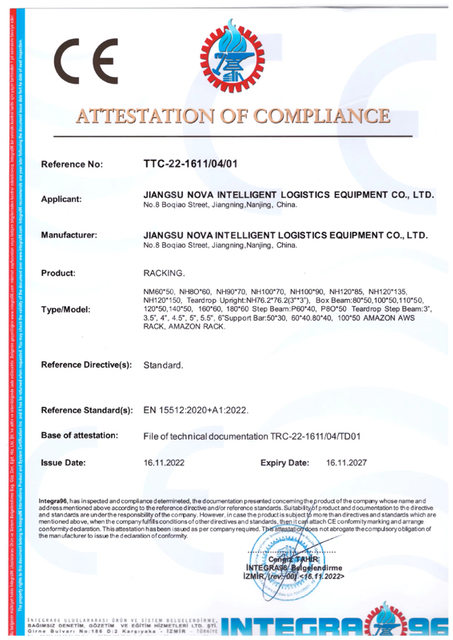 CE · Racking
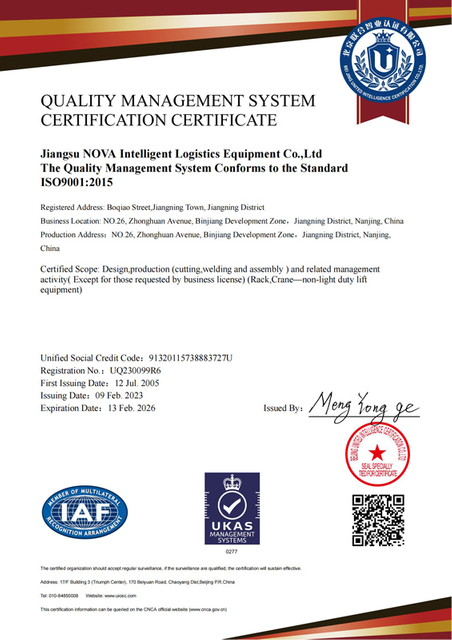 ISO 9001
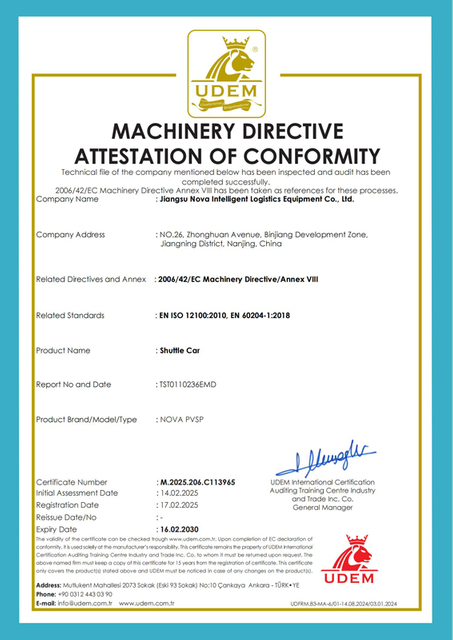 CE · Shuttle Car
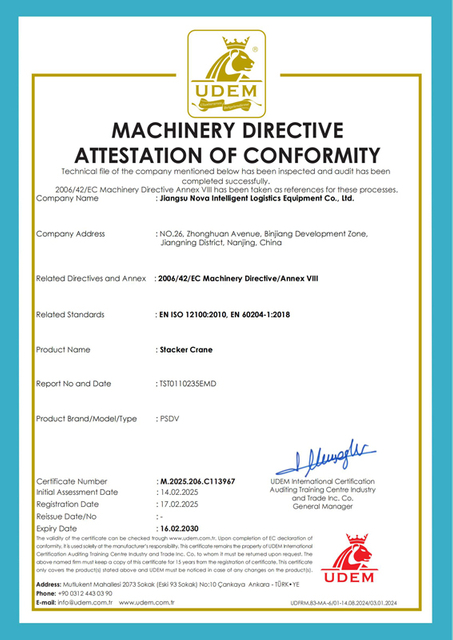 CE · Stacker Crane
Trusted by Global Enterprises







How to Specify Industrial Shelving for a Wholesale or Project Order
Use a structured RFQ to avoid comparing incomparable offers. The table below is a starting point for matching storage density and selectivity. It should not replace engineered drawings, but it helps procurement and operations agree on the operating model before prices are requested.
| System | Relative Density | Selectivity | Typical Best Fit |
|---|---|---|---|
| Selective Pallet Racking | ●●●○○ | ●●●●● | Many SKUs and fast access |
| Double-Deep Racking | ●●●●○ | ●●●○○ | Two or more pallets per SKU |
| VNA Pallet Racking | ●●●●○ | ●●●●● | Tall buildings and narrow aisles |
| Drive-In Racking | ●●●●○ | ●○○○○ | Cold storage and few SKUs |
| Radio Shuttle Racking | ●●●●○ | ●●●○○ | Deep lanes with FIFO or LIFO |
| Four-Way Shuttle System | ●●●●● | ●●●●○ | Automated dense storage |
| AS/RS | ●●●●● | ●●●●● | High-bay, 24/7, labor-saving operations |
- Building dimensions, clear height and column grid.
- Pallet or carton dimensions, weight and load center.
- Forklift type, lift height, aisle width and throughput per hour.
- Ambient conditions: humidity, coastal salt, cold storage or temperature variation.
- Seismic zone and local design code requirements.
- Required color, branding, packaging and export documentation.
- Future automation or expansion plan, including WMS/WCS interfaces.
For OEM/ODM wholesale programs, include private-label artwork, user manual requirements, barcode or nameplate details, spare-parts percentage and the target container loading pattern. A supplier that asks for these details before quoting is usually a better long-term partner than one that sends a price per bay immediately.
Industrial Shelving Procurement FAQ
Can you manufacture under our brand and custom color?
Yes. OEM/ODM production can include private-label nameplates, branded packaging, customized manuals, selected RAL colors and matching touch-up paint. For wholesale programs, we can also prepare product data sheets and installation instructions for your local market. Please provide logo files, packaging requirements and the target load range before the quotation stage so the production route and MOQ can be confirmed accurately.
What are typical MOQ and production lead times?
MOQ depends on the racking profile, color, packaging and whether the order is a standard wholesale program or a custom ODM project. Standard selective racking is typically produced in about 25 to 35 days after drawing approval. Shuttle and AS/RS projects follow a project schedule agreed at contract stage. Ocean transit from China to ports such as Santos, San Antonio, Callao, Buenaventura, Guayaquil or Buenos Aires usually takes around 30 to 45 days depending on the route.
Can you design racking for seismic zones in Chile, Peru and Colombia?
Yes. Our engineers can run structural and seismic load calculations with reference to local requirements such as NCh 2369 in Chile, E.030 in Peru and NSR-10 in Colombia, then specify reinforced uprights, bracing, base plates and anchors accordingly. Calculation reports can be delivered with quotation drawings for review by your local engineer or structural consultant before fabrication.
How do you support export shipping and customs clearance?
We provide container-optimized packing, commercial invoice, detailed packing list, bill of lading, certificate of origin and, on request, test reports, material certificates and installation manuals. Nested profiles and steel-strapped bundles help reduce freight cost per pallet position. For project cargo, we can coordinate shipping schedules and documentation with your freight forwarder and customs broker.
What certifications and quality checks are available?
Production is managed under ISO 9001, ISO 14001, ISO 45001 and ISO 10012 measurement management. CE certification is available for racking, shuttle cars, stacker cranes and RGVs. Before shipment, we perform coil traceability checks, coating-thickness inspection, dimensional verification and load testing according to the approved drawings. Certificates and test reports can be included in tender or procurement submissions.
Do you provide installation and after-sales service?
Yes. We can dispatch supervising engineers for installation and commissioning, train local installation crews, provide spare-parts kits and offer remote diagnostics for automated equipment such as stacker cranes, shuttles and WMS/WCS software. For wholesale partners, we can also supply installation manuals and standard inspection checklists so your local team can manage routine safety reviews.
What is the most common specification mistake when buying industrial shelving?
The most common mistake is buying on price per bay without defining load center, seismic assumptions, future automation, coating environment or documentation requirements. Two offers can look similar in a catalogue but differ significantly in steel grade, upright thickness, beam section, anchor specification and packaging. A clear RFQ and engineered drawings reduce the risk of unsafe loading, delayed installation or costly rework.
Request an Industrial Shelving Proposal
Send us your building drawing or basic dimensions, pallet or carton load data, target throughput, destination port and branding requirements. Our engineers will respond with a draft layout, pallet-position calculation, recommended system and a wholesale or project quotation.
Contact Us