Pallet Storage Systems Built for Export Programs
As an OEM/ODM warehouse pallet storage manufacturer and exporter, My Favorite Shelf supports brand owners, distributors, EPCs and 3PLs with product engineering, private-label production, container optimization and project documentation. Each system below can be specified around your pallet size, load profile, clear height, local code and target landed cost.
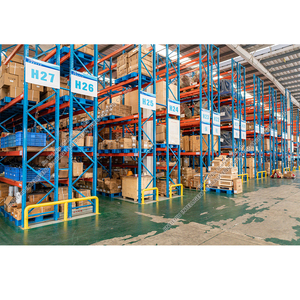
Heavy Duty Corrosion Protected 1000KG Racking System Beam Structure Industrial Warehouse Rack Steel Panels Carton Parts Picking 1000KG
Corrosion-protected beams and frames for carton picking, steel panels and parts storage. OEM finishes, labels and export packing are available for distributor programs.
View product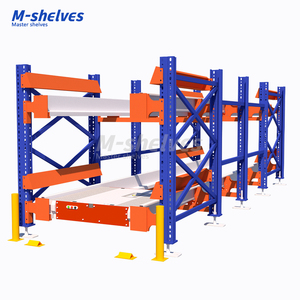
Metal Shuttle Pallet Racking Industrial Warehouse Rack Storage Shelving Steel System
Semi-automated high-density lane storage with radio shuttle control. Suitable for FIFO or LIFO operations where forklifts should not enter the rack.
View product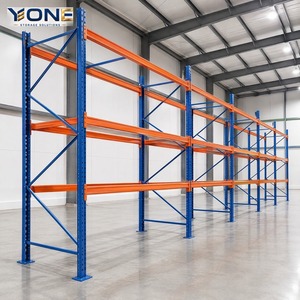
Steel Storage Rack Warehouse Heavy Duty Selective Pallet Rack System for Industrial Metal Organizers
Selective pallet racking gives direct access to every pallet. A practical base system for mixed SKUs, fast picking and phased expansion.
View product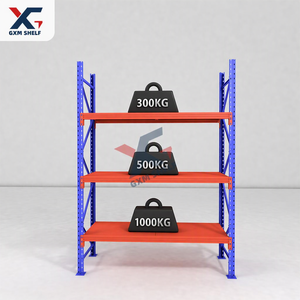
Heavy Duty Rack System Warehouse Storage Stacking Warehouse Shelf Racking Warehouse Racks Heavy Duty
Stacking rack modules create flexible heavy-duty storage without fixed aisle infrastructure. Useful for seasonal, temporary and changing layouts.
View product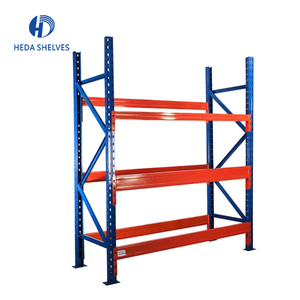
Heavy Duty Rack Warehouse Storage Rack, Pallet Racking Manufacturer
Factory-direct pallet racking components: uprights, beams, bracing, base plates and accessories. Ideal for OEM/ODM private-label programs.
View product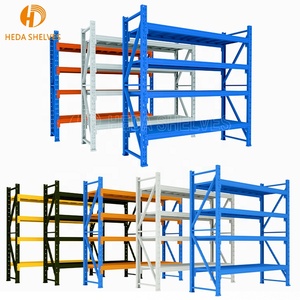
Heavy Duty Warehouse Pallet System Warehouse Racking Pallet Rack Shelving Pallet Racking for Industrial Shelves System
Integrated pallet and shelving system for warehouses that mix pallet reserve, carton picking and industrial spare parts in one footprint.
View product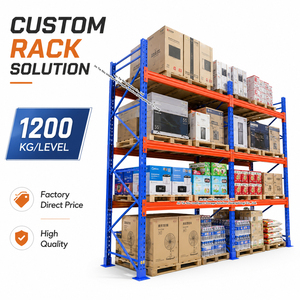
1200KG Steel Heavy Duty Rack Warehouse Pallet Storage Shelving System
Higher load rating for dense pallet loads in manufacturing, steel and distribution warehouses. Engineered with verified load assumptions.
View product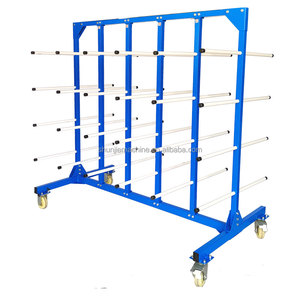
Customized 5 Tiers Cantilever Racking for Warehouse with Wheels Long Arms Metal Double Side Cantilever Rack Cart
Double-sided cantilever rack cart for pipes, profiles, panels and long loads. Custom tiers, arm length, mobility and finish are available.
View productManufacturing Depth Behind the OEM/ODM Supply Relationship
OEM/ODM sourcing is not a catalog exercise. It requires engineering depth, stable production, export documentation and after-sales capability. These figures summarise the operating base that supports every pallet storage project.
An OEM/ODM Partner That Can Document the Claim
For procurement and engineering teams, credibility is shown through production control, certifications, references and a clear service boundary. Our advantage is the combination of racking manufacturing, automation capability and export project experience.
In-House Production, One Accountable Team
Racking, stacker cranes, conveyors, shuttle carriers and WMS/WCS are developed within one industrial system. For OEM/ODM buyers, this means fewer handoffs between steel fabrication and automation, tighter change control, and a clearer warranty boundary when a project combines selective racking with shuttle or AS/RS equipment.
R&D Center and 70+ Patents
Guided by a municipal-level technical R&D center and a professor-level senior engineer who co-authored automated warehouse design and logistics distribution references, our engineering team holds more than 70 national patents and software copyrights. That matters when your tender requires custom profiles, non-standard loads or software interfaces.
Quality System You Can Audit
Production is managed under ISO 9001, ISO 14001, ISO 45001 and ISO 10012 measurement management. Racking, stacker cranes, shuttles and RGVs carry CE certification. Coil traceability, coating-thickness checks, dimensional inspection and load testing are documented before shipment.
Proven with Global Brands
We have served as a designated logistics equipment supplier for GE, Siemens, Walmart, Amazon and Toyota. The same project discipline — drawing control, packing lists, inspection records and site supervision — is applied to distributors, 3PLs and manufacturers in South America.
Seismic, Humid and Coastal Engineering
For Chile, Peru and Colombia, we can prepare structural calculations with reference to NCh 2369, E.030 and NSR-10, and specify reinforced uprights, bracing, base plates and anchors for review by your local engineer. For humid or coastal sites we recommend enhanced epoxy-polyester powder coating or hot-dip galvanized components.
Installation, Training and After-Sales
Supervising engineers can attend site for installation and commissioning, train local crews, support acceptance tests and provide spare parts. Automated systems such as stacker cranes, shuttles and WMS/WCS can be supported through remote diagnostics.
Match the Pallet Rack to the Operating Reality
A pallet storage purchase should start with pallet dimensions, load, SKU velocity, clear height, forklift type, local seismic requirement and future expansion. The table below is a practical starting point for OEM/ODM buyers; final selection should follow a layout and structural review.
| System | Recommended when | Density | Selectivity | OEM/ODM note |
|---|---|---|---|---|
| Corrosion-protected 1000KG racking | Carton picking, steel panels, parts storage, humid or coastal sites. | Finish, labels and export packing can be customized. | ||
| Metal shuttle pallet racking | High-density lanes, stable SKUs, FIFO or LIFO, lower labor intensity. | Shuttle control, training and spare-parts planning matter. | ||
| Selective pallet racking | Many SKUs, direct access to every pallet, fast picking and phased growth. | The most flexible base range for private-label programs. | ||
| Stacking rack system | Flexible heavy storage, seasonal layouts and rapid deployment. | Modular supply and simple site assembly. | ||
| Pallet racking manufacturer program | Distributors, EPCs and brands that need components or private label. | Profiles, beams, accessories and packaging can be specified. | ||
| Industrial pallet and shelving system | Mixed pallet reserve, carton picking and spare-parts storage. | Layout integration reduces interfaces for the buyer. | ||
| 1200KG heavy-duty rack | Dense loads, steel and manufacturing logistics, higher load ratings. | Load assumptions and verification records should be reviewed early. | ||
| Cantilever rack cart | Pipes, profiles, panels and long loads needing mobile or double-sided storage. | Custom tiers, arm length, wheels and finish are available. |
A simple five-step recommendation logic
Start with the operating case, then let the structure follow.
- Start with selectivity: if every SKU must be accessible, selective racking is usually the base case.
- Then test density: if the SKU profile is stable and deep lanes are acceptable, shuttle or drive-in layouts can reduce aisle space.
- Then test automation: if labour availability, throughput or high-bay utilization is the constraint, evaluate four-way shuttle or AS/RS.
- Then test the building: clear height, floor flatness, column grid, fire strategy and local seismic code can change the design.
- Then test the supply model: OEM/ODM buyers should confirm drawings, packaging, spare parts, documentation and after-sales responsibility.
The lowest price per kilogram is not the lowest total cost. A well-documented racking layout protects throughput, safety and future expansion.
Procurement Trends Shaping Pallet Storage Purchases
Purchasing teams are changing how they evaluate pallet storage. The shift is from buying steel by weight to buying a verified storage asset with measurable life-cycle performance.
Total Cost of Ownership Becomes the Scorecard
Buyers increasingly compare installation, freight, spare parts, inspection, maintenance and downtime risk alongside the quotation. A rack that costs less at the factory but creates rework on site is not a saving. For export projects, container optimization and packing quality directly affect landed cost.
Seismic and Local Code Evidence
In Chile, Peru and Colombia, seismic requirements are not a generic add-on. Procurement teams ask for calculation reports, anchor specifications, base plates and review drawings that local engineers can approve. Suppliers that can provide this documentation early shorten the tender cycle.
Modular, Phased Investment
High interest rates and uncertain demand make phased capital spending attractive. Mezzanine, longspan and selective racking can be designed for later expansion, while shuttle and AS/RS can be staged by aisle or module. Modularity should be built into the first layout, not added after the building is full.
Data-Driven Specification
Buyers now share SKU data, pallet heights, order profiles and throughput peaks instead of asking for a single rack type. This allows simulation of pallet positions, aisle widths, forklift travel and pick paths. Better input data leads to fewer change orders and a more defensible tender comparison.
Supplier Consolidation and Interface Reduction
Projects combining racking, shuttle, conveyor and WMS/WCS are easier to control when one manufacturer owns the interfaces. Procurement teams are reducing the number of suppliers to cut coordination risk, warranty disputes and commissioning delays.
ESG, Documentation and Customs Readiness
Export buyers request certificates of origin, material and test reports, coating specifications, packing lists and installation manuals. ESG and safety requirements also push suppliers to document powder-coating processes, material traceability and occupational health and safety management.
For South American destinations, request a container loading plan before the order is finalised. Routes to Santos, Paranaguá, San Antonio, Valparaíso, Callao, Buenaventura, Cartagena, Guayaquil, Buenos Aires and Montevideo have different transit times, port handling patterns and documentation expectations. A supplier that understands export packing can reduce freight waste and site receiving problems.
What the Next Pallet Storage Generation Looks Like
The product itself is evolving. Racking is becoming a structural, digital and service-enabled system rather than a static steel frame.
High-Bay AS/RS and Stacker Cranes
Automated storage and retrieval systems continue to move higher and denser, with stacker cranes serving high-bay warehouses up to 40 m and supporting 24/7 lights-out operation. The value is not only labour reduction; it is predictable throughput, traceability and better use of clear height.
Four-Way and Radio Shuttle Density
Shuttle technology is becoming more mainstream because it increases pallet positions in the same building footprint. Four-way shuttles add flexibility for automated dense storage, while radio shuttle racking provides a lower-investment step into semi-automation.
WMS/WCS Integration and Remote Diagnostics
Storage equipment is increasingly judged by its software interface. Warehouse management and control systems coordinate pallet locations, shuttle movements, stacker cranes and conveyors. Remote diagnostics and spare-parts planning reduce long-term service risk for overseas buyers.
Corrosion Protection and Cold-Chain Readiness
Humid ports, coastal warehouses and cold stores demand more than a standard paint finish. Enhanced pretreatment, epoxy-polyester powder coating and hot-dip galvanizing are becoming specification items. Design details also matter: drainage, condensation, anchor protection and material handling.
Modular Standardization and Faster Delivery
OEM/ODM buyers want custom layouts without unlimited lead times. Manufacturers are standardizing upright profiles, beam connectors, bracing and accessories so that custom projects can still use proven components. This supports faster quotations, container packing and spare-parts availability.
Safety Engineering and Transparent Documentation
Rack safety is moving from visual inspection to documented engineering. Load plates, inspection schedules, anchor checks, impact protection and calculation reports are increasingly requested in tenders. A supplier that provides this evidence is easier to approve internally.
These trends do not replace basic procurement discipline. They reward buyers who define the operating case clearly and ask suppliers to prove the design with drawings, calculations, test reports and references. Information gain starts with better questions.
From Drawing to Container: Export-Ready Delivery
Our OEM/ODM process is built to reduce uncertainty for export buyers who cannot inspect every production stage in person.
Requirement Review
Share building drawing or dimensions, pallet size and load, lift height, forklift type, throughput, SKU profile, destination city and any local code requirements. For seismic zones, include the site category and local review process.
Layout and Engineering
We prepare CAD layout, pallet-position count, system recommendation, structural calculations where required, finish specification and a quotation with clear scope. Drawings are issued for your review before production.
Production and Inspection
Profiles are rolled, cut, punched and powder-coated; accessories are packed by project. In-process checks cover dimensions, welding, coating thickness and load capacity. Test reports and material certificates can be provided.
Export Packing and Documents
Steel is bundled and container-optimized to reduce freight volume. Documents include commercial invoice, packing list, bill of lading, certificate of origin and, on request, test reports and installation manuals. Spanish and Portuguese project support is available.
Installation and After-Sales
Supervising engineers can be dispatched, local teams trained, spare parts supplied and automated systems supported remotely. A handover checklist helps the project close with documented acceptance.
Certifications, Projects and Factory Evidence
E-E-A-T is built on verifiable evidence: certificates, projects and a factory system behind the product.
Our factory and project record includes AS/RS for Taishan Fiberglass, shuttle racking for Samgak FMC and PT Tiga Pilar, pallet racking for Suning Group and Keppel Logistics, and mezzanine projects for Amazon. These references show the range of applications — from heavy machinery and paper to e-commerce and contract logistics.
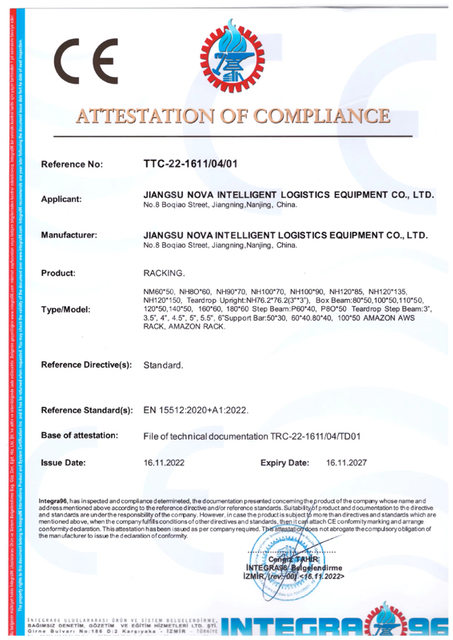
CE · Racking
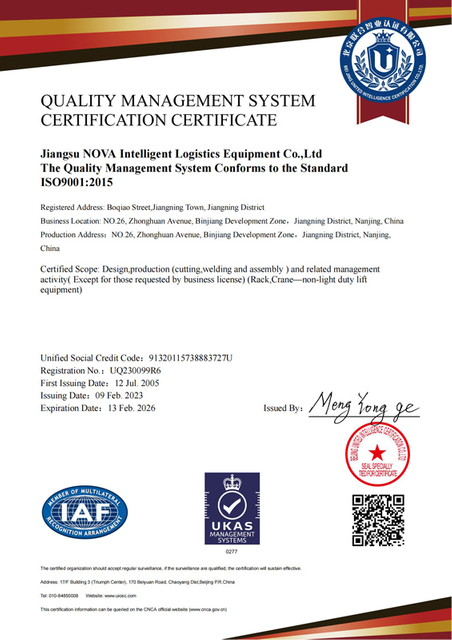
ISO 9001
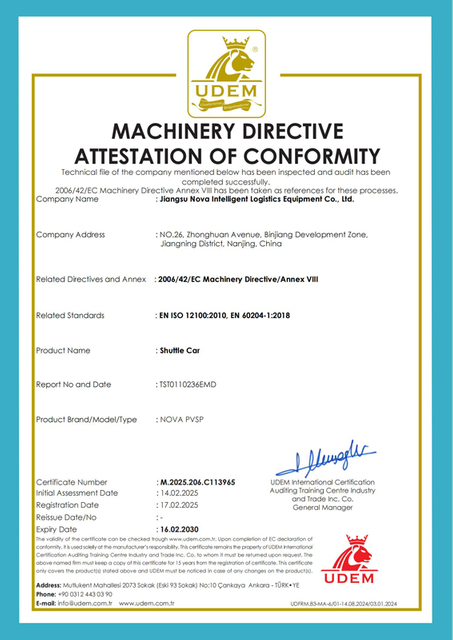
CE · Shuttle Car
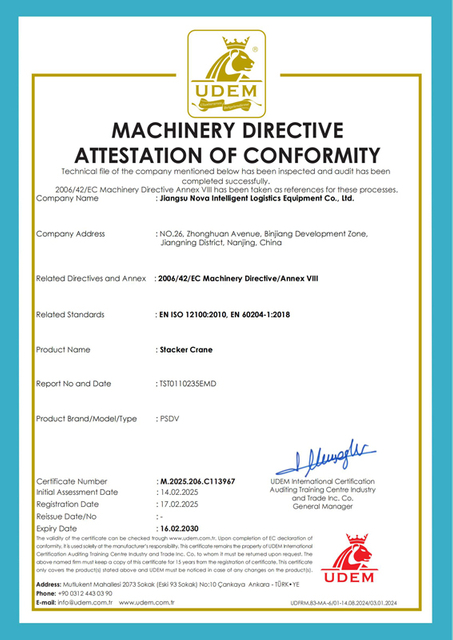
CE · Stacker Crane
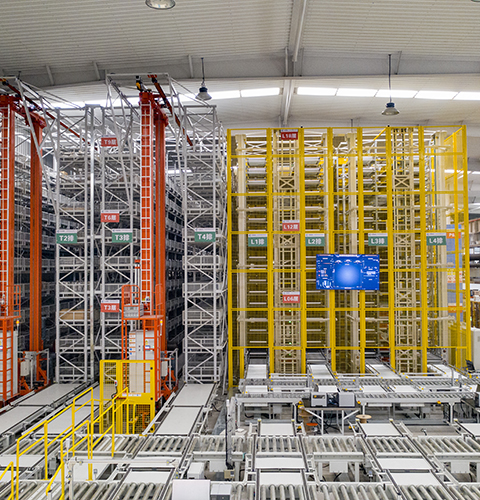
Machinery Industry Storage Center
High-density pallet storage for heavy components and spare parts, freeing floor space for production expansion.
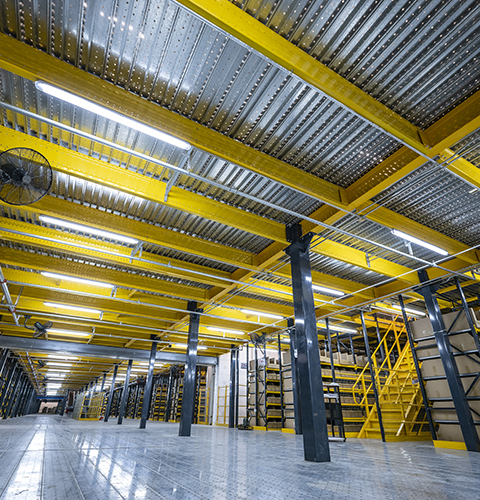
E-Commerce Logistics Center
Multi-tier picking racks and pallet storage built for peak-season order volumes and rapid SKU rotation.
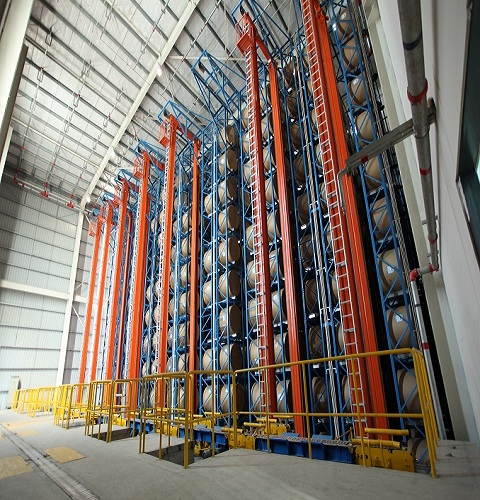
Paper Industry Logistics Center
Automated storage for heavy paper rolls and finished goods, linking production output directly to dispatch.
Frequently Asked Questions for Pallet Storage OEM/ODM Buyers
Can you design pallet racking for seismic zones in Chile, Peru and Colombia?
Yes. Our engineers can run structural and seismic load calculations with reference to local requirements such as NCh 2369 (Chile), E.030 (Peru) and NSR-10 (Colombia). We specify reinforced uprights, bracing, base plates and anchors accordingly, and deliver calculation reports with quotation drawings for review by your local engineer.
How long is production and shipping to South America?
Standard selective racking is typically produced in 25–35 days. Ocean transit from China to ports such as Santos, San Antonio, Callao, Buenaventura, Guayaquil or Buenos Aires usually takes 30–45 days depending on the route. AS/RS and shuttle projects follow a project schedule agreed at contract stage.
Which export documents do you provide?
We provide commercial invoice, detailed packing list, bill of lading, certificate of origin and, on request, test reports, material certificates and installation manuals in English, with Spanish or Portuguese support for project documentation.
Do you offer installation and after-sales service?
Yes. We can dispatch supervising engineers for installation and commissioning, train local installation teams, supply spare parts and offer remote diagnostics for automated systems such as stacker cranes, shuttles and WMS/WCS software.
What finish is recommended for humid or coastal warehouses?
For humid tropical or coastal sites, we recommend epoxy-polyester powder coating with enhanced pretreatment, or hot-dip galvanized components for cold storage and high-corrosion environments. The finish should be specified with the site environment, not chosen from a generic catalog.
Can you manufacture under our brand or drawing?
OEM/ODM support can include custom profiles, colors, labeling, packaging and private-label documentation, subject to structural safety and compliance review. Share your drawings, target loads, finish and packaging requirements so our engineers can confirm feasibility before quotation.
Get a Free Pallet Storage Layout and OEM/ODM Proposal
Send us your building drawing or simple length × width × clear height, pallet size and weight, forklift type and destination country. Our engineers will reply with a layout, pallet-position count, system recommendation, container plan and preliminary quotation. For OEM/ODM programs, include your brand, packaging and documentation requirements.
- Building dimensions and column grid
- Pallet size and maximum load
- Forklift type and lift height
- City and country for seismic and freight review
Tell us your target capacity, load profile and destination port. Our project team will confirm the next engineering step.