Eight Industrial Storage Systems Buyers Shortlist First
The phrase Top 10 Industrial Storage Racks Factories & Suppliers usually masks a more practical question: which factory can prove material control, structural calculations, load testing, export packing, installation support and after-sales response? The systems below are the first technical shortlist for many warehouse projects because they cover selective pallet racking, high-density storage, automated storage and custom long-load handling.
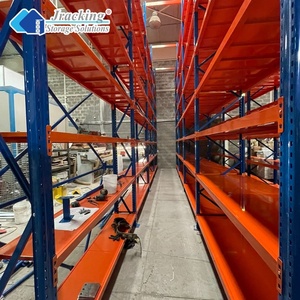
Jracking EURO Standard Warehouse Storage Racks Heavy Duty Steel Pallet Racking System for Distribution
Recommended for distributors and 3PLs that need high selectivity, fast forklift access and a familiar EURO-style beam-lock interface. Confirm beam loads, upright height and seismic bracing before quotation.
View product details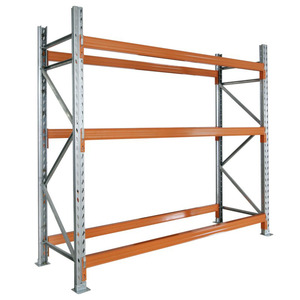
NOVA Full Automatic Warehouse Q235 Steel Boltless Store Heavy Duty Stacking Rack Industrial Storage Pallet Racking System
Best suited to projects moving toward automated handling or dense stacking. Ask for interface drawings, stacker or shuttle compatibility, WMS/WCS integration scope and maintenance access details.
View product details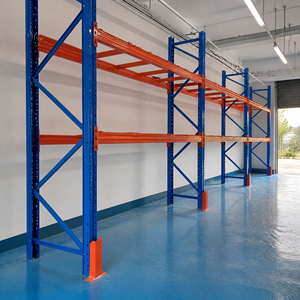
Warehouse Storage Rack Adjustable 80x70x2.0mm Upright with 500 Times Wear-resistant Tested Selective Pallet System
Useful for mixed-SKU warehouses that expect frequent reconfiguration. The specification highlights an 80×70×2.0 mm upright and wear-resistant testing, but buyers should still match capacity to pallet weight and anchorage conditions.
View product details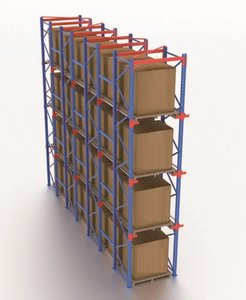
High Density Commercial Shelves Storage Warehouse Racking Systems Drive-In Pallet Rack for Industrial Factory Racks
A strong candidate for cold rooms, beverage warehouses and homogeneous SKU storage. Drive-in racking trades selectivity for density, so model forklift clearance, lane depth and LIFO product rotation before approval.
View product details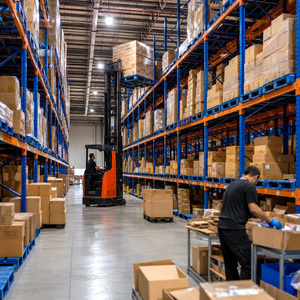
Industrial Storage System Warehouse Storage Rack Q235B Steel for Metal Facilities Storage with 1000-4000kg Load
Appropriate for manufacturing and metal-facility storage where pallet loads are heavy but not fully automated. Request Q235B material certificates, beam deflection limits and finish specifications for the site environment.
View product details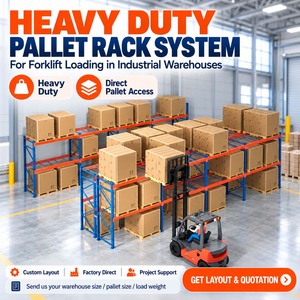
Heavy Duty Pallet Rack System for Forklift Loading in Industrial Warehouses
Built around forklift-driven operations in industrial warehouses. Before ordering, confirm aisle width, forklift reach height, pallet overhang tolerance, beam locking pins and periodic inspection points.
View product details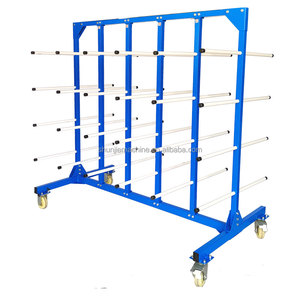
Customized 5 Tiers Cantilever Racking for Warehouse with Wheels Long Arms Metal Double Side Cantilever Rack Cart
Designed for long loads, pipe, timber, profiles and mobile picking. Buyers should check arm length, wheel load rating, stability under partial load and whether a fixed cantilever system would deliver better lifecycle value.
View product details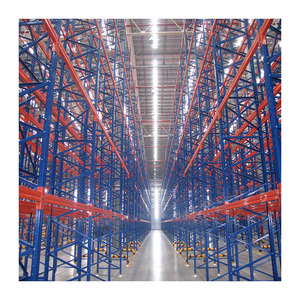
Mracking Heavy Duty Industrial Palletized Racking with a Capacity of 1000-4000kg Industrial Storage Racking
An industrial palletized storage option for heavy loads and straightforward forklift access. Verify capacity per level, seismic project location, anchor design, coating thickness and spare-parts availability.
View product detailsWhy the Best Industrial Storage Racks Factories & Suppliers Are Ranked by Evidence
Procurement intent behind this keyword is not simply “find a cheap racking seller.” It is a risk-reduction search: buyers want a factory that can survive engineering review, customs review, installation inspection and long-term operational audits.
The search intent for Top 10 Industrial Storage Racks Factories & Suppliers usually comes from three buyer groups: warehouse owners who need a first layout, 3PLs comparing selective racking with high-density systems, and EPC or facilities teams preparing an AS/RS business case. Price remains important, but the hidden question is whether the supplier can produce consistent steel sections, provide structural calculations, pack for international freight, support installation and remain reachable after handover. A useful supplier ranking therefore needs evidence, not a logo wall.
This guide uses the supplier capabilities published by My Favorite Shelf Industrial Co., Ltd. as an auditable factory benchmark. Founded in 1997, the company has operated through multiple warehouse construction cycles, reports approximately 60,000 tons of annual steel capacity, more than 8,000 delivered projects and exports to more than 140 countries. It also reports more than 70 national patents and software copyrights covering racking, stacker cranes, conveyors, shuttle carriers and WMS/WCS software. For international buyers, those data points are not decoration; they show whether a supplier has the engineering depth to coordinate steel, automation and software in one project.
10-Point Factory Due-Diligence Scorecard
Use these ten checks to compare any shortlisted industrial storage rack factory before you release a purchase order.
Ask whether the supplier owns cold-rolling, punching, welding and powder coating, and request coil or material traceability for Q235B or equivalent steel.
A real factory can provide upright, beam and anchorage calculations for the project location, not only a catalog load table.
Check ISO 9001, ISO 14001, ISO 45001 and CE certificates against the exact product family, model and validity date.
Confirm beam deflection limits, weld quality checks, powder-coating thickness and packing inspection records before shipment.
If automation is planned, verify experience with stacker cranes, four-way shuttles, conveyors, RGV and WMS/WCS interfaces.
Nested profiles, steel-strapped bundles and clear packing lists reduce freight damage and demurrage risk at destination ports.
Ask about Santos, San Antonio, Callao, Buenaventura, Guayaquil and Buenos Aires routes, plus transit time and customs documentation.
A supplier should offer site supervision, local crew training, commissioning checklists and clear handover acceptance criteria.
For automated systems, confirm WMS/WCS integration responsibilities, remote diagnostics, spare parts and software update policy.
Request comparable project references, maintenance plans and total cost of ownership over five to ten years, not only FOB price.
What My Favorite Shelf Brings to a Racking Procurement
My Favorite Shelf Industrial Co., Ltd. is a useful benchmark because its published capabilities cover both conventional pallet racking and automated warehouse systems, with engineering documentation and export support relevant to international buyers.
Full-Chain Manufacturing Control
Production covers racking profiles, automated storage equipment and the software layer. One accountable factory reduces coordination gaps between steel, automation and WMS/WCS delivery.
Engineering and Code Compliance
Seismic and structural design can reference local requirements such as NCh 2369 in Chile, E.030 in Peru and NSR-10 in Colombia, with reinforced uprights, bracing and anchors specified accordingly.
Verifiable Certifications
ISO 9001, ISO 14001, ISO 45001 and CE certification for racking, shuttle cars, stacker cranes and RGVs give procurement and safety teams documents that can be checked before order.
Global Project Delivery
The company reports 8,000+ projects in 140+ countries and has served international brands including GE, Siemens, Walmart, Amazon and Toyota. South America support can be handled in English, Spanish or Portuguese.
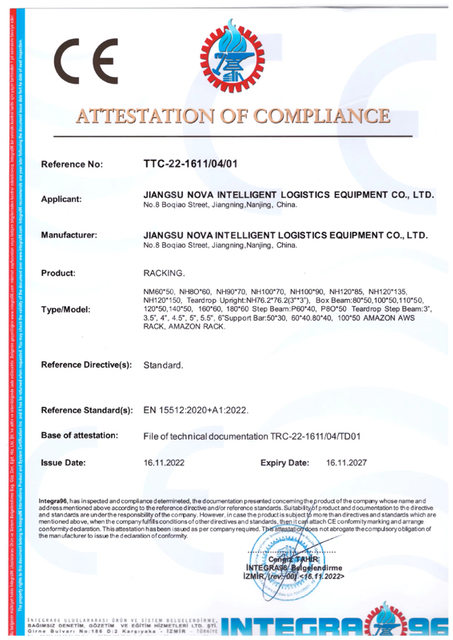
E-E-A-T note for procurement teamsCertificates prove that a management system or product family has been assessed, but they do not replace project-specific calculations. Always match the certificate scope to the ordered system, site location and load profile.
CE · Racking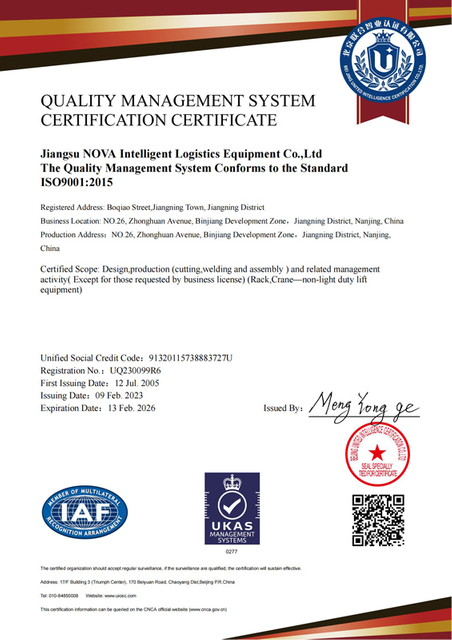 ISO 9001
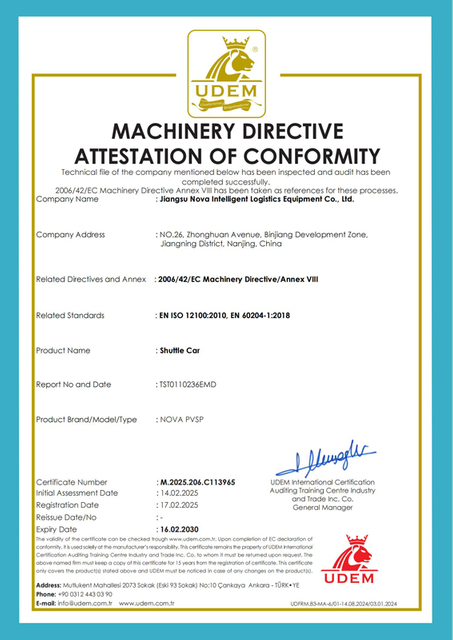 CE · Shuttle Car
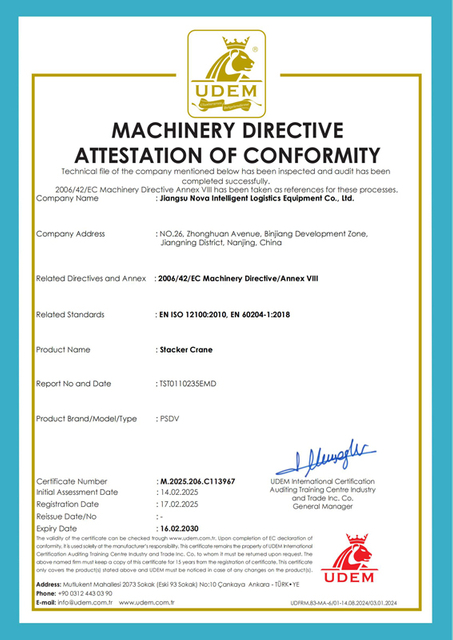 CE · Stacker Crane
Match the Storage Rack System to the Operating Profile
Industrial storage racks should be selected by SKU profile, load, selectivity, handling equipment and future automation — not by unit price alone. The table below converts the eight-product shortlist into a practical buyer decision.
| System | Density | Selectivity | Best-Fit Operation | Procurement Check |
|---|---|---|---|---|
| Jracking EURO Standard Heavy Duty Pallet Racking | ●●●○○ | ●●●●● | Distribution, FMCG and spare-parts warehouses | Beam load, upright height, seismic bracing, powder-coating thickness |
| NOVA Automatic Boltless Pallet Racking | ●●●●○ | ●●●○○ | Automation-ready dense storage and stacking | Stacker/shuttle interface, WMS/WCS scope, maintenance access |
| Adjustable Selective Pallet Rack Upright System | ●●●○○ | ●●●●● | 3PLs and mixed-SKU warehouses needing flexibility | Upright profile, wear test, reconfiguration plan, anchor design |
| High-Density Drive-In Pallet Rack | ●●●●○ | ●○○○○ | Cold storage, beverage and homogeneous SKU storage | Lane depth, forklift clearance, LIFO rule, rail wear |
| Q235B Steel Industrial Storage Rack | ●●●○○ | ●●●●○ | Metal facilities, manufacturing and heavy industrial stores | Q235B certificate, 1,000–4,000 kg load, finish for site humidity |
| Heavy Duty Pallet Rack for Forklift Loading | ●●●●○ | ●●●○○ | Forklift-driven industrial warehouses | Aisle width, forklift reach, pallet overhang, beam locking |
| Customized 5-Tier Double-Sided Cantilever Rack Cart | ●●○○○ | ●●●●○ | Long loads, pipe, timber, profiles and mobile picking | Arm length, wheel load, stability, fixed vs. mobile comparison |
| Mracking Heavy Duty Palletized Racking | ●●●●○ | ●●●○○ | Heavy palletized industrial storage | Capacity per level, seismic location, anchors, spare parts |
Illustrative Buyer Intent Signals
These scores are not market statistics. They are a planning visual showing how often different performance criteria dominate industrial racking projects when buyers move from inquiry to technical evaluation.
What to Send for a Useful Quotation
- Building drawing or clear height, length, width and column grid
- Pallet or carton dimensions, weight and load overhang
- Forklift type, lift height and aisle constraints
- SKU count, turnover profile and FIFO/LIFO requirement
- City and country for seismic, wind and freight review
- Target pallet positions, future expansion plan and budget stage
Future Procurement Trends for Industrial Storage Racks
Buying behavior is shifting from unit-price comparison to lifecycle procurement. The strongest suppliers will be those that can document engineering, support phased automation and remain accountable after installation.
Total Cost of Ownership Contracts
Procurement teams increasingly ask for spare-parts lists, service-level agreements, remote diagnostics and maintenance plans. A low FOB price can be misleading if beams, uprights or shuttle parts are difficult to replace, or if installation delays push the project past its commissioning date.
Compliance-First Purchasing
Seismic zones, fire safety, occupational safety and local building practice now enter the buying decision earlier. For South America, suppliers should be ready to discuss NCh 2369 in Chile, E.030 in Peru, NSR-10 in Colombia and ABNT NBR 15524 practice in Brazil, alongside CE and ISO documentation.
Phased Automation and Flexible Finance
Many buyers now phase AS/RS, four-way shuttle or mezzanine expansion instead of committing the entire warehouse at once. Suppliers must show modular layouts, future interface provisions, container-optimized shipping and a digital handover package that can support later automation or WMS upgrades.
Engineering Trends Reshaping Industrial Storage Racks
Racking development is moving in three directions at once: denser storage, smarter control and more durable construction for humid, coastal and cold-chain environments.
Denser, Higher and Smarter
Four-way shuttle racking, radio shuttle systems, stacker cranes and rack-supported buildings are pushing storage upward and inward. Sensors, anti-collision systems and WMS/WCS integration are becoming part of the racking conversation, not a separate automation add-on.
Stronger and More Corrosion-Resistant
High-strength steel sections, tighter weld quality and better pretreatment are becoming standard expectations. For humid or coastal warehouses, epoxy-polyester powder coating with enhanced pretreatment or hot-dip galvanized components can extend service life and protect the buyer’s maintenance budget.
Reconfigurable and Sustainable Design
Warehouse demand changes faster than buildings do. Modular longspan shelving, mezzanine platforms and adjustable selective racking let buyers expand in phases. Suppliers are also being asked for material documentation, recyclable steel content, lower-VOC finishes and digital as-built drawings.
From Inquiry to Handover: A Practical Four-Step Process
A reliable factory should turn your data into a layout, a verified bill of materials, an export plan and an installation sequence. The process below also helps procurement compare suppliers on equal terms.
Collect Operating Data
Building dimensions, pallet size, load weight, SKU profile, forklift type, throughput target and future expansion plan.
Layout and Pallet Count
CAD proposal, aisle decisions, storage density comparison, safety clearances and a draft bill of materials.
Engineering Verification
Load calculations, seismic review where required, finish selection, packing plan and shipping-route confirmation.
Installation and Handover
Site supervision, commissioning, operator training, inspection records, spare-parts list and after-sales support.
Frequently Asked Questions About Industrial Storage Racks
These are the questions procurement teams most often raise when comparing factories, quoting racking, planning automation or shipping to South America.
How do I verify a factory is a real racking manufacturer rather than a trading company?
Ask for production process evidence: cold-rolling, punching, welding, powder coating, inspection records and material traceability. Request a video plant tour, certificate scope, tooling records and a project reference with similar upright and beam specifications. A factory should be able to explain its own quality-control gates, not only forward a catalog.
What information is required for an accurate pallet racking quotation?
Provide building length, width, clear height and column grid; pallet length, width and loaded weight; pallet overhang; forklift type and lift height; SKU count and turnover; FIFO or LIFO requirement; project city and country; and target pallet positions. Without these inputs, a price is only an estimate and may become inaccurate after engineering review.
Can racking be designed for seismic zones in Chile, Peru or Colombia?
Yes, when the supplier has engineering capability for project-specific calculations. Design should reference local requirements such as NCh 2369 in Chile, E.030 in Peru and NSR-10 in Colombia, and include reinforced uprights, bracing, base plates and anchor specifications. Buyers should have the calculation report reviewed by their local engineer before fabrication.
How long is production and shipping to South American ports?
Standard selective racking is often produced in about 25 to 35 days, while AS/RS and shuttle projects follow a project schedule. Ocean transit from China to ports such as Santos, San Antonio, Callao, Buenaventura, Guayaquil or Buenos Aires usually takes roughly 30 to 45 days depending on the route. Customs clearance, port congestion and inland transport should be planned separately.
Which export documents should be prepared for customs clearance?
Typical documents include commercial invoice, detailed packing list, bill of lading and certificate of origin. Depending on the project, buyers may also need material certificates, test reports and installation manuals. For South America, documentation support in English with Spanish or Portuguese project communication can reduce misunderstandings during clearance and installation.
What surface finish is best for humid, coastal or cold-storage warehouses?
For humid tropical or coastal sites, specify epoxy-polyester powder coating with enhanced pretreatment. For high-corrosion environments or certain cold-storage applications, hot-dip galvanized components may be appropriate. The correct decision depends on humidity, salt exposure, cleaning chemicals, condensation and expected service life, so the finish should be written into the bill of materials.
Do you support installation and after-sales service overseas?
International projects can be supported with supervising engineers, local crew training, commissioning procedures and remote diagnostics for automated equipment such as stacker cranes, shuttles and WMS/WCS software. Buyers should agree in advance on the service scope, spare-parts package, response time and the party responsible for local permits and lifting equipment.
How should I compare AS/RS, shuttle racking, drive-in and selective racking for ROI?
Start with the operating profile. Selective racking offers the highest selectivity and flexibility. Drive-in and radio shuttle systems increase density for homogeneous SKUs. Four-way shuttle and AS/RS can reduce labor and increase throughput where volume, order profile and capital budget justify automation. Compare total cost of ownership: building height utilization, forklift or robot count, energy, labor, maintenance, downtime risk and future expansion cost.
Send Your Warehouse Data. Get a Practical Racking Layout Direction.
Share your building drawing, pallet dimensions, load per pallet and target throughput. The project team can respond with a system recommendation, preliminary pallet-position direction and the engineering information needed for a verified quotation.
Support for industrial storage racks, pallet racking, AS/RS, shuttle systems, mezzanine platforms and warehouse expansion projects.