Factory Direct · Since 1997 · ISO 9001 / 14001 / 45001 · CE

Top 10 Industrial Storage Shelving Supplier & Wholesaler

A 2025 procurement white paper on racking density, seismic-ready engineering, automation readiness and total cost of ownership — written by the engineers who build the steel.

Wholesale Product Range

Eight Systems That Carry the Top 10 Standard

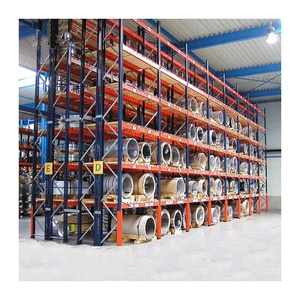
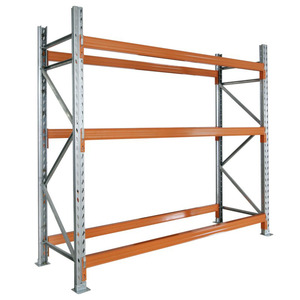
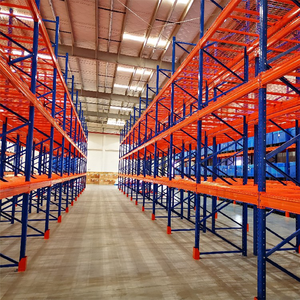
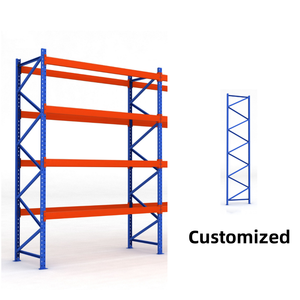
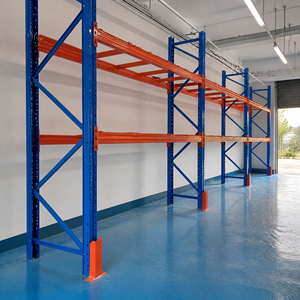
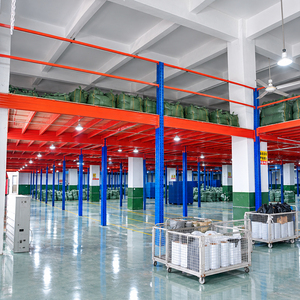
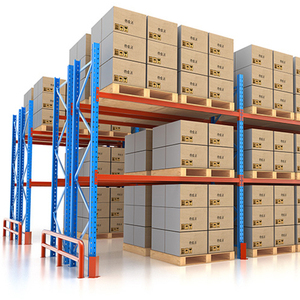
Industrial storage shelving is no longer a commodity purchase. A three-level selective bay can hold 20 tonnes of static load, sits inside a building whose insurer will demand load certificates, and must stay safe through a seismic event that a local authority will model. These eight platforms cover roughly nine out of ten industrial shelving enquiries we receive — each built on our own roll-forming and powder-coating lines, sampled and load tested, and shipped with structural calculations your regional engineer can verify.

1997Founded
60,000 tAnnual Steel Capacity
8,000+Projects Delivered
140+Export Countries
70+Patents & Software Rights
Procurement Outlook 2025–2030

Six Sourcing Trends Reshaping Industrial Shelving Purchases

Buying behaviour changed faster in the last three years than in the previous fifteen. These are the forces our project engineers see in live tender documents, not predictions from a research report.

Automation-Ready Beats Automation-Now

Most first enquiries now ask a different question: can this racking be automated later? Buyers increasingly specify tighter upright tolerances, reserved conveyor corridors and a defined WMS/WCS data model at the structural design stage — even when the first phase is manual.

Seismic Documentation Is Now Mandatory

Procurement teams in Chile, Peru and Colombia ask for seismic calculation files during the tender, not after the award. A generic “EN compliant” statement no longer passes review; the report must name the code, the load cases and the anchor design.

Total Cost of Ownership Replaces Unit Price

Buyers who compare only price per pallet position discover bent uprights, failed coatings and no expansion room three years later. Mature tenders now score inspection cycles, spare-part availability and future add-on capacity alongside the quoted figure.

Nearshoring Changed the Delivery Rhythm

As manufacturing shifts toward Mexico, Brazil and Colombia, shelving demand is moving from one-off mega-projects to recurring, phased replenishment. Wholesalers are being judged on rolling production capacity and container consolidation, not on headline unit price.

High Density Moved Into the Mid-Market

Radio shuttle and very narrow aisle layouts were once reserved for large distribution centres. Mid-sized 3PLs are now adopting them because pallet positions per square metre has become a board-level planning KPI in land-constrained cities.

Sustainability Enters the Scorecard

Steel is inherently recyclable, so the real differentiators are coating chemistry, packaging waste and transport emissions. Retail and FMCG buyers increasingly add supplier sustainability criteria to the scoring matrix, and expect documented answers.

Product Development Trends

Where Industrial Shelving Design Is Heading

These are the engineering changes already visible in production drawings — the direction the next generation of racking will be specified from.

Thin-Wall High-Strength Profiles

Higher-grade steel and optimised section geometry hold the same capacity at thinner wall thickness — which means more pallet positions per container and a lower landed cost per position.

Modular Boltless Assembly

Slotted uprights, pre-punched beams and factory-fitted bracing shorten site installation far more than adding crew numbers does — a decisive factor when crane and forklift downtime is billed hourly.

Embedded Monitoring

QR-coded bay labels, beam deflection indicators and load sensors on shuttle carriers turn inspection from an external audit into a built-in property of the racking itself.

Hybrid System Layouts

Buyers ask less often whether a warehouse is shuttle or stacker-crane based, and more often which zone should use which. Selective racking, shuttle lanes and VNA aisles now coexist inside a single building as standard practice.

Supplier Due Diligence

The 10 Criteria That Earn a Supplier a Place in the Top 10

“Top 10” is a claim buyers cannot audit. These ten criteria can be — each one maps to a document you should request before signing.

01

Factory Ownership & Steel Traceability

Owning the roll-forming and coating lines means controlling chemistry, camber and coating thickness. Ask for mill certificates and coil traceability records.

02

Calculations From Real Project Data

Structural reports should be generated from your pallet weight, beam span and clear height — never a template. Seismic models must name the code they follow.

03

Certification Covering Rack & Automation

ISO 9001, 14001 and 45001 are the baseline. Verify exactly which equipment the CE marking covers — racking, shuttle car, stacker crane or RGV.

04

Auditable Capacity & On-Time Delivery

Request twelve months of monthly output figures and an on-time rate for standard selective racking. A supplier without those numbers is guessing at your schedule.

05

Automation-Ready Design Details

Racking specified today may be retrofitted to shuttle operation in a decade. That depends on upright tolerance, beam node design and reserved conveyor paths.

06

Surface Finish Matched to Climate

Coastal warehouses need enhanced-pretreatment powder coating or hot-dip galvanizing. Salt-spray hours should be specified against your actual environment.

07

Container Loading & Export Documents

Nested profiles, steel-strapped bundles and complete paperwork save real freight and customs time. Ask how many pallet positions actually fit in one container.

08

Installation & Commissioning Support

A supervising engineer on site, a trained local crew and documented acceptance testing are a different service level from a PDF installation manual.

09

Spare Parts & Remote Diagnostics

Uprights, beams, safety clips and shuttle batteries wear out. A regional stock or a guaranteed fast channel matters more than a generous verbal promise.

10

Contract Transparency

Warranty duration, guaranteed load values and change-order pricing should be written down. Ambiguity becomes expensive the first time a schedule slips.

Experience & Authority

Who Stands Behind the Top 10 Position

My Favorite Shelf Industrial Co., Ltd. has designed, manufactured and installed warehouse racking and automated storage systems since 1997. Our own production base processes approximately 60,000 tonnes of steel per year, and our municipal-level R&D centre holds more than 70 national patents and software copyrights covering racking, stacker cranes, conveyors, shuttle carriers and WMS/WCS software.

For South American buyers this means one manufacturer is responsible for the steel, the automation and the software — with engineering documentation in English, project support in Spanish and Portuguese, and seismic calculations referenced to NCh 2369, E.030, NSR-10 and ABNT NBR 15524 for independent review by your local engineer.

More than 8,000 projects in over 140 countries have been delivered, including designated logistics equipment supply for international enterprises such as GE, Siemens, Walmart, Amazon and Toyota. Racking, shuttle carriers, stacker cranes and RGVs carry ISO 9001, ISO 14001, ISO 45001 and CE certification, and the engineering team is led by a professor-level senior engineer who co-authored recognised automated warehouse design references.

Seismic Engineering

Reinforced uprights, bracing and anchor design calculated against the local code and issued for review.

Port-Optimised Logistics

Container-packed for Santos, San Antonio, Callao, Buenaventura, Guayaquil and Buenos Aires routes.

Installation & Commissioning

Supervising engineers on site, local crew training and documented handover acceptance testing.

Spanish & Portuguese Support

Project documentation translated, technical replies in-language, spare parts and remote diagnostics.
Buyer Questions

Frequently Asked Procurement Questions

The questions our South American project team answers most often during the quotation stage.

Can your pallet racking be designed for seismic zones in Chile, Peru and Colombia?

Yes. Our engineers run structural and seismic load calculations with reference to NCh 2369 (Chile), E.030 (Peru) and NSR-10 (Colombia), then specify reinforced uprights, bracing, base plates and anchors accordingly. Calculation reports are issued together with the quotation drawings so your local engineer can review and approve them before production begins.

How long does delivery to South American ports take?

Standard selective racking is typically produced in 25 to 35 days. Ocean transit from China to ports such as Santos, San Antonio, Callao, Buenaventura, Guayaquil or Buenos Aires usually takes 30 to 45 days depending on the route. AS/RS and shuttle projects follow a project schedule agreed at contract stage, because commissioning and software integration run on a different timeline.

Which export documents do you provide for customs clearance?

Commercial invoice, detailed packing list, bill of lading, certificate of origin and, on request, material certificates, test reports and installation manuals in English — with Spanish or Portuguese support available for project documentation.

Do you offer installation and after-sales service in South America?

Yes. We dispatch supervising engineers for installation and commissioning, train local installation teams, supply spare parts and offer remote diagnostics for automated systems such as stacker cranes, shuttles and WMS/WCS software.

What surface finishes are recommended for humid or coastal warehouses?

For humid tropical or coastal sites we recommend epoxy-polyester powder coating with enhanced pretreatment, or hot-dip galvanized components for cold storage and high-corrosion environments. Specify salt-spray hours against your actual site conditions rather than accepting a generic “powder coated” description.

What is the minimum order quantity for wholesale orders?

There is no fixed MOQ for standard selective racking — we quote from single-bay replacement uprights up to multi-thousand-pallet programmes. Automated systems such as AS/RS and four-way shuttles are quoted per project, because the engineering scope and software integration differ in every case.

Can existing racking be upgraded to semi-automated or fully automated storage?

In many cases yes, provided the uprights, beam nodes and floor tolerances meet current standards. We begin with a survey of the existing structure, then model the upgrade path and quote either partial replacement or a phased retrofit that keeps the warehouse operating during the transition.

How should I compare costs per pallet position between quotations?

Strip out freight, installation and lifetime inspection costs before comparing unit prices. A cheaper bay that cannot accept a fourth level or a shuttle retrofit will cost more over ten years than a slightly higher-priced system designed with expansion capacity built in.

Start Your Sourcing Project

Send Your Pallet Data. Receive a Layout and a Wholesale Quotation.

Send us your building dimensions, pallet size, weight per unit and expected throughput. Our engineers will reply with a draft layout, pallet-position count and a wholesale quotation broken down by factory price, sea freight and installation scope — usually within one business day, in English, Spanish or Portuguese.

Download Catalog