Top 10 Warehouse Racking Solutions Suppliers & Exporters
A buyer-focused guide to heavy-duty pallet racking, radio shuttle, AS/RS, mezzanine and cantilever systems — with export logistics, seismic engineering and lifecycle support criteria for South American warehouses.
Get Catalog8 High-Intent Warehouse Racking Systems for 2025 Projects
The eight systems below are not a random catalog. They map to the most common RFQ patterns we see from distributors, 3PLs, food and beverage operators, e-commerce fulfillment centers and manufacturers. Each product URL is preserved for direct technical review.
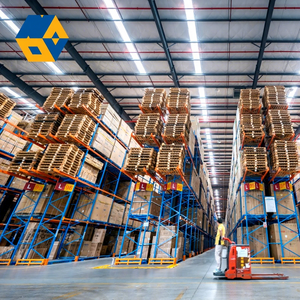
Heavy Duty 2000KG Per Layer Pallet Rack System
Large-capacity selective racking for dense pallet storage, with heavy-duty beams and engineered uprights for high-load warehouse zones.
View product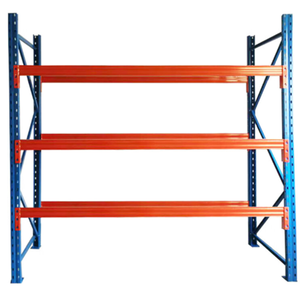
Mracking Industrial Warehouse Pallet Racking System
A flexible selective pallet racking platform for mixed-SKU warehouses, fast item access and phased expansion.
View product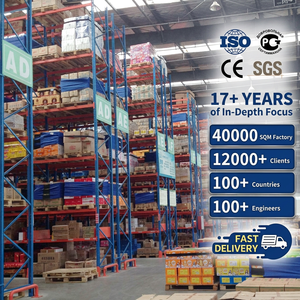
SDFD Heavy Duty Selective Pallet Racking
Steel box-beam selective racking with adjustable levels for multi-layer storage and straightforward forklift picking.
View product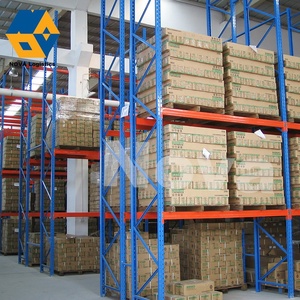
NOVA Heavy Duty Industrial Pallet Rack
Manufacturer-grade storage racking for heavy industrial loads, with project-specific beam and upright configurations.
View product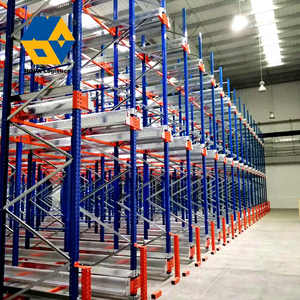
Automated 2-Way Radio Shuttle System
Semi-automated deep-lane storage that keeps forklifts outside the rack, improving safety and pallet density.
View product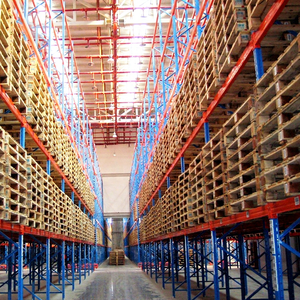
Heavy Duty Selective Warehouse Pallet Rack
A versatile selective racking solution for warehouses that need high selectivity, clear aisles and efficient replenishment.
View product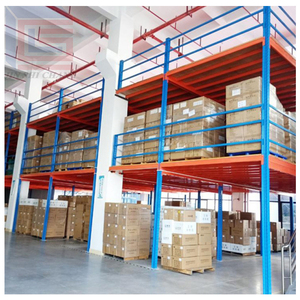
Custom Heavy Duty Mezzanine Racking
A steel mezzanine platform that adds usable floor area for picking, storage or light production without a new building.
View product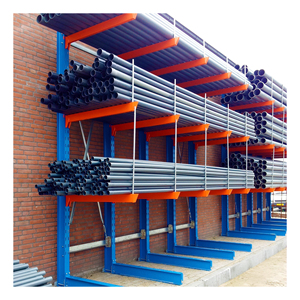
Industrial Single-Side Cantilever Rack
Cantilever racking for pipes, timber, profiles and other long loads, with clear access and custom arm spacing.
View productWhy This Top 10 List Is Different
Most “Top 10 supplier” pages publish a price list and call it a ranking. That does not serve a procurement team that must defend a capital project to finance, safety and operations. This whitepaper evaluates warehouse racking solutions suppliers and exporters through the lens of project risk, engineering evidence, export readiness and total cost of ownership.
The core search intent behind “warehouse racking solutions suppliers and exporters” is not simply to find a product photo. Buyers want to know who can engineer the system, who controls the steel quality, who can document seismic performance, who understands container loading, and who will still answer the phone after commissioning. Those questions become more important when the project is exported to Brazil, Chile, Peru, Colombia, Argentina or another South American market where freight, humidity, seismic codes and installation labour all affect the final outcome.
Our view is based on more than 25 years of manufacturing experience, 8,000+ delivered projects and export support across 140+ countries. The Top 10 shortlist in this guide is therefore treated as a capability benchmark, not a paid placement. Eight representative systems from My Favorite Shelf are included below because they cover the highest-frequency RFQ categories: heavy-duty selective racking, radio shuttle, AS/RS-ready structures, mezzanine platforms and cantilever storage.
The strongest supplier is not the one with the lowest price per bay; it is the one that reduces the number of unknowns before steel leaves the factory.
The 2025 Buyer’s Scorecard: How We Evaluate Suppliers & Exporters
A supplier that is strong in one area but weak in another creates hidden cost. We score each shortlisted exporter against six criteria that map directly to the questions asked in real RFQs.
Structural Engineering & Seismic Readiness
Suppliers should provide verifiable load calculations, seismic detailing for NCh 2369 (Chile), E.030 (Peru) or NSR-10 (Colombia) where applicable, and clear assumptions for uprights, bracing, base plates and anchors.
In-House Manufacturing & Steel Traceability
Ask whether racking profiles are cold-rolled in-house or brokered. Mill certificates, coil traceability, hole-pitch accuracy and coating-thickness records reduce the risk of mixed steel or inconsistent beam engagement.
Certifications & Load-Test Documentation
ISO 9001, ISO 14001 and ISO 45001 are baseline management signals. CE marking for racking, shuttle cars, stacker cranes and RGVs, plus load-test reports, gives safety and procurement teams evidence to audit.
Export Logistics & Port Experience
A low unit price can disappear in freight. Container-optimized nesting, steel-strapped bundles, port-specific packing and experience with Santos, San Antonio, Callao, Buenaventura, Guayaquil or Buenos Aires matter.
Automation & WMS/WCS Integration
For AS/RS, four-way shuttle and radio shuttle projects, the supplier must control the rack, the machine and the software interface. Otherwise, the integrator, rack vendor and software vendor blame each other during commissioning.
Installation, Training & Lifecycle Support
Supervising engineers, local crew training, spare-parts lists, remote diagnostics and periodic safety inspections protect the asset after go-live. A rack is a long-term structure, not a one-time shipment.
What Buyers Will Demand Through 2030
Procurement is moving away from “price per bay” toward measurable lifecycle value. The following six trends are already visible in South American RFQs, especially in Brazil, Chile, Peru, Colombia and Argentina.
Total Cost of Ownership Over Lowest Price
Buyers are comparing freight, installation, downtime, spare parts and reconfiguration cost — not only FOB steel price. A slightly higher racking quote that reduces container count or speeds installation can be cheaper overall.
Seismic and Climate-Resilient Engineering
Chile, Peru and Colombia require project-specific seismic review. Coastal and tropical sites also demand enhanced powder coating or hot-dip galvanizing to resist humidity and salt.
Higher Density Without New Buildings
Land and permit cycles are slow. Radio shuttle, four-way shuttle, VNA and mezzanine systems let operators add pallet positions inside the existing footprint.
Automation That Starts Modular
Not every warehouse can jump to a fully automated AS/RS. Buyers prefer modular starts: selective racking today, shuttle-ready lanes tomorrow, and WMS/WCS integration when volume justifies it.
Digital Documentation and Verification
Procurement teams now request calculation reports, material certificates, CE documentation, packing lists and installation manuals before release of payment. Digital handover packages reduce customs and audit friction.
Green Steel and Circular Materials
ESG targets are entering warehouse specifications. Suppliers that can document steel sourcing, coating processes, recyclability and repairability will have an advantage in corporate tenders.
Where Racking Technology Is Moving Next
The next generation of warehouse racking is being shaped by high-bay automation, structural safety and faster installation. These are the engineering directions that matter for 2025–2030 projects.
High-Bay AS/RS and Four-Way Shuttle
High-bay AS/RS and four-way shuttle systems are becoming more accessible for mid-size DCs. The rack is no longer passive steel; it is part of a machine interface with tolerances measured in millimetres.
Cold-Chain and Corrosion Protection
Cold storage, ports and humid climates push demand for hot-dip galvanized components, enhanced pretreatment and epoxy-polyester powder coating. Finish specification is now a procurement line item, not an afterthought.
Rack-Supported Buildings and Mezzanine
Rack-supported buildings and multi-tier mezzanine platforms reduce structural steel duplication. They require early collaboration between rack engineer, building designer and fire consultant.
Safety Intelligence and Monitoring
Load signs, anti-collision protection, upright guards, beam-lock inspection and periodic rack safety audits are becoming standard. Some projects now include sensor-based monitoring for high-traffic aisles.
Modular Profiles and Faster Installation
Boltless and pre-punched profiles, colour-coded components and container-optimized kits shorten installation time. For export projects, faster site assembly directly reduces labour and crane cost.
WMS/WCS Integration and Digital Twin
Warehouse control software and digital twin models are used to test layout changes before steel is ordered. Suppliers that understand both the physical rack and the software layer can reduce commissioning risk.
Why My Favorite Shelf Belongs on Your Shortlist
My Favorite Shelf Industrial Co., Ltd. has designed, manufactured and installed warehouse racking and automated storage systems since 1997. For buyers comparing exporters, the advantage is not only the steel price — it is one accountable manufacturer for racking, automation and software.
Our production base processes around 60,000 tons of steel per year. A municipal-level R&D center holds more than 70 national patents and software copyrights covering racking, stacker cranes, conveyors, shuttle carriers and warehouse control software. That matters when a project moves from static pallet racking to a shuttle or AS/RS layout.
More About Our Factory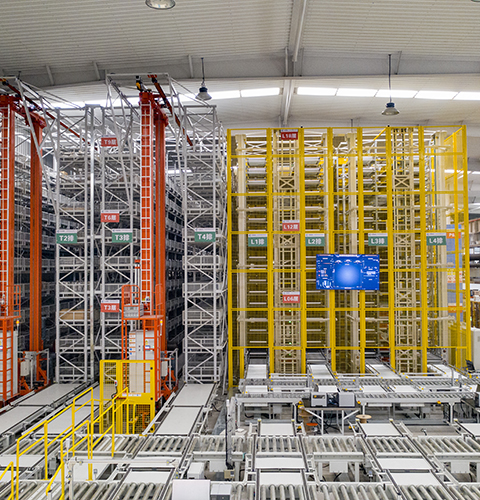
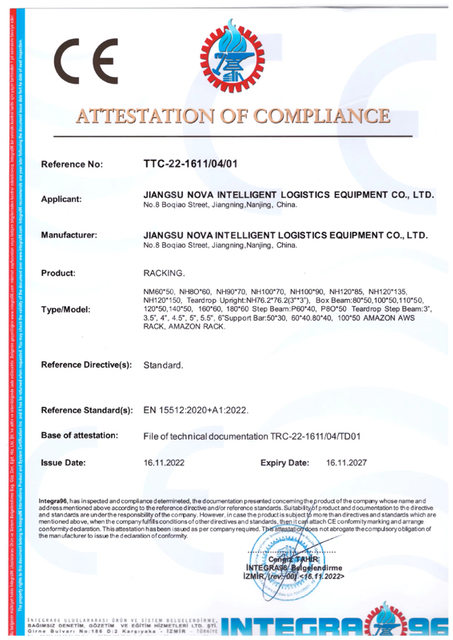 CE · Racking
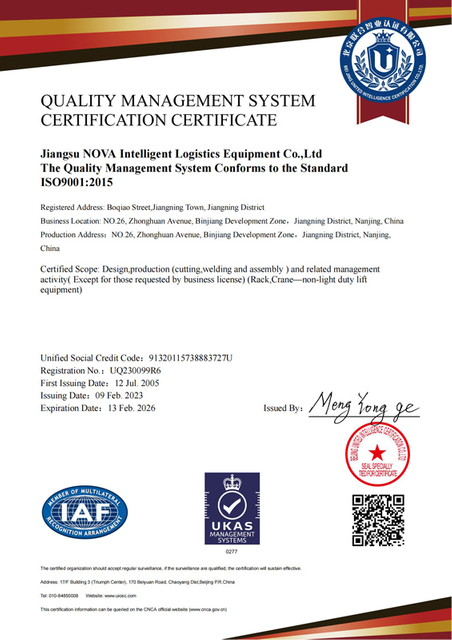 ISO 9001
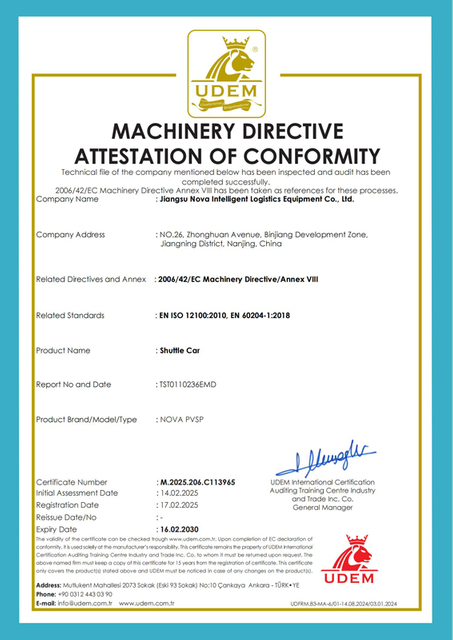 CE · Shuttle Car
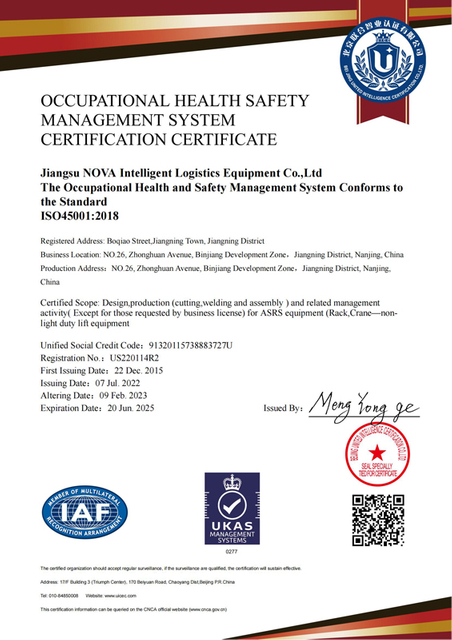 ISO 45001




What to Verify Before You Sign
Use this table as a due-diligence checklist when comparing warehouse racking solutions suppliers and exporters. The evidence should be provided before the deposit, not after production.
| Verification Area | Evidence to Request | Why It Matters |
|---|---|---|
| Seismic design | Site-specific load and seismic calculation report referencing local code (e.g., NCh 2369, E.030, NSR-10) | Avoids overloading or under-designing in active zones and supports permit review. |
| Load capacity | Beam and upright load tables, deflection limits, load-test reports | Prevents unsafe use and clarifies permissible pallet weights. |
| Steel traceability | Mill certificates, coil traceability, coating-thickness records | Confirms material quality and consistency across shipments. |
| Certification | ISO 9001/14001/45001, CE certificates for rack and equipment, test reports | Gives safety, procurement and customs teams verifiable documents. |
| Export packing | Container loading plan, nested bundle drawings, steel-strapping specification | Reduces freight damage and cost per pallet position. |
| Installation & spares | Method statement, supervising engineer scope, spare-parts list, warranty terms | Protects schedule and long-term operation after handover. |
Frequently Asked Questions
These are the questions we see most often from warehouse managers, 3PLs and procurement teams comparing racking suppliers and exporters.
What should buyers compare when shortlisting warehouse racking suppliers and exporters?
Compare engineering evidence, in-house manufacturing, certifications, export packing, installation support and lifecycle spares. Ask for calculations, load tables and certificate numbers, not only a price per bay. A supplier that can document these items is easier to audit and less likely to create hidden cost after the deposit.
Can racking be engineered for seismic zones in Chile, Peru and Colombia?
Yes. Our engineers run structural and seismic load calculations with reference to local requirements such as NCh 2369 (Chile), E.030 (Peru) and NSR-10 (Colombia), and specify reinforced uprights, bracing, base plates and anchors accordingly. Calculation reports are delivered with quotation drawings for review by your local engineer.
How long does production and shipping take to South American ports?
Standard selective racking is typically produced in 25–35 days. Ocean transit from China to ports such as Santos, San Antonio, Callao, Buenaventura, Guayaquil or Buenos Aires usually takes 30–45 days depending on route. AS/RS and shuttle projects follow a project schedule agreed at contract stage.
Which export documents do you provide for customs clearance?
Commercial invoice, detailed packing list, bill of lading, certificate of origin and, on request, test reports, material certificates and installation manuals in English. Spanish or Portuguese support is available for project documentation.
Do you offer installation and after-sales service in South America?
Yes. We dispatch supervising engineers for installation and commissioning, train local installation teams, supply spare parts and offer remote diagnostics for automated systems such as stacker cranes, shuttles and WMS/WCS software.
What surface finishes are recommended for humid or coastal warehouses?
For humid tropical or coastal sites we recommend epoxy-polyester powder coating with enhanced pretreatment, or hot-dip galvanized components for cold storage and high-corrosion environments.
What is the difference between selective, drive-in, radio shuttle and AS/RS?
Selective racking gives high SKU access and is the most flexible. Drive-in stores homogeneous SKUs in lanes. Radio shuttle and four-way shuttle increase density with semi-automated or automated pallet handling. AS/RS uses stacker cranes and software for high-bay, lights-out storage.
What information do you need for a layout and quotation?
Building dimensions and column grid, pallet or carton size and weight, maximum load per unit, forklift type and lift height, throughput target, city and country for seismic and freight review. A building drawing is helpful but not mandatory.
Get a Free Warehouse Layout Proposal
Send us your building drawing, pallet size and weight, and expected throughput. Our engineers will reply with a layout, pallet-position count and system recommendation. If you are comparing exporters, include your destination port and target installation date so we can align production and shipping.
- Building dimensions and column grid
- Pallet / carton size and max load per unit
- Forklift type and lift height
- City and country for seismic and freight review
- Target throughput and SKU profile
- Destination port and required delivery window
Replies in English, Spanish or Portuguese within one business day. Email: [email protected]