8 Warehouse Racking Systems Buyers Should Compare First
The fastest way to compare warehouse racking system manufacturers and wholesalers is not to start with a catalogue. Start with the constraints that decide cost per usable pallet position: SKU profile, selectivity, lift height, floor tolerance, seismic category, humidity, fire strategy and container economics. These eight systems cover most industrial briefs and form a practical technical RFQ shortlist.
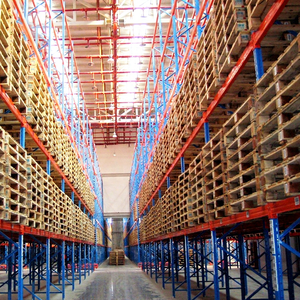
Heavy-Duty Selective Pallet Racking
The default choice for warehouses handling many SKUs. Every pallet is directly accessible, making it easier to slot fast movers and control inventory. Ask for beam load tables, upright capacity and anchor calculations, not just a price per bay.
- Best for high SKU count and direct access
- Distribution, spare parts and FMCG
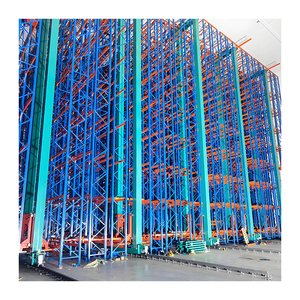
High-Density Pallet Shuttle Racking
A semi-automated deep-lane system for dense storage. A shuttle carries pallets inside the rack, so forklifts stay in the aisle and operators are separated from the storage face. Suitable for batch production, cold stores and high-volume SKUs.
- Automatic steel storage frame, 3000 kg load capacity
- FIFO or LIFO options for deep lanes
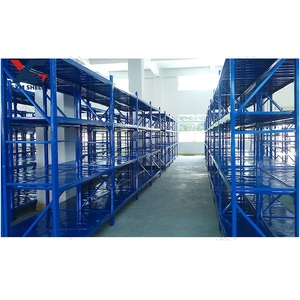
Adjustable Heavy-Duty Steel Storage Rack
A flexible adjustable system for mixed pallet and heavy carton storage. Adjustable beam pitch helps future-proof layouts as SKU profiles change, but the final configuration still needs a load calculation and a damage-protection plan.
- Industrial storage and racking integration
- Adjustable levels for changing inventory
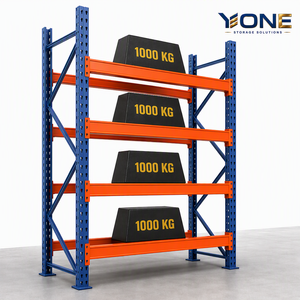
Durable Steel Pallet Racking with Safety Accessories
Adds guards, protectors and structural accessories that reduce day-to-day damage. For procurement, safety accessories should be specified in the base scope, not left as an optional extra that appears after the first forklift impact.
- Upright protectors, row spacers and barriers
- Industrial warehouse storage applications
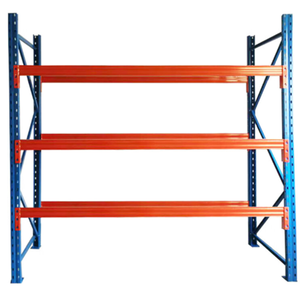
Industrial Pallet Racking & Shelving System
An industrial pallet racking and shelving combination for warehouses that need both pallet locations and hand-picked levels. Useful for spare parts, components and service operations where one system must support multiple handling methods.
- Mixed pallet and hand-pick storage
- Service parts and component warehouses
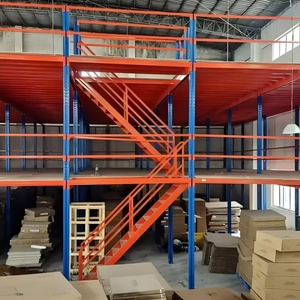
Heavy-Duty Mezzanine Racking Platform
A mezzanine platform creates usable floor area without a new building. Use it for picking, light assembly, packaging or spare-parts storage. Verify floor load, stair and gate positions, fire egress and the interaction with forklift traffic below.
- Adds usable storage floors inside the building
- Rack-supported or free-standing options
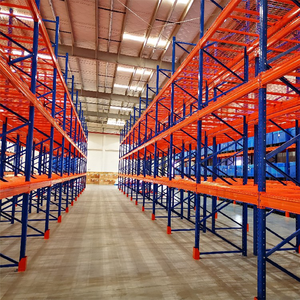
High-Strength Rack for Large Goods
For long, bulky or non-palletized goods, large-goods racking reduces wasted height and improves organization. Load frames and beam spans must be engineered around the actual handling method, not only the static weight on the drawing.
- Organized storage for bulky industrial goods
- Custom load frames and beam spans
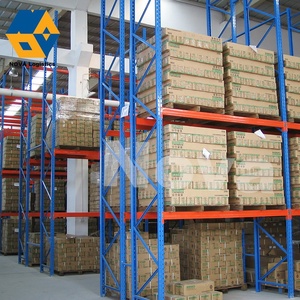
Heavy-Duty Industrial Pallet Rack System
A general-purpose heavy-duty pallet rack system for stacking and storage. It is often the cost-effective backbone of an expansion project before automation is added, and it can be designed to accept future shuttle or AS/RS interfaces if the layout is planned early.
- Scalable backbone for industrial storage
- Designed for future expansion and automation
How to Read the Top 10 Warehouse Racking System Market
Search results for top 10 warehouse racking system manufacturers and wholesalers often list companies by export volume, factory area or advertised price. Those are weak proxies for a structural product that must match a building, a fire strategy, a handling fleet and a local code review.
A racking system is not a commodity shelf. Its value depends on a design that matches the building, a manufacturing process that holds tolerances, and a delivery scope that includes the details most quotations hide: anchors, shims, row spacers, protectors, load signs, installation supervision and spare parts. For buyers in Brazil, Chile, Peru, Colombia, Argentina, Ecuador and beyond, the question is even more specific: can the supplier support seismic review, humid or coastal corrosion, container optimization and after-sales response across a long ocean route?
Use a normalized comparison. Ask every supplier to price the same approved layout and to show pallet positions, steel weight, coating system, certification file, packing plan, container load and installation scope. The lowest price per ton is not the lowest cost per pallet position. A quotation can look cheap because it excludes anchors, because it uses more steel to reach the same capacity, because the coating is unsuitable for a coastal site, or because installation supervision is treated as a separate contract.
This white paper therefore treats “top 10” as a procurement lens rather than a popularity list. The ten checks below are the ones that most often separate a reliable industrial racking partner from a trading company that can supply steel but cannot carry a project through engineering review, installation and lifecycle support.
01 · Engineering ownership
Does the supplier own the structural calculation, seismic review and CAD layout? A trader can resell steel, but accountability becomes fragmented when the local engineer asks for load assumptions.
02 · Traceable steel and coating
Look for coil traceability, upright profile control, hole pitch accuracy, weld quality and coating thickness checks. In humid ports, pretreatment matters as much as the paint brand.
03 · Certification depth
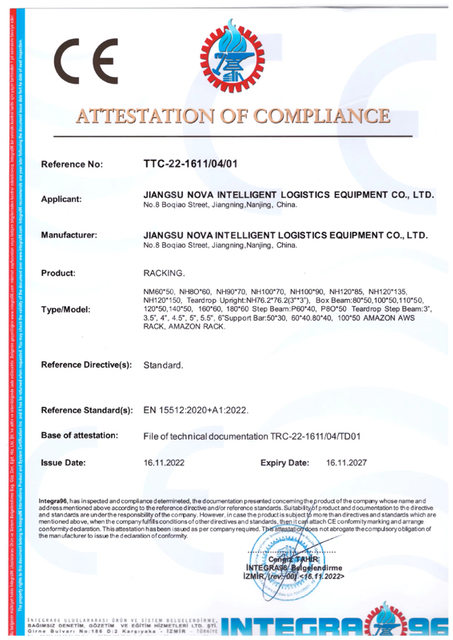
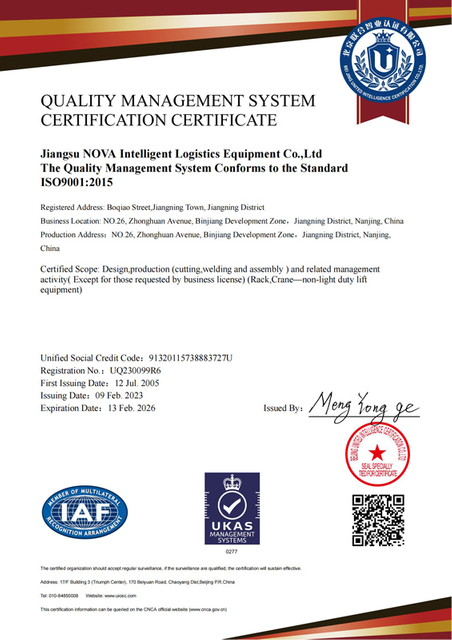
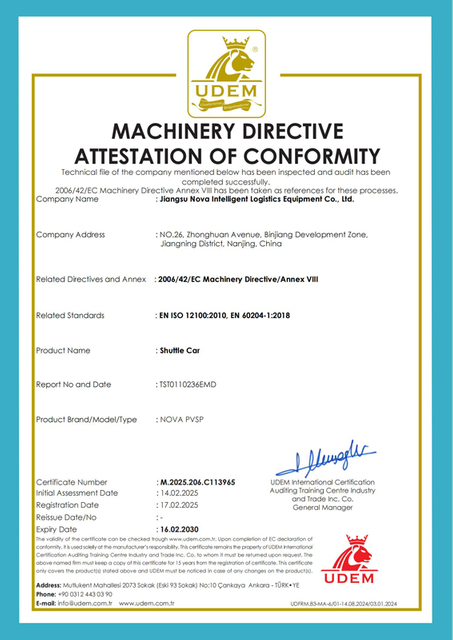
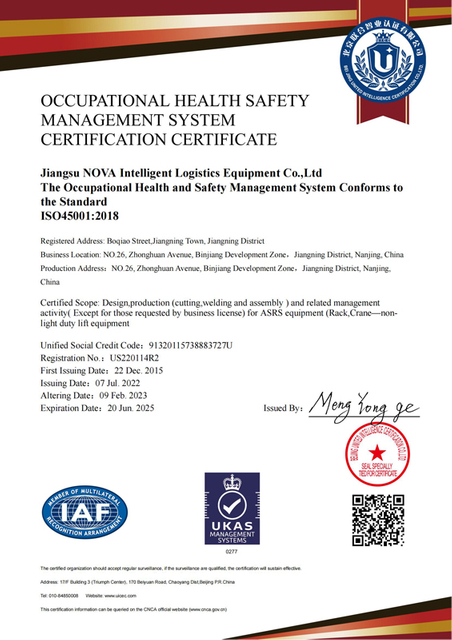
ISO 9001, ISO 14001 and ISO 45001 are a baseline. For automation, ask for CE files covering racking, shuttle cars, stacker cranes, RGVs and related control systems.
04 · Seismic and local-code fluency
Chile, Peru and Colombia have different structural expectations. The supplier should reference local requirements such as NCh 2369, E.030 and NSR-10 where applicable.
05 · Product breadth without dilution
Selective, double-deep, drive-in, shuttle, VNA, mezzanine and AS/RS should share a coherent engineering language, not be sourced from unrelated workshops.
06 · Automation and software
If AS/RS or shuttle is on the roadmap, confirm WMS/WCS capability, interface responsibility, spare-part strategy and remote diagnostics before the first steel beam is rolled.
07 · References and installation
Ask for comparable projects, not just logos. The best reference is a site with similar height, load, climate, SKU profile and local installation constraints.
08 · Export packing and logistics
Nested profiles, steel-strapped bundles, container loading plans and customs-ready documents reduce freight cost and site delays. Packing is part of the product.
09 · After-sales and spare parts
Racking is damaged in real warehouses. Confirm protector availability, replacement lead time, inspection guidance and whether automated equipment can be diagnosed remotely.
10 · Total cost per pallet position
Normalize quotations by usable pallet positions, delivered and installed cost, steel weight, coating life and expected maintenance. This exposes hidden exclusions.
Which Racking System Fits Which Warehouse?
Product recommendations should begin with operating profile. The matrix below helps procurement teams compare a selective pallet racking manufacturer, a shuttle system wholesaler or an AS/RS integrator on the same commercial and technical basis.
| Operating profile | Recommended system | Why it wins | Buyer check |
|---|---|---|---|
| Many SKUs, fast access, 3PL or distribution | Selective pallet racking | Direct access to every pallet and easier slotting control for changing demand. | Beam load tables, aisle width, upright protection, anchor design. |
| Cold storage, few SKUs, high pallet volume | Drive-in / radio shuttle | High density and reduced aisle space; shuttle keeps forklifts outside deep lanes. | Defrost conditions, shuttle battery strategy, FIFO/LIFO rules. |
| Tall building, high land cost, labor constraints | VNA / AS/RS | Uses height and reduces labor exposure in repetitive pallet handling. | Floor tolerance, fire strategy, WMS/WCS interface, spare parts. |
| E-commerce, carton picking, spare parts | Longspan / mezzanine | Creates pick faces and usable floors where pallet racking alone is inefficient. | Stair capacity, egress, floor loading, pick-path design. |
| Mixed pallets and hand-loaded goods | Adjustable steel rack | Flexible level spacing supports changing inventory without a full rebuild. | Adjustment frequency, decking type, load signs, inspection plan. |
| Long goods, bulky components, non-palletized loads | Large-goods rack | Improves organization and vertical use for awkward loads. | Handling method, arm or beam deflection, lifting equipment interface. |
Warehouse Racking Procurement Trends Shaping 2025–2030
The buying process is becoming more technical. Price is still important, but it is increasingly evaluated against compliance risk, operating uptime, installation quality and the cost of future automation.
Compliance-first procurement
Buyers now request seismic calculations, anchor specifications, load signs and installation method statements before comparing commercial terms. The supplier that cannot produce these documents becomes a schedule risk.
Total cost of ownership
Procurement teams compare freight, installation, spare parts, inspection frequency and recoating risk. A slightly higher factory price can outperform a cheaper quote once lifecycle cost is modeled.
Automation-ready layouts
Even non-automated projects are planned with straighter aisles, tighter floor tolerance and future shuttle or AS/RS interfaces. Retrofitting automation into a poorly planned building is expensive.
Port-smart and nearshoring logistics
For South America, container optimization and route planning to ports such as Santos, San Antonio, Callao, Buenaventura, Guayaquil and Buenos Aires directly affect landed cost and installation sequence.
Product Development Trends Manufacturers Are Investing In
The next generation of racking is being designed around density, structural integration, digital documentation and long-term serviceability rather than isolated steel price.
High density without losing selectivity
Radio shuttle and four-way shuttle systems continue to close the gap between dense storage and flexible access. Buyers should ask for lane design, shuttle count, charging strategy and WMS/WCS integration, not only pallet positions.
Structural integration and mezzanine growth
Rack-supported buildings and multi-tier mezzanine platforms are becoming more common where land is expensive. This moves racking from a storage purchase to a structural engineering decision with permits, fire strategy and egress implications.
Smart maintenance and coating durability
Sensors, digital inspection records and remote diagnostics are becoming part of automated storage projects. At the same time, epoxy-polyester powder coating and hot-dip galvanizing are specified more often for coastal, cold-chain and humid sites.
 Since 1997
What My Favorite Shelf Adds to a Racking Procurement Process
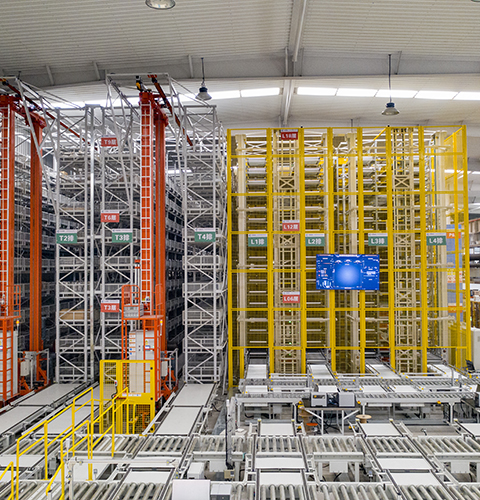
My Favorite Shelf Industrial Co., Ltd. has designed, manufactured and installed warehouse racking and automated storage systems since 1997. The company operates its own production base with annual steel processing capacity of around 60,000 tons, supported by a municipal-level R&D center and more than 70 national patents and software copyrights covering racking, stacker cranes, conveyors, shuttle carriers and warehouse control software.
For a wholesaler or distributor, that factory-direct model reduces double handling and allows mixed container planning. For an end user, it means one manufacturer can be responsible for the steel, the automation and the software interface, with engineering documentation in English and project support in Spanish and Portuguese for South American buyers.
- In-house racking, automation, shuttle and software production capability
- ISO 9001, ISO 14001, ISO 45001 and ISO 10012 measurement management
- CE certification for racking, stacker cranes, shuttle cars, four-way shuttles and RGVs
- 8,000+ projects delivered across 140+ countries, with references including GE, Siemens, Walmart, Amazon and Toyota
- Expert engineering team led by a professor-level senior engineer and doctoral tutor who co-authored automated warehouse and logistics references
For South American warehouses, engineering support can reference local seismic and structural requirements such as NCh 2369 in Chile, E.030 in Peru and NSR-10 in Colombia where applicable. Calculation reports, layout drawings and installation manuals can be prepared for review by the buyer’s local engineer, while export packing is optimized for high-freight routes.
Learn more about the manufacturerVerifiable Certifications for Procurement and Safety Review
 CE · Racking
 ISO 9001
 CE · Shuttle Car
 ISO 45001
Frequently Asked Questions About Racking Manufacturers and Wholesalers
These are the questions that most often decide whether a quotation becomes a safe, installable and economically sound warehouse project.
How do I compare quotations from top warehouse racking manufacturers and wholesalers?
Compare the same approved layout, not different catalogues. Ask each supplier to state usable pallet positions, upright and beam capacities, steel weight per position, coating system, anchor type, safety accessories, packing plan, container count and installation scope. Then calculate delivered-and-installed cost per usable pallet position. A quote that excludes anchors, protectors or installation supervision is not comparable to a complete factory-direct offer.
Can pallet racking be engineered for seismic zones in Chile, Peru and Colombia?
Yes, but seismic design must be part of the engineering scope from the beginning. Suppliers should run structural and seismic load calculations with reference to local requirements such as NCh 2369 in Chile, E.030 in Peru and NSR-10 in Colombia where applicable, then specify reinforced uprights, bracing, base plates and anchors accordingly. The calculation report should be delivered with the quotation drawings so the buyer’s local engineer can review it before production.
What is the difference between a racking manufacturer and a racking wholesaler?
A manufacturer controls the steel profile, hole punching, welding, powder coating, load testing and engineering documentation. A wholesaler may offer faster local communication, mixed sourcing or stock availability, but should disclose the origin factory, certificate holder and the party responsible for engineering calculations. For large industrial projects, the strongest model is often a factory-direct manufacturer supported by a capable local installation partner.
What lead times and shipping should a South American buyer expect?
Standard selective racking is typically produced in about 25 to 35 days after drawing approval. Ocean transit from China to ports such as Santos, San Antonio, Callao, Buenaventura, Guayaquil or Buenos Aires usually takes around 30 to 45 days depending on the route and sailing schedule. AS/RS, shuttle and mezzanine projects should follow a project schedule agreed at contract stage, including engineering approval, factory acceptance testing where applicable, packing, shipping and installation supervision.
What export documents should be provided for customs clearance?
A complete shipment should include a commercial invoice, detailed packing list, bill of lading, certificate of origin and, on request, material certificates, test reports and installation manuals. For projects in South America, Spanish or Portuguese documentation support can reduce friction with local customs brokers, engineers and safety reviewers.
What surface finish is best for humid or coastal warehouses?
For humid tropical or coastal sites, specify epoxy-polyester powder coating with enhanced pretreatment, or hot-dip galvanized components where corrosion risk is high. The finish should be selected with the site’s humidity, salt exposure, temperature cycle and cleaning regime in mind. Coating thickness alone is not enough; pretreatment, edge coverage and damage touch-up procedures matter for long-term performance.
Should I choose selective racking, shuttle racking, drive-in or AS/RS?
Start with selectivity and throughput. Selective racking is best when every SKU must be accessible. Drive-in and radio shuttle systems increase density for homogeneous or batch inventory. VNA and AS/RS make sense when building height, labor cost or throughput justify automation. Mezzanine and longspan systems are better for carton picking and multi-level operations. The correct answer usually combines two systems rather than forcing one product to solve every storage problem.
Request a Layout, Load Calculation and Factory-Direct Quotation
Send your building dimensions, pallet size and weight, clear height, forklift type and target throughput. Our engineering team can review the storage concept, compare selective racking with shuttle, mezzanine or AS/RS options, and respond with a practical scope for your market.
Get a Quote Engineering review · export packing · installation support