High Density Commercial Shelves Storage Warehouse Racking Systems Drive-In Pallet Rack
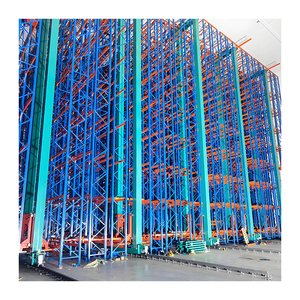
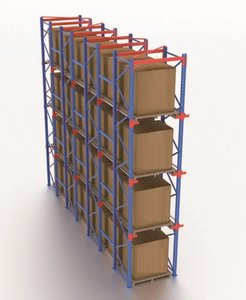
Deep-lane storage for homogeneous SKUs — the lowest cost per pallet position in cold-chain and beverage warehouses.
View DetailsFactory-direct configurations produced on in-house cold-rolling, welding and powder-coating lines — each one supplied with layout drawings and load calculations your local engineer can verify.
Deep-lane storage for homogeneous SKUs — the lowest cost per pallet position in cold-chain and beverage warehouses.
View Details
Semi-automatic shuttle carriers handle 3,000 kg pallets while forklifts stay outside the rack structure.
View Details
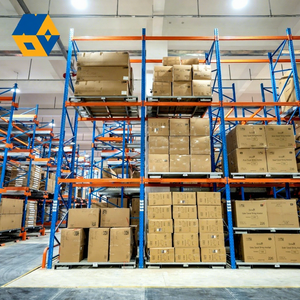
Built to your upright profile, beam length and pallet count, with FIFO or LIFO lane logic selected at design stage.
View Details
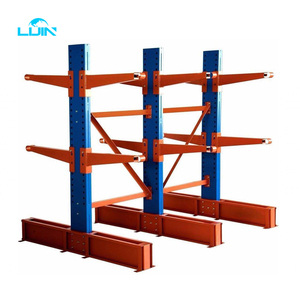
Obstruction-free arms for pipes, timber, steel sections and profiles that will not fit a standard pallet bay.
View Details
Bolt-together steel shelving that scales from retail display to workshop spares without custom fabrication.
View Details
Multi-tier platforms that double usable floor area inside the existing building envelope.
View Details
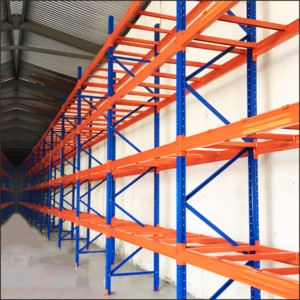
A modular pallet racking base that can later be upgraded to shuttle operation without replacing uprights.
View Details
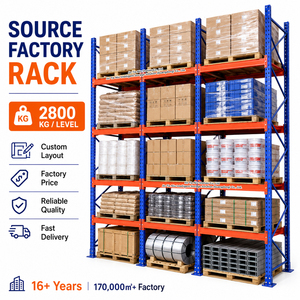
Five-level high-bay configuration rated at 2,800 kg per level, with seismic bracing specified to your site.
View DetailsIf you type “industrial style shelving factory China” into a search engine today you will be shown hundreds of near-identical websites, most of them reusing the same stock renders and the same three sentences about “advanced equipment and excellent quality.” For a procurement manager, a 3PL operator or a warehouse developer, that noise is expensive: the difference between a genuine manufacturer and a reseller is rarely visible on a landing page, and it only becomes obvious when the first container arrives with the wrong upright thickness.
This whitepaper exists to close that gap. It is written from the perspective of a manufacturer that has shipped racking and automated storage systems since 1997 — My Favorite Shelf Industrial Co., Ltd., based in Nanjing, Jiangsu — and it is structured so that you can use it as an evaluation framework, not a brochure. Every claim below can be checked against documentation you should request from any supplier before you place a deposit.
The Chinese racking industry is highly concentrated along the Yangtze River Delta and the Shandong peninsula, where coil steel, cold-rolling capacity, powder-coating supply chains and port access sit within a few hundred kilometres of one another. That density produces genuine cost advantages. It also produces an enormous spread in quality, because the marginal cost of a 0.2 mm reduction in upright steel thickness is invisible on an invoice but decisive on a load chart. Understanding where that spread occurs is the first step toward buying well.
Ask these before you compare prices. A qualified Chinese industrial shelving manufacturer answers all six with documents, not adjectives.
Ask for mill certificates for Q235B or Q355B coil. Traceable steel is the single strongest predictor of whether a rack will hold its rated load after ten years of forklift impact.
A real manufacturer issues a structural report with a named engineer, reference standards and a safety factor. A reseller forwards a PDF template with the logo swapped.
Standard selective racking from a real line runs 25–35 days. If a quote promises ten days for a custom high-bay project, the production is being outsourced to a second tier.
ISO 9001, ISO 14001, ISO 45001 and CE marks for racking, shuttle cars, stacker cranes and RGVs. Verify the certificate numbers and expiry dates independently.
Nested uprights, steel-strapped bundles and calculated weight distribution. Poor packing adds 15–25% to your landed freight cost before you ever open the doors.
Dispatchable engineers, translated manuals and a spare-parts list. A supplier who cannot name an installation supervisor cannot support you after handover.
Information gain, not information volume: every racking quotation you receive should contain a beam load table, an upright load table, a deflection limit and an anchor specification. If any of those four is missing, the price is not comparable.
Buying behaviour for industrial shelving has shifted decisively away from unit price toward verified lifecycle cost. Four changes matter most.
Buyers now model cost per pallet position over ten years, including repair rates, reconfiguration flexibility and downtime. A rack that costs 8% more but survives two extra relocations wins the tender.
Rather than jumping straight to a 24-metre automated warehouse, mid-size distributors are deploying radio shuttle lanes first, then layering WMS and stacker cranes once volumes justify them.
Enquiries now arrive with CAD layouts, pallet weights, SKU velocity profiles and seismic parameters. Suppliers who can respond with simulation output and load tables win on credibility, not discount.
Seismic standards, fire regulations and customs documentation are now screening criteria in Latin America, Southeast Asia and the Middle East — not afterthoughts at installation.
Steel geometry changes slowly. What changes quickly is how that steel integrates with software, energy constraints and corrosion environments.
Drive-in, push-back and shuttle configurations continue to squeeze more pallet positions into the same building. Empty aisle space is now treated as a measurable cost line.
Tolerance-controlled punch patterns let overlapping profiles lock without welding on site. Reconfiguration becomes a maintenance task instead of a project.
Epoxy-polyester powder coating with enhanced pretreatment, or hot-dip galvanising, is becoming default for coastal, cold-chain and tropical-humidity projects.
WMS and WCS integration is now designed in at quotation stage, so that a shuttle or AS/RS upgrade later does not require replacing the steel structure.
My Favorite Shelf Industrial Co., Ltd. is a manufacturer, not a trading company. Everything below is checkable before contract signature.
Our own production base processes roughly 60,000 tonnes of steel per year across cold-rolling, welding, punching and powder-coating lines — so the racking, the shuttle cars and the stacker cranes all come from one accountable supply chain.
A municipal-level technical R&D centre holds more than 70 national patents and software copyrights covering racking profiles, stacker cranes, conveyors, shuttle carriers and WMS/WCS — led by a professor-level senior engineer who co-authored reference manuals on automated warehouse design.
Production runs under ISO 9001, ISO 14001, ISO 45001 and ISO 10012 measurement management, with CE marks for racking, shuttle cars, four-way shuttles, stacker cranes and RGVs. Coil traceability, coating-thickness checks and load testing are performed before shipment.
More than 8,000 delivered projects in 140+ countries, with logistics-equipment supply relationships with international enterprises including GE, Siemens, Walmart, Amazon and Toyota. Export documentation, port-optimised packing and supervising engineers are standard on overseas orders.
For buyers sourcing from outside China, the practical value of these credentials is risk reduction. A racking structure is a safety-critical load-bearing assembly, not a piece of furniture. When a supplier controls its own steel forming, its own coating line and its own engineering department, an error in beam capacity or anchor specification is corrected before the container is loaded rather than after installation begins. That is the difference between a purchase order and a liability.
It also changes what a quotation looks like. A manufacturer can quote a drive-in system, a radio shuttle retrofit and a future AS/RS phase in one document, because the same engineering team is responsible for all three. A trader can only quote what a third party agrees to build.
The questions procurement teams raise most often when sourcing industrial style shelving from a Chinese factory.
Standard pallet racking uses Q235B cold-rolled or hot-rolled coil for uprights and beams, with Q355B specified for high-bay or heavy-impact applications. Upright thickness typically ranges from 1.8 mm to 3.0 mm depending on load height and required capacity, and beams from 1.5 mm to 2.5 mm. Always request mill certificates and a load table showing deflection limits — the rated capacity of a beam is only meaningful together with its span and deflection class.
Standard selective pallet racking is normally produced in 25 to 35 days once drawings are approved. Ocean transit to major ports — Santos, San Antonio, Callao, Buenaventura, Guayaquil, Buenos Aires, Jebel Ali or Port Klang — usually takes 30 to 45 days depending on route and carrier schedule. Radio shuttle and AS/RS projects follow a phased project schedule agreed at contract stage, because software configuration and commissioning are included.
Yes. Structural and seismic calculations can be prepared with reference to the applicable local standard — for example NCh 2369 in Chile, E.030 in Peru, NSR-10 in Colombia, or the equivalent requirement in your jurisdiction — and the results are used to specify reinforced uprights, additional bracing, base plates and anchor sizes. The calculation report is delivered with the quotation drawings so your own engineer or authority can review and stamp it.
Uprights are nested and steel-strapped, beams are bundled by length, and small components are crated and labelled by bay number. Packing is designed to maximise container fill while keeping individual bundle weights within forklift handling limits at destination. A detailed packing list mapped to the installation drawing is issued with the shipping documents so your site team can receive and stage materials without opening everything at once.
Quality and safety documentation includes ISO 9001, ISO 14001, ISO 45001 and ISO 10012 management certificates, plus CE certification for racking, shuttle cars, four-way shuttles, stacker cranes and RGVs. Export documentation typically covers the commercial invoice, packing list, bill of lading and certificate of origin, with material test reports and installation manuals supplied in English and, on request, Spanish or Portuguese.
For tropical, coastal or cold-chain environments, specify epoxy-polyester powder coating over enhanced multi-stage pretreatment, with a film thickness verified by coating gauge readings before shipment. For high-corrosion zones, hot-dip galvanised uprights and beams are the more durable option despite a higher unit cost. It is worth stating the expected humidity, salt exposure and wash-down regime in your enquiry so the finish is specified rather than assumed.
Share your building dimensions (or CAD drawing), pallet size and weight, clear height, forklift type and target pallet count. Our engineers reply with a system recommendation, pallet-position count and a quotation you can compare line by line.
Get a Quote