Pallet Racking & Flow-Compatible Systems for Modern Warehouses
Pallet flow rack works best when the structural rack, pallet interface, beam capacity and access strategy are designed together. These eight systems are among the most requested configurations for buyers comparing a China pallet flow rack supplier with traditional selective, cantilever, shuttle and high-load racking providers.
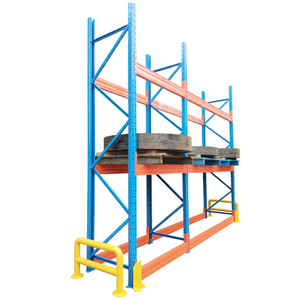
Industrial Warehouse Racks Heavy Duty Beam Rack Adjustable Selective Pallet Racking Warehouse Storage Racks Custom Pallet Racks
Selective pallet racking for mixed-SKU warehouses, fast access and future extension into high-density flow lanes.
View Details →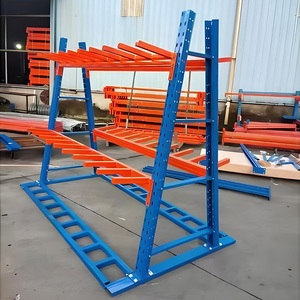
Industrial Warehouse a Shape Cantilever Rack Heavy Duty Steel Long Material Storage
Cantilever storage for pipes, timber, profiles and other long loads that cannot be handled efficiently in standard pallet bays.
View Details →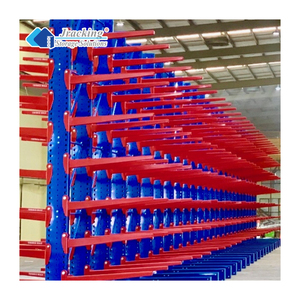
CE-Certified Industrial Warehouse Storage Shelves Heavy-Duty Cantilever Racking System for Cold Storage Pipe Storage
CE-certified cantilever racking configured for cold-chain, coastal or high-humidity environments where finish quality matters.
View Details →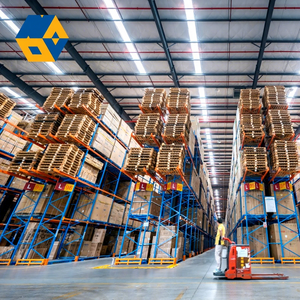
Heavy Duty 2000KG Per Layer Large Capacity Racking System Warehouse Storage High Duty Beam Stacking Pallet Rack Shelving Unit
High-capacity pallet racking for dense reserve storage, heavy pallet loads and demanding distribution-center throughput.
View Details →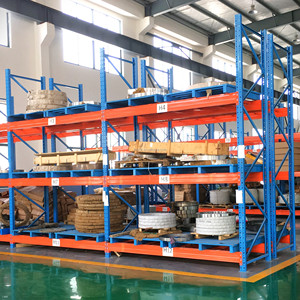
OEM Factory Wholesale Warehouse Racking Industrial Racks Customized Pallet Racking System Heavy Duty Steel Racks for Storage
Customized OEM racking for distributors and project buyers who need branded drawings, special colors and export packing.
View Details →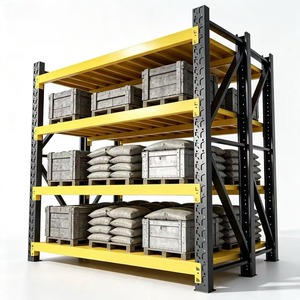
500kg Heavy Duty Steel Pallet Racking High Load Metal Pallet Racking System for Distribution Center Storage
A practical racking option for distribution centers balancing cost, load control and rapid replenishment.
View Details →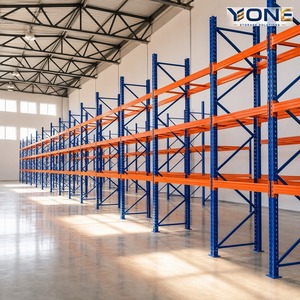
Steel Storage Rack Heavy Duty Pallet Racking Q235B Steel Selective Racking for Racks Industriales Warehouse Storage
Q235B steel selective racking with export-ready engineering documentation and configurable beam levels.
View Details →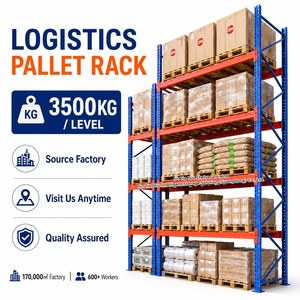
3500kg Super Heavy Duty Logistics Warehouse Pallet Beam Racking Source Factory High Load Storage Rack
Super-heavy-duty beam racking engineered for high pallet weights, large-span beams and industrial logistics hubs.
View Details →A China Supplier Built on Capacity, Engineering and Project Evidence
For a pallet flow rack project, supplier capacity matters because lane rollers, brakes, uprights, beams and safety accessories must arrive as one coordinated system — not as disconnected commodities.
Why Pallet Flow Rack Is Moving From “Special Racking” to Mainstream Procurement
Pallet flow rack, also called gravity flow pallet racking or pallet flow storage, uses inclined roller lanes and controlled braking to move pallets from the loading end to the picking end. For the right SKU profile, it delivers dense storage, First-In-First-Out rotation and reduced forklift travel. But it is not a universal replacement for selective racking. The strongest 2025–2030 business cases share five conditions: repeatable SKU footprints, steady replenishment, high pallet throughput, limited floor space and a warehouse team ready to enforce lane discipline.
The real procurement question is not “Who sells the cheapest pallet flow rack?” but “Which China pallet flow rack manufacturer can prove structural safety, document the load case and support installation after the container leaves the port?” This is where information gain matters. A supplier that publishes lane design inputs, braking specifications, corrosion strategy and seismic assumptions reduces the buyer’s review cycle. A supplier that offers only a price per pallet position transfers engineering risk to the buyer. For multi-country procurement teams, the difference is often visible before the first purchase order: drawing quality, calculation transparency and willingness to align with local building codes.
Pallet flow rack also changes the warehouse operating model. Because pallets move by gravity, forklifts are kept at the loading and picking faces rather than travelling deep inside storage lanes. That can reduce congestion, improve safety and raise picking productivity — but only if lane length, pallet quality, load weight and brake roller condition are specified correctly. A serious supplier should ask for pallet size, load height, load weight, pallet condition, temperature range, SKU velocity and replenishment pattern before quoting lane quantities.
2025–2030 Pallet Flow Rack Procurement Trends
Buyers are shifting from “unit-price comparison” to lifecycle value, compliance evidence and supplier coordination capability.
Total Cost of Ownership Beats Lowest Price
Procurement teams will compare pallet flow rack by lane uptime, brake-roller replacement cost, installation speed, freight density and after-sales response — not simply by price per pallet position. A lower steel price can become expensive when drawings, spares or commissioning support are incomplete.
Compliance-Ready Engineering
Seismic zones, cold rooms, coastal humidity, fire access and local racking codes will be discussed earlier. Suppliers must provide structural calculations, material certificates, coating specifications, anchor details and load-test records that local engineers can review.
Hybrid High-Density Design
Pallet flow rack will increasingly be combined with selective racking, radio shuttles, four-way shuttles and AS/RS zones. The winning layout matches each SKU family to the right density and selectivity, instead of forcing one system across the entire warehouse.
Digital Handover and Traceability
Buyers will expect CAD layouts, packing lists, material reports, installation manuals and maintenance schedules as standard deliverables. Carbon accounting and recyclable steel content may also enter supplier scorecards for large retail and logistics groups.
What the Next Generation of Pallet Flow Rack Looks Like
Future systems will be safer to operate, easier to document and simpler to integrate with automated storage and warehouse software.
Higher-Strength Steel and Optimized Profiles
Flow lanes, pallet stops and beam connections will be optimized with higher-strength steel and better roll-formed profiles to support heavier pallets without unnecessary freight volume.
Smarter Lane Control and Sensors
Pallet presence sensors, lane-full indicators and brake-roller inspection points can reduce jams and support preventive maintenance. Automated warehouses will link these signals to WMS/WCS dashboards.
Cold-Store, Coastal and Hygienic Finishes
Epoxy-polyester powder coating with enhanced pretreatment, hot-dip galvanized components and hygienic detailing will be specified more often for cold chain, port warehouses and food-grade facilities.
Modular Integration With Automation
Pallet flow modules will be designed as part of a larger storage roadmap: conveyors, shuttle cars, stacker cranes, mezzanines and rack-supported buildings can be phased without locking the client into one fixed layout.
Pallet Flow Rack vs Other Storage Systems
Use this selection matrix to compare density, selectivity and best-fit applications before requesting a layout.
Why My Favorite Shelf Qualifies as a China Pallet Flow Rack Supplier
Manufacturing scale, engineering depth and certification evidence can be reviewed before a project enters detailed design.
Manufacturing Scale Since 1997
My Favorite Shelf Industrial Co., Ltd. has designed and manufactured warehouse racking and automated storage systems since 1997, with an annual steel processing capacity of around 60,000 tons and 8,000+ projects delivered across 140+ countries.
Engineering and R&D Depth
A municipal-level technical R&D center holds more than 70 national patents and software rights covering racking, stacker cranes, conveyors, shuttle carriers and WMS/WCS software. The engineering team is led by a professor-level senior engineer and doctoral tutor who co-authored automated warehouse design and logistics distribution center references.
Certified Quality Control
Production is managed under ISO 9001, ISO 14001, ISO 45001 and ISO 10012 measurement management. CE certification covers racking, stacker cranes, shuttle cars, RGVs and four-way shuttles, with coil traceability, coating-thickness checks and load testing before shipment.
Global Project Experience
As a designated logistics equipment supplier for international enterprises including GE, Siemens, Walmart, Amazon and Toyota, the company applies the same project discipline to distributors, 3PLs and manufacturers. One accountable team can coordinate design, manufacturing, installation supervision, spare parts and after-sales support.
From Layout Study to Installation and After-Sales Support
A pallet flow rack project succeeds when the supplier can coordinate steel, safety accessories, drawings, freight and commissioning without hand-off gaps.
Warehouse Design and Planning
Space and throughput analysis, CAD layouts, pallet-position simulations and lane-count recommendations based on SKU velocity and replenishment data.
Engineering and Customization
Structural calculations, seismic detailing where required, custom profiles, special finishes and load ratings aligned with the buyer’s racking standards.
Installation and Commissioning
Supervising engineers, local crew training, installation manuals, acceptance checks and commissioning support for automated or semi-automated equipment.
Project Management and After-Sales
A dedicated project contact controls schedule, shipping milestones and documentation, followed by spare parts supply, remote diagnostics and periodic safety inspection guidance.
Information Gain for Buyers: request lane design assumptions, pallet load case, brake-roller specification, coating standard, anchor details and packing plan before comparing prices.
Verify Project Support: confirm whether the China supplier provides layout drawings, installation manuals, material reports and English documentation, with Spanish or Portuguese support where required.
Check Site Conditions: disclose seismic zone, humidity, coastal exposure, cold-store temperature and fire-access requirements early so that the racking design is not over-simplified.
Frequently Asked Questions When Sourcing Pallet Flow Racks From China
These are the questions procurement teams should ask before selecting a pallet flow rack manufacturer or supplier.
Can a China pallet flow rack manufacturer design for seismic, cold-storage or coastal environments?
Yes. A qualified manufacturer should design and document the racking according to the site conditions you provide. For seismic zones, request structural calculations, reinforced uprights, bracing, base plates and anchor specifications for review by a local engineer. For cold rooms and coastal warehouses, request enhanced pretreatment powder coating or hot-dip galvanized components, plus clear maintenance guidance for brake rollers and moving parts.
How do I calculate how much pallet flow rack I need?
Start with pallet length, width and height; maximum load per pallet; number of SKUs; pallet movement per day; and replenishment frequency. Pallet flow rack is usually most efficient when each lane serves a repeatable, fast-moving SKU family. A supplier should model lane depth, number of lanes, loading face and picking face before quoting. Do not size a flow system only by floor area; the operational lane count is the more important number.
What is the difference between pallet flow rack, drive-in racking and radio shuttle racking?
Pallet flow rack uses gravity rollers and controlled braking to provide FIFO movement by lane. Drive-in racking stores pallets deep inside a bay but generally offers low selectivity because forklifts enter the structure. Radio shuttle racking uses a semi-automated shuttle for deep-lane storage and can reduce forklift travel. The right choice depends on SKU count, FIFO requirements, pick faces and the acceptable capital budget for automation.
Which documents should I request from a China pallet flow rack supplier?
Request commercial invoice, detailed packing list, bill of lading, certificate of origin, material certificates, load-test reports, coating specifications, installation manuals and as-built drawings. For regulated projects, also confirm ISO 9001, ISO 14001, ISO 45001 and relevant CE certificates for racking or automated equipment. A transparent supplier will provide these documents before shipment, not after a problem appears on site.
Do you provide installation and after-sales support for overseas projects?
Yes. Project support can include supervising engineers for installation and commissioning, training for local installation crews, spare-parts planning and remote diagnostics for automated systems. For buyers comparing a China manufacturer with a local trading company, confirm who owns the drawings, who signs off load-test reports and who supplies replacement brake rollers or safety accessories after commissioning.
How should I compare quotations from multiple pallet flow rack manufacturers?
Normalize the quotations by pallet position, lane length, steel grade, upright thickness, beam section, roller type, brake system, surface finish, anchor specification, installation scope and documentation. A cheaper offer may exclude anti-seismic bracing, lane dividers, pallet stops or engineering reports. The best comparison is a like-for-like bill of materials plus a clear schedule for drawings, production, shipment and commissioning.
Ready to Shortlist a China Pallet Flow Rack Manufacturer?
Share your warehouse dimensions, pallet size and weight, SKU profile, target throughput and destination country. Our engineers can recommend a pallet flow, selective, shuttle or AS/RS-ready configuration and provide a catalog for your procurement review.
Get Catalog