China factory-direct · engineered for global procurement

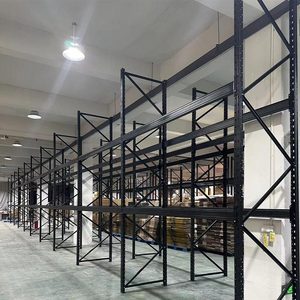
Top China Pallet Storage System Factory & Wholesalers

Source selective pallet racking, AS/RS, shuttle systems, mezzanine platforms and cantilever racks from a manufacturer with in-house steel production, seismic calculation support, CE/ISO documentation and export project delivery.

Since 1997 60,000 t annual steel capacity 8,000+ projects 140+ export countries
Product center

Eight Pallet Storage Systems Available Factory-Direct

Each system can be quoted as a stand-alone racking package or combined into a phased warehouse plan. Product links, load data and export documentation can be reviewed before quotation.

1997
Founded
60,000t
Annual steel capacity
8,000+
Projects delivered
140+
Export countries
70+
Patents & software rights
Buyer intelligence

Why a China Pallet Storage System Factory Must Be Evaluated Like an Engineering Supplier

The search intent behind “China pallet storage system factory” is rarely a simple price request. Most buyers are trying to reduce project risk: structural safety, loading capacity, delivery, installation, documentation and after-sales support.

A search for a China pallet storage system factory often returns three very different business models. The first is a trading company or wholesaler that publishes a broad catalogue but does not control steel profiles, welding, powder coating or load calculations. The second is a contract fabricator that can produce racking steel but depends on third parties for AS/RS software, stacker cranes or shuttle carriers. The third is an integrated manufacturer that controls the chain from steel coil and cold-rolling to racking, automation equipment, WMS/WCS integration and commissioning.

For procurement teams, the difference appears in documents rather than slogans. Ask for the engineering calculation package, the manufacturing and coating inspection record, the container-loading plan, the installation method statement and the spare-parts list. For B2B buyers, the real comparison is not price per upright — it is lifetime cost per safe pallet position. A supplier that can prove load capacity, seismic design assumptions, coating specification and service response is usually more valuable than a lowest-cost wholesaler that cannot support the project after shipment.

My Favorite Shelf Industrial Co., Ltd. has designed, manufactured and installed warehouse racking and automated storage systems since 1997. Its own production base processes around 60,000 tons of steel per year, and its municipal-level R&D center holds more than 70 national patents and software copyrights covering racking, stacker cranes, conveyors, shuttle carriers and warehouse control software. For overseas buyers, that means one manufacturer can take responsibility for steel, automation and software scope while providing ISO 9001, ISO 14001, ISO 45001 and CE documentation for verification.

Load calculations Seismic reports Coating specification WMS/WCS scope Container loading plan Installation method statement Spare parts list
Search intent mapped

Product Recommendations by Real Warehouse Scenario

The right pallet storage system depends less on the product name and more on selectivity, density, throughput, building height and labor strategy.

Multi-SKU distribution

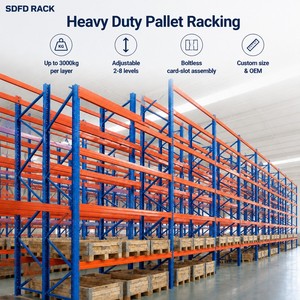
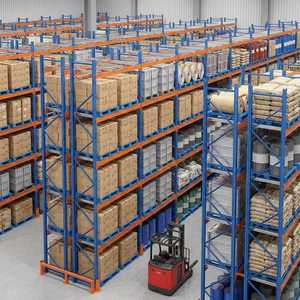
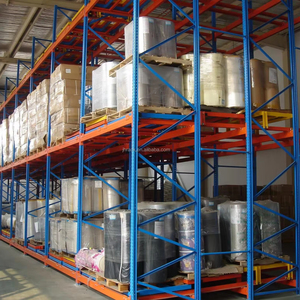
Use selective pallet racking with wire mesh decking when every SKU must remain directly accessible. Add adjustable beam levels and 3,000 kg-class frames for mixed pallet weights, then phase into shuttle storage only when a stable fast-mover lane justifies it.

Best fit: selective + wire mesh

Cold chain and high density

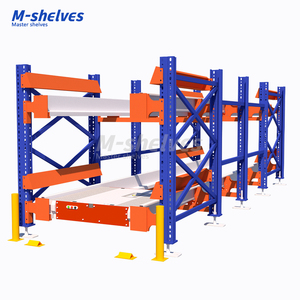
Radio shuttle or drive-in racking is appropriate when many pallets share the same SKU and storage density matters more than instant access. For cold rooms, specify corrosion protection, low-temperature steel performance and a pallet quality standard before commissioning.

Best fit: radio shuttle / drive-in

High throughput with labor constraints

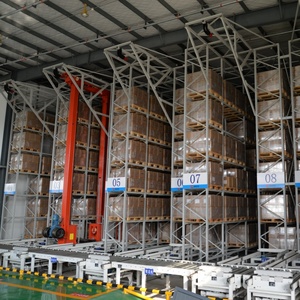
AS/RS and four-way shuttle systems are strongest where 24/7 operation, traceability and labor reduction justify the investment. They require stable pallet quality, WMS/WCS integration and a clear spare-parts strategy. The factory scope should include conveyors, cranes, shuttle carriers and software.

Best fit: AS/RS + four-way shuttle

Long loads and vertical expansion

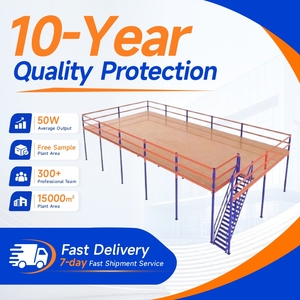
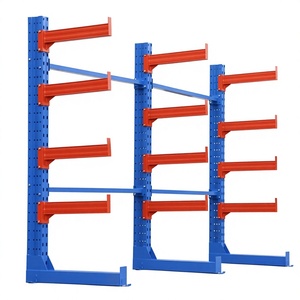
Cantilever racking protects pipes, profiles and timber, while a steel mezzanine platform adds usable floor area without a new building permit cycle. These systems are often combined in building-material warehouses and industrial distributors with limited floor space.

Best fit: cantilever + mezzanine
Product development

What the Next Generation of Pallet Storage Systems Will Require

The market is moving from “steel supply” to engineered storage infrastructure with verifiable safety, automation readiness and lifecycle support.

Modular automation

AS/RS is becoming more modular. Buyers can start with selective racking, add shuttle lanes and later integrate stacker cranes or conveyors without discarding the original storage concept. Factory documentation must support that upgrade path.

Shuttle systems as mainstream infrastructure

Radio shuttle and four-way shuttle systems are moving beyond niche projects. Their value is clearest in deep-lane storage where forklift travel can be reduced and pallet positions per square meter can be increased without a fully automated building.

Seismic-ready engineering

Chile, Peru and Colombia require design attention for seismic zones. Modern procurement expects calculation reports with reinforced uprights, bracing, base plates and anchors that reference local requirements such as NCh 2369, E.030 and NSR-10.

Corrosion protection as risk control

Humid and coastal warehouses require more than a color choice. Epoxy-polyester powder coating with enhanced pretreatment, or hot-dip galvanized components for high-corrosion areas, protects the asset and reduces maintenance downtime.

WMS/WCS and digital visibility

Automated storage is only as good as the software layer. Warehouse control systems, inventory traceability, remote diagnostics and spare-parts planning are becoming standard evaluation criteria for AS/RS and shuttle projects.

Lifecycle procurement

Buyers increasingly compare total cost of ownership: installation time, reconfiguration flexibility, repairability, spare-parts availability and periodic safety inspections. A lower steel price can be outweighed by higher lifetime downtime.

Procurement outlook

2025–2030 Buying Trends for Pallet Storage System Wholesalers and Buyers

The next procurement cycle will reward suppliers who can prove safety, document performance and support the asset after delivery.

Total cost over lowest quote

Procurement teams are shifting from price per ton to cost per safe pallet position. Freight optimization, installation time, reconfiguration and spare-parts availability are now part of the comparison.

Compliance evidence before order

ISO 9001, ISO 14001, ISO 45001, CE certificates and load-calculation reports are being requested earlier. Buyers want documents that local engineers and safety teams can verify, not catalogue claims.

Supplier consolidation

Distributors increasingly prefer one factory responsible for racking, shuttles, AS/RS and software. Fewer interfaces reduce schedule risk and clarify responsibility when commissioning an automated warehouse.

Port-optimized logistics

Nested profiles, steel-strapped bundles and container-loading plans reduce freight cost. For South America, buyers also consider production lead time, ocean transit and local installation supervision as one project schedule.

Typical buyer evaluation scorecard for pallet storage projects

Structural safety & calculations
30%
Total cost of ownership
25%
Lead time & installation
20%
Automation readiness
15%
After-sales & spare parts
10%
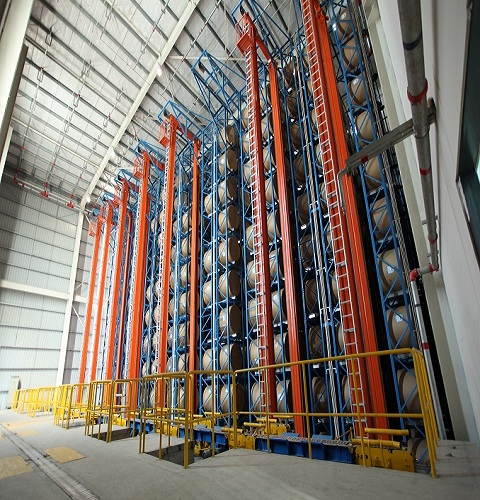
Automated logistics center project for the paper-making industry
Project evidence: automated logistics center for the paper-making industry, linking production output with dispatch.
E-E-A-T evidence

Factory Experience That Can Be Audited

My Favorite Shelf has delivered more than 8,000 racking and AS/RS projects across 140+ countries. Designated logistics equipment supply experience includes international enterprises such as GE, Siemens, Walmart, Amazon and Toyota. The same project discipline is applied to wholesalers, 3PLs and manufacturers that need repeatable specifications and export-ready documentation.

Municipal-level technical R&D center with 70+ patents and software rights
ISO 9001, ISO 14001, ISO 45001 and ISO 10012 measurement management
CE certification for racking, stacker crane, shuttle carrier and RGV
Engineering team led by a professor-level senior engineer with automated warehouse design experience
Enterprise advantages

Why This Factory-Quality Supplier Fits Long-Term Wholesale and Project Procurement

For distributors and project owners, the strongest supplier is the one that reduces technical uncertainty and supports repeat orders.

Manufacturing depth since 1997

An in-house production base and approximately 60,000 tons of annual steel capacity allow the factory to control profiles, cold-rolling, welding, powder coating and shipment planning instead of outsourcing critical steps.

70+ patents and software rights

The municipal-level R&D center covers racking, stacker cranes, conveyors, shuttle carriers and WMS/WCS software. This matters when a project moves from manual racking to semi-automated or fully automated storage.

Certified quality control

ISO 9001, ISO 14001, ISO 45001 and ISO 10012 management systems support coil traceability, coating-thickness checks, dimensional inspection and load testing before shipment. CE certificates are available for core automation equipment.

Reference projects at scale

Project experience includes AS/RS, shuttle racking, pallet racking and mezzanine work for industrial, e-commerce, paper, logistics and retail operations. Global references help wholesalers reduce the perceived risk of sourcing from China.

Engineering leadership

The engineering team is led by a professor-level senior engineer and doctoral tutor who has contributed to automated warehouse design and logistics distribution center references. This depth supports seismic checks and complex AS/RS layouts.

Export and service discipline

English engineering documentation is supported by Spanish and Portuguese project communication. Installation supervision, local team training, spare parts and remote diagnostics for automated equipment are available for overseas projects.

Regional engineering

China Factory + Local Conditions: Reducing Project Risk in South America

Seismic activity, tropical humidity and long ocean routes change how pallet storage systems should be specified, packed and installed.

Chile · Peru

Seismic-ready design

Structural and seismic load calculations can reference NCh 2369 and E.030, with reinforced uprights, bracing, base plates and anchor specifications supplied for review by your local engineer.

Brazil

Large-scale distribution

High-bay AS/RS, VNA and shuttle systems for retail, food and pharmaceutical distribution centers can be prepared with reference to ABNT NBR 15524 storage-system practice.

Colombia · Ecuador

Humid and coastal sites

Enhanced pretreatment powder coating or hot-dip galvanized components are recommended for ports, cold chain and exporters. Seismic checks can follow NSR-10 where required.

Argentina · Uruguay

Flexible expansion

Modular longspan shelving, mezzanine and cantilever systems can be rolled out in phases, helping buyers manage capital spending while demand scales.

Export logistics are planned around the destination port and site access. Standard selective racking is typically produced in 25–35 days, while ocean transit from China to ports such as Santos, San Antonio, Callao, Buenaventura, Guayaquil or Buenos Aires usually takes 30–45 days depending on route. AS/RS and shuttle projects follow a schedule agreed at contract stage. Packaging is container-optimized with nested profiles and steel-strapped bundles, and export documents include commercial invoice, detailed packing list, bill of lading, certificate of origin and, on request, test reports, material certificates and installation manuals.

Procurement FAQ

Common Questions About Pallet Storage System Procurement

These are the questions most often asked by buyers comparing China pallet storage system factories, wholesalers and project suppliers.

What is the minimum order quantity for a factory-direct pallet storage system?

MOQ depends on the system. Standard selective pallet racking can be quoted by project or by container-load for distributors. AS/RS, shuttle and mezzanine projects are engineered to the building, pallet size and throughput, so there is no single catalogue MOQ. Send your pallet dimensions, load weight and required pallet positions for a practical factory-direct scope.

How do I choose between selective pallet racking and AS/RS?

Selective racking offers lower capital cost, direct access and fast reconfiguration, so it suits mixed-SKU warehouses and phased growth. AS/RS is more suitable when building height, labor cost, throughput and traceability justify automation. A useful decision point is whether your operation can standardize pallet quality and integrate WMS/WCS without disrupting daily orders.

Can racking be designed for seismic zones in Chile, Peru and Colombia?

Yes. Engineers can run structural and seismic load calculations with reference to local requirements such as NCh 2369 in Chile, E.030 in Peru and NSR-10 in Colombia. Reinforced uprights, bracing, base plates and anchor specifications can be included, and calculation reports can be delivered with quotation drawings for review by your local engineer.

What is the lead time for production and shipping to South America?

Standard selective racking is typically produced in 25–35 days. Ocean transit to ports such as Santos, San Antonio, Callao, Buenaventura, Guayaquil or Buenos Aires usually takes 30–45 days depending on the route. AS/RS and shuttle projects follow a project schedule agreed at contract stage, including software, commissioning and installation supervision.

Which export documents and certifications are supplied?

Typical documents include commercial invoice, detailed packing list, bill of lading and certificate of origin. On request, the factory can provide test reports, material certificates, installation manuals and certification documentation such as ISO 9001, ISO 14001, ISO 45001 and CE certificates for racking, stacker cranes, shuttle carriers and RGVs.

Do you provide installation, training and after-sales support?

Yes. For overseas projects, supervising engineers can be dispatched for installation and commissioning, local installation teams can be trained, and spare parts can be supplied. For automated systems such as stacker cranes, shuttles and WMS/WCS software, remote diagnostics and service guidance are available to reduce downtime.

What surface finish is recommended for humid or coastal warehouses?

For humid tropical or coastal sites, epoxy-polyester powder coating with enhanced pretreatment is recommended, while hot-dip galvanized components may be specified for cold storage and high-corrosion environments. The finish should be matched to the building environment, cleaning method and expected service life, not selected only by color.

How are pallet storage systems packed and quality-checked before shipment?

Components are packed for container efficiency using nested profiles and steel-strapped bundles where appropriate. Quality control includes coil traceability, dimensional inspection, coating-thickness checks and load testing before shipment. A detailed packing list and container-loading plan help buyers verify arrival condition and simplify customs clearance.

Start your project

Send Your Pallet, Building and Throughput Data — Get a Factory-Direct Layout

To receive a useful quotation, send the building drawing or length × width × clear height, pallet size and maximum load, forklift type, expected throughput, destination port and local seismic requirements. The engineering team can return a layout, pallet-position count and system recommendation.

  • Building dimensions and column grid
  • Pallet or carton size and maximum load per unit
  • Forklift type, lift height and throughput target
  • City, country and seismic zone for engineering review
Request a factory-direct proposal Replies can be provided in English, Spanish or Portuguese for export projects. Contact Us
Download Catalog