Top China Racking Pallet System Manufacturers & Factories
A 2025 procurement white paper for buyers comparing pallet racking, high-density storage, AS/RS automation, seismic engineering, export packing and after-sales support from China.
What Separates a Reliable China Pallet Racking Factory From a Trading Company?
For serious procurement teams, the decision is not only about price per kilogram. It is about engineering accountability, documented quality, loading safety, export packing and service after the ship sails.
China’s pallet racking industry has moved from simple copy manufacturing to engineering-led supply. Leading factories now control coil slitting, cold roll forming, robotic welding, powder coating, load testing and export packing under one roof, and they deliver CAD layouts, structural calculations, material certificates and installation documentation with the steel. That matters because a racking system is not a catalogue item: upright load capacity, beam deflection, seismic bracing, fire strategy, forklift aisle and building tolerance all interact. A low price per kilogram means little if the design lacks local code review or the shipment arrives with mismatched parts.
For international buyers, the practical question is not “who sells the cheapest pallet rack?” but “which China racking manufacturer can prove repeatable engineering and quality?” Serious suppliers maintain ISO 9001, ISO 14001 and ISO 45001 systems; CE documentation for racking, shuttle systems, stacker cranes and RGVs; traceable steel; and a project team that can answer RFQs in English, Spanish or Portuguese. They also understand seismic zones, humid coastal sites and long ocean routes. This guide focuses on the information that usually separates a reliable factory from a trading company, and it recommends eight pallet racking systems that cover most warehouse storage applications.
Use this white paper as a shortlisting tool. It includes product recommendations, procurement trends, product development trends, factory audit questions, a selection table and buyer FAQs. The intent is to help you compare China racking factories with commercial clarity rather than only price. When you are ready, send building dimensions, pallet data, throughput and destination port; a qualified manufacturer should return a layout, pallet-position count, load calculation and shipping plan—not just a quotation.
Factory Capability Checklist
- ✓In-house roll forming, welding, powder coating and load testing—not outsourced steel assembled by a trader.
- ✓Engineering drawings, beam deflection checks, upright load calculations and seismic review by qualified engineers.
- ✓ISO 9001, ISO 14001 and ISO 45001 systems, with CE certificates scoped to racking and automated equipment where applicable.
- ✓Traceable steel, coating-thickness checks, packing lists and installation manuals suitable for customs and site teams.
- ✓South America experience: seismic zones, port logistics, Spanish/Portuguese documentation and spare-parts planning.
Fast RFQ Checklist for Buyers
- 01Building length × width × clear height, column grid and floor condition.
- 02Pallet length × width × height, max load per pallet and load per beam level.
- 03SKU count, batch control, FIFO/LIFO requirements and peaks per shift.
- 04Forklift type, required aisle width, lift height and handling attachments.
- 05City and country, seismic code, humidity, cold-room temperature and local permitting needs.
- 06Target container loading, installation scope and after-sales service level.
8 Pallet Racking Systems Buyers Shortlist Most Often
These eight systems cover selective storage, high-density storage, flow racking, stacking racks and adjustable pallet racking. All product links below preserve the original factory product URLs.
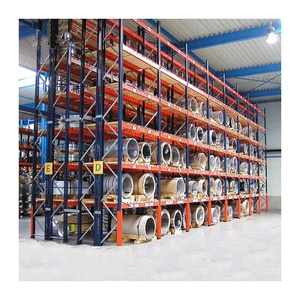 Best seller
Heavy Duty Warehouse Storage Pallet Racking System
Selective pallet racking remains the default choice for mixed-SKU distribution centres because every pallet is directly accessible. This heavy-duty warehouse storage system uses adjustable beams, reinforced uprights and optional wire mesh decks, making it suitable for FMCG, spare parts and 3PL operations. Confirm upright load, beam deflection and seismic bracing before selecting a supplier.
View system →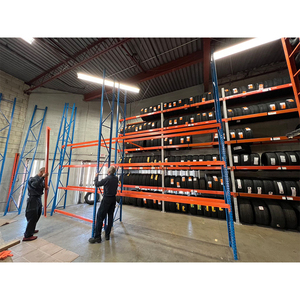 Heavy load
Industrial Structural Stacking Pallet Rack System
Structural stacking racks and heavy-duty structural pallet racks are built for demanding industrial loads. They suit machinery parts, moulds, steel components and dense factory warehouses where conventional selective racking may be exposed to impact. Buyers should request structural calculations, base-plate details and forklift clearance drawings. The system also supports phased projects because additional bays can be added as demand increases.
View system →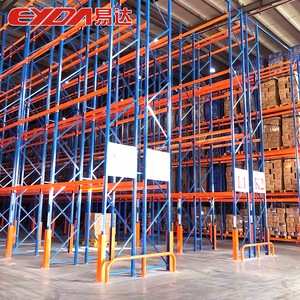 Narrow aisle
5-Layer Narrow Aisle Pallet Racking System
Five-layer narrow-aisle pallet racking is a high-bay solution for warehouses where land cost and building height make cube utilisation more important than instant access. It is normally used with very narrow aisle forklifts and requires precise floor tolerance, guide rails and operator discipline. It offers significantly more pallet positions than conventional selective racking in the same footprint. Ask for a VNA layout, aisle calculation and commissioning plan.
View system →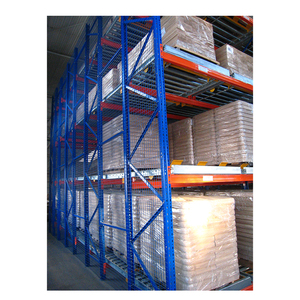 FIFO flow
FIFO Pallet Flow Rack System
Pallet flow racking uses gravity roller lanes to deliver true FIFO storage for food, beverage, pharma and cold-chain products. Pallets are loaded at the rear and retrieved from the front, so handling is controlled and product flow is visible. It is ideal for dated or batch-controlled inventory but requires correct lane slope, brake rollers and pallet quality control. Request a flow simulation and lane design for your pallet sizes.
View system →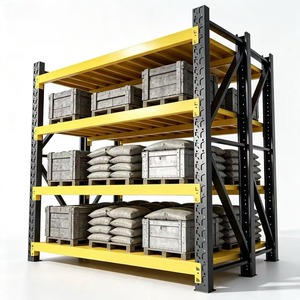 Distribution
500kg Heavy Duty Steel Pallet Racking
500 kg heavy-duty steel pallet racking is a practical middle ground for distribution centres, retail backrooms and light manufacturing. It supports cartons and pallets at a lower capital cost than fully automated systems, while still allowing adjustable levels and future expansion. Buyers should check whether the stated 500 kg applies per beam level, per pallet or per shelf, and confirm the finish for humidity or cold storage.
View system →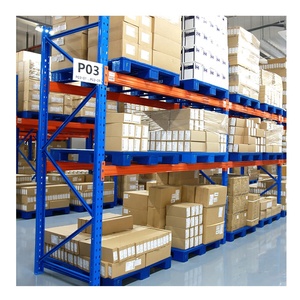 Modular
Heavy Duty Warehouse Pallet Rack Storage System
This warehouse storage pallet racking system is designed for flexibility: selective access, adjustable beam levels, standard frames and additive bays. It suits suppliers, distributors and manufacturers that need a safe, code-conscious storage structure without committing to automation. The system can be combined with wire mesh decking, column protectors and rack-end barriers. A manufacturer should supply load signs, installation drawings and a maintenance checklist.
View system →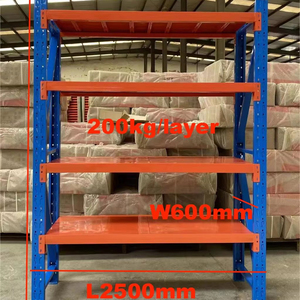 Stacking
Metal Stacking Shelves & Steel Pallet Racking
Stacking racks and metal storage shelves are useful when pallets need to be stored without a fixed racking structure. They work well for seasonal inventory, overflow storage, bulk containers and temporary projects. Because stability depends on stacking discipline, buyers should specify stack height, load per unit, forklift handling method and base support. For permanent high-density storage, compare this option with selective or radio shuttle racking before finalising the layout.
View system →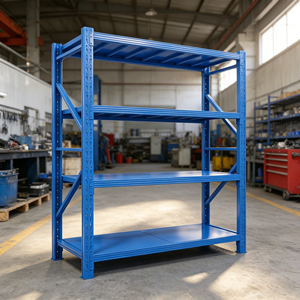 High density
High Density Adjustable Pallet Racking System
High-density adjustable pallet racking helps modern warehouses add storage capacity without expanding the building footprint. It can be configured for dense pallet storage, multiple levels and future automation, and is often combined with shuttle systems or narrow-aisle handling. The key procurement decision is whether the design should remain purely manual or be automation-ready. Ask your factory for a staged growth plan, beam-adjustment detail and seismic review.
View system →Quick Comparison for Procurement Teams
| System | Storage density | Selectivity | Best-fit project | Procurement note |
|---|---|---|---|---|
| Selective racking | Low to medium | High | Mixed SKUs, fast picking, 3PL | Confirm beam load, mesh deck and upright protection. |
| Structural stacking rack | Medium | Medium | Heavy components, machinery, moulds | Require structural calculations and forklift clearances. |
| Narrow aisle / 5-layer | High | High | Expensive land, high clear height | Check floor tolerance, VNA trucks and guide rails. |
| Pallet flow FIFO | High | Medium | Food, beverage, pharma, cold chain | Validate lane slope, brake rollers and pallet quality. |
| 500 kg heavy-duty | Medium | High | Distribution centre, retail backroom | Clarify load per level versus load per pallet. |
| Modular warehouse rack | Medium | High | Distributors, suppliers, expansion projects | Ask for additive bay drawings and future expansion plan. |
| Stacking shelves | Medium to high | Low to medium | Seasonal bulk, overflow, temporary storage | Specify stack height, base support and handling method. |
| High-density adjustable | High | Medium to high | Modern warehouses, automation-ready projects | Decide manual versus automation-ready configuration early. |
How Buyers Will Purchase China Pallet Racking in the Next 3–5 Years
The buying process is becoming more technical, more documented and more focused on lifetime value. These trends are already visible in RFQs from distributors, manufacturers, 3PLs and cold-chain operators.
Total cost of ownership replaces lowest price
Buyers are moving from lowest price per kilogram to total cost of ownership. They compare engineering hours, installation time, freight volume, maintenance, downtime and spare-part availability. A slightly higher factory quote with accurate drawings and complete packing can cost less by the time the rack is commissioned.
Seismic and local-code documents enter the RFQ
In Chile, Peru and Colombia, seismic design is moving into the RFQ. Procurement teams now request calculation reports, anchor specifications, base plates and bracing details for review by local engineers. Factories that cannot produce these documents are increasingly excluded before price comparison.
Automation-ready racking becomes standard
Even manual warehouses now specify that racking should be automation-ready: straight uprights, accurate tolerances, reserved conveyor paths and data for WMS/WCS integration. This avoids a costly rebuild when a shuttle or AS/RS phase is added later.
Modular capex and phased expansion
Finance teams prefer phased capex. Modular selective racking, mezzanine platforms and longspan shelving allow a warehouse to grow in stages while keeping the building operational. Suppliers that support staged drawings and repeatable components win repeat orders.
Port-optimised packing and logistics
Export packing is now part of procurement. Nested profiles, steel-strapped bundles, container-loading plans and clear marks reduce freight damage and unloading time. A factory that understands ports such as Santos, San Antonio, Callao and Buenaventura can avoid costly rework.
ESG, coating and safety compliance
Environmental requirements influence coating, packaging and supplier selection. Powder coating with low VOC emissions, recycled steel content, reduced plastic packaging and documented EHS systems are increasingly requested. They also support buyer compliance and warehouse safety programmes.
Factory verification before order placement
Buyers are auditing factories, not just websites. They ask for business licence details, production video, test reports, certification scope, export references and named project contacts. A live factory tour or third-party inspection is common for AS/RS or large racking orders.
Service-level agreements for after-sales
After-sales support is part of the purchase. Spare parts, installation supervision, remote diagnostics and periodic rack inspections should be written into the agreement. For automated systems, clarify software support, response time and local commissioning responsibilities.
Where Pallet Racking Technology Is Heading Next
Racking is becoming a data-enabled storage asset, not a static steel structure. The strongest factories are combining mechanical design with automation, safety and software integration.
Four-way shuttle and dense pallet automation
Four-way shuttles and radio shuttle systems are pushing storage density higher while reducing forklift travel inside racks. The next procurement wave will compare shuttle systems not only on price but on battery strategy, WCS reliability and spare-car availability.
AS/RS at higher bays and tighter tolerances
Automated storage and retrieval systems are moving into tall, high-bay warehouses where stacker cranes, conveyors and WMS/WCS software work together. Buyers need factory tolerances, commissioning data and long-term software support defined at contract stage.
Cold-chain and coastal corrosion protection
Humid ports, cold rooms and coastal sites demand better pretreatment, epoxy-polyester powder coating or hot-dip galvanized components. Product development is moving toward documented coating systems and material traceability rather than generic “powder-coated blue” descriptions.
Digital twins and WMS/WCS integration
Before steel is shipped, buyers increasingly want layout simulations, pallet-position counts and digital models that can be reviewed by local engineers. Later, these models support operator training and warehouse control integration.
Safety accessories designed in, not added later
Wire mesh decks, column protectors, rack-end barriers, load signs, guard rails and inspection labels are becoming part of the base design. This reduces site modifications and supports insurance and safety audits.
Sustainable coatings and lower packaging waste
Factories are improving powder-coating efficiency, reducing plastic wrapping and designing bundles for container optimisation. These changes lower damage rates and support buyer ESG reporting without compromising structural performance.
Mezzanine and rack-supported buildings
Where land is scarce, mezzanine platforms and rack-supported warehouse buildings add usable floors or integrate racking with the building structure. These projects require close coordination between racking, steel structure, fire and local permitting teams.
Condition monitoring and inspection data
Rack safety inspections are becoming more systematic, with digital checklists, damage tagging and repair records. Sensor-based monitoring remains an emerging option, but the procurement principle is already clear: demand documented inspection and maintenance data.
What a Factory With Deep Engineering Capability Can Prove
A benchmark example is My Favorite Shelf Industrial Co., Ltd., a Nanjing-based manufacturer and integrator founded in 1997. Its capabilities illustrate the standards buyers should look for when comparing China racking factories.
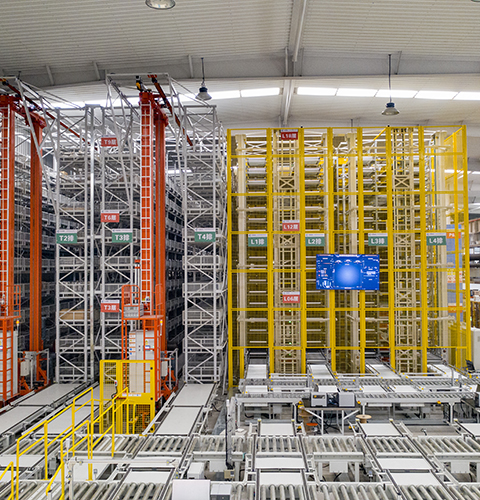
My Favorite Shelf processes around 60,000 tons of steel per year and has delivered more than 8,000 projects in over 140 countries. Its municipal-level R&D centre holds more than 70 national patents and software copyrights covering racking, stacker cranes, conveyors, shuttle carriers and WMS/WCS software. The company is certified to ISO 9001, ISO 14001 and ISO 45001, and holds CE certificates for racking, stacker cranes, shuttle cars, four-way shuttles and RGVs.
Its engineering team is led by a professor-level senior engineer and doctoral tutor who has co-authored reference works on automated warehouse design and logistics distribution centre management. The company has supplied projects for international enterprises including GE, Siemens, Walmart, Amazon and Toyota, and it adapts designs for South American seismic, humidity and port-logistics requirements. For buyers, this means one manufacturer can be responsible for the steel, automation and software—with English documentation and Spanish or Portuguese project support where needed.
Manufacturing depth since 1997
Nearly three decades of racking production, cold-rolling, powder coating and export project delivery reduce execution risk for first-time and repeat buyers.
R&D and automation capability
More than 70 patents and software rights across racking, stacker cranes, conveyors, shuttle carriers and WMS/WCS support manual, semi-automated and fully automated projects.
Auditable quality and certification
ISO systems, CE certificates, material traceability, coating checks and load testing give procurement and safety teams documentation they can review before shipment.
South America project adaptation
Seismic calculations referencing local requirements such as NCh 2369, E.030 and NSR-10, port-optimised packing and installation supervision help projects move from quotation to go-live.
Frequently Asked Questions About China Pallet Racking Suppliers
These are the questions procurement teams, distributors, 3PLs and warehouse engineers ask most often before shortlisting a factory.
What is the difference between selective, drive-in and shuttle pallet racking?
Selective racking gives direct access to every pallet and is best for mixed SKUs and fast picking. Drive-in racking stores pallets in deep lanes for high density but low selectivity. Radio shuttle and four-way shuttle systems use a movable shuttle inside the lane to improve safety and throughput in dense storage. The right choice depends on SKU count, required access, forklift type, throughput and building height—not on density alone.
How should I compare China pallet racking manufacturers instead of only comparing price?
Compare engineering documents, factory ownership, certification scope, steel traceability, coating system, load testing, export packing and after-sales support. Ask for a sample layout, calculation report, project reference and spare-parts list. A factory that can explain beam deflection, upright load and seismic bracing is usually safer than a trader quoting a lower price per kilogram without technical documentation.
What information do I need to provide for an accurate pallet racking quotation?
Send building length, width and clear height; column grid; pallet size and max weight; load per beam level; SKU count; FIFO or LIFO requirements; forklift type and lift height; local city and country; and any seismic, fire or cold-storage requirements. If available, include a floor plan or CAD drawing. These details let the factory calculate pallet positions and prepare a reliable layout instead of a rough price.
Can pallet racking be designed for seismic zones in Chile, Peru and Colombia?
Yes. Qualified manufacturers can run structural and seismic load calculations with reference to local requirements such as NCh 2369 in Chile, E.030 in Peru and NSR-10 in Colombia, and can specify reinforced uprights, bracing, base plates and anchors accordingly. Calculation reports should be delivered with quotation drawings so your local engineer can review them before fabrication.
What load capacity and height can China racking factories manufacture?
Capacity varies by system. Selective pallet racking commonly uses beam loads in the range of 1,000 kg to 4,500 kg per level, while heavy structural racks and special systems can be engineered for higher loads. Height depends on building clear height, forklift or stacker crane capability and local code. For high-bay AS/RS, systems can be designed for very tall warehouses, but the factory must provide structural calculations and precise tolerances.
How do I verify quality and certification before shipment?
Request the certificate scope, not just a logo. Ask for material certificates, coating-thickness records, load-test reports, packing lists and inspection photos. For larger projects, arrange a third-party inspection or a live video factory tour. Confirm that the racking, shuttle, stacker crane or RGV certification matches the equipment you are buying, and keep these documents for customs and site acceptance.
What are typical production and shipping times to South America?
Standard selective racking is often produced in about 25 to 35 days after drawing approval. Ocean transit from China to ports such as Santos, San Antonio, Callao, Buenaventura, Guayaquil or Buenos Aires usually takes around 30 to 45 days depending on the route and vessel schedule. AS/RS, shuttle and mezzanine projects follow a project schedule agreed at contract stage.
What surface finish is recommended for humid, coastal or cold-storage warehouses?
For humid tropical or coastal sites, specify epoxy-polyester powder coating with enhanced pretreatment, or hot-dip galvanized components for high-corrosion environments. For cold storage, confirm that the coating and steel toughness are suitable for low temperatures. The purchase order should state the finish system, coating thickness and any touch-up materials supplied with the shipment.
Can a factory integrate AS/RS, shuttle racking and WMS/WCS software?
Integrated manufacturers can combine racking, stacker cranes, conveyors, shuttle carriers, RGVs and WMS/WCS software under one project team. This reduces interface risk between suppliers. During procurement, clarify who supplies the warehouse control system, who commissions the interfaces, how software support is handled after handover and what spare parts are recommended for the first year.
What after-sales support should be included in a racking contract?
Include installation supervision, operator training, as-built drawings, load signs, inspection checklists, spare-parts recommendations and a response-time commitment. For automated equipment, add remote diagnostics, software support and commissioning responsibilities. Periodic rack inspections are also important because damage from forklifts, overloading or building changes can affect safety and insurance compliance.
Send Your Warehouse Data. Get a Factory-Backed Layout.
Share building dimensions, pallet size and weight, SKU profile, throughput, destination city and any seismic or cold-storage requirements. A qualified China racking manufacturer should reply with a layout, pallet-position count, system recommendation and shipping plan—not just a price list.