Eight Factory-Direct Racking Systems Buyers Compare First
These are not generic catalogue items. Each system answers a different storage intent: fast access, high density, cold-chain durability, mezzanine expansion, heavy-load safety or automated 24/7 throughput. Compare the operating logic before comparing price per kilogram.
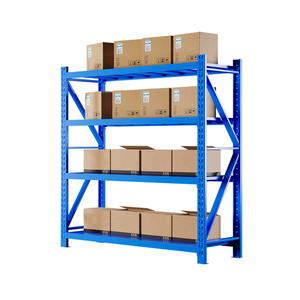
5-Layer Pallet Racking & Tire Stacking System
High-level storage for tires, slotted-angle shelves, bulk spares and mixed warehouse loads where vertical space must earn its keep.
Explore product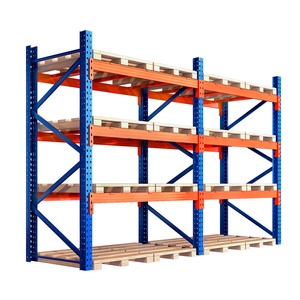
Heavy-Duty Steel Warehouse Pallet Racking
Selective racking for distributors and 3PLs that need direct pallet access, high rotation and clearly engineered beam loads.
Explore product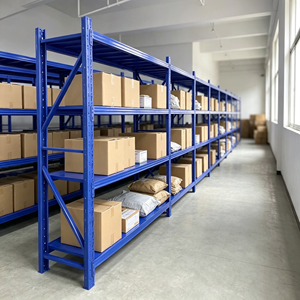
Cold-Rolled Boltless Rivet Storage Racks
Fast-assembly shelving with powder-coated protection for spare parts, e-commerce SKUs and humid or coastal environments.
Explore product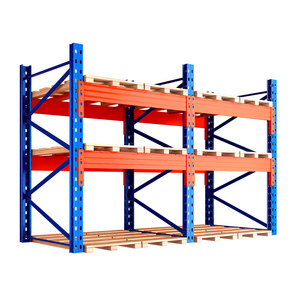
Heavy-Duty Industrial Pallet Racking
A robust structural answer for factories moving dense palletized goods, heavy cartons, machinery parts and production materials.
Explore product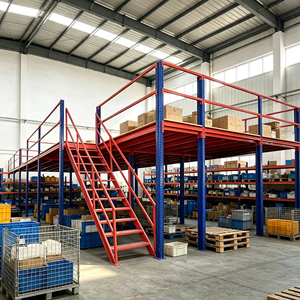
Mezzanine Floor Platform Racking
Add usable floor area without a new building cycle. Ideal for growing e-commerce, logistics and household-goods operations.
Explore product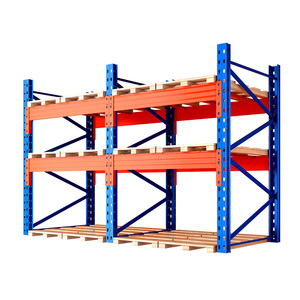
Industrial Metal Pallet Racking System
Modular pallet racking for mixed SKU profiles, seasonal peaks and warehouses that expect layout changes without full replacement.
Explore product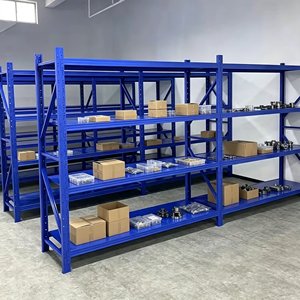
Adjustable Metal Warehouse Shelving
Flexible logistics shelving for express delivery hubs, spare-parts rooms, retail backrooms and light household storage.
Explore product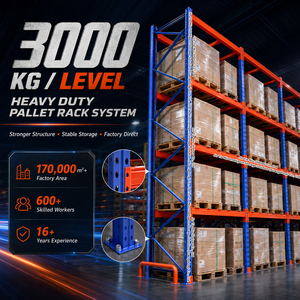
4-Level 3000 kg Heavy-Duty Pallet Rack
Built for factories and warehouses handling dense, heavy pallets where beam capacity, upright protection and audit trails matter.
Explore productWhy the Search for a China Warehouse Racking Factory Requires More Than a Price List
Buyers searching for a “China warehouse racking factory” usually intend to solve one of four problems: reduce project cost, increase storage density, replace an unreliable supplier, or find an engineering partner for automation. Each intent leads to a different set of questions. A price per beam is meaningless if the upright section, bracing pattern, anchor specification, seismic calculation and coating system have not been reviewed together. For procurement teams, the real comparison is not between two quotations — it is between two levels of engineering evidence.
A serious factory should be able to show how the layout was derived from pallet dimensions, forklift aisle requirements, column grid, clear height, floor flatness and local code requirements. It should also be able to explain the difference between selective racking, double-deep racking, drive-in racking, radio shuttle racking, four-way shuttle systems and AS/RS in terms of pallet positions, selectivity, throughput, safety and lifetime cost. That is the information gain a buyer needs before placing a high-value order.
This guide is written around the capabilities and product range of My Favorite Shelf Industrial Co., Ltd., a Nanjing-based manufacturer that has served warehouse projects since 1997. It is structured for procurement managers, 3PL operators, factory owners, logistics consultants and importers who need a defensible shortlist rather than a glossy brochure.
Engineering Evidence
CAD layouts, load calculations, seismic notes, upright and beam specifications, anchor schedules and installation drawings should be available for review by your local engineer.
Production Control
Coil traceability, cold-rolling, hole punching, welding, powder coating and pre-shipment load checks should be controlled inside the factory — not outsourced without documentation.
Certification & Traceability
For export projects, ISO 9001, ISO 14001, ISO 45001, CE documents, material certificates, inspection reports and packing lists reduce commercial and customs risk.
Export Delivery
Container optimization, port coordination, installation supervision, spare parts and remote diagnostics are part of the factory service — especially for AS/RS and shuttle projects.
Match the Storage System to the Operational Intent
A high-performing warehouse design starts with the everyday movement of goods, not with the catalogue. Use the matrix below to narrow the engineering conversation before requesting a layout.
| Operating Need | Recommended System | Why It Fits | Procurement Watch-Out |
|---|---|---|---|
| Many SKUs, fast access | Selective pallet racking | Direct access to every pallet; simple forklift operation. | Confirm beam load, deck type and aisle width. |
| Few SKUs, cold storage | Drive-in racking | High-density lane storage with reduced aisle use. | Check LIFO requirement and forklift access inside lanes. |
| Dense pallet storage, FIFO or LIFO | Radio shuttle racking | Forklifts stay outside the rack; shuttle handles deep lanes. | Review shuttle quantity, battery strategy and spare parts. |
| Automated high-density storage | Four-way shuttle or AS/RS | Higher throughput with software-controlled pallet movement. | Confirm WMS/WCS integration, redundancy and service support. |
| Cartons, spare parts, e-commerce | Longspan shelving or boltless racks | Manual picking, adjustable levels and fast replenishment. | Verify shelf load, deck finish and ergonomic picking height. |
| Expand without a new building | Mezzanine platform racking | Adds a second or third usable floor inside the existing footprint. | Check floor loading, stair access, fire strategy and column placement. |
| Heavy factory loads | Heavy-duty pallet racking | Engineered uprights and beams for dense, heavy pallet profiles. | Do not compare only beam capacity; verify upright section and bracing. |
| High-bay, labor-saving operation | AS/RS with stacker cranes | 24/7 pallet handling, reduced labor dependency and better inventory control. | Model annual throughput, energy use, maintenance and software lifecycle. |
For a practical recommendation, send pallet length × width × height, maximum load, SKU count, daily inbound/outbound volume, forklift type, building dimensions and local seismic requirements. A factory engineer can then propose two or three layout options with pallet-position counts.
What Buyers Will Prioritize When Sourcing China Racking Factories
The lowest quotation is no longer the default benchmark. Project owners are increasingly comparing engineering documentation, automation readiness, lifecycle service and supply-chain resilience.
Total Cost of Ownership Beats Unit Price
Procurement teams are calculating freight density, installation time, maintenance access, spare-part availability and replacement cost per pallet position. A slightly higher factory price can be cheaper over ten years.
Automation-Ready Documentation
Even manual warehouses are being planned for future shuttle or AS/RS integration. Buyers want rack layouts, control interfaces and software assumptions that do not need to be rebuilt later.
Seismic and Local Code Evidence
Projects in Chile, Peru, Colombia, Ecuador and other active zones require clear references to local code requirements, reinforced uprights, bracing and anchor design.
ESG and Coating Performance
Powder coating, galvanizing, recyclability and reduced packaging waste are becoming formal requirements in corporate supply chains, especially for cold-chain and coastal warehouses.
Digital Handover Packages
Buyers now expect load tables, CAD files, installation manuals, test reports, spare-part lists and maintenance schedules in a structured digital package.
Supplier Resilience and Dual Sourcing
Importers are evaluating production capacity, port flexibility, lead-time stability and communication quality — not simply whether a factory can quote the lowest price.
How Top Factories Are Developing Racking and Automation
High-Bay AS/RS Extraction
Stacker crane, conveyor and WMS/WCS packages are moving into mid-sized distribution centers, not only very large warehouses. The commercial question is throughput payback and maintainability.
Four-Way Shuttle Density
Four-way shuttle systems reduce aisle waste and allow a single fleet to serve multiple storage zones. They are becoming a bridge between manual racking and full AS/RS.
Cold-Chain and Coastal Durability
Enhanced pretreatment, epoxy-polyester powder coating and hot-dip galvanizing are increasingly specified for humid, coastal, frozen and food-grade environments.
Modular Rack-Supported Structures
Rack-supported buildings and mezzanine platforms are being designed in phases, letting owners add storage floors without losing the ability to reconfigure operations.
Safety and Inspection Culture
Upright protectors, beam locks, load signs, repair programs and inspection schedules are becoming part of the factory deliverable rather than an afterthought.
WMS/WCS Integration
Modern racking is increasingly tied to software. Factories that develop control software, conveyors, stacker cranes and shuttle carriers under one roof can reduce integration friction.
Inside My Favorite Shelf Industrial Co., Ltd.
For buyers comparing China warehouse racking factories, the strongest evidence is a combination of manufacturing depth, engineering records, certifications and real project experience.
One Accountable Manufacturer for Steel, Automation and Software
My Favorite Shelf Industrial Co., Ltd. has designed, manufactured and installed warehouse racking and automated storage systems since 1997. Its production base processes approximately 60,000 tons of steel per year, and its municipal-level R&D center holds more than 70 national patents and software copyrights covering racking, stacker cranes, conveyors, shuttle carriers and warehouse control software.
For international buyers, this matters because the same organization can control the steel specification, coating quality, automation interface and installation documentation. The company has delivered more than 8,000 projects in over 140 countries and provides engineering documentation in English, with project support in Spanish and Portuguese for Latin American markets.
Its engineering team is described as led by a professor-level senior engineer and doctoral tutor who co-authored technical references on automated warehouse design and logistics distribution center management. Production is managed under ISO 9001, ISO 14001, ISO 45001 and ISO 10012 measurement management, with CE certification for racking, radio shuttle cars, stacker cranes, four-way shuttles and RGV systems.
- Founded in 1997 with in-house racking and automation production
- 8,000+ projects delivered across 140+ countries
- ISO 9001, ISO 14001, ISO 45001 and CE documentation
- South America support with seismic and port considerations
- Factory video, layout drawings and project documentation available
- Installation supervision, spare parts and remote diagnostics
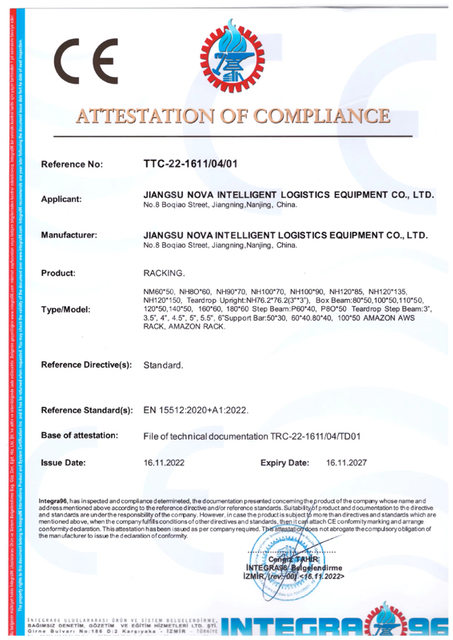 CE Racking
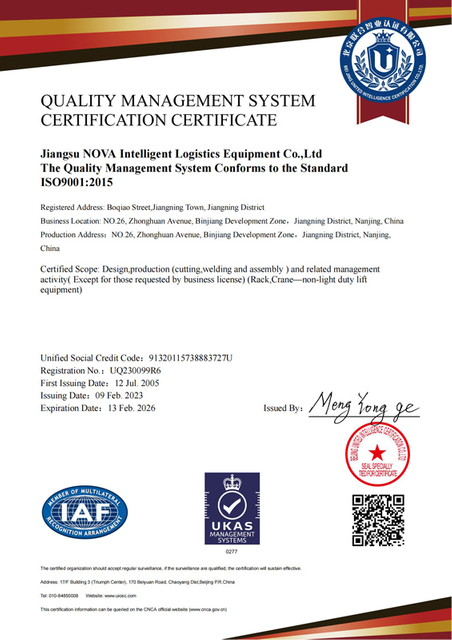 ISO 9001
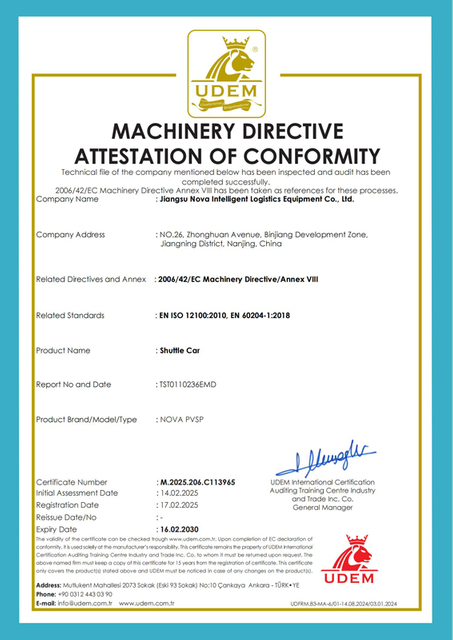 CE Shuttle Car
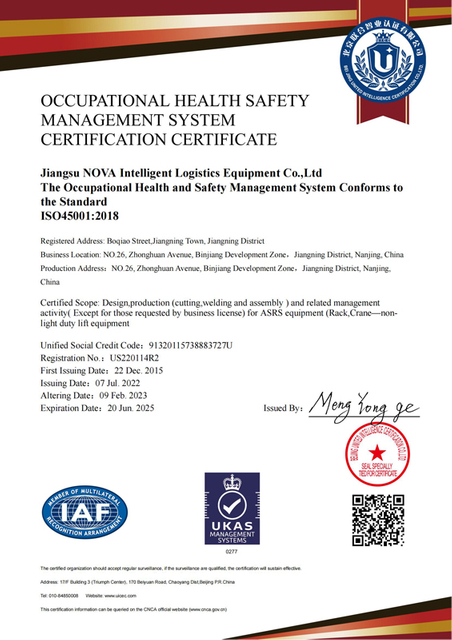 ISO 45001








Certification and customer logos are published by the manufacturer for supplier-verification purposes. Buyers should request current certificates, scope statements and project references during the RFQ stage.
How to Audit a China Racking Factory Quotation
Use this six-point review to test whether the quotation is a true engineered proposal or simply a material list.
Check the Load Basis
Confirm pallet weight, beam span, load per level, upright capacity at the required height and whether the design uses static, dynamic or seismic load combinations.
Review the Layout Logic
Ask how aisle width, turning radius, column grid, forklift type, sprinkler clearance and picking height influenced the rack configuration.
Demand Material and Coating Data
Request steel grade, coil thickness, coating process, coating thickness, color standard and corrosion assumptions for your city or cold-store environment.
Verify Certification Scope
Look for current ISO and CE certificates with product scope, issuing body, validity date and model coverage. Do not accept a logo without a document.
Compare Installation and Service
Clarify whether installation supervision, anchor bolts, shim packs, spare parts, training and after-sales diagnostics are included or quoted separately.
Model Lifetime Cost
Compare freight per container, installation hours, maintenance frequency, repair access, replacement-part lead time and damage protection — not only factory price.
Frequently Asked Questions About China Warehouse Racking Procurement
These answers are written for sourcing teams who need practical criteria before contacting a factory.
How can I verify that a China warehouse racking factory is a real manufacturer, not only a trading company?
Ask for a live video factory tour, production line photos, equipment list, business license, export records, certificate scopes and project references. A real racking factory should be able to show cold-rolling, punching, welding, powder coating, packaging and quality inspection areas, and it should explain which parts are made in-house versus purchased.
What information should I send for an accurate racking quotation?
Send warehouse length, width and clear height; column grid; pallet size and maximum weight; SKU count; daily inbound and outbound volume; forklift type and lift height; floor condition; local code or seismic requirements; and any fire protection constraints. For mezzanine or AS/RS, include target pallet positions and automation expectations.
Can racking be designed for seismic zones such as Chile, Peru and Colombia?
Yes, but the design must state the code basis and assumptions. Projects in seismic zones may reference requirements such as NCh 2369, E.030 or NSR-10, and may require heavier uprights, additional bracing, seismic base plates and specified anchors. Ask the factory to provide calculation reports for review by your local engineer.
What is the typical lead time for factory-direct racking orders?
Standard selective racking is often produced in roughly 25 to 35 days after drawing approval. Ocean transit from China to ports in South America usually takes about 30 to 45 days depending on route and schedule. AS/RS, shuttle systems and rack-supported buildings require a project schedule agreed at contract stage because software, automation and commissioning are involved.
How do I choose between selective, drive-in, radio shuttle, four-way shuttle and AS/RS?
Start with selectivity, density and throughput. Selective racking gives direct access; drive-in is dense but restricts access; radio shuttle improves deep-lane handling; four-way shuttle supports automated high density; AS/RS is best for high-bay, high-throughput operations with strong software integration. The correct answer depends on SKU profile and labor strategy.
What certifications and documents should come with an export order?
Typical documents include commercial invoice, packing list, bill of lading, certificate of origin, material certificates, inspection reports and installation manuals. For CE-marked equipment, request the relevant declaration and certificate scope. For project documentation, ask for English, Spanish or Portuguese support where required.
What finish is suitable for humid, coastal or cold-store warehouses?
For humid tropical or coastal sites, specify enhanced pretreatment and epoxy-polyester powder coating, or hot-dip galvanized components where corrosion risk is high. For cold storage, confirm coating flexibility and hardware performance at low temperature. The finish should be selected from the site environment, not copied from a generic catalogue.
Can you support installation and after-sales service overseas?
Yes, for qualified projects. A factory may dispatch supervising engineers, train local installation teams, provide commissioning checklists, supply spare parts and support remote diagnostics for automated equipment. Clarify the scope in the contract: supervision days, travel costs, tools, acceptance criteria and response time.
What is the minimum order quantity and can the racking be customized?
Minimum order quantity depends on the product family and shipping method. Standard pallet racking can be produced to project dimensions; longspan shelving and boltless racks may have more flexible quantities. Customization may include upright height, beam length, load rating, color, coating, decking, anchors, protectors and packaging.
How should I compare lifetime cost instead of price per ton?
Compare pallet positions per square meter, freight cost per container, installation hours, maintenance access, repair cost, spare-part lead time, expected service life and damage protection. A heavier or better-engineered system may cost more initially but require fewer repairs and less downtime over its service life.
Ready to Compare a Real Factory Layout Instead of a Generic Price List?
Share your building dimensions, pallet data, load requirements and target throughput. The engineering team can respond with a practical system recommendation, pallet-position estimate and the technical questions that matter for your site.
Contact Us