Top China Warehouse Shelving Racks Factory & Suppliers
Compare eight factory-direct systems — Q235B pallet racking, cantilever, mezzanine, drive-in and automatic-ready storage — engineered for seismic, humid and high-throughput warehouses.
8 Warehouse Shelving Racks Recommended for Global Buyers
These are not random catalogue items. Each system answers a specific storage problem: mixed-SKU industrial stores, heavy pallet handling, long-profile storage, high-density factories, mezzanine expansion or automatic-ready racking. Every image and link below is preserved from the factory product range so buyers can verify specifications directly.
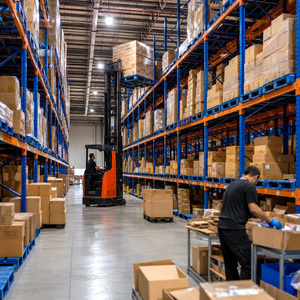
Industrial Storage System Warehouse Storage Rack Q235B Steel for Metal Facilities Storage with 1000-4000kg Load
A selective racking workhorse for metal facilities, spare parts and mixed industrial loads, with load ratings from 1,000 kg to 4,000 kg per level.
View product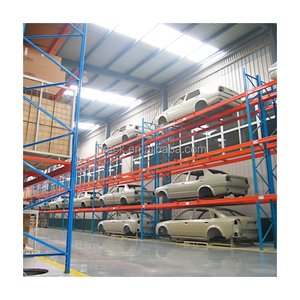
Industrial Metal Shelf Shelving Unit Garage Storage System Heavy Duty Pallet Racking for Warehousing Material Handling
Heavy-duty pallet racking and shelving for warehouses, garages and material-handling zones where beams, uprights and accessories must be purchased factory-direct.
View product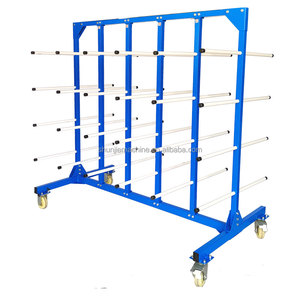
Customized 5 Tiers Cantilever Racking for Warehouse with Wheels Long Arms Metal Double Side Cantilever Rack Cart
A mobile five-tier, double-sided cantilever rack cart for long profiles, pipes, timber and awkward loads that cannot sit efficiently on standard pallet beams.
View product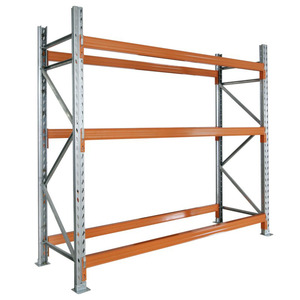
NOVA Full Automatic Warehouse Q235 Steel Boltless Store Heavy Duty Stacking Rack Industrial Storage Pallet Racking System
A boltless, heavy-duty stacking rack platform that suits fast installation, dense industrial storage and future integration with automated warehouse equipment.
View product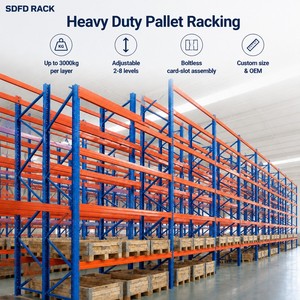
3000kg Heavy Duty Metal Pallet Racking Adjustable Industrial Warehouse Storage Rack System
Adjustable heavy-duty pallet racking rated around 3,000 kg for factories, distribution centres and 3PL warehouses needing flexible beam levels.
View product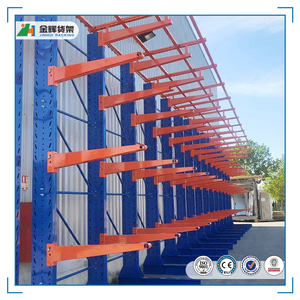
Heavy Duty Industrial Metal Cold Rolled Steel Aluminum Profile Storage Cantilever Pipe Rack Heavy Duty Cantilever Racking
A cantilever pipe and profile rack for cold-rolled steel, aluminium extrusions, tubes and long materials — designed to keep long loads accessible and off the floor.
View product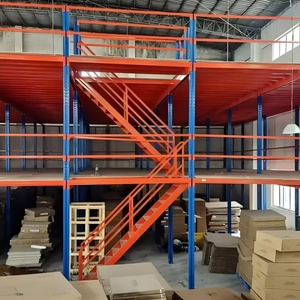
Heavy Duty Mezzanine Floor Racking Warehouse Storage Racks Shelf Units Pallet Rack System Equipment Platform Shelves Attic Rack
Mezzanine floor racking that adds a second or third usable level without a new building, ideal for picking operations, spare-parts storage and phased expansion.
View product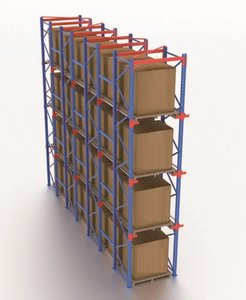
High Density Commercial Shelves Storage Warehouse Racking Systems Drive-In Pallet Rack for Industrial Factory Racks
Drive-in pallet racking for high-density factory storage, cold rooms and low-SKU inventory where floor space is more expensive than access speed.
View productHow to Read a China Warehouse Shelving Racks Supplier List
The phrase top China warehouse shelving racks factory & suppliers describes a market, not a single product. A genuine factory should control the critical production steps — cold-rolling, profile punching, welding, powder coating, load testing, packing and documentation — rather than sub-contracting the structural parts that carry pallet loads every day. That distinction matters because racking is safety equipment: a low price per kilogram means little if the upright, beam, bracing, base plate or anchor specification cannot pass your local engineer's review.
My Favorite Shelf Industrial Co., Ltd. has designed, manufactured and installed warehouse racking and automated storage systems since 1997. The production base processes around 60,000 tons of steel per year, and the company has delivered more than 8,000 projects in over 140 countries. Engineering work is supported by a municipal-level R&D centre with more than 70 national patents and software copyrights covering racking, stacker cranes, conveyors, shuttle carriers and WMS/WCS software. For procurement teams, the practical question is not whether a supplier can quote a beam and upright, but whether the supplier can provide a verifiable chain from steel coil to installation, including drawings, load calculations, finish specifications and after-sales support.
This buyer guide is written for importers, 3PL operators, factory engineers and project contractors comparing China warehouse racking suppliers. It uses information that changes the buying decision: how to compare quotations, how seismic and humidity affect design, which systems suit which warehouse profile, and what documentation should be supplied before a deposit is paid. Rather than treating a rack as a commodity, we recommend evaluating each quotation by total cost per usable pallet position.
Total cost per pallet position = (racking + accessories + installation + freight + duty + expected downtime + future retrofit) ÷ verified usable pallet positions. This prevents a low steel price from hiding weak load ratings, poor container packing or costly rework after arrival.
Which Warehouse Racking Fits Your Operation?
Use this recommendation matrix as a first filter. A competent factory will then ask for pallet dimensions, load per pallet, forklift type, aisle width, clear height, SKU profile and local seismic requirements before issuing a final layout.
| Warehouse profile | Recommended system | Why it works |
|---|---|---|
| Mixed-SKU industrial stores and metal facilities | Q235B steel industrial storage rack | Selective access, 1,000–4,000 kg load options and a familiar beam-and-upright structure that is easy to inspect and expand. |
| Palletised warehousing and material-handling zones | Heavy-duty industrial shelving and pallet racking | Factory-direct beams, uprights and decking for warehouses that need a robust, repeatable pallet racking standard. |
| Long pipes, timber, aluminium profiles and steel extrusions | Heavy-duty cantilever pipe rack | Open front with long arms, avoiding the need to slide long loads through a conventional pallet bay. |
| Mobile long-load handling inside a workshop | Customized wheeled double-sided cantilever rack cart | Five tiers, double-sided arms and wheels make long materials movable without sacrificing vertical storage. |
| Fast-installation industrial storage and future automation | NOVA boltless automatic-ready pallet racking | Boltless erection reduces installation time, while the structural layout can be planned for automated storage integration. |
| Adjustable pallet levels around 3,000 kg | 3,000 kg adjustable heavy-duty pallet racking | Balanced load capacity and flexibility for factories that need to change beam levels as product lines evolve. |
| Adding picking area without a new building | Heavy-duty mezzanine floor racking | Creates a new usable floor for shelves, picking stations or light pallet storage while using the existing clear height. |
| High-density, low-SKU factory storage | Drive-in pallet rack system | Reduces aisle count and increases pallet positions per square metre, especially useful for cold rooms and homogeneous stock. |
Product Future Procurement Trends: 2026–2030
Buyers are shifting from “price per tonne” to “verified performance per pallet position.” The following four trends are already visible in tenders, especially across South America, the Middle East and Southeast Asia.
Seismic and safety documentation becomes a purchase gate
Projects in Chile, Peru and Colombia increasingly require calculation reports, base-plate details, anchor specifications and bracing drawings before approval. A supplier that cannot provide these documents creates delay even if the steel price is low.
Automation-ready racking replaces single-use structures
Warehouse operators now ask whether selective racking can later accept shuttles, conveyors, stacker cranes or WMS/WCS controls. Procurement is moving toward modular layouts that protect the first investment from becoming obsolete.
Land scarcity pushes density, but access still matters
Drive-in, radio shuttle and four-way shuttle systems are being compared against selective racking using cost per pallet position and throughput. The winner is rarely the densest system; it is the system that matches SKU velocity and truck-loading patterns.
Whole-life corrosion and carbon review
Humid ports and cold-chain sites require enhanced pretreatment, epoxy-polyester powder coating or hot-dip galvanising. At the same time, buyers ask for container-optimised packing, spare parts availability and recyclable steel content.
Warehouse Racking Development Trends
The rack is no longer just a passive steel structure. It increasingly acts as the physical interface between inventory, machinery, sensors and warehouse software.
From static shelving to AS/RS integration
High-bay racking is engineered with tighter tolerances for stacker cranes, conveyors and warehouse control systems. Buyers should confirm interface drawings, tolerance bands and WMS/WCS compatibility early.
Four-way shuttle and radio shuttle maturity
Shuttle systems are becoming more modular and easier to service. The procurement focus is shifting to battery strategy, remote diagnostics, spare-part lead time and safe maintenance access inside dense lanes.
Q235B steel and boltless design
High-strength steel profiles and boltless connections reduce installation labour. However, buyers should request coil traceability, hole-position tolerances, welding checks and coating-thickness measurements rather than relying on the material name alone.
Mezzanine as modular real estate
Rack-supported mezzanines, free-standing platforms and multi-tier picking structures are being planned as upgradable assets. The design should consider future stair, lift, conveyor and fire-protection routes from day one.
Cold-chain and coastal corrosion engineering
Cold storage, ports and tropical warehouses need more than standard paint. Enhanced pretreatment, galvanising, stainless fasteners and drainage details should be specified according to the actual humidity and salt exposure.
Digital engineering and verified documentation
CAD layouts, load calculations, seismic reports, container packing plans and as-built drawings are becoming part of the deliverable. This documentation protects the buyer during installation, insurance review and future expansion.
Why This China Warehouse Racking Factory Earns Trust
E-E-A-T in industrial procurement is not a badge. It is the evidence behind the quotation: factory ownership, engineering depth, certified processes, project history and service capability after shipment.
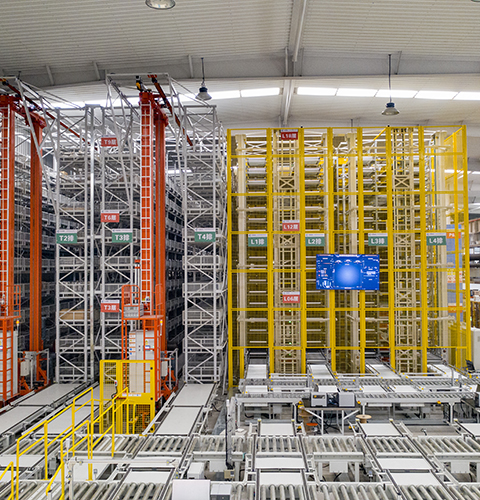
My Favorite Shelf Industrial Co., Ltd.
Founded in 1997, the company plans, designs, manufactures and installs racking systems and AS/RS automated warehouses. Its own production base processes around 60,000 tons of steel per year, supported by cold-rolling, punching, welding and powder-coating capability. The municipal-level R&D centre holds more than 70 national patents and software copyrights covering racking, stacker cranes, conveyors, shuttle carriers and WMS/WCS software.
For overseas buyers, this means one manufacturer can take responsibility for the steel structure, the automation interface and the project documentation. Engineering documents are available in English, with project support in Spanish and Portuguese for South American customers.
- In-house racking and automation production
- ISO 9001, ISO 14001 and ISO 45001 systems
- CE-marked shuttles, stacker cranes and RGVs
- 8,000+ projects in 140+ countries
Factory control from coil to coating
Racking production is managed in-house, including cold-rolling, profile forming, welding, powder coating and packing. This reduces the risk of mixed material standards or undisclosed subcontracting.
Engineering depth, not just sales support
The engineering team is led by a professor-level senior engineer and doctoral tutor with experience in automated warehouse design and logistics distribution-centre references, supporting seismic, load and layout calculations.
Certified quality and measurement control
Quality management follows ISO 9001, ISO 14001 and ISO 45001, with measurement management under ISO 10012. CE certification covers racking, shuttle cars, stacker cranes and RGVs where applicable.
Global project evidence
More than 8,000 delivered projects and experience with international enterprises including GE, Siemens, Walmart, Amazon and Toyota provide a reference base for distributors, 3PLs and manufacturers.
R&D and software capability
More than 70 patents and software rights support racking, stacker cranes, conveyors, shuttle carriers and WMS/WCS. This is important for buyers planning automatic storage, not just static shelves.
One-stop export and service
Layout design, structural calculation, production, container-optimised packing, installation supervision, spare parts and remote diagnostics are coordinated by one project team, with Spanish and Portuguese support available.
Certifications and Documentation for Procurement Review
A serious supplier should make verification easy. Ask for the certificate scope, report date, product model, material certificate, load test record and the name of the legal manufacturing entity before comparing final prices.
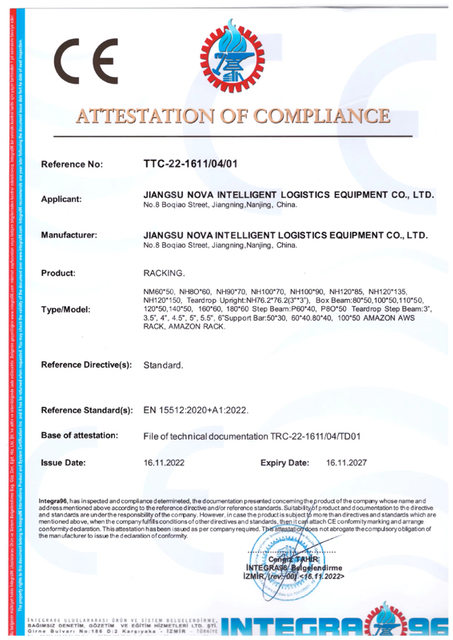 CE · Racking
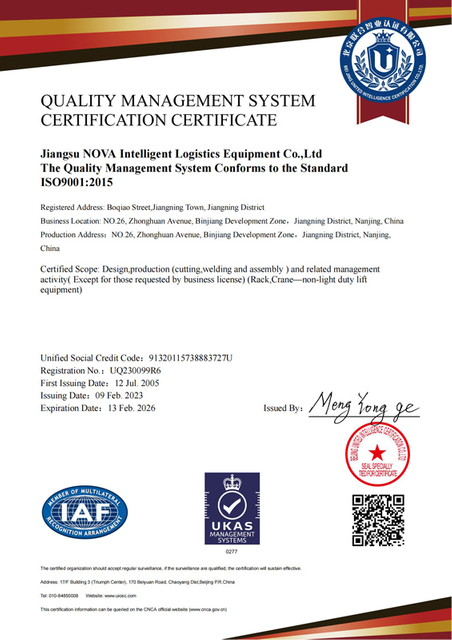 ISO 9001
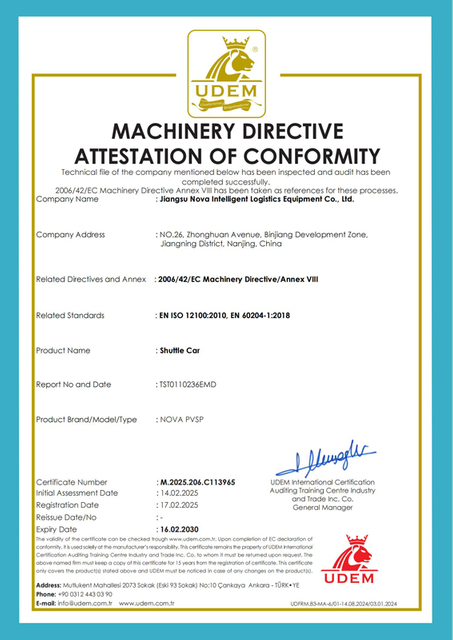 CE · Shuttle Car
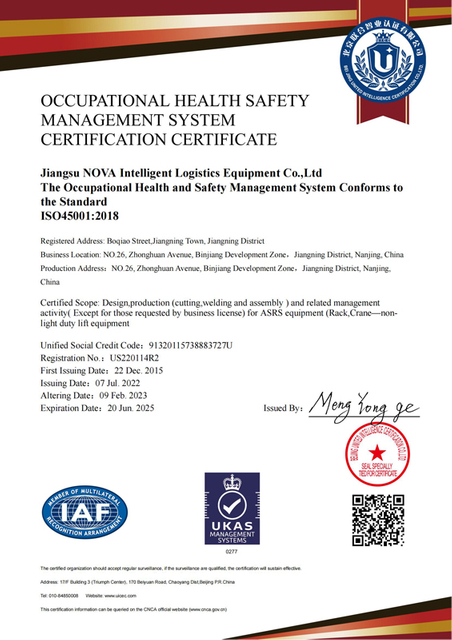 ISO 45001
Frequently Asked Questions for Overseas Buyers
These are the questions procurement teams ask most often when comparing warehouse shelving rack factories and suppliers in China.
Are you a real factory or a trading company? How can I verify?
My Favorite Shelf Industrial Co., Ltd. is a manufacturer and project integrator founded in 1997, with its own production base, cold-rolling and powder-coating capability and a municipal-level R&D centre. Verification should go beyond a catalogue: request the legal company name, factory address, business licence, ISO certificate scope, product test reports and recent container-loading photos. For a live project, ask for a video call during production hours and a sample of the exact profile, coating colour and connection details.
What is the minimum order quantity for customized racking?
MOQ depends on the system. Standard selective pallet racking and longspan shelving can be supplied in mixed container loads, while fully customized cantilever carts, mezzanine platforms and automatic-ready racking are engineered per project. For export efficiency, we recommend comparing the total container utilisation rather than the number of individual bays, because nesting profiles and steel-strapped bundles can reduce freight cost per pallet position.
Can you design racking for seismic zones in Chile, Peru, Colombia and other markets?
Yes. Our engineers prepare structural and seismic load calculations with reference to local requirements such as NCh 2369 in Chile, E.030 in Peru and NSR-10 in Colombia where applicable. Reinforced uprights, bracing, base plates and anchor specifications can be adjusted accordingly. Calculation reports are supplied with quotation drawings so your local engineer or authority can review them before fabrication.
How long is production and shipping to South America or other ports?
Standard selective racking is typically produced in 25 to 35 days after drawing approval. Ocean transit from China to ports such as Santos, San Antonio, Callao, Buenaventura, Guayaquil or Buenos Aires usually takes around 30 to 45 days depending on the route and vessel schedule. AS/RS, shuttle and mezzanine projects follow a project schedule agreed at contract stage, including design review, production, factory testing, packing and installation planning.
What load capacities can you manufacture?
The product range includes industrial storage racks from 1,000 kg to 4,000 kg load, 3,000 kg adjustable heavy-duty pallet racking and project-specific heavy-duty systems. Final capacity depends on beam span, upright profile, bracing, decking and pallet placement. Always provide the actual pallet weight, dimensions and impact conditions; a reputable factory will calculate the safe working load per level instead of quoting a generic capacity.
Do you provide installation and after-sales service overseas?
Yes. We dispatch supervising engineers for installation and commissioning, train local installation teams, supply spare parts and offer remote diagnostics for automated systems such as stacker cranes, shuttles, conveyors and WMS/WCS software. For remote projects, a practical handover package should include layout drawings, anchor plans, installation sequence, torque requirements, safety inspection points and a spare-parts list.
How do you protect racking in humid, coastal or cold-chain warehouses?
For humid tropical or coastal sites we recommend epoxy-polyester powder coating with enhanced pretreatment, or hot-dip galvanised components for high-corrosion environments. Stainless fasteners, drainage details and careful packaging also matter. Buyers should specify the expected humidity, salt exposure, wash-down practice and operating temperature so the coating system and material thickness are selected for the real environment, not only the catalogue photo.
Can the racking be upgraded to AS/RS, shuttle or automation later?
In many cases, yes — provided the original layout, floor tolerance, height, bracing and future equipment interfaces are planned from the beginning. We can review your growth plan and design racking that can accept radio shuttle, four-way shuttle, conveyor or stacker-crane interfaces later. The key is to decide the automation direction before fabrication, because retrofitting an existing static rack can be more expensive than designing the structure correctly at the first stage.
Get a Factory-Direct Layout, Load Calculation and Quotation
Send us your building length × width × clear height, pallet or carton dimensions, maximum load per unit, forklift type and target throughput. Our engineers will reply with a practical layout, usable pallet-position count, recommended system and the documentation needed for your local approval process.
No obligation. Drawings, load calculations and container packing plans are reviewed by our project engineers before quotation.