8 Warehouse Storage Shelving Systems for Import Projects
These eight systems reflect the most common export inquiries for China warehouse storage shelving factories: selective pallet racking, cantilever storage, multi-layer steel shelving, mezzanine platforms and custom heavy-duty racking. Each product link is retained as published, so buyers can review dimensions, load options and project application directly.
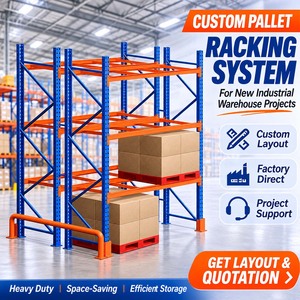
Custom Pallet Racking System for New Industrial Warehouse Projects
Layout-based pallet racking for new distribution centers, with adjustable beam pitch, upright protection and CAD drawings prepared around the building column grid.
View Product →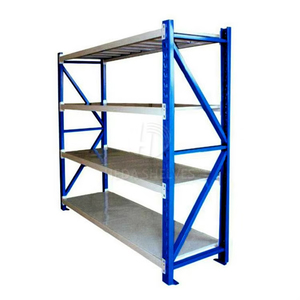
Heavy Duty Steel Pallet Racking Store Warehouse Rack Storage Rack
Selective heavy-duty pallet racking for fast-moving SKUs, with direct access to every pallet and flexible bay widths for forklift operations.
View Product →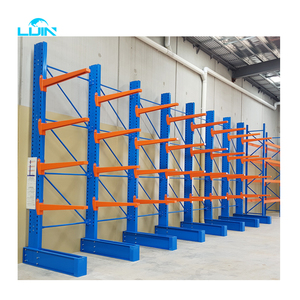
Factory Price Cantilever Rack Heavy Duty Industrial Cantilever Racking Steel Storage
Open-front cantilever storage for pipes, timber, steel profiles and long goods. Arms can be configured for single-sided or double-sided yard and indoor storage.
View Product →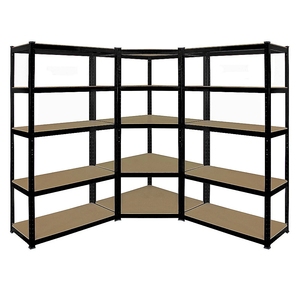
Black / Silver Steel 5 Layer Warehouse Pallet Shelving Rack System
Five-layer metal shelving for cartons, spare parts, e-commerce picking and retail stockrooms where hand access and visible inventory matter.
View Product →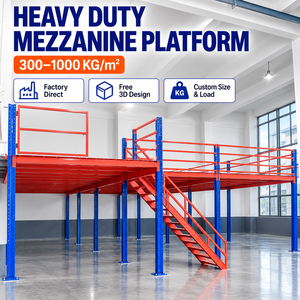
Heavy Duty Steel Mezzanine Floor Rack System for Warehouse Storage
Rack-supported mezzanine platforms that add a second or third usable working level without constructing a new warehouse building.
View Product →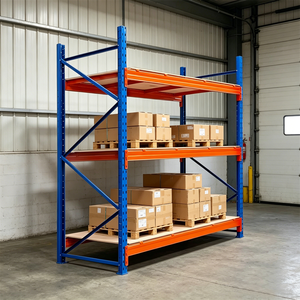
Powder Coated Heavy Duty Rack Industrial Warehouse Storage Pallet Racking
Powder-coated adjustable pallet racking for humid, coastal or food-grade environments where coating adhesion and cleaning matter.
View Product →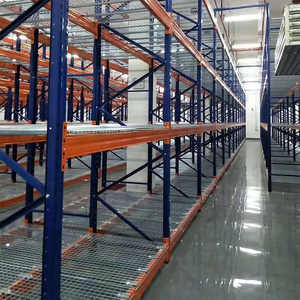
Custom Q235B Steel Heavy Duty Pallet Racking System 2000kg Load Capacity
Q235B steel uprights and beams for heavy pallet loads, with adjustable levels, safety pins, base plates and project-specific load calculations.
View Product →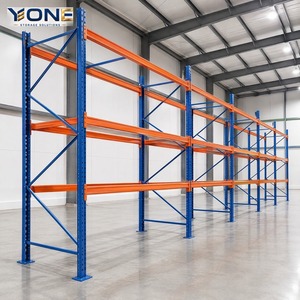
Steel Storage Rack Warehouse Heavy Duty Selective Pallet Rack System
A flexible selective pallet rack system for 3PLs, manufacturers and distributors that need high SKU selectivity and straightforward expansion.
View Product →What Serious Buyers Look For in China Warehouse Shelving Factories
The term “warehouse storage shelving” covers many systems: selective pallet racking, longspan shelving, cantilever racking, mezzanine platforms, drive-in racking, radio shuttle systems and AS/RS installations. A reliable China warehouse shelving exporter should not simply quote a beam-and-upright price. The factory must connect the proposal to building height, floor condition, pallet weight, SKU profile, forklift type, fire strategy, seismic requirements and container loading.
In international procurement, the lowest ex-works price often becomes the most expensive decision when the racking arrives without coordinated drawings, missing installation accessories or a load rating that cannot be reviewed by the buyer’s local engineer. For that reason, professional buyers now ask for information gain before they issue a purchase order: a clear layout drawing, a pallet-position count, a beam load calculation, a coating specification, packing drawings and a realistic production schedule.
The strongest China exporters are not only steel fabricators. They are engineering coordinators. They help the buyer convert a building survey into a racking plan, confirm the interface with sprinklers and lighting, prepare customs documentation and support installation teams on site. That integrated capability is especially important for projects in South America, where seismic design references such as NCh 2369 in Chile, E.030 in Peru and NSR-10 in Colombia may need to be reviewed alongside the racking quotation.
When comparing China warehouse storage shelving factories, look for evidence that the factory controls the critical process steps: steel coil traceability, cold-rolling tolerance, upright and beam profiles, powder-coating thickness, load testing and export packing. Ask whether the supplier manufactures racking and automation in-house or merely assembles bought-out components. A factory with its own production lines, R&D team, calibration systems and after-sales engineers can reduce interface risk across the entire project.
Finally, procurement teams should separate product price from total landed cost. Container fill rate, packing method, spare parts list, installation supervision, warranty response and documentation quality all affect the final cost of ownership. A well-packed container with nested profiles and steel-strapped bundles can materially reduce freight cost per pallet position, especially on long ocean routes to Santos, San Antonio, Callao, Buenaventura, Guayaquil or Buenos Aires.
What to Request Before Quotation
- Building length, width, clear height and column grid.
- Pallet or carton dimensions, weight and load pattern.
- Forklift type, lift height and aisle requirement.
- SKU count, throughput and selectivity target.
- City and country for seismic, wind and freight review.
- Required surface finish for humidity, cold storage or coastal air.
Future Procurement Trends for Warehouse Storage Shelving
The buying process for China warehouse racking has shifted from transactional purchasing to evidence-based project procurement. The following patterns are visible in current export inquiries for pallet racking, shelving, mezzanine and automated storage systems.
Lifetime Cost Beats Unit Price
Buyers compare freight, installation, spare parts, inspection and downtime risk, not just dollars per beam or upright. A factory that supplies complete packing lists and installation manuals reduces hidden cost after arrival.
Consolidation of Suppliers
Instead of buying shelving, racking and mezzanine from separate traders, project buyers prefer one accountable manufacturer that can coordinate steel profiles, accessories, automation interfaces and delivery sequence.
Compliance Documentation
ISO 9001, ISO 14001, ISO 45001, CE certificates, material reports and load-test records are increasingly requested as part of the tender package, especially for enterprise and government-linked warehouses.
How Warehouse Shelving and Racking Are Evolving
Product development in the China racking industry is moving toward higher structural transparency, denser storage and better integration with warehouse software. For exporters, this means the racking system must be designed not only to hold loads, but to support future automation and long-term safety inspection.
Higher and Denser Systems
However, selective pallet racking remains the default for mixed SKUs because it protects fast access. High-density systems such as radio shuttle, four-way shuttle and AS/RS are growing where land cost and labor cost justify automation.
Seismic-Engineered Design
Reinforced uprights, additional bracing, seismic base plates and anchor specifications are being designed with local review in mind. Calculation reports are no longer a premium document; they are part of the quotation package for seismic zones.
Corrosion and Finish Control
For coastal and humid warehouses, enhanced pretreatment, epoxy-polyester powder coating and hot-dip galvanized components are specified more often. Coating thickness and salt-spray data are becoming purchasing criteria.
Automation-Ready Interfaces
Racking is now prepared for stacker cranes, shuttle carriers, conveyors, WMS and WCS coordination. This requires tighter tolerances, accurate guide rail installation and clear handover documentation.
Modular and Demountable Design
Overseas projects often expand in phases. Modular beams, bolted uprights, standard accessories and container-optimized profiles make it easier to extend the system without redesigning the entire warehouse.
Full-Lifecycle Documentation
Load signs, installation manuals, spare-part lists, inspection schedules and maintenance guidance are becoming part of the product itself. Good documentation protects the buyer during safety audits and operator training.
How to Compare China Warehouse Shelving Exporters
Use this evidence-based checklist when shortlisting factories. A competent exporter should be able to answer with documents, not only verbal assurances.
| Evidence to Request | Why It Matters | Common Red Flag |
|---|---|---|
| Factory profile and production lines | Confirms whether the supplier controls cold rolling, punching, welding, powder coating and packing rather than acting as a trading intermediary. | Only product photos are supplied, with no workshop, equipment or quality process detail. |
| Load calculation and layout drawing | Shows whether the racking proposal matches your pallet weight, beam span, elevation and building height. | A generic capacity claim is offered without beam span, upright profile or safety factor information. |
| Material and coating reports | Supports steel grade, zinc or powder coating thickness and corrosion performance, especially for humid or coastal sites. | No traceability between steel coil, finished uprights and shipment batch. |
| Certificates and test records | ISO 9001, ISO 14001, ISO 45001 and CE documents help procurement and safety teams complete internal approval. | Certificates cannot be verified, or they cover unrelated products. |
| Export packing and container plan | Reduces damage risk and freight cost per pallet position, and clarifies unloading sequence at the destination port. | No packing drawing, no bundle list and no spare parts identification. |
| Installation and after-sales plan | Defines who supervises installation, who trains local workers and how spare parts or remote diagnostics will be handled. | The factory disappears after shipment and offers no commissioning support. |
Why My Favorite Shelf Is a Reliable China Warehouse Storage Shelving Exporter
Founded in 1997, My Favorite Shelf Industrial Co., Ltd. designs, manufactures and installs warehouse racking and automated storage systems from Nanjing, Jiangsu. The company combines steel fabrication, structural engineering and warehouse software support in one accountable organization.
Since 1997
Nearly three decades of racking and warehouse project experience, with approximately 60,000 tons of steel processed annually and more than 8,000 projects delivered across 140+ countries.
Certified Quality System
Production is managed under ISO 9001, ISO 14001, ISO 45001 and ISO 10012 measurement management. CE certification covers racking, shuttle cars, stacker cranes and RGVs.
R&D and Patents
A municipal-level technical R&D center holds more than 70 national patents and software copyrights covering racking, stacker cranes, conveyors, shuttle carriers and WMS/WCS.
Engineering Leadership
The engineering team is led by a professor-level senior engineer and doctoral tutor who co-authored automated warehouse design and logistics distribution center management references.
South America Project Focus
Seismic calculations with reference to NCh 2369, E.030 and NSR-10; corrosion protection for humid and coastal warehouses; packing plans for ports such as Santos, San Antonio, Callao and Buenaventura.
Export Documentation
Commercial invoice, detailed packing list, bill of lading, certificate of origin, material reports, test reports and installation manuals can be prepared in English with Spanish or Portuguese support.
Global Brand Experience
Designated logistics equipment supplier experience with international enterprises including GE, Siemens, Walmart, Amazon and Toyota; the same project discipline is applied to distributor, 3PL and manufacturer projects.
Installation and Service
Supervising engineers can be dispatched for installation and commissioning; local teams can be trained; spare parts and remote diagnostics support automated systems such as stacker cranes, shuttles and WMS/WCS.
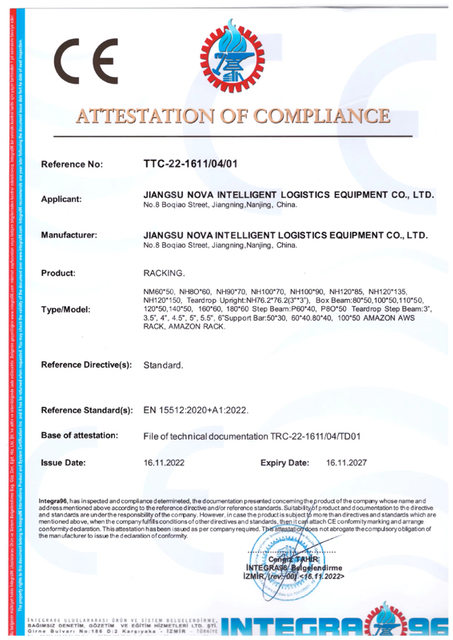 CE · Racking
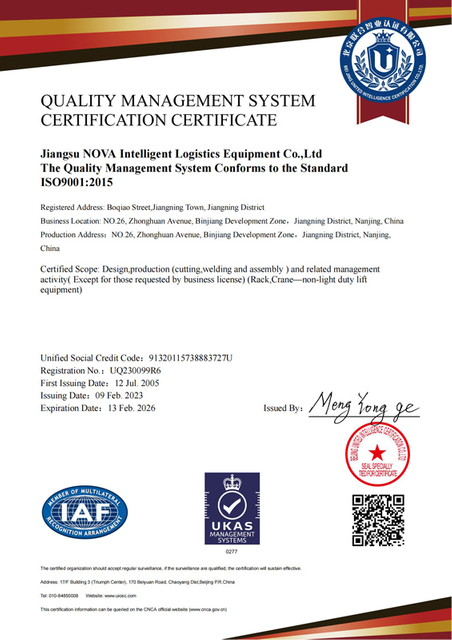 ISO 9001
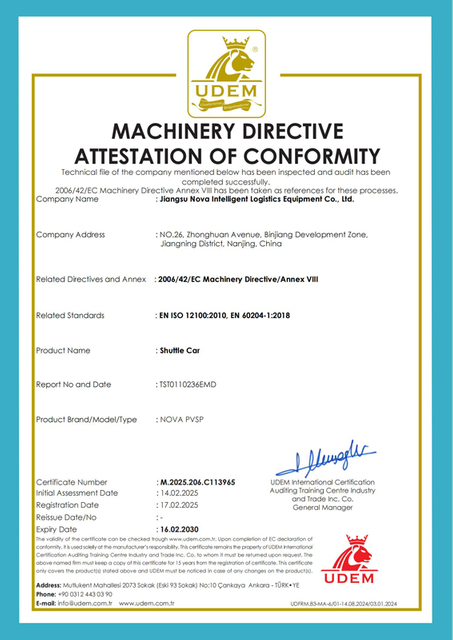 CE · Shuttle Car
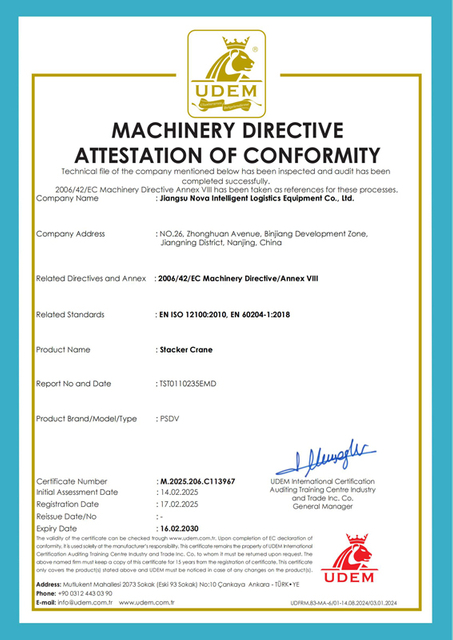 CE · Stacker Crane
Warehouse Shelving and Racking Applications
Project references help buyers evaluate whether a factory understands their operational reality. The images below show applications in machinery, e-commerce and paper-industry logistics — categories that demand different load patterns, picking methods and safety controls.
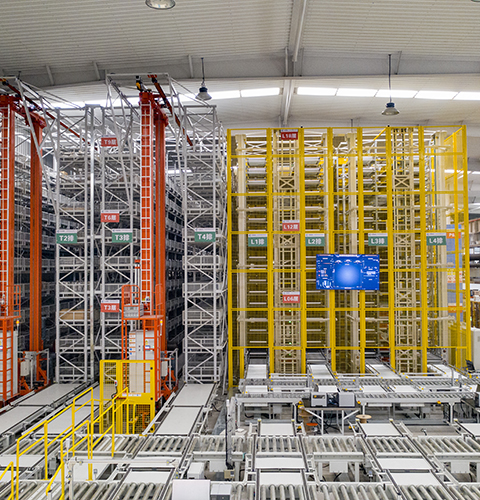
Machinery Industry High-Density Storage
Heavy components and spare parts consolidated into dense pallet storage, releasing floor space for production and improving stock visibility.
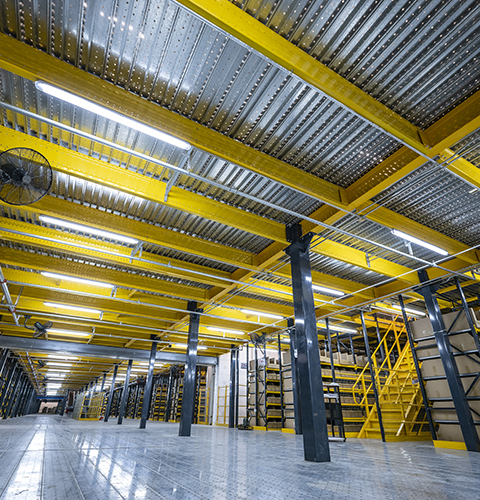
E-Commerce Logistics Center
Multi-tier picking racks and pallet storage designed for peak-season order volumes, fast SKU rotation and coordinated packing operations.
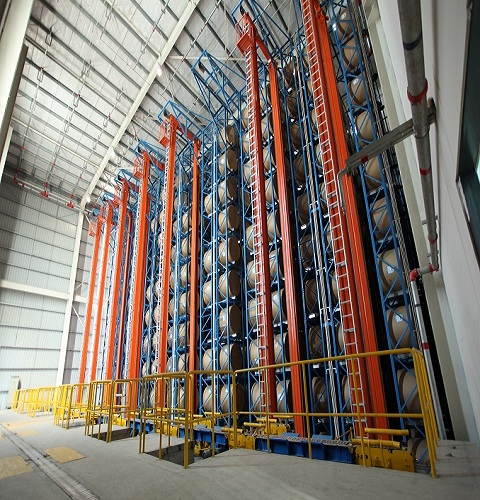
Paper-Making Industry Logistics Center
Automated storage for heavy paper rolls and finished goods, connecting production output with dispatch and reducing manual handling risk.
Quick Selection Guide: Which Racking Fits Your Operation?
Use this table to align storage density, selectivity and handling equipment before requesting a quotation from a China warehouse shelving exporter.
| System | Density | Selectivity | Best For |
|---|---|---|---|
| Selective Pallet Racking | ●●○○○ | ●●●●● | Many SKUs, fast picking, 3PL and distribution warehouses. |
| Double-Deep Racking | ●●●○○ | ●●●○○ | Two or more pallets per SKU, moderate selectivity and higher density. |
| VNA Racking | ●●●○○ | ●●●●● | Tall buildings, narrow aisles and very narrow aisle forklift operations. |
| Drive-In Racking | ●●●●○ | ●○○○○ | Cold storage, beverage and homogeneous SKUs with limited selectivity. |
| Radio Shuttle Racking | ●●●●○ | ●●○○○ | Deep lanes, FIFO or LIFO storage and reduced forklift entry into the rack. |
| Four-Way Shuttle | ●●●●● | ●●●●○ | Automated dense storage with high throughput and labor reduction. |
| AS/RS | ●●●●● | ●●●●● | High-bay, 24/7 operation, labor saving and full WMS/WCS integration. |
FAQ for Global Buyers of China Warehouse Storage Shelving
These are the questions most often raised during factory selection, RFQ review and pre-shipment inspection for pallet racking, shelving and mezzanine projects.
Can racking be designed for seismic zones in Chile, Peru and Colombia?
Yes. Our engineers run structural and seismic load calculations with reference to local requirements such as NCh 2369 in Chile, E.030 in Peru and NSR-10 in Colombia. Reinforced uprights, bracing, base plates and anchors can be specified accordingly. Calculation reports can be delivered with quotation drawings for review by your local engineer.
How long does production and shipping take?
Standard selective racking is typically produced in 25 to 35 days. Ocean transit from China to Santos, San Antonio, Callao, Buenaventura, Guayaquil or Buenos Aires usually takes 30 to 45 days depending on the route. AS/RS and shuttle projects follow a project schedule agreed at contract stage.
Which export documents are provided for customs clearance?
We provide commercial invoice, detailed packing list, bill of lading, certificate of origin and, on request, test reports, material certificates and installation manuals in English. Spanish or Portuguese support can be arranged for project documentation where required.
Do you offer installation and after-sales service overseas?
Yes. Supervising engineers can be dispatched for installation and commissioning, local installation teams can be trained, spare parts can be supplied and remote diagnostics are available for automated systems such as stacker cranes, shuttles and WMS/WCS software.
What finishes are recommended for humid or coastal warehouses?
For humid tropical or coastal sites, we recommend epoxy-polyester powder coating with enhanced pretreatment. For cold storage, ports and high-corrosion environments, hot-dip galvanized components or a zinc-rich primer system may be more appropriate. Finish selection should match the actual humidity, temperature and cleaning regime.
How do I confirm the real load capacity of a pallet racking quotation?
Ask for the beam span, upright profile, steel grade, number of load levels, pallet weight and load pattern. A credible quotation should define capacity per level or per pair of beams, not only a general “heavy duty” claim. Load testing, material reports and safety factor information should be available for project approval.
Can you customize sizes, colors and accessories?
Yes. Bay width, depth, height, beam pitch, upright thickness, powder-coating color, wire mesh decking, upright protectors, footplates, anchors and safety signage can be customized. For longspan shelving and carton-flow applications, divider systems and picking labels can also be incorporated.
How do I choose between selective, drive-in, shuttle and AS/RS?
Selective racking is best when SKU variety and direct access are priorities. Drive-in and radio shuttle are suitable when SKUs are homogeneous and density matters more than selectivity. AS/RS and four-way shuttle are selected when throughput, labor savings, high-bay storage and software integration justify the investment. A professional supplier should compare these options using your pallet data and throughput targets.
Request a Factory-Direct Layout and Quotation
Share your building dimensions, pallet or carton size, maximum load, target pallet positions and destination port. Our engineering team will prepare a racking recommendation, layout direction, packing plan and export quotation based on your actual operating conditions.