8 Industrial Rack Configurations Recommended for Storage Projects
Choosing industrial racks for storage is not a catalogue exercise. It is a decision about selectivity, density, safety, local code compliance and the cost of every pallet position over ten years. Below are eight proven configurations from our factory floor, each matched to a common buying intent. Product URLs are kept unchanged so your team can compare drawings, loading data and model references directly.
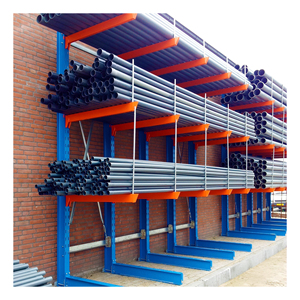
China Wholesale Industrial Warehouse Heavy Duty Single Side Cantilever Rack
A practical choice for timber, steel pipes, profiles and long components. The open front allows forklift or side-loader access without uprights interrupting the load bay. We confirm arm spacing, load per arm and base length before quoting.
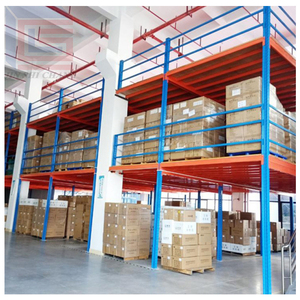
Heavy Duty Mezzanine Racking System Custom Industrial Storage Shelves and Platform
Add usable floor area without a new building permit cycle. Ideal for carton picking, spare parts and multi-tier e-commerce operations. The live load, stair position, egress and future expansion should be confirmed early.
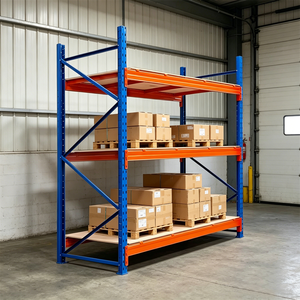
Powder Coated Heavy Duty Rack Industrial Warehouse Storage Pallet Racking Adjustable Industrial Shelves
Adjustable beams, powder-coated finish and factory-punched uprights support fast layout changes. A strong fit for general pallet storage, cartons and mixed SKU warehouses where beam levels may need to change.
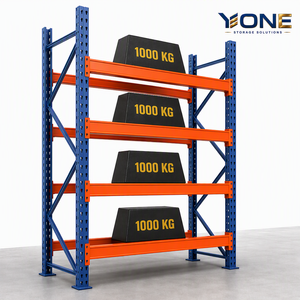
Durable Steel Storage Rack Heavy Duty Pallet Racking for Industrial Warehouse Storage with Safety Accessories
Built for distribution centers and 3PL operations that need upright protectors, beam locks and clear anchor specifications. We review forklift traffic, aisle width and impact risk with the layout.
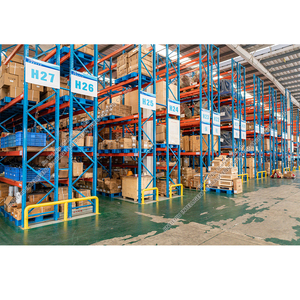
Heavy Duty Corrosion Protected Racking System Beam Structure Industrial Warehouse Rack Steel Panels Carton Parts Picking 1000KG
For humid, coastal or cold-chain sites where standard paint may not be enough. Enhanced pretreatment or hot-dip galvanized components can be specified. Suitable for panels, carton parts and 1000 kg-class loads.
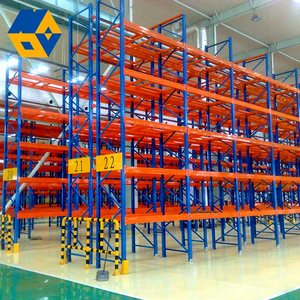
NOVA Industry Warehouse Steel Adjustable Shelf, Automation Equipment Heavy Duty Pallet Racking System Selective Pallet Rack
A selective pallet rack platform that can align with future WMS/WCS, shuttle lane or stacker crane planning. We check upright capacity, beam deflection, floor tolerance and interface points at the first quotation.
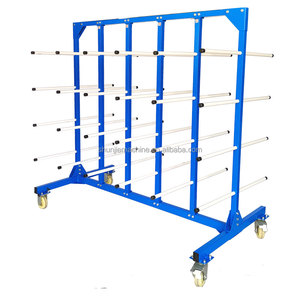
Customized 5 Tiers Cantilever Racking for Warehouse with Wheels Long Arms Metal Double Side Cantilever Rack Cart
Useful for maintenance, assembly and line-side supply of long parts. The wheeled double-sided design reduces double handling and keeps materials close to the point of use. Wheel load and floor condition should be checked.
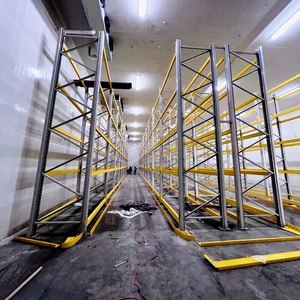
Low Price Racking Heavy Duty VNA Rack Adjustable Metal Boltless Shelf and Racks Warehouse Warehouse Storage Racks Metal Shelf
A high-bay, narrow-aisle option for warehouses that need more pallet positions in the same footprint. Boltless assembly supports faster installation. VNA projects require truck guidance, floor tolerance and aisle discipline.
Factory Capability Snapshot
How to Choose Industrial Racks for Storage: A Procurement Matrix
Search intent for this product cluster usually falls into four buckets: long-load storage, high-density pallet storage, multi-tier picking and narrow-aisle VNA storage. The matrix below maps those intents to measurable trade-offs. It is also the framework our engineers apply when converting a warehouse drawing into a pallet-position plan.
| Rack family | Density | Selectivity | Best-fit operating intent | Information-gain check |
|---|---|---|---|---|
| Single-side cantilever | ●●○○○ | ●●●●● | Timber, pipes, profiles, long spare parts | Arm load chart, base length and side clearance |
| Mezzanine platform | ●●●○○ | ●●●●○ | Carton picking, e-commerce, spare parts | Live load, stair/egress plan and column grid |
| Powder coated adjustable pallet rack | ●●●○○ | ●●●●○ | General pallet storage, mixed SKUs | Coating thickness, beam lock and load per level |
| Heavy-duty steel pallet rack | ●●●○○ | ●●●●○ | Distribution centers, 3PL, safety-critical sites | Upright protector, anchor specification and impact risk |
| Corrosion-protected rack | ●●●○○ | ●●●●○ | Coastal, humid, cold-chain warehouses | Pretreatment, salt-spray report and galvanizing option |
| NOVA selective pallet rack | ●●●●○ | ●●●●○ | Automation-ready DCs and phased expansion | WMS/WCS interface, stacker-crane clearance and floor tolerance |
| Double-side cantilever cart | ●●●○○ | ●●●●● | Maintenance, assembly and line-side supply | Wheel load, floor condition and movement frequency |
| VNA boltless rack | ●●●●● | ●●●●○ | High-bay, narrow-aisle pallet storage | Aisle width, truck guidance, floor tolerance and lift height |
Factory-direct RFQ checklist
- Building length × width × clear height and column grid
- Pallet or carton size, weight, overhang and load per level
- Forklift type, lift height, aisle width and VNA guidance
- Required selectivity, FIFO/LIFO and peak throughput
- Site city and country for seismic, humidity and freight review
- Local code references such as NCh 2369, E.030, NSR-10 or ABNT NBR 15524
- Installation window and availability of a local crew
Procurement advice: compare delivered cost per usable pallet position, not price per beam or upright. Freight, installation, inspection and spare parts belong in the same model.
Future Procurement Trends for Industrial Racks (2025–2030)
Procurement teams are shifting from “buy steel” to “buy verified capacity.” The next buying cycle will reward suppliers who can prove structural performance, interoperability and lifecycle cost — not only unit price. Three trends dominate our RFQ reviews with distributors, manufacturers and 3PLs.
Code-led procurement in seismic and humid regions
In Chile, Peru and Colombia, racking procurement is increasingly tied to local seismic practice. Buyers ask for calculation reports that reference NCh 2369, E.030 and NSR-10, and for reinforced uprights, extra bracing, base plates and anchor specifications that a local engineer can review. In Brazil, projects often reference ABNT NBR 15524 storage-system practice. For coastal or tropical sites, finish specification is moving from generic powder coating to enhanced pretreatment or hot-dip galvanizing. The practical result: RFQs now include site coordinates, corrosion class and the name of the local verifying engineer. A factory supplier that cannot provide these documents becomes a higher-risk choice.
Automation-ready racking with phased ROI
AS/RS, four-way shuttle and radio shuttle systems are no longer reserved for very large DCs. Mid-size buyers are asking for selective pallet racking that can be upgraded later with shuttle lanes, conveyors or stacker cranes. This changes the original rack design: upright capacity, beam deflection, floor tolerance and future WMS/WCS interfaces are reviewed at the first quotation. The procurement question shifts from “Which rack is cheapest?” to “Which rack protects the automation investment?” We advise buyers to request a phased layout — manual phase one, automated phase two — so steel and software roadmaps are aligned.
Total cost per pallet position and freight discipline
Long ocean routes to Santos, San Antonio, Callao, Buenaventura, Guayaquil or Buenos Aires make freight part of the rack design. Nested profiles, steel-strapped bundles and container-optimized packing can materially change the landed cost. Procurement teams are also adding warranty, spare-parts availability and installation support to the TCO model. Our recommendation is a simple formula: delivered equipment cost + installation + inspection + expected downtime + replacement parts, divided by usable pallet positions. This exposes the real cost of low-priced components that consume aisle space or require frequent repair.
Product Development Trends Influencing Your Next Rack Order
What is changing in the product itself? Four engineering directions are visible in current racking and automated warehouse projects, and each one affects the specification you should write.
High-density systems with better selectivity
Radio shuttle racking, VNA racking and four-way shuttle systems continue to reduce the traditional trade-off between density and access. Boltless VNA racks allow narrow aisles and faster assembly; shuttle carriers keep forklifts out of the rack structure. For buyers, the key is to map SKU velocity to lane depth and retrieval frequency. High density is only valuable when the order profile can absorb it.
AS/RS and stacker-crane integration
High-bay AS/RS projects are moving toward integrated stacker cranes, conveyors and WMS/WCS control. Our factory data supports high-bay storage up to 40 m when the building, fire strategy and crane specification allow. The development focus is not simply height; it is the interface between steel, equipment and software. That is why we ask for SKU data, throughput per hour and future growth before specifying an automated layout.
Smart safety and inspection culture
Rack safety accessories are being specified earlier: upright protectors, beam locks, back-to-back ties, anchor inspection and periodic rack inspections are now part of the purchase decision. Automated systems add remote diagnostics and spare-parts planning. Buyers increasingly request a safety file with the quotation — load charts, anchor plans, installation method statements and inspection points. This turns safety from a post-installation discussion into an engineering input.
Modular, boltless and faster-to-install systems
Mezzanine platforms, longspan shelving, boltless VNA racks and modular cantilever carts are designed to reduce site labor. Factory pre-punching, powder coating and numbered packing allow local crews to install faster with fewer errors. For South American projects, this matters because installation windows are often short and site labor rates vary. A modular design also supports phased expansion — a procurement advantage when capital spending is released in stages.
Why a Factory-Direct Supplier Lowers Project Risk
My Favorite Shelf Industrial Co., Ltd. has designed, manufactured and installed warehouse racking and automated storage systems since 1997. Our production base processes around 60,000 tons of steel per year, and our municipal-level R&D center holds more than 70 national patents and software copyrights covering racking, stacker cranes, conveyors, shuttle carriers and WMS/WCS software. For buyers, the advantage is not a slogan; it is fewer interfaces between design, steel, automation and after-sales support.
Manufacturing depth, not trading margin
We operate in-house racking and automation production, including cold-rolling and powder-coating lines, load testing and coil traceability. Rack beams, uprights, mezzanine structures and safety accessories are produced under one quality system. This reduces the risk of incompatible components and shortens the feedback loop when a drawing changes.
Engineering authority
Our engineering team is led by a professor-level senior engineer and doctoral tutor who co-authored automated warehouse design and logistics distribution center references. The R&D center supports structural calculations, seismic-review documentation and custom profiles. When your local engineer raises a question, the answer comes from the design team, not a reseller.
Certified quality and CE-marked automation
Production is managed under ISO 9001, ISO 14001, ISO 45001 and ISO 10012 measurement management. CE certification covers racking, radio shuttle cars, stacker cranes, four-way shuttles and RGVs. Certificates and test reports can be supplied for procurement and safety review. This is the documentation trail serious buyers ask for before releasing a purchase order.
Global reference projects
More than 8,000 projects have been delivered in over 140 countries. Our logistics equipment has been selected by international enterprises including GE, Siemens, Walmart, Amazon and Toyota. Project experience includes AS/RS for Taishan Fiberglass, shuttle racking for Samgak FMC and PT Tiga Pilar, pallet racking for Suning Group and Keppel Logistics, and mezzanine projects for Amazon. This matters when your project requires a supplier with auditable references.
South America engineering and logistics
For Chile, Peru and Colombia we prepare structural and seismic calculations with reference to local requirements such as NCh 2369, E.030 and NSR-10. For Brazil we review designs against ABNT NBR 15524 practice. For humid ports and cold-chain sites we recommend enhanced pretreatment or hot-dip galvanizing. Container-optimized packing and customs-ready documents — commercial invoice, packing list, bill of lading, certificate of origin, test reports and material certificates — are part of the delivery scope.
Installation and lifetime support
We dispatch supervising engineers for installation and commissioning, train local installation teams, supply spare parts and provide remote diagnostics for automated systems. Standard selective racking is typically produced in 25 to 35 days, with ocean transit of roughly 30 to 45 days depending on the route. Project documentation can be supported in English, Spanish or Portuguese, and maintenance planning can be included in the handover package.
Certifications Buyers Can Verify Before Ordering
Ask for the certificate number, scope and validity date. A factory supplier should be able to connect each certificate to the product and production line — not simply show a logo on a website.
ISO 9001
Quality management system covering racking production and project delivery.
ISO 14001
Environmental management evidence for international tender review.
ISO 45001
Occupational health and safety management for factory and site activities.
CE-marked equipment
Racking, shuttle car, stacker crane, four-way shuttle and RGV certification scope available on request.
Selectivity vs Density: A Visual Guide for RFQ Meetings
Use the bars below to align operations, procurement and safety teams before the first drawing is issued. Scores are directional and should be confirmed against your SKU profile, building geometry and local code.
Applications: Where These Racks Earn Payback
The same rack family can perform very differently depending on the operation. These three application lenses help narrow the specification before you request a catalog or a layout drawing.
Distribution centers and e-commerce
Selective pallet racking, mezzanine platforms and longspan shelving support fast-moving SKUs and multi-order picking. The key data is order lines per hour, not only pallet count. For peak seasons, design extra beam levels or a future mezzanine rather than overloading the aisle. A factory-direct supplier can align the rack load chart with your conveying or picking strategy.
Manufacturing, long loads and line-side supply
Cantilever racks, double-side cantilever carts and heavy-duty pallet racks organize pipes, profiles, timber, dies and spares. The right layout reduces double handling and protects long loads from forklift damage. For maintenance and assembly areas, wheeled cantilever carts can move material directly to the point of use, improving both safety and space utilization.
Cold chain, coastal and 3PL environments
Corrosion-protected systems, VNA racking and radio shuttle racking are common in cold stores, ports and 3PL warehouses. Specify pretreatment, coating thickness and galvanizing options early. For 3PL operations, confirm that the rack can adapt to changing SKU profiles and client cycles without a full rebuild. Seismic and humid-site documentation should be requested at the quotation stage.
Industrial Rack Procurement FAQ
These are the questions our project engineers answer most often during the first technical review with distributors, manufacturers and 3PL buyers.
What information is needed for an accurate industrial rack quotation?
Send building length × width × clear height, column grid, pallet or carton size, load per unit, forklift type and lift height, required selectivity, peak throughput and site city/country. If you have a drawing, upload it; if not, our engineers can start from a sketch and return a pallet-position layout, rack recommendation and shipping scope.
How do you handle seismic zones in Chile, Peru and Colombia?
We prepare structural and seismic load calculations with reference to local requirements such as NCh 2369 (Chile), E.030 (Peru) and NSR-10 (Colombia), and specify reinforced uprights, bracing, base plates and anchors. Calculation reports are delivered with quotation drawings so your local engineer can review them before fabrication begins.
How long is production and delivery to South American ports?
Standard selective racking is typically produced in 25 to 35 days. Ocean transit to ports such as Santos, San Antonio, Callao, Buenaventura, Guayaquil or Buenos Aires usually takes 30 to 45 days depending on the route. AS/RS and shuttle projects follow a project schedule agreed at contract stage.
Which export documents do you provide for customs clearance?
We provide commercial invoice, detailed packing list, bill of lading, certificate of origin and, on request, test reports, material certificates and installation manuals in English. Spanish or Portuguese support is available for project documentation and installation coordination.
Do you offer installation and after-sales service in South America?
Yes. We dispatch supervising engineers for installation and commissioning, train local installation teams, supply spare parts and offer remote diagnostics for automated systems such as stacker cranes, shuttles and WMS/WCS software. For standard racking, we also provide installation drawings and numbered packing to help local crews work efficiently.
What surface finish is recommended for humid or coastal warehouses?
For humid tropical or coastal sites, use epoxy-polyester powder coating with enhanced pretreatment. For cold storage or high-corrosion environments, specify hot-dip galvanized components where appropriate. The decision should be linked to your site corrosion class, cleaning regime and expected service life — not only the initial price.
How should we plan for automation if the budget is not approved yet?
Start with an automation-ready selective rack layout: confirm upright capacity, beam deflection, floor tolerance, aisle width and data interfaces. Then phase the investment: manual racking first, shuttle lanes or AS/RS later. A modular design protects the initial spend and reduces disruption when the automation phase is approved.
Request a Factory-Direct Layout and Catalog
Send us your building drawing or a simple sketch with length × width × clear height, pallet size and weight, forklift type and target throughput. Our engineers will return a pallet-position plan, recommended rack family, seismic or finish notes and a quotation for your review.
- Layout drawing with usable pallet positions
- Load and seismic calculation scope for your site
- Finish recommendation for humidity, coast or cold chain
- Container loading plan and installation scope
No obligation. Replies in English, Spanish or Portuguese within one business day.