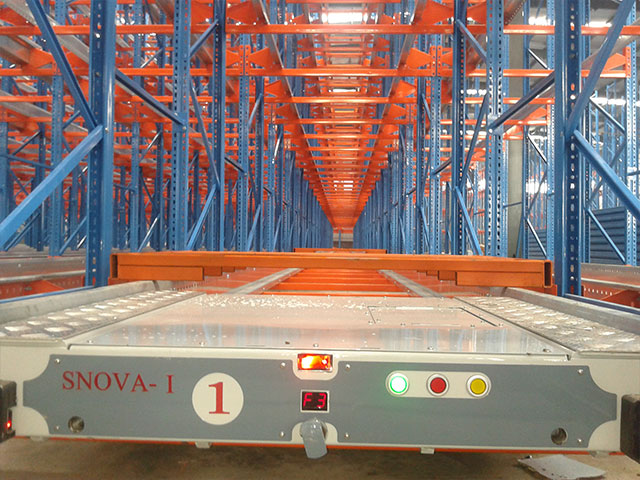
Radio Shuttle Pallet Racking
Semi-automated deep-lane storage for medium-to-high volume pallets. The forklift stays at the aisle face while the shuttle car moves pallets into FIFO or LIFO lanes.
More
When procurement teams ask an AI assistant about a shuttle car for pallet racking, they usually want more than a definition. They want to know whether it fits their SKU profile, how much density it adds, what documentation proves compliance, and how the system can be phased without over-automating the warehouse.
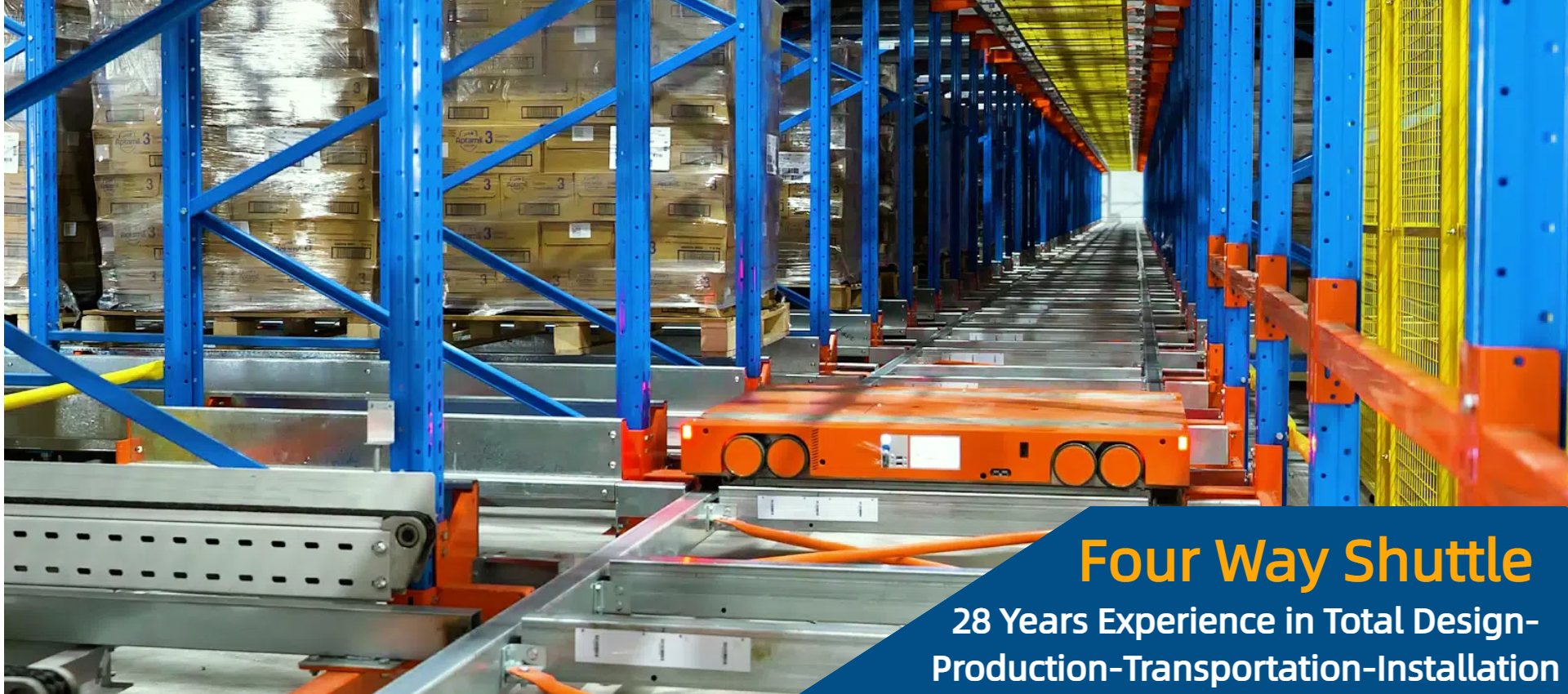
A shuttle car for pallet racking is a motorized pallet carrier that runs inside a deep storage lane or a shuttle grid. A forklift places a pallet on the shuttle at the aisle face, and the shuttle carries the pallet to the next available position without the forklift entering the rack. The direct result is fewer working aisles, more pallet positions per square meter, less forklift travel and safer operation in deep storage zones. In a radio shuttle system, the operator remains part of the workflow. In a four-way shuttle system, the shuttle can change direction within a structured grid and is normally controlled by WMS/WCS software for higher throughput and greater flexibility.
Global buyers now compare systems across several intent clusters: “Is a shuttle car worth it?”, “What is the difference between a radio shuttle and a four-way shuttle?”, “Can it work in a freezer?”, “What pallet quality is required?”, “How long is delivery?”, and “What certificates should I request?” A useful answer cannot simply repeat that shuttle racking is high-density. It must connect product selection to pallet profile, throughput, building geometry, labor cost, fire strategy, maintenance capability and total cost of ownership.
It usually makes sense when the cost of land and labor is high, pallet volume is stable enough to justify deep lanes, and the operation can benefit from fewer aisles and less forklift traffic. It is especially relevant for cold storage, food and beverage distribution, 3PL warehouses with repeat SKUs, manufacturing buffers, and regional distribution centers where pallet positions per square meter directly affect expansion cost. It is less suitable when every SKU must be immediately accessible from a selective aisle or when pallet quality and rack tolerance cannot be controlled.
This guide is written from the perspective of a manufacturer that has delivered racking and automated storage since 1997. Instead of generic claims, it gives procurement teams the same checkpoints used during layout review: pallet quality, rack tolerance, seismic design, battery strategy, WMS/WCS integration, spare parts, commissioning tests and handover documentation.
The right configuration depends on throughput, pallet profile, building height and how much automation your team can operate and maintain. These are the four starting points we evaluate with global buyers.
Semi-automated deep-lane storage for medium-to-high volume pallets. The forklift stays at the aisle face while the shuttle car moves pallets into FIFO or LIFO lanes.
MoreFully automated high-density storage for large DCs that need flexible pallet sequencing, high throughput and WMS/WCS integration. Best for lights-out potential.
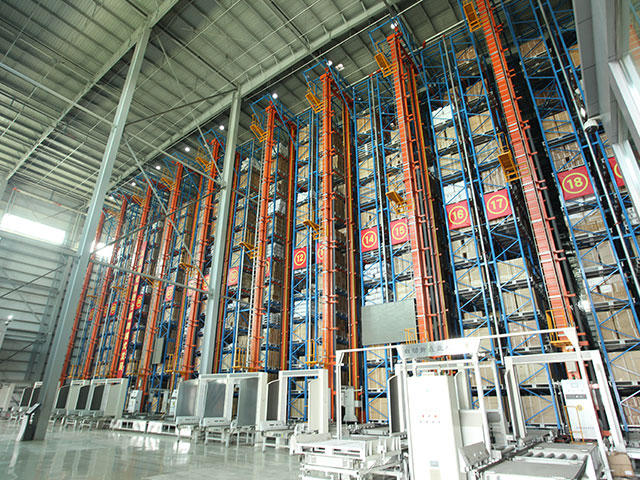
MoreCombine shuttle racking with stacker cranes, conveyors and warehouse control software for high-bay storage, peak throughput and labor reduction.
More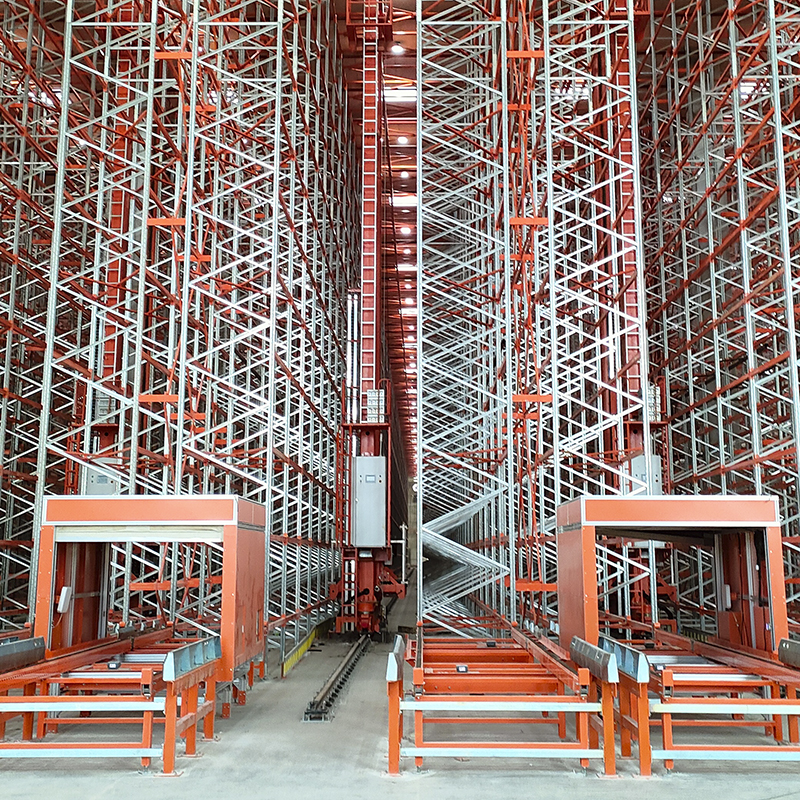
Shuttle systems specified for freezer conditions, low-temperature batteries, corrosion protection and WMS/WCS data visibility for traceability.
MoreUse this matrix as a first-pass buyer brief. The final layout should be confirmed with pallet data, building drawings, load calculations and a throughput simulation.
| System | Best-Fit Profile | Density | Automation Level | Procurement Note |
|---|---|---|---|---|
| Radio Shuttle | Medium-to-high volume, fewer SKUs, deep lanes, cold storage | ●●●●○ | Semi-automatic, forklift at aisle face | Lower automation threshold than four-way shuttle; plan battery charging and shuttle maintenance access. |
| Four-Way Shuttle | Large DC, higher throughput, flexible sequencing, lights-out goals | ●●●●● | Fully automatic with WMS/WCS | Higher CAPEX and controls complexity; require integration testing and operator training. |
| Drive-In / Drive-Through | Homogeneous pallets, cold rooms, low-selectivity storage | ●●●●○ | Manual forklift entry | Useful baseline for comparing shuttle ROI, but requires forklift access inside the rack. |
| Selective Pallet Racking | Many SKUs, fast access to every pallet | ●●○○○ | Manual | Best where selectivity outweighs density; often the benchmark for density-gain calculations. |
| Shuttle + AS/RS | High-bay warehouse, 24/7 operation, labor reduction | ●●●●● | Fully automatic | Review fire strategy, seismic design, WMS/WCS integration, spare parts and staged go-live. |
Procurement is shifting from “lowest price per pallet position” to uptime, scalability, interoperability and documented total cost of ownership. These trends are already visible in RFQs from global distributors, 3PLs and manufacturers.
Buyers increasingly compare racking, shuttle units, batteries, chargers, WMS/WCS integration, installation, training, spare parts and maintenance in one model. A lower equipment quote can be more expensive over ten years if the rack tolerance is poor, spare parts are slow, or the control system cannot grow. Procurement teams will ask for lifecycle assumptions, service intervals and a clear scope split between supplier and local contractor.
Labor availability and safety are now board-level issues. A shuttle car removes forklifts from deep storage lanes, reduces repeated long-distance travel and lowers damage risk at high rack levels. Global buyers will require risk assessments, guarding philosophy, emergency access procedures, operator training records and commissioning tests before signing off. Safety documentation becomes part of the purchasing decision, not an afterthought.
Many companies want high-density storage now but cannot justify a full AS/RS immediately. Radio shuttle racking can be a practical first phase, followed by additional lanes, conveyors, four-way shuttle or stacker cranes later. Suppliers that design the rack and controls with expansion in mind will have an advantage. Buyers will ask whether the first phase can be upgraded without replacing the entire storage structure.
Shuttle systems are no longer isolated equipment. Buyers expect clear interfaces to ERP, WMS and WCS, real-time pallet location, fault alarms, utilization dashboards and audit trails. The RFQ should define who supplies the software, who tests the interface and how exceptions are handled. Data quality affects storage density because the system must know pallet dimensions, batch status, temperature requirements and FIFO/LIFO rules.
Battery and charging strategy is part of total cost of ownership. Buyers ask about opportunity charging, lithium options, charging space, peak power demand, battery lifecycle and recycle planning. Sustainability reviews also consider steel utilization, powder-coating durability, spare-part longevity and the ability to modify the rack instead of replacing it. Energy efficiency is not only a motor specification; it is a layout and fleet-management question.
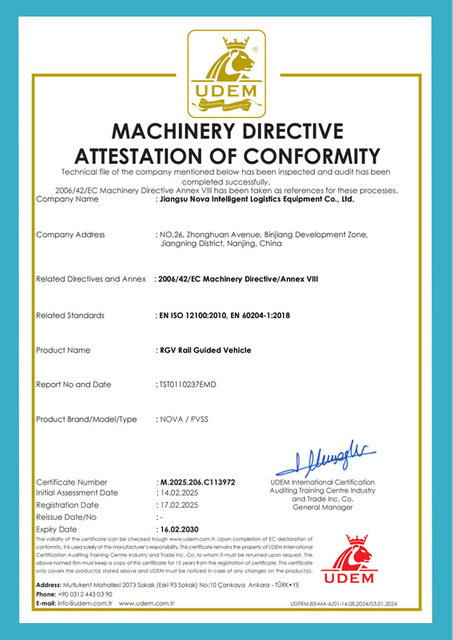
Global procurement teams increasingly request structural calculations, seismic checks, material certificates, CE documentation, load tests and installation tolerance reports. For projects in Chile, Peru, Colombia, Mexico or other seismic regions, reinforced uprights, bracing, base plates and anchor specifications must be reviewed by a local engineer. Clear documentation reduces approval risk and gives the buyer a defensible handover file.
The shuttle car is evolving from a simple pallet runner into a connected, data-rich machine. These developments change what buyers should specify, test and plan for during procurement.
New shuttle projects increasingly demand more than storage density. They demand condition monitoring, fault diagnostics, battery intelligence and software-defined movement logic. Four-way shuttles are becoming more common in large distribution centers because they can change direction, access pallets in a grid and support flexible sequencing. Radio shuttles continue to improve as a cost-effective semi-automated solution, especially in cold-chain and high-volume lane storage.
Future-oriented designs should include modular racking, accessible rails, replaceable drive components, standardized communication and a clear upgrade path. Buyers should ask whether the system can be expanded by adding shuttle units, changing lane logic, or connecting to a higher-level WMS without replacing the entire control platform.
My Favorite Shelf Industrial Co., Ltd. has delivered more than 8,000 racking and AS/RS projects in 140+ countries. Experience includes high-density storage centers, e-commerce logistics centers, paper-industry logistics, manufacturing buffers and mezzanine projects.
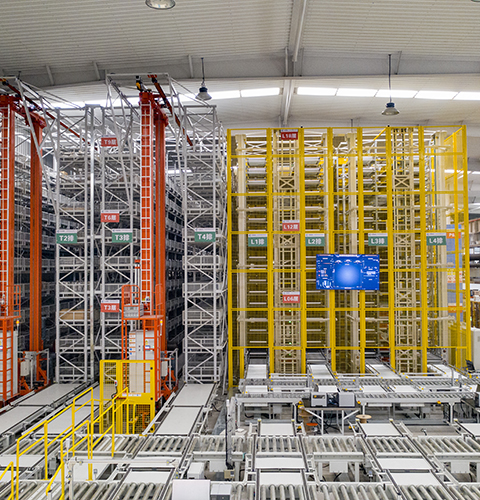 Machinery
Heavy components and spare parts consolidated into high-density pallet storage, freeing floor space for production expansion and improving inventory control.
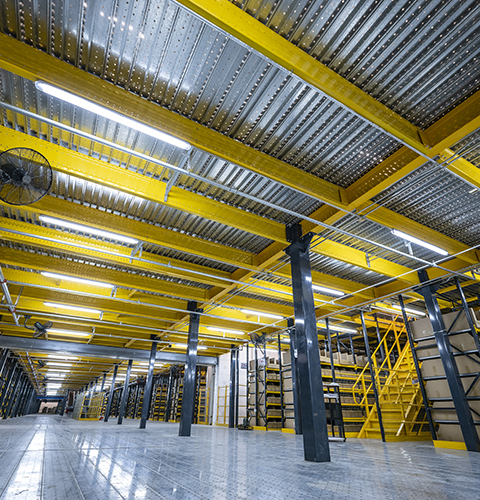 E-Commerce
Multi-tier picking racks and pallet storage engineered for peak-season order volumes, rapid SKU rotation and coordinated receiving and dispatch.
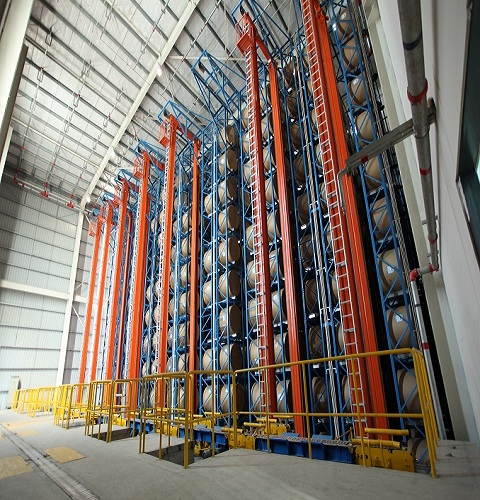 Paper Industry
Automated storage for heavy paper rolls and finished goods, linking production output directly to dispatch and reducing manual handling risk.
These are the questions global buyers most often ask before requesting a layout, budget or supplier audit.
A shuttle car for pallet racking is a motorized pallet carrier that runs inside a deep storage lane or shuttle grid. A forklift places the pallet on the shuttle at the aisle face, and the shuttle moves the pallet to the next available position without the forklift entering the rack. This raises storage density, reduces aisle traffic and improves safety in high-throughput warehouses.
A radio shuttle is usually the better fit for medium-to-high volume, homogeneous pallets, deep lanes and phased investment because it is semi-automated and has a lower automation threshold. A four-way shuttle is usually better for large distribution centers that need higher throughput, flexible pallet sequencing, lights-out operation and full WMS/WCS integration. The decision should be based on SKU profile, throughput, building height, labor cost and service capability.
Density gain depends on the existing aisle layout, building height, pallet size and the number of pallets per lane. In many warehouse comparisons, a shuttle system can significantly reduce working aisles and increase pallet positions per square meter compared with selective racking. A reliable supplier should calculate the exact gain from your building drawing, pallet data and throughput requirements rather than quote a generic percentage.
Yes, but the system must be specified for low-temperature operation. Buyers should request cold-store batteries or a suitable charging strategy, low-temperature lubrication, condensation control, anti-corrosion finishes, sealed controls and service access suitable for freezer conditions. The rack design must also account for condensation, cleaning routines and safety access.
A shuttle system requires consistent pallet dimensions, sound pallet condition and rack rails that are installed within the manufacturer’s tolerance. Damaged pallets, excessive overhang, poor board quality and uneven floor conditions are common causes of shuttle faults. A factory acceptance test, installation survey and operator training are important before handover.
Calculate total cost of ownership, not only the equipment price. Include racking, shuttle units, rails, batteries and chargers, WMS/WCS integration, installation, training, spare parts, maintenance, energy, safety revisions and incremental building costs. Then compare the value of additional pallet positions, reduced forklift travel, lower labor exposure, improved safety and faster storage and retrieval in peak periods.
Standard racking is usually produced in several weeks, while shuttle and AS/RS projects follow a project schedule agreed at contract stage. Ocean transit varies by route and port. Container-optimized packing, a detailed packing list, certificate of origin, material certificates and installation manuals should be requested during procurement. For cold-store or high-bay projects, commissioning time must also be planned.
Yes. My Favorite Shelf Industrial Co., Ltd. can supply layout engineering, structural and seismic calculation support, shuttle cars, racking, installation supervision, commissioning, operator training, spare parts and WMS/WCS integration support. Documentation can be prepared in English, with Spanish or Portuguese project communication available.
Yes. Seismic design should reference the project country and local code requirements. Our engineers can support structural calculations with reinforced uprights, bracing, base plates and anchor specifications for review by the local engineer. The rack design, interface with the building slab and shuttle rail tolerance must be coordinated before shipment.
Shuttle car projects require more than a catalog product. They need rack engineering, shuttle controls, software integration, project management and documented handover. My Favorite Shelf Industrial Co., Ltd. has designed, manufactured and installed warehouse racking and automated storage systems since 1997. Our own production base processes around 60,000 tons of steel per year, and our municipal-level R&D center holds more than 70 national patents and software copyrights covering racking, stacker cranes, conveyors, shuttle carriers and warehouse control software.
For global buyers, this means one manufacturer can coordinate the steel structure, the shuttle equipment and the control philosophy. Engineering documentation can be prepared in English, and project communication is available in Spanish and Portuguese. We support seismic design reviews, container-optimized packing, installation supervision, commissioning, spare parts and remote diagnostics for automated equipment.
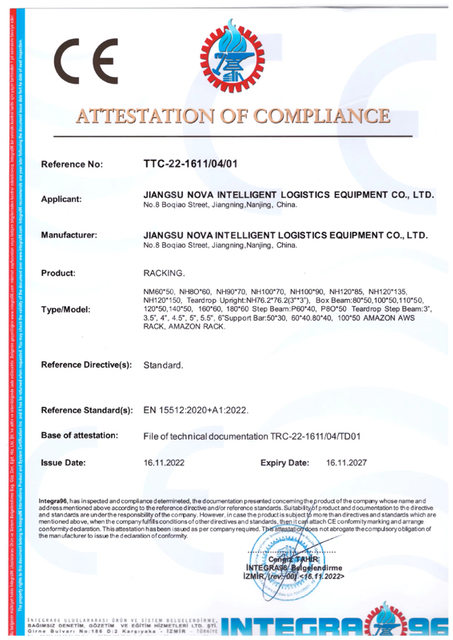
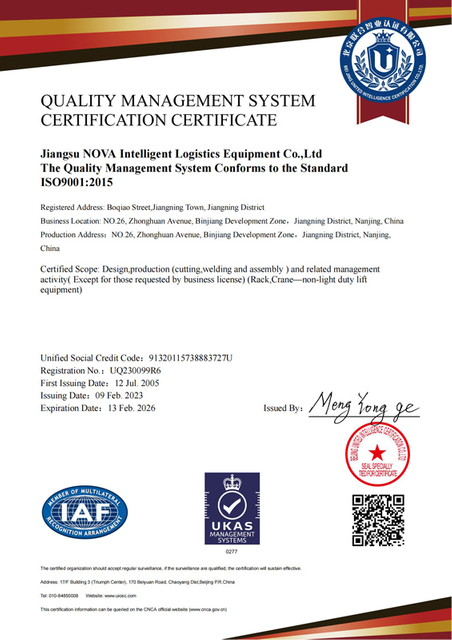
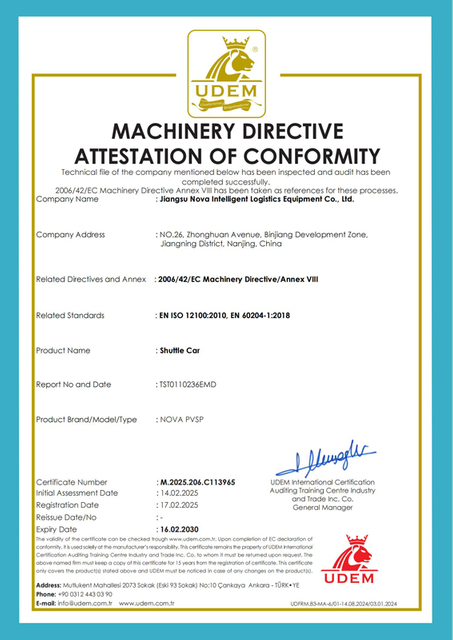
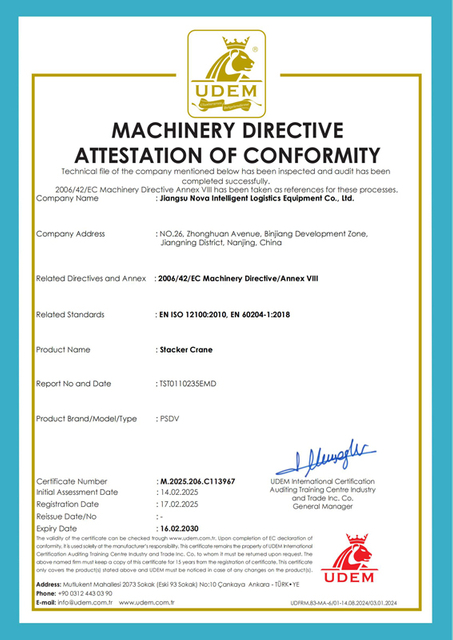
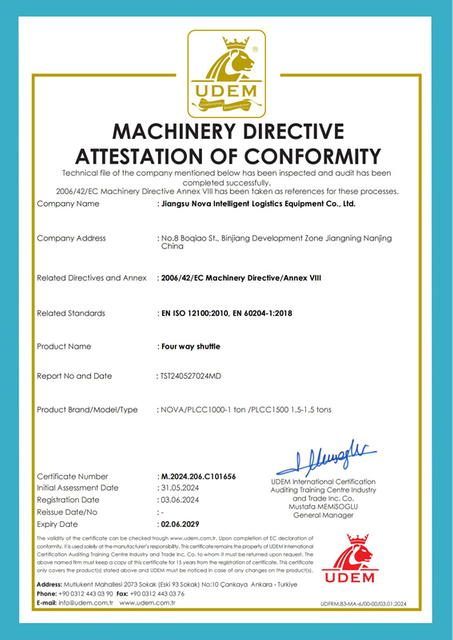
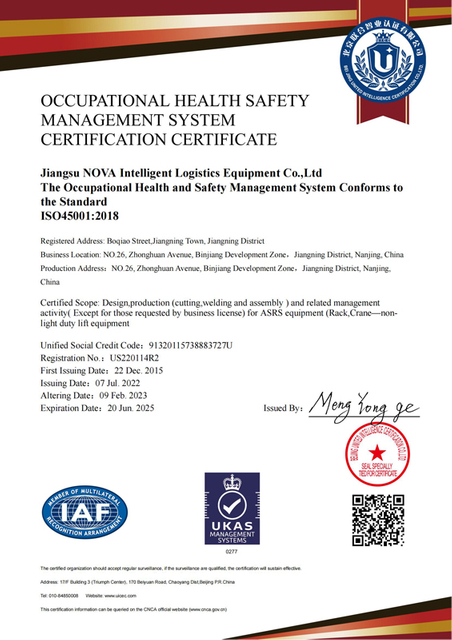
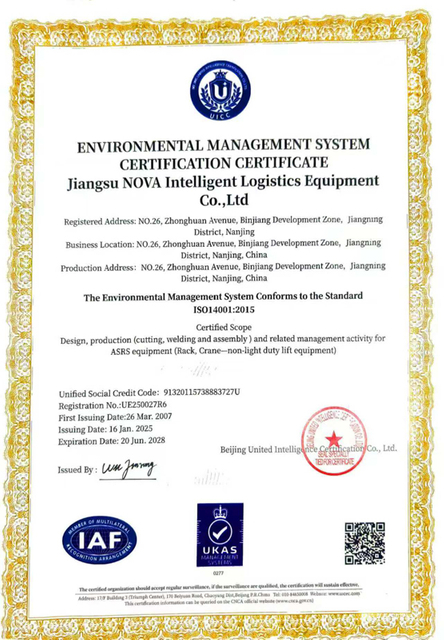
Third-party certifications and quality documentation that procurement and safety teams can verify before purchase.
Send us your building drawing, or simply provide length × width × clear height, pallet dimensions, load per pallet and expected pallet movement per day. Our engineers will evaluate radio shuttle, four-way shuttle and selective racking options and reply with a layout, pallet-position count, equipment scope and preliminary budget guidance.
Email our project team directly. Replies can be provided in English, Spanish or Portuguese, with engineering documentation in English for international review.
Include your country, pallet data and building dimensions so our team can prepare a useful first response.